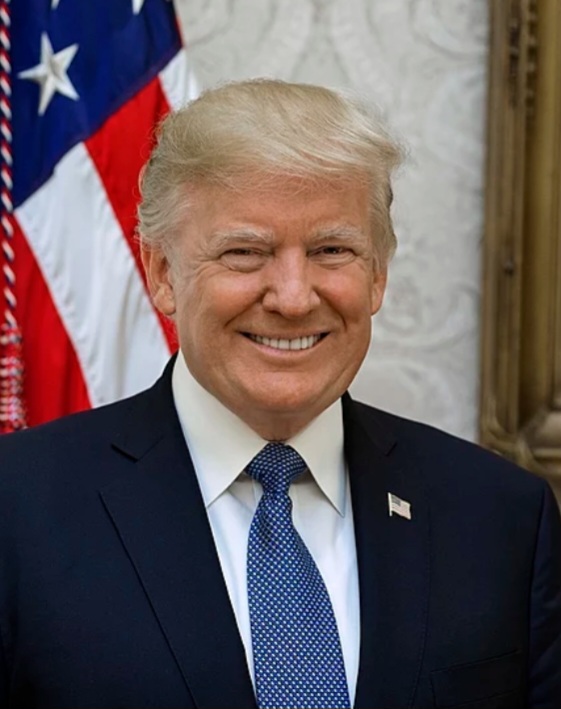
Donald Trump’s return to the White House marks a significant political shift in the U.S. and beyond, ushering in a new phase of U.S. policy both domestically and internationally. Following the victory over Vice President Kamala Harris, Trump’s second term is set to bring policies aligned with his “America First” agenda, potentially reshaping the U.S. approach to trade, immigration, and global security.
Domestic And International Impact of Trump’s Policies
Trump’s 2024 campaign reiterated his core themes from his previous term: stricter immigration policies, protectionist economic measures, and conservative social stances. Backed by a Republican-controlled Senate, Trump has the momentum to advance these policies more decisively than in his previous term. Key policy areas include immigration reform, trade policies, and a reduction in U.S. involvement in international organisations.
Immigration Policies
In his campaign, Trump stressed the importance of stronger borders and proposed sweeping immigration reforms. His plans include terminating birthright citizenship and implementing stricter visa policies, which could significantly impact H-1B visa holders, many of whom are Indian nationals working in technology and engineering fields.
This stance could disrupt the lives of Indian professionals in the U.S. and raise challenges for aspiring immigrants. Trump’s rhetoric of reducing legal immigration pathways may lead to increased scrutiny of visa applications and make the immigration process more stringent for Indian families and professionals.
Economic Ramifications: “America First” And Its Effect on Trade with India
A hallmark of Trump’s agenda has been economic nationalism, with a focus on reducing trade deficits and bringing manufacturing jobs back to America. This “America First” approach could affect India-U.S. trade relations by imposing higher tariffs on imports, a strategy that could impact Indian exports to the U.S. and affect sectors such as IT services, pharmaceuticals, and textiles.
For the Indian economy, these trade restrictions may prompt concerns over a narrower U.S. market. Trump has hinted at renegotiating trade deals that he perceives as unfavourable to U.S. interests, and this may include agreements with India. However, some analysts suggest that Trump’s strong stance against China could open avenues for India to emerge as a strategic alternative partner, leveraging tensions to deepen economic ties.
Foreign Policy and Strategic Alliances: Potential Gains For India?
Trump’s renewed focus on a U.S.-led coalition against China could benefit India, particularly as tensions between India and China remain heightened. Analysts foresee a Trump administration continuing to encourage India’s role as a counterbalance to China in Asia. Trump’s past administration saw the U.S.-India defence relationship strengthen, with multiple defence agreements signed, and this trend may continue with India positioned as a key regional ally.
However, Trump’s scepticism toward NATO and other traditional alliances could signal a more unpredictable U.S. presence in global security frameworks. This unpredictability could lead India to recalibrate its foreign policy, seeking stronger ties with European and Asian powers to offset potential volatility in its relationship with the U.S.
Stock Markets and Economic Stability
Trump’s win had an immediate effect on financial markets worldwide, with investors reacting to potential policy changes that could impact global stability. Indian markets, sensitive to U.S. economic policy shifts, initially responded with a dip amid concerns over Trump’s trade policies and their impact on emerging economies like India. Analysts predict that if Trump implements tariff increases and limits on tech and services sectors, India’s stock markets could experience further volatility. However, India may benefit if Trump’s policies indirectly encourage Indian investment or redirect capital flows toward Asia amid U.S.-China tensions.
Environmental Policies and Climate Change
During his first term, Trump withdrew the U.S. from the Paris Agreement, and although the U.S. later rejoined under Biden, Trump’s re-election raises questions about the future of U.S. climate commitments. Trump’s emphasis on deregulation and prioritisation of American energy independence may lead to reduced U.S. involvement in global climate initiatives. This could put pressure on India, which is balancing its own energy needs with ambitious climate goals. A divergence on climate policy could impact collaborative efforts in renewable energy and emissions reduction.
What Lies Ahead
Trump’s leadership style and policy priorities could reshape not only U.S.-India relations but also the broader global political landscape. His focus on a transactional approach may redefine traditional alliances and lead to a more bilateral approach in international relations. For India, this means both challenges and opportunities. As Trump prioritises U.S. economic interests, India may need to navigate a more complex diplomatic landscape, positioning itself as a reliable ally while advancing its own strategic interests.
India’s strategic value as a regional counterbalance to China is likely to remain a significant factor in its relationship with the U.S. under Trump. However, India’s policymakers may need to adapt quickly to changes in U.S. trade policies, visa regulations, and geopolitical strategies, all of which could impact the Indian economy and its global partnerships.
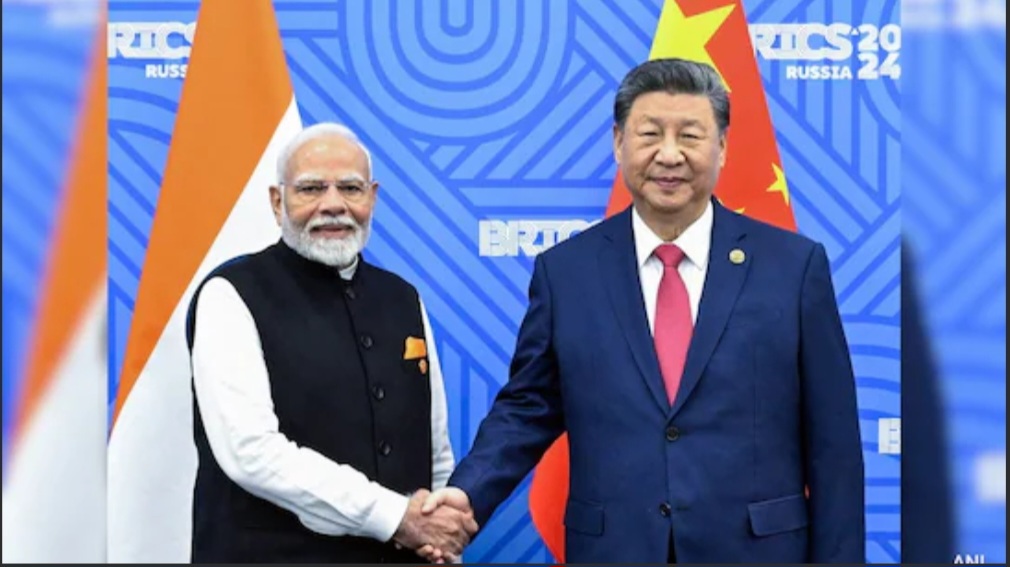
Prime Minister Narendra Modi and President Xi Jinping meet during BRICS 2024 Summit: source Internet
On the sidelines of the 16th BRICS Summit, 2024 Indian Prime Minister Mr Narendra Modi held a bilateral meeting with Chinese President Xi Jinping in Kazan. In their first formal bilateral meeting after half a decade, Prime Minister Modi and President Xi Jinping on October 23, 2024 accepted the agreement for a resolution of the military stand-offat the Line of Actual Control in their joint initiative to bring Sino-Indian relations to normalcy. Prime Minister Narendra Modi highlighted the importance of properly handling the differences, disputes and disagreements between the two countries. Besides, the leaders also decided to restart dialogue mechanisms between Foreign Ministers and other officials of the two countries in order to stabilize and rebuild bilateral relations that have been virtually suspended on most of the issues.
A brief overview of the BRICS and its achievements
In its two decades of existence, the BRICS (comprising Brazil, Russia, India, China and South Africa) group has achieved policy coordination among five very disparate countries and has started posing a serious challenge to the status quo in global governance. With the addition of five new members – Egypt, Ethiopia, Iran, Saudi Arabia, and the United Arab Emirates, it is now collaborating on many policy issues and delegating authority to a range of newer BRICS organizations. Throughout its first decade, BRICS has advanced new policy initiatives in the field of global economic governance. At the 2014 BRICS Summit in Brazil, the New Development Bank (NDB), and the Contingent Reserve Arrangement (CRA) was launched. Since then, the NDB has approved billions of dollars in infrastructure and renewable energy financing projects in BRICS countries and received excellent long-term issuer credit ratings from respected agencies. The CRA has become an important financial stability mechanism designed to assist countries with balance of payments crises. The new institutions have stepped up to provide financial stability and respond to the needs of COVID-19. In addition, BRICS countries have also made some progress in the ‘old’ international financial institutions. For example, they negotiated a reform of the IMF quota system, which now includes Brazil, Russia, India, and China among the top ten largest shareholders. These accomplishments have demonstrated that BRICS countries’ domestic differences in political structures, development models and values can be overcome in pursuit of common, well-defined international agendas.
But BRICS lacks common organizational features such as a permanent international secretariat or a formal treaty. The presidency of BRICS usually rotates and so do the summits. The India–China rivalry has also cast a dark shadow over the group and has been a bottleneck for BRICS institutionalization.
The trajectory of India-China relationship in the context of BRICS:
India and China’s rivalry stemmed from their national aspirations of becoming global powers. The two countries have competed in various spheres since their independence, especially for influence in the third world. China is not supportive of India’s aspirations to become a permanent member of the UN Security Council and has been against India’s membership in the Nuclear Suppliers Group (NSG). In 1962, both the countries fought a war which has been the main reason for a more aggravated and antagonistic relation. In addition to border disputes, the two countries have also clashed over the Tibet issue and the Dalai Lama, as well as over influence and strategic space in South Asia, East Asia, and the Indian Ocean. In addition to that, China’s ‘all-weather’ strategic partnership with Pakistan has been a constant worry for India, which sees China using Pakistan as a ‘cat’s paw’ to keep India enmeshed in South Asian affairs, inhibit India’s ability to channel its energies to challenge China’s aspirations to become the pre-eminent power in the Asia-Pacific, and curtail India’s rise as a global power.
In a similar way, China did not receive India’s support for its most important international project – the Belt and Road Initiative (BRI). China resented India’s unwillingness not only to join BRI but also to endorse it. In its defense, India claims that its principal objection is the China–Pakistan Economic Corridor (CPEC), BRI’s flagship project, which passes through Kashmir and impinges on India’s territorial sovereignty. Moreover, other concerns include China’s ‘String of Pearls Strategy’ (network of commercial and military facilities extending along the sea lanes of communication in Asia and Africa) and its increasing forays in the Indian Ocean. To counter China’s rising ascendancy, India has launched initiatives such as The Bay of Bengal Initiative for Multi-Sectoral Technical and Economic Cooperation (BIMSTEC), Security and Growth for All in the Region (SAGAR) and Project Mausam.
Sino-Indian bilateral ties suffered a huge setback in 2017 during the 73-day standoff between troops from two countries in Doklam, at China–Bhutan–Indian trijunction. The standoff led to increased tensions with a potential to escalate into a nuclear war, but both India and China agreed to withdraw troops from the area. However, the incident increased mistrust between the two countries and damaged bilateral ties.
To improve bilateral ties, in 2018, Modi and Xi met informally in Wuhan, China. In the ten-hour meeting known as the Wuhan Summit, both countries agreed to improve communication and further strengthen the existing confidence building measures. The bilateral relationship received a jolt when the Modi government amended Article 370 of the Indian constitution in August 2019 and divided the state of Jammu and Kashmir into two union territories – Jammu and Kashmir and Ladakh – to be administered directly by the central/federal government in New Delhi. However, the ‘Chennai Connect’, an informal meeting between Modi and Xi in October 2019 in Mamallapuram, restored and enhanced bilateral relations. ‘Chennai Connect’ led to the formation of a high-level mechanism on trade and investment. The chief aim was to increase Chinese investments in India and bilateral trade with China, finding ways and means to increase Indian exports and market access for Indian companies in China to mitigate the trade deficit – a major Indian concern. In 2020, Xi proposed to further strengthen the bilateral relationship, including cultural exchanges and people-to-people ties to mark 70 years of the establishment of diplomatic cooperation between the two countries. Modi hailed the ‘Chennai Connect’ as ‘a new era of cooperation between the two countries and Xi invited Modi for a third summit in China in 2020. ‘Chennai Connect’ emitted the belief that increasing economic and cultural ties will strengthen bilateral ties and ease the differences from becoming disputes.
Current position of the two countries
Tensions between the two countries arose again in June 2020 because of the clashes in Galwan, which further escalated into a military standoff. Although Modi and Xi had brief encounters at the Group of 20 meeting in Bali in 2022 and again in Johannesburg in 2023, the 16th BRICS Summit marks a significant renewal of dialogue. Both the leaders emphasized on the fact that stable, predictable, and cordial bilateral relations between India and China, as two neighbors and the two largest nations on earth, will have a positive impact on regional and global peace and prosperity. Besides that, it will also contribute to a multi-polar Asia and a multi-polar world.
By: Shivangee Bhattacharya, Research Analyst, GSDN
Artic Security Conference 2024: source Internet
In order to showcase special interest in the Artic, 2024’s Artic Security Conference became the platform to discuss and findings related to the security of that region. In the arising tension between Russia and Ukraine, the atomic security factors are becoming a point of discussion. The tension got escalated after Russia’s invasion of Ukraine. The high north is observing major dialogues related to the increased military activities and instances of sabotage and provocation. The increased heat in the region is often the subject of nuanced research and policies related to it. In order to understand the situation, first it’s important to understand what the conference was about.
The conference took place at Litteraturhuset in Oslo on September 12-13, 2024. It was a two-day event referring to the agenda related to the security challenges in the region. The conference was delighted to have a series of speakers, which included the Minister of Foreign Affairs of Norway, the head of the U.S. Coast Guard of Alaska, and also the head of Canada’s defence in the Arctic. The region is being governed under the Artic Council, which is an intergovernmental forum inculcating 8 countries (Canada, Denmark, Finland, Iceland, Norway, Russia, Sweden, and the U.S.) with the given uprising tension in the half of the world, which does comprise the economics, military, and environmental aspects that are at stake for both Artic and non-Artic nations.
The major dialogue was on the increased militarization in the region. With the depletion of ice in the Artic, both Artic and non-Artic nations created their bases of military strength in that part. The discussion majorly focused on Russia’s interest in the region and its bases of military for its benefits. Russia has both economic and defence interests; this became evident after the investment done by Russia on military outposts and nuclear-powered submarines.
At the conference, the concern was shown by the Western countries over the ambitions of Moscow over the region. NATO and the state of the U.S. stated the importance of vigilance over the region. The US came up with strategies for the Arctic allied countries, previously introduced in 2023, which focused on the increased presence of military patrols and exercises, majorly with Norway and Canada. The US’s Admiral of the Navy emphasized multilateral naval presence to counter the ambitions of Russia and its footprint. China not being part of the Artic circle but do have interest in it, and it also showcased its interest through naming it “near Artic State.” With growing cooperation with Russia, China’s interest in the region is becoming suspicious and also creating tension among the Artic power states.
The conference also inculcated the environment and climate issues related to the region. With the growing pace of global warming, the region is warming twice its actual environment. In the reports given by the National Snow and Ice Data Centre, the ice extent has reached its lowest in the year 2023. The loss of ice is affecting the ecosystem, the environmental components, and, most importantly, the lives of indigenous living beings. The conference discussed the preservation of the natural resources and risks, including oil spills and gas exploration. Countries like Canada and Greenland came forward to safeguard the traditional ways of life and also emphasized the importance of indigenous governance in the region.
Next panel of discussion consisted of the economic aspects, the factor of exploitation of natural resources in Artic region did become major factor in geopolitical dynamics. Russia regressive extraction of resources became point of debate whereas countries like Canada and Norway pushed for a sustainable development. During the discussion Russia’s Yamal Gas project came in and became the cornerstone Artic strategy. Russia’s plan to export gases to global markets will help in solidification of its position in energy supplier. Along with Russia, China became the point of contention as through Russia’s plan of extraction of gases China is planning its plan for its energy development. The BRI (Belt and Road Initiative) of China has reached the Artic region as well through its investment in the infrastructure, mining and telecommunication in the region majorly in the part of Greenland. The final draft of the conference did acknowledge the benefits of investments in the area but also poses challenges to the sustainability and environmental aspects.
The conclusion of the conference did mention of the need for enhanced governance structures to maintain and manage the Artic region. UNCLOS (United Nations Convention on the Law of the Sea) and the present Artic Council emphasised on cooperation and need of body for the monitoring the rapid changes. The key concerns came out as there is a lack of mandate upon the security issues by the Artic council.
Members like Finland and Sweden and also the Artic nations and non-Artic nations called for the structuring of new body which will work for the prevention of conflict and competition. Artic Security Forum was also being proposed by the members for the easier management of security and military presence in the Artic region and to have transparency as well.
The conference did showcase the growing importance of the region in the global arena. Through the dialogues between nations, it became clear that the issue is multifaceted which asks for the cooperation between Artic as well as non-Artic nations. Also, the important factor was the management of resources and preserving the region for the future generation by adopting sustainable development. The event did mention about the rights and life of the indigenous communities present in the region; the region does consist of indigenous people who are living in a traditional lifestyle. With growing global warming, the breakage ice and melting create tension for the climate. The region is more than just a region for the geopolitical competition. It requires cooperation and assistance from all over the world leaders in order to save the Artic. The region does provide commerce, resources to the leaders but the extent of exploitation can lead to the deterioration of the region. With all environment degradation in the region its poses both opportunities as well as challenges for the world leaders, the challenge is for the leaders is to manage the challenges effectively.
‘Pax Americana’, an idea crafted by the U.S., envisioned the post-war world. Its core mandate envisages the motto of establishing ‘peace and tranquility’ in the West and beyond, as the world nations had witnessed the brutality and ruckus due to the outbreak of World War II in 1945.
In the post-war era, the U.S., a victorious allied power, began to aid nations that were entangled in political and economic crises. Initiatives such as Truman Doctrine and Marshall Plan were not just rehabilitation and rebuilding plans for revamping Europe and Asia but they became U.S.’s strategic and soft power tools.
Post 1945, the era of decolonization across Asia and Africa, parellely witnessed the rise of U.S. across Atlantic and Asia-Pacific. When nations were jeopardised in political and economic turmoil, the U.S. manipulated the geopolitical game to its advantage. From unfurling the principles of liberalism, capitalism to dollarization and democracy the world watched U.S. scripting the geopolitical realities of those days.
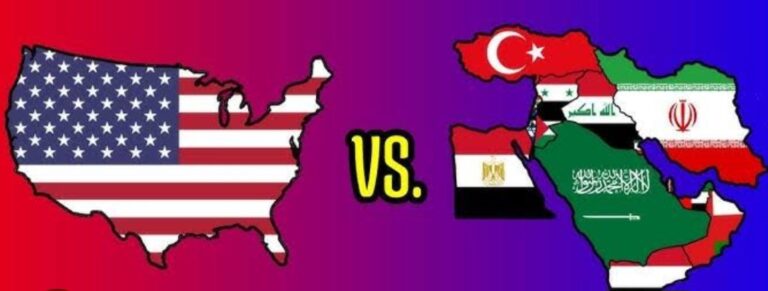
In this voyage to exercise relative strategic relevance and superpower beyond continents and oceans, a major pawn for the U.S. is the ‘Middle East’ or what we call as ‘West Asia’. Yes, U.S.’s geopolitical footprint in the region is a 360-degree approach from trade, infrastructure development to military presence and intervention in domestic and regional politics.
Seven decades have passed since World War II. Does the journey of the U.S. in the Middle East, given innumerable ups and downs, stand for the goal of ‘peace and tranquility’ (Pax Americana) even today? Is the U.S. losing control over the region in the era of multipolarity? How is U.S. and Middle East’s domestic politics affecting the larger goal of peace and regional growth? Are U.S. initiatives scaling only conflicts and fuelling its strategic and hegemonic interests? Let us decode.
U.S.-Middle East ties: tracing through history
The earliest traces of the relations between the U.S. and the Middle East dates back to the 18th century. Soon after independence, the U.S. began to sign treaties with the non-western nations to ensure safe passage of its vessels through the Mediterranean Sea, for the sake of trade prosperity. Later, in the 19th century American missionaries landed in West Asia and established educational institutions in Syria, Lebanon, Turkey, Palestine etc.
Until the outbreak of world wars, the U.S. had no geopolitical interests in the region, as it was an era of British monopoly. Even the oil mines were monopolized by the British. Thereby, the Middle East nations too had a cordial view towards the U.S. as they had no imperialistic ambitions.
Infact, in the aftermath of World War 1, when U.S. President Woodrow Wilson gave the ’14 points formula’ for global peace. Middle East nations looked up to the U.S. for defending & protecting them against European imperialism and world war atrocities.
However, the situation took a rampant shift in the inter-war period and in the post-war era. When the British and French powers began to weaken, U.S.’s strategic interests strengthened in the region. Further, the U.S.’s urge to tackle the Soviet Union and its growing influence in Syria, Iran, Turkey, deemed ‘Middle East’ as a trump card in the political and ideological conflict of the cold war era.
Why ‘Middle East’ Matters
The Middle East can be perceived as the heart of the geopolitical map. Not just the U.S., but every nation aspires to have a strategic fist in the region. For example, India considers the Middle East as an ‘Extended Neighbourhood’. What makes Middle East so vital in geopolitics are the following factors –
Geographical location
The region is at the epicentre of three continents-Asia, Europe and Africa making it a pivotal zone for trade, transit and infrastructure development. Middle East nations such as Egypt, Turkey, Jordan, Lebanon, Israel border the Mediterranean Sea that is crucial for world trade, which sustains 20% of world trade especially oil, petroleum and other strategic resources, through Suez Canal and other routes.
Resource Richness
The Middle East houses 2/3rd of the world’s petroleum reserves in countries such as Saudi Arabia, Iran and UAE etc. The Gulf Cooperation Council together fulfills 60% of the world’s oil needs. Thus, restoring influence across the Middle East is a synonym to having strategic control over world’s crucial resources and a route to climb the ladder of global hegemony, because this is the era, where ‘oil’ is the engine of global growth.
U.S.’s strategic interests in the region grew by leaps and bounds especially to thwart the influence of the U.S.S.R. during the cold war. In its quest to create a unipolar hegemony, as a part of Truman Doctrine, U.S. deployed military bases to Saudi Arabia, mainly to deter the Soviets. Infact, the U.S. also had fruitful relations with Iran until the 1979 Iranian revolution.
But, the maiden large scale military operation of the U.S. in the Middle East was in 1953. The U.S. and British jointly overthrew the democratically elected regime in Tehran, as the later tried to nationalise the oil industry. Thereby, reimposition of the autocratic rule in Iran began the era of U.S. influx into domestic politics of the region in order to nourish its strategic and economic interests and as a master stroke against U.S.S.R.
But, in the path of ensuring benefit for U.S. oil companies and the path of hegemonic aspirations of the U.S. also began to fuel the geopolitical turbines of the Middle East. It led to the eruption of internal conflicts and instability in the region.
U.S.-Israel Axis: Unfolding of a new chapter
With the creation of a Jewish state in the heart of the Arab Peninsula in 1948, embarked on a new saga for U.S. foreign policy in the Middle East. It truly turned around the pages of diplomacy and geopolitics that acts as the root cause for the majority of the turbulence that the Middle East faces today.
In 1922 and 1944 U.S. Congress acknowledged the Balfour Declaration that reflected the spirit of creation of a Jewish state in Palestine. But initial days marked minimal relations as U.S. was not happy with Israel launching Suez War. President John Kennedy also expressed dissatisfaction regarding Israel’s secret nuclear programme.
However, the Six Day war of 1967 made the entire scenario to flip, for the mutual advantage of both Israel and U.S. when Israel defeated Jordan, Syria, Egypt single handedly in a short span of 6 days and captured few swaths of territories, U.S. began to consider Israel as its perfect partner in a strategically vital zone to defeat Soviet interests.
Thus, began the chapter of U.S.-Israel alliance that is unhindered and continuing for ages. This relation is a catalyst for current chaos in the Middle East.
Israel: An ally amidst the Arab Axis
Today the U.S. has more than 19 military bases in the Middle East, Qatar being the largest with 10,000 troops and Saudi Arabia with 2,700 troops. Also, the U.S. has approximately US$ 80.53 billion direct investment in the region across manufacturing, mining and service sectors. Yet, the panorama of U.S. geopolitics in the Middle East is predominantly derived by the Israeli factor, an ‘all weather ally’ for the U.S. especially after the break away of the U.S. from Iran due to the 1979 revolution.
For example, in the latest Israel-Hamas conflict since October 7, 2023 that has killed more than 40,000 people, injured lakhs and displaced the complete 2.3 million population of the narrow strip of Gaza, U.S. has unequivocally supported Israel.
Ofcourse, the U.S. has voiced humanitarian needs, dialogue, diplomacy and a ceasefire. But, the aid to Israel is flowing relentlessly. The ever spiraling war, with no sign of de-escalation and dialogue, is stretching its arms even to Lebanon, Iran etc. triggering a caution towards the outbreak of a larger regional war, and the U.S. role cannot be understated.
According to data, the U.S. has spent US$ 17.9 billion on military assistance to Israel since October 7. Even, the U.S. never criticizes Israel for it being an undeclared nuclear power. Israel has received a bilateral aid of US$ 158 billion from the U.S. since the end of the Second World War. 16% of Israel’s military budget is funded by the U.S. Another hallmark of the U.S.-Israel alliance is since past 5 decades, the U.S. has vetoed nearly 53 UNSC resolutions that were critical of Israel.
This unwavering shield of the U.S. to Israel against global accusations, just in the name of defending Israel’s sovereignty and integrity, irks other Arab nations, in spite of there being testimonial humanitarian atrocities in Gaza.
Arab states consider that the detrimental support of the U.S. to Israel, is deferring the solution for the Palestinian question. Though, U.S. initiated Middle East Peace Plans through the Oslo Accords to arrive at a solution for Palestinian question and the Abraham Accords as a normalization effort between Gulf states of UAE, Bahrain and Israel, they are still purely theoretical and there is a long way to go, to it to materialize, given the current volatile situation.
On the other hand, U.S. defense and financial assistance keeps flowing into Israel. Backing Israeli actions in global platforms, seeking to backlash Iran are a testimony for Arabs to feel that the U.S. is portraying double standards in the region. The stand of the U.S. with respect to the Iraq invasion in 2003 and dismantling the Saddam Hussein regime, nuclear tests of Israel, questions of human rights and democracy in Palestine is leading to rift between the U.S. and the Arab world for a decade now.
China facet to U.S. Policy in Middle East
The People’s Republic of China (PRC) making inroads into the Middle East is definitely leaving the U.S. at the crossroads in the region. Though 50% of U.S. overseas military assistance goes to the Middle East the situation isn’t the same as it was a decade ago.
U.S. interests for hegemony and power are at stake in this age of multipolarity and rising Chinese dominance. The Middle East is crucial for China as much as it is for the U.S. to seek hegemony in global trade and development.
China has cordial relations with Saudi Arabia, a partner of U.S. and also with Iran, the conflict of U.S. Also, China has a great economic relationship with Saudi Arabia, UAE and Bahrain etc. to cater to the oil needs of China’s mammoth manufacturing sector. For example, China completed the construction of one of the world’s largest offshore oil and gas platforms in Saudi Arabia.
Through its flagship Belt and Road Initiative, China has ventured into telecommunication, housing, mining, road, railway and other transit construction across the Middle East. For example, Vision 2030 with respect to Saudi Arabia, Kuwait, Qatar, Egypt etc. The plan is to revamp the maritime silk route connecting the South China Sea to the Mediterranean, giving it a strategic edge in the region.
With Iran being inducted into SCO and Sino-Iran relations celebrating 50 years of cooperation, China is definitely a step ahead of the U.S. by partnering with all Middle East states beyond ideologies.
China acting as a mediator between Iran and Saudi Arabia, thereby facilitating for peace and diplomacy is a masterstroke of China against the U.S.’s libertarian goals in the Middle East and acts as a strategic deterrence for U.S. operations in the region.
As the Minister of External Affairs of India, Dr. S. Jaishankar says, “For the last 20 years, the U.S. has been fighting but not winning in the Middle East, and China has been winning but not fighting in the region”. Thus, despite numerous aids and peace plans, Middle East dreams for the U.S. are in doldrums, in an era where the region is more important to Washington D.C. than ever before, to tackle Beijing’s interests. Of course, the U.S. ‘s tilt towards Israel sometimes makes the Arab world tilt towards China more, inevitably!
U.S. domestic politics: Catalyst for Chasm
The main chasm for smooth foreign policy of U.S. in the Middle East is Israel factor. The reason for U.S.’s unhindered support to Israel is beyond mere strategic goals. Irrespective of the party and leader in power in the U.S., the aid for Israel is spiking tremendously over the decades. One of the narratives that explain the U.S. ‘s position towards Israel is that the U.S.’s electoral politics is funded by the Jewish capitalists.
American Jews and elite Christians who are pro-Israel are politically active citizens. Be it Democrats or Republicans, they are invariably influenced by pro-Israel lobby, which in turn influences U.S. policy towards Israel and decisions taken on Israeli soil definitely spills across Middle East. For example, pro-Israel groups contributed over US$ 30 billion to the U.S. elections. Thus, for anyone contesting U.S. presidential elections Israel is a double-edged sword. If you consider it, you will lose hold in West Asia, if you ignore it you will probably lose your president cap and homeland victory, where the latter is a greater loss than the former!
Thus, U.S. domestic politics defining its Middle East policy is empirical evidence for how capitalism navigates political decisions in the era of realist politics of 21st century.
The Era of Realism: But not at humanitarian Cost
Mounting geopolitical goals, humanitarian concerns are backsliding in the Middle East. The terrors emanating from Gaza is a testimony for how humanity is at stake to fulfill hegemonic and expansionist ambitions. Neither Israel nor Hamas, Hezbollah and other non-state actors or of course U.S. can distance themselves from being accountable for the atrocities caused that are costing innocent lives.
Unwinding political scenarios doesn’t guarantee unipolarity in the region, as this is the era of multipolarity where national interests are a key priority for every stakeholder. That doesn’t mean any nation has a right to kill innocent lives, harm the environment and cause pollution due to massive use of chemical induced weapons.
Of course, the U.S. hasn’t completely lost prominence in the region. Even, the Middle East needs the U.S. for its economic, military and strategic interests and to ensure balance of power across trans-Atlantic to Indo-Pacific.
With U.S. Presidential elections over, the world has to wait and watch how the policy towards the Middle East unfolds under the President-elect Donald Trump. The Biden administration is unable to de-escalate and initiate a ceasefire between the warring parties in the current Israeli-Hamas conflict and strike a balance of power in larger West Asia. Infact, Israel and Iran’s direct confrontation are hinting the chances of a regional war, there is no aspiration for peace.
Thus, the current challenge for the U.S. is to navigate a responsible foreign policy that considers all stakeholders into account, involves in a consistent and constructive dialogue and negotiations, mediating peace treaties with not just Iran, Israel and other state actors, but also with non-state actors of the region.
Rather than mere checkmating China, Iran or Russia, the U.S. should ensure a sustainable partnership and development along with restoring its strategic interests. It should accept only limited defensive practices and not the acts that trigger proxy wars. The U.S. should not act as a catalyst for chaos and conflict, but should be a kingpin for cooperation and collaboration in the Middle East or anywhere else. Because, in this era of global warming and climate change, wars should not add to global burden. Only these actions can save the U.S. from a global backlash and give it the fame of a true global frontrunner or leader, a position that it always aspires for!
India and Israel have a good relationship, and the two countries are on course to achieve even greater ties in the future. Today, India is Israel’s second-largest trading partner in Asia. Though bilateral merchandise trade is dominated mainly by diamonds, petroleum products and chemicals, recent years have witnessed an increase in trade in areas such as electronic machinery and high-tech products; communications systems; medical equipment, according to India’s Embassy in Israel.
But it is these ties that have come under intense scrutiny, especially after the Hamas attack on October 7 of last year that saw 1,200 Israelis killed and 250 kidnapped into Gaza.
Lebanese Ambassador to India Rabie Narsh said Lebanon acknowledges India’s principled support for Palestinian rights, and said he believes that India, as a global leader, can play a decisive role in advocating for an end to Israeli occupation and oppression.
“We call on India to leverage its influence to urge Israel to respect international law and UN resolutions,” he said. “India’s support for a just and peaceful resolution is especially vital in these times, where Israel’s aggression threatens regional stability.”
India and Israel’s diplomatic relationship formally began in 1992 when India established full diplomatic ties with Israel. Before that, India’s support for the Palestinian cause and alignment with the Non-Aligned Movement had kept the two countries apart diplomatically, despite quiet economic and military connections.
The collapse of the Soviet Union, India’s major ally, and evolving global geopolitics in the 1990s led India to reassess its foreign policy, including toward Israel.
Formal relations opened up avenues for cooperation in defense, agriculture, technology, and counter-terrorism. Since then, the partnership has steadily grown, with both nations now considering each other strategic allies.
After the October 7 attack by Hamas against Israel, India has quietly remained supportive of Israel, even though it does not always support it in public. As an example, the cargo vessel Borkum in May 2024 carried explosives and ammunition destined for Israel.
Information obtained by the Solidarity Network Against the Palestinian Occupation (RESCOP), suggested the Borkum contained 20 tons of rocket engines, 12.5 tons of rockets with explosive charges, 1,500kg (3,300 pounds) of explosive substances and 740 kg (1,630 pounds) of charges and propellants for cannons, according to an Al Jazeera report.
Because of this and other incidents that infuriated pro-Palestinian activists and lawmakers, several prominent individuals have tried to put a stop to India’s aid to Israel. In September 2024, India’s Supreme Court dismissed a petition seeking to suspend military exports from India following a plea from human rights activists and scholars to minimize India’s complicity in potential Israeli war crimes in Gaza, as noted by the Middle East Eye.
The court said jurisdiction fell under the authority of the Union Government under Article 162 of the Indian constitution. The top court also observed that intervening would amount to a judicial injunction for breach of contracts that the Indian companies may have entered into with international entities.
“The fallout of such breaches cannot be appropriately assessed by this court and would lay open Indian companies which have firm commitments into proceedings which may affect their own financial viability,” the court said.
In June this year, right-wing political commentator Anand Ranganathan went viral when he called for an “Israel-like” solution in Kashmir, telling a podcast host: “Israel has catered for its people who were hard done by. We haven’t; it’s as simple as that. Despite that, yes, there may never be a solution because of the ideology of the people who hate Israelis, and the ideology of the people who hate Hindus.” Many people decried the remarks as a clear call for genocide against Muslims in Kashmir.
Ranganathan replied on X that he was not calling for genocide, but rather to prevent another genocide by “rehabilitating the victims, making settlements, fighting terror, securing borders.” Ranganathan’s comments have been criticized by many in India’s liberal left who oppose the US-backed Israeli genocide in Gaza and certainly do not want India to be compared with Israel.
Many have also sought to differentiate the struggles in Kashmir and Palestine. “Those who liken Kashmir to Palestine, mostly the hard right and Islamists, understand neither the Kashmir dispute nor the Palestine question,” an editor for The Hindu, wrote on X.
The reason the relationship between India and Israel is so important to each country is because they share similar visions and rely on each other for military and diplomatic assistance. India’s membership in BRICS is also potentially beneficial to Israel which could use another diplomatic pathway to reach nations it does not have relations with.
Leaders of the BRICS – Brazil, Russia, India, China, and South Africa – just met in Kazan, Russia from October 22-24 for the 16th BRICS Summit where the organization welcomed its five new members – Egypt, Ethiopia, Iran, Saudi Arabia, and the United Arab Emirates.
As BRICS expands and looks to become a more influential player in world affairs, India faces the increasingly complicated task of continuing to deepen ties with the United States and play a leading role in Russian and Chinese-dominant global forums, like BRICS.
India’s BRICS connection gives Israel that diplomatic pathway it needs to some of those countries, while Israel provides India with an added pathway to the United States.
This mutually beneficial relationship is important, and each nation can and should continue to find ways to build on their common interests and needs. In the decades ahead, India and Israel can grow their partnership and benefit each other in several ways, including militarily, diplomatically and economically.
Indeed, the future is bright for India-Israel ties.
Relations with Pakistan has gained a new dimension during the current interim government in Bangladesh. Recently, due to the fall of Awami League government and the interim government taking control in Dhaka may give Pakistan and its ‘iron brother’ China a strategic advantage on the eastern part of India. It is said that Pakistan has quietly started trying to reorganize its relations with Bangladesh. Pakistan will take this opportunity to make defence and economic ties with Bangladesh in order to increase the military strength of both countries. At the same time, some radical organizations from both countries can also take this opportunity to influence radicalization in the eastern part of India.
After more than five decades of Bangladesh being granted of diplomatic recognition from Pakistan it is time to analyse the relations between Pakistan and Bangladesh. Lack of physical connectivity, direct flights and sea linkages between the cities of Bangladesh and Pakistan is one of the main reasons among others such as blocking of economic, trade, cultural, educational and defence ties by the former Awami League government.
Pakistan-Bangladesh relation and obstacles
On February 22, 1974, on the occasion of second Islamic summit held in Lahore, Pakistan made a historic decision to recognise Bangladesh as Dhaka was not ready to attend that conference without seeking recognition from Islamabad. Fifty years down the road, Pakistan and Bangladesh have started rethinking the rationale of stagnation in their relations from other angle. From 1971 to 2015, the relations between the two countries witnessed periodic normalcy but things got worsened during the third regime of Sheikh Hasina from 2015 onwards.
The biggest stumbling-block between Pakistan and Bangladesh relationship is the demand of apology for the war crimes Pakistan committed in the Bangladesh liberation war. According to the Bangladesh, Pakistan killed around 3 million people and the roughly 200,000 women were raped by Pakistani soldiers, and the millions who were driven across the border with India to seek shelter in refugee camps. However, Pakistan raised question over the integrity of the statistics claimed by Bangladesh. According to Pakistan, it was tactically impossible for 40,000 soldiers posted in the then East Pakistan to commit mass atrocities of such a scale. Although, Pakistan acknowledged that crimes were committed by “some” of the soldiers.
Ups and downs on the relations between Pakistan and Bangladesh are heavily influenced by internal politics of Bangladesh. The ‘Pakistan card’ is often used to control or influence popular public sentiments in Bangladesh. In past former Foreign Minister of Bangladesh Muhammad Shamsul Haq supported the Pakistan-Bangladesh relations by stating “Bangladesh and Pakistan were bound by many common ties routed in a shared history and culture, which was overshadowed but not obliterated by the tragic happenings of 1971.”
Relations between the two countries also deteriorated as Hasina’s government executed several pro-Islamabad Bangladeshi politicians. The resolution passed by Pakistan’s National Assembly was bitterly criticised by Bangladesh when Pakistan’s condemned the executions of Bangladesh National Party (BNP) leader Salahuddin Choudhry and Ali Ahsan Mujahid. Sheikh Hasina accusing Pakistan of interfering in its domestic affairs and imposed travel restrictions between both countries. Hasina’s tilt towards favouring India was clearly seen as an animosity against Pakistan.
This resulted in the suspension of direct flights between Dhaka and Karachi. Pakistan International Airlines (PIA) stopped flying to Dhaka in 2018. Similarly, the Joint Economic Commission between the two countries also remained inactive for years. There has also been no top government-level visit between the two countries for years now, and the foreign secretary consultations remain suspended since 2016. The last official visit to Bangladesh from Pakistan’s side was in July 2002 by the then President Pervez Musharraf whereas from Bangladeshi side it has been several decades that an official visit has taken place.
Possible scenario after Sheikh Hasina
On August 5, 2024 Hasina stepped down and fled to India and the interim government took power three days later. Diplomats of countries, including Pakistan, have been meeting the leaders of the interim government to strengthen relations with Bangladesh. Recently, the Information Technology minister from Pakistan Nahid Islam said that Bangladesh aims to resolve the 1971 war issues with Pakistan to enhance relations and promote democracy in South Asia. Ties between Bangladesh and Pakistan were at an all-time low during Hasina’s tenure, especially after she put several leaders of the Bangladesh Jamaat-e-Islami on charges of war crimes during the 1971 war.
Pakistani diplomats allege that Hasina’s closeness with New Delhi and the overall Indian influence on Bangladesh prevented Dhaka from normalising relations with Pakistan over the years. Awami League has always been against the idea making any kind of economic and military trades with Pakistan.
In the present time, majority of Bangladeshi population are of post 1971 generation and youth who have not seen the horrors of war crimes of Bangladesh independence. New generation of both the countries have not done or experienced the war crimes of 1971. Therefore, both the countries have stopped playing the victim card and have moved on. This is helping to build a healthy bilateral relationship, since they both have similar culture, religion, and traditions.
Warning Bells for India
The trade between Pakistan and Bangladesh could be concerning for India. Increase in defence cooperation between Bangladesh Pakistan could affect the region’s military power balance. Pakistan could do this by increasing economic, military, and political influence in Bangladesh. With Nobel laureate Muhammad Yunus now heading Bangladesh’s interim government, Pakistani Prime Minister Shehbaz Sharif has expressed the desire to work with him to reopen cooperation between the two countries. With the new military-backed popular political order in Bangladesh firmly in place, now there is room for Pakistan to initiate baby steps to build trust and improve relations with Dhaka which is already causing concerns in India.
After Hasina fled, the interim government is trying to make military ties between Bangladesh and Pakistan. According to recent reports, Bangladesh bought nearly 40,000 artillery rounds, 2,000 units of tank ammunition, 40 tons of RDX explosives, and 2,900 high-intensity projectiles from Pakistan’s Ordinance Factories (POF). This defence deal after Hasina left the country, is seen as an unusual turn in Bangladesh’s military strategy. A Bangladeshi University professor even suggested to sign a nuclear treaty with Pakistan in order to provide a security umbrella to Bangladesh. Traditionally, Bangladesh has done defence trade from countries such as India, Russia, and China but a shift in defence strategy towards Pakistan can be concerning for India. While Bangladesh is unlikely to break military ties with India entirely, it might affect India’s military strategy and force India to re-evaluate its defence posture along the Bangladesh border.
India is also worried about is the possibility of increase in extremist ideology in Bangladesh. The Radical organisations in Bangladesh may find it easier to expand without Awami League in power. It is considered that some of the radical organisation in Bangladesh have connections with Pakistan radical organisation as well as Pakistan Army’s spy agency Inter-Services Intelligence (ISI). This could have a big impact on both politics and radicalisation in Bangladesh. This will raise military concern for India between India-Bangladesh border.
Conclusion
The evolving geopolitical and geo-military scenario between Pakistan and Bangladesh could influence internal politics in Bangladesh and make external influences in Pakistan, China, and India’s strategic response. For India, maintaining regional stability and protecting its national interests will require a recalibrated approach. By balancing diplomatic, economic, and defence ties, India can continue to play a vital role in shaping Bangladesh’s future while safeguarding its strategic position in South Asia.
The world is entering a new decade, and one of the hot topic scholars discuss around the world is the future of China and its relations with other countries. Within the last twenty years, it considerably increased its influence in Cambodia beginning with the sphere of Foreign Direct Investment and military cooperation.
At least since the 13th century, relations between Cambodia and China have existed. Diplomatic ties between the two nations were however established as far back as July 19, 1958. From the immediate aftermath of the Cold War until now, China’s geopolitical interest in Cambodia has undergone almost dramatic turns. It still has a lot of influence, partly because it is close to the Chinese minority in Cambodia and the major government officials as well as the late King Norodom Sihanouk. There is usually at regular intervals high level consultations between the two countries. China has provided significant bilateral aid, and economic links have since continued to expand.
The two nations upgraded the bilateral relation to a comprehensive partnership of cooperation in 2006 and then further upgraded to a comprehensive strategic partnership in 2010 In April 2019, the two nations also signed an “Action Plan 2019-2023 on Building China-Cambodia Community of Shared Future”. Two countries agreed to implement 31 activities in five fields- political, security, economic, people-to-people contacts, and multilateral cooperation- based on action plan. However, the development agenda might have overshadowed their relations. Since the introduction of Belt and Road Initiative (BRI) in late 2013, China has increasingly become influential within the realm of Cambodia, in which development agenda is used as a primary tool.
Nowadays, the involvement of China in Cambodia is more than just economic influence. China’s interest also aims at seeking Beijing’s visions of international acceptance of China’s alternative, and sometimes competing, governance models, above the status quo, in the contemporary global order, which Cambodia is likely to be a recipient as well as a supporter.
Since the era of Xi Jinping as the President since 2013, China’s foreign policy has confidently been moving toward a more assertive role in international affairs. In its competitive game with the US, China also took efforts to present itself as a benevolent power both in the international and regional arenas. China has incrementally utilized economic statecraft and discursive power to engage other nations, especially in the Global South, by offering alternative concepts and structures for international relations. In Southeast Asia, Beijing found Phnom Penh to be a strong ally in receiving the benefits of and promoting normative and discursive powers.
The relations between China Cambodia can be categorized in two major periods: historical and contemporary. The historical period dates back to the formation of the Kingdom of Cambodia and functioned until the close of the 1950s. The beginning of the historical period is associated with the King Norodom Sihanouk’s quest for a neutral foreign policy following Cambodia’s independence from French control in 1953. However, in the early 1960s, when the Vietnam War had begun to extend into Cambodia, Sihanouk looked for support against U.S. and Western encroachments and aligned the country more with China, which had previously been passive.
As early as 1958, China was among the first countries to recognize Cambodia and provided active assistance to the regime of Sihanouk. Their friendship took on special significance is the King’s deposition in 1970 in a coup that was sponsored by the US. After the coup, China went on to provide aid to Sihanouk who had gone into exile and later allied with the Khmer Rouge instigating the civil war that engulfed Cambodia in 1975.
Ironically, China persevered as one of the supporters of the Khmer Rouge regime (1975-1979) which was the height of genocidal killings in the history of the country and even helped China traced the world map back to those brutal years. In 1979, the year after the Soviet-backed Vietnamese forces invaded Cambodia, drove out the Khmer Rouge and put in place a puppet government, China aided the anti-Vietnamese forces, further deepening their grip in Cambodia. According to some historians, the first organized embassy to travel to India, Thailand, and China was sent by the Khmer Empire around the eighth or ninth century AB.
Political and Diplomatic Relations
In recent years, Cambodia has also drifted closer to China politically. Under the rule of Prime Minister Hun Sen, who has ruled the country since 1985, Cambodia has adopted an eastern facing policy at the expense of western powers ignoring to mention the primary western democratic nations. Hun Sen’s government has, on many occasions, sought the intervention of foreign powers like China whenever there is a crisis more so when the relation between the government and the western countries has deteriorated.
For example, the country’s fall into the hands of international critics waged against its deteriorating level of democracy, flagrant violation of human rights and oppression of the political opponents brought China to come into the fray. In the year 2017 for example, Cambodia dissolves its main opposition party, the Cambodian National Rescue Party, the CNRP and crushes the independent journalists. The west notably the US and EU responded by sanctioning and cutting aid to the country. Contrarily, Chinese aid increased, with Hun Sen often lauding this aspect of China, its respect for non-interference in the internal politics of other countries.
This close political relationship was further forged in 2010 when the two countries proclaimed their bilateral relations as the ‘Comprehensive Strategic Partnership of Cooperation.’ Since this date, high level meetings of Chinese and Cambodian leaders have become commonplace with an influx of Chinese leaders to Phnom Penh.
Relations between China, Cambodia and the Role of ASEAN
Cambodia is intricately related to the patterns of international relations in the Asia-Pacific region concerning geopolitics, which is especially true in the case of the Association of Southeast Asian Nations (ASEAN). Cambodia has often been seasoned to act on various regional settlements including the South China Sea disputes to the cardinal determent position of East Asia on behalf of China.
Because of this, difficult relations have existed between Cambodia and the rest of the ASEAN members, in- particular with Vietnam and the Philippines more conciliating claims over the contested water regions, due to Cambodian opposition on various ASEAN propositions. This behaviour was the most notable in the assertion of Cambodia’s unengaged position as the ASEAN chair in 2012 in which it blocked a joint statement that sought to censure China regarding the South China Sea. Similar statements and behaviours were repeated the next years proving more firmly Cambodia’s pro-Beijing stance regarding region’s main power’s geopolitics.
Concerns in the US and the West
The growing relations of China and Cambodia have also elicited an uneasiness on the part of the Western powers especially the United States. There are reports that the United States has voiced its concern over the possibility of the establishment of military structures by Chinese authorities in Cambodia, especially at the Ream Naval Base located at the southern coast of Cambodia. Even if a number of officials from Cambodia and China claim the reports are baseless, aerial photos and news outlets have alleged that the Chinese have embarked on the renovation of the facilities located within the base.
Conceivably, the establishment of Chinese military installation in Cambodia will alter the dynamics within the region as China will have access to vital trade routes in the South China Sea. This scenario is bound to aggravate the current tension escalation with the China and the United States of America given that America sees South East Asia as a stronghold in the Indo-Pacific region.
Cambodia’s Role in Advancing China’s Global Initiatives
At present, the presence of China in Cambodia is not only limited to the economic engagements. Rather, it points to aspirations from Beijing to gain international sympathy for its methods of global governance and other ideas that may exist apart from the current world order with Cambodia being one potential supporter. China regards Cambodia as a strategic beleaguered area in South East so as to contain the empire; its relations with South China Sea claimants are not that cordial. Under Xi Jinping, who assumed office in 2013, there has been a clear turn in China’s foreign policy that made the country much more active in the world. In the contest with the US, for example, China has been eager to project itself as a benevolent empire both in an international context and in a regional one.
Engagement with other nations, especially the southern hemisphere nations, has been graduated to the use of economic statecraft as well as discursive power for presenting other ways and means of conducting international relations. In Southeast Asia, Beijing discovered that Phnom Penh was a beneficial partner in both reaping the offers from and enhancing China’s normative and discursive powers. This resulted to ‘ironclad friendship’ to be hailed by Cambodia making it a reliable partner for china on issues of paramount importance to the country.
While neighbouring Southeast Asian states continue to have a rather ambivalent and cautious stance about China’s initiatives, it is Cambodia that has pioneered support to many Chinese related global initiatives including the recent Global Security Initiative, the Global Development Initiative as well as the Global Civilization Initiative. These are all initiatives aimed at helping China further assert its power on the global stage and not least become the primary shaper of the international order.
Conclusion
To summarize, in present times, the Cambodia-China relationship is more than a simple economic partnership; it can be considered a multi-dimensional partnership. This is an alliance forged out of history and advancing state interests, which has made it an essential part of China’s global ambitions.
From Cambodia’s perspective, such a partnership has some advantages; there is economic growth, improvement of infrastructure, and assistance in political sphere especially when the West is critical. Hence, Cambodia aids in the advancement of China’s aspirations in that region, especially in the sensitive zones such as the South China Sea and is also considered a team player in China’s quest to counter the prevailing systems of governance in all regions around the world.
China’s Ministry of State Security logo: source Internet
The emergence of China as a global techno-security state has significantly reshaped the international geopolitical landscape. At the core of this transformation is China’s ability to integrate cutting-edge technology into its national security framework, creating a comprehensive strategy for both economic and military dominance. In his book Innovate to Dominate: The Rise of the Chinese Techno-Security State, Tai Ming Cheung provides an in-depth analysis of how China has successfully implemented its techno-security strategy under the leadership of Xi Jinping.
Historical Context and the Foundations of the Techno-Security State
China’s journey toward becoming a techno-security state can be traced back to Mao Zedong’s era, with the ‘Two Bombs, One Satellite’ project that aimed to secure China’s technological self-sufficiency in nuclear and space technologies. However, it was under Xi Jinping’s leadership that the techno-security state truly took shape. Xi inherited a robust national innovation framework from previous leaders but expanded its scope by prioritizing technological self-reliance in the context of national security.
Xi’s leadership has been marked by several key strategies aimed at integrating innovation with security. One of these strategies is the Innovation-Driven Development Strategy (IDDS), launched in 2013, which focuses on advancing China’s technological capabilities to maintain its global competitiveness and safeguard its national interests. Xi’s emphasis on innovation is not only about economic progress but is deeply linked to military and strategic goals. This dual-purpose innovation approach underlines the techno-security state model.
Key Elements of the Chinese Techno-Security State
Cheung identifies four pillars that underpin China’s techno-security state: innovation-driven development, military-civil fusion (MCF), military modernization, and national security strategies.
Innovation-Driven Development Strategy (IDDS): The IDDS, as the cornerstone of Xi’s innovation policy, encourages the development of critical technologies in areas such as artificial intelligence (AI), quantum computing, and defense technologies. Cheung argues that this strategy is designed to reduce China’s dependence on foreign technologies, particularly from the United States, and to position China as a leader in the global tech race.
Military-Civil Fusion (MCF): One of the most distinctive aspects of China’s techno-security state is its Military-Civil Fusion (MCF) strategy, which integrates civilian industries with the military to enhance national security. Cheung emphasizes that this policy enables China to pool resources from its civilian sector to accelerate military advancements without the need for a traditional arms race. MCF has allowed China to leverage innovations in civilian industries, such as telecommunications and aerospace, for military purposes. This integration has proved crucial in developing dual-use technologies, which serve both commercial and defense needs.
Military Modernization: Xi’s administration has invested heavily in modernizing the People’s Liberation Army (PLA), making it a key component of the techno-security state. Cheung notes that China’s military modernization goes beyond conventional arms development, focusing on high-tech capabilities such as cyber warfare, space technologies, and precision-guided weapons. This modernization effort is in line with China’s broader national security strategy, which views technological superiority as essential to maintaining global influence and securing its national interests.
National Security Strategy: China’s national security strategy under Xi has expanded to address both traditional and non-traditional threats. The establishment of the Central National Security Commission (CNSC) in 2014 exemplifies the institutionalization of this broader security vision, which encompasses not only military threats but also economic and technological vulnerabilities. Xi’s holistic approach to national security ensures that technological innovation is viewed as a critical asset for both economic stability and military preparedness.
Comparison with the United States
Cheung provides a comparative analysis of China’s techno-security state with the United States, particularly focusing on their divergent approaches to technological innovation and national security. While the U.S. relies on a market-driven model of innovation, China’s state-led approach allows for more rapid mobilization of resources. Cheung argues that China’s authoritarian governance structure, combined with the SAMI (Selective Authoritarian Mobilization and Innovation) model, gives it a strategic advantage in mobilizing technological resources for both civilian and military purposes.
However, Cheung also highlights the risks associated with China’s model. The centralized control that enables rapid resource mobilization can also stifle innovation, as it limits private sector dynamism and may lead to inefficiencies in the long run. Moreover, international responses to China’s techno-security strategy, particularly from the U.S., have resulted in increased scrutiny and trade restrictions, potentially hindering China’s access to critical technologies.
Implications for International Security
The rise of China’s techno-security state has profound implications for global security. Cheung argues that as China continues to close the technological gap with the West, it is likely to exert more influence over global governance, particularly in areas such as cybersecurity, AI regulation, and space technologies. The integration of civilian and military sectors under MCF further complicates the international landscape, as technologies developed in one context can quickly be repurposed for military use.
Additionally, Cheung suggests that the techno-security competition between China and the U.S. is likely to intensify, with both countries vying for dominance in emerging technologies such as AI, quantum computing, and advanced manufacturing. This competition could lead to further geopolitical tensions, particularly as both nations seek to protect their technological advantages and influence global standards.
Conclusion
Tai Ming Cheung’s Innovate to Dominate provides a comprehensive and insightful analysis of China’s rise as a techno-security state. Through its emphasis on innovation-driven development, military-civil fusion, and national security, China has positioned itself as a formidable global power with the potential to challenge the United States’ technological supremacy. However, as Cheung notes, the sustainability of China’s model is not guaranteed. Internal challenges, such as bureaucratic inefficiencies and external pressures, may limit China’s ability to maintain its technological edge. Nonetheless, the rise of the Chinese techno-security state marks a significant shift in global power dynamics, with far-reaching implications for international security and governance.
As the world advances technologically, the traditional battlegrounds leapfrog to a heady mix of hybrid/irregular/unrestricted and conventional warfare. The Land, Sea, Air, Cyber and Space, the known five domains so far, inclusive of the Electromagnetic Warfare (EW) was exploited by Hamas to surprise the Israel Defence Force (IDF) in the former’s attack against the latter on October 07, 2023. The Pager/ the ICom attack by Mossad against Hezbollah on September 17-18, 2024 through a systematic process of preparing the potential target by luring them away from preferred means of communication, ie mobile communication highlights the relevance and importance of the “cognitive domain” thereby altering the foundational character of any warfare in 21st century. The nature of conflict, thus has transformed significantly.
India’s counter-strategy to 6G warfare encompasses the following-
1. Seeing the concept of 6G warfare transforming traditional warfare methods, especially with the inclusion of cognitive and biological dimensions. How does this shift affect India’s defense preparedness.
2. In light of recent cyber threats and hybrid warfare tactics targeting India, what are the key areas where India should focus its technological advancements to stay resilient and prepare for future conflicts.
3. With 6G warfare encompassing domains like AI, quantum computing, and bioengineering, what role can international collaboration and policy reforms play in strengthening India’s defense capabilities, and how should India approach these global partnerships.
Weaponisation of Neurosciences
With the advent of the concept of 6G warfare – an anticipated new era of military strategy and technology that encompasses not only the physical and digital but also the cognitive and biological domains has made a conspicuous entry into warfare in the 21st century. The concept for a sixth domain of operations emerged at the beginning of 2020. It was introduced as the first recommendation in the essay “Weaponization of neurosciences” (Le Guyander, 2000) written for the “Warfighting 2040” study run by Allied Command Transformation (ACT). Its executive summary offered the three following recommendations:
• “Human mind” should be NATO’s next domain of operations
• AWACS successor must address Nanotechnology, Biotechnology, Information technologies and Cognitive technologies (NBIC)
• Global security is what’s at stake today.
Environmental Scan of India
Increasing bomb hoaxes and train derailments in India in 2024, as part of the ongoing hybrid/irregular/gray-zone warfare by forces inimical to India’s progress and growth, highlight the evolving nature of cybercrimes predominantly targeting the economy of the country. The civil aviation, infrastructure, communication network, schools, hospitals and malls among others being the major victims of such threats,are likely to retard the predictable growth chart if not prevented from future onslaughts. As the rise in such cases is mainly due to use of end-to-end encryption of email by the attacker, it makes detection that much more impossible. Therefore, besides being a security hazard, such threats also cause significant economic losses and merit preventive measures at the earliest.
For a country like India, with its strategic position and growing global influence, understanding and preparing for 6G warfare is imperative. With an aim to explore the concept of 6G warfare, its potential impact on India’s defense strategy, and the steps India must take to stay ahead in this evolving landscape, understanding 6G warfare, or sixth-generation warfare that extends beyond the conventional and cyber domains to include advanced technologies such as artificial intelligence (AI), quantum computing, biotechnology, and cognitive warfare is paramount.
6G Warfare
The 6 G Warfare integrates multiple dimensions of conflict – physical, digital, cognitive, and biological – to create a comprehensive and multifaceted approach to warfare :-
Physical Dimension: Traditional military operations are on land, sea, air, and space.
Electromagnetic Warfare (EW): Exploitation of the electromagnetic spectrum by Electronic Support Measures (ESM), Electronic Counter Measures (ECM), Electronic Counter Counter Measures (ECCM).
Digital Dimension: Cyber warfare, encompassing hacking, cyber espionage, and digital sabotage.
Cognitive Dimension (Hacking of Human Mind): Psychological operations (psy-ops), information warfare, and influencing public perception and decision-making. One of the methods for example is what the US Consulate Hyderabad, in an open funding announcement, has published in multimedia platforms that it would be awarding grants between US$ 100,000 and US$ 175,000 for programs to build skills and training for Countering Disinformation for Telugu, Marathi, Bengali, and Hindi-speaking journalists working in media outlets and digital platforms in Hyderabad, Chennai, Mumbai, Kolkata and New Delhi.
Biological Dimension: Biotechnology and bioengineering, potentially involving genetic manipulation and bio-weapons.
Potential Impact on India’s Defense Strategy
India, with its complex security environment and geopolitical challenges, must adapt to the evolving nature of 6G warfare. This new paradigm will influence several aspects of India’s defense strategy :-
Enhanced Situational Awareness.
Leveraging AI and quantum computing for real-time data analysis.
Decision-making. This would enhance India’s ability to anticipate and respond to threats.
Integrated Defense Systems: Developing integrated defense systems that combine traditional military capabilities with cyber defense, space assets, and bio-defense mechanisms.
Cyber Resilience: Strengthening cyber infrastructure and capabilities to defend against cyber-attacks, espionage, and information warfare. Ensuring the protection of critical infrastructure and national assets.
Information Dominance: Investing in psy-ops and information warfare capabilities to influence adversaries and maintain public morale and support during conflicts.
Biotechnological Advancements: Preparing for potential bio-warfare scenarios by advancing research in biotechnology and developing countermeasures against bio-threats.
India’s Counter Strategy- Steps India Must Take To effectively prepare Against 6G Warfare
India must adopt a multifaceted approach, encompassing technological advancements, policy reforms, and international collaboration :-
Investment in Research and Development: India mustincrease funding for R&D in AI, quantum computing, cyber technologies, and biotechnology.
Establishing dedicated research centres and fostering collaboration between the government, military, and private sector.
Building Cyber Capabilities: Enhancing cyber defense and offense capabilities.
Establishing a robust framework for cyber intelligence, threat detection, and incident response.
Training a skilled cyber workforce and promoting cyber hygiene.
Developing Cognitive Warfare Strategies: Investing in psy-ops and information warfare.
Building capabilities to counter misinformation and propaganda.
Enhancing public resilience against psychological manipulation and fostering national unity.
Strengthening International Alliances: Collaborating with international partners to share intelligence, technology, and best practices.
Participating in joint exercises and developing coordinated strategies to address common threats.
Policy Reforms and Regulatory Frameworks: Updating defense policies and regulatory frameworks to address the complexities of 6G warfare. Ensuring legal and ethical guidelines for the use of advanced technologies in warfare.
Public Awareness and Education: Raising awareness about the evolving nature of warfare among the public and educating them on the importance of national security.
Promoting STEM education to build a skilled workforce for the future.
Conclusion
6G Warfare represents a paradigm shift in the nature of conflict, integrating advanced technologies and new dimensions of warfare. For India, preparing for this new era is not just a strategic necessity but a national imperative. By investing in technological advancements, building robust cyber and cognitive warfare capabilities, and fostering international collaboration, India can safeguard its national security and maintain its strategic edge in the evolving global landscape. The future of warfare is complex and multifaceted, and India must be proactive and resilient in its approach to navigate these challenges and emerge stronger.
Major General Sudhakar Jee, VSM (Retd) has been General Officer Commanding, 3 Infantry Division and Colonel of the Mahar Regiment of the Indian Army. The General Officer is now an internationally renowned defence and strategic affairs analyst who often appears on leading television news channels for discussions and whose articles and comments are regularly published in reputed print media publications
The Forum on China-Africa Cooperation (FOCAC) is a crucial multilateral platform established in 2000 to formalize and strengthen the strategic partnership between China and African nations. It includes 53 African countries, with Eswatini being the only exception due to its diplomatic ties with Taiwan. FOCAC aims to promote collective dialogue and practical cooperation across various sectors, including politics, economics, culture, and social development, thereby addressing the diverse needs and aspirations of African nations.
FOCAC is structured around ministerial summits held every three years, alternating between China and an African host country. This format facilitates high-level discussions and agreements intended to deepen ties between China and Africa while reflecting the continent’s unique challenges and opportunities.
The 9th FOCAC Summit, held in Beijing from September 4-6, 2024, was conducted under the theme “Joining Hands to Advance Modernization and Build a High-Level China-Africa Community with a Shared Future.” This significant summit was attended by heads of state and ministers from 53 African nations, along with representatives from regional and international organizations, including the United Nations. Notably, this year’s gathering occurred against a complex geopolitical backdrop characterized by increasing tensions between China and the West, particularly in light of the ongoing U.S.-China rivalry and the global repercussions of the Ukraine crisis.
The importance of FOCAC cannot be overstated, as it serves as a critical framework for advancing China’s engagement in Africa, which has significant implications for the continent’s developmental trajectory. Through FOCAC, China has positioned itself as a key partner for African nations, offering investment, infrastructure development, and capacity-building initiatives. The summit also provides an opportunity for African leaders to engage in bilateral discussions on governance, industrialization, agricultural modernization, and enhanced cooperation through initiatives like the Belt and Road Initiative (BRI).
As FOCAC continues to evolve, it addresses the pressing challenges faced by African countries, including poverty alleviation, economic diversification, and sustainable development. This article analyses the key outcomes and implications of the 2024 FOCAC summit, exploring its impact on the future of China-Africa relations and the broader geopolitical context in which these dynamics unfold.
Historical Context of China-Africa Relations
The relationship between China and Africa has evolved significantly, shaped by political, economic, and social factors. Since the end of the Chinese Civil War in 1949, Africa has been a focal point of China’s foreign policy, particularly during the Cold War era. China provided support for various African liberation movements, positioning itself as a champion of anti-colonial struggles. For most years since 1950, the Chinese foreign minister has prioritized visits to African nations, signalling the importance of this relationship.
In 1971, the votes of African nations were crucial in securing the People’s Republic of China’s (PRC) seat in the United Nations General Assembly, replacing the Republic of China (Taiwan). This diplomatic victory solidified China’s engagement with Africa, leading several nations to shift their recognition to the PRC. Countries such as Burkina Faso, Malawi, Liberia, and Senegal recognized the PRC, while Eswatini remains the only African nation to recognize Taiwan as of 2023.
China’s “Going Out” strategy in 1999 marked a new wave of economic engagement with Africa, promoting overseas investments by Chinese firms. This strategy led to infrastructure projects and resource extraction initiatives that transformed the economic landscape of several African nations. The establishment of FOCAC in 2000 further institutionalized this relationship, facilitating dialogue and cooperation across various sectors.
The launch of the Belt and Road Initiative (BRI) in 2013 signalled a strategic shift toward enhancing trade and infrastructure development across the continent. However, Chinese investment peaked around 2016 and subsequently declined due to domestic priorities in China and the repayment challenges faced by some African nations.
While China presents its investments as mutually beneficial partnerships, Western critics often frame it as “debt trap diplomacy,” suggesting that China’s loans can lead African nations into unsustainable debt. Nevertheless, many African countries have managed to create realistic debt arrangements with China, emphasizing the importance of responsible financial management.
China’s military engagement in Africa includes establishing its first overseas military base in Djibouti, strategically located near a U.S. military base. This move reflects China’s growing influence in the Horn of Africa and highlights its focus on regional security, including combating piracy and ensuring the safety of Chinese nationals abroad.
Recognizing that China’s approach to Africa has evolved since the Cold War is crucial. While it no longer seeks to export communist ideology, China maintains formal ties with various political parties and parliaments across the continent, adapting its strategy to fit the contemporary political landscape.
Significance of the 2024 FOCAC Summit
The 9th FOCAC summit occurs against a complex backdrop of global economic and geopolitical dynamics. As African nations grapple with high inflation, currency depreciation, and escalating debt, recent conflicts including the Israel-Hamas war and the Russia-Ukraine conflict complicate the geopolitical landscape, affecting African economies and international cooperation.
African leaders are expressing “summit fatigue” after engaging in numerous Africa+1 summits with countries like Türkiye, Russia, South Korea, and the U.S. This sentiment emphasizes the need for a focused agenda, with suggestions to adopt the Banjul format involving 15 countries plus the African Union Commission for better management and representation. The effectiveness of FOCAC hinges on Africa’s ability to assert ownership over its strategic planning, moving away from being passive recipients of foreign assistance.
Economic Dynamics and China’s Approach
The significance of the 2024 FOCAC is amplified by China’s current economic situation. Post-pandemic, China faces a prolonged economic slowdown, with manufacturing struggles leading to deflationary pressures and rising unemployment. Reports indicate that President Xi Jinping is inclined to shift investments away from large-scale infrastructure projects toward “small and beautiful projects.” This approach aligns with China’s desire to promote advanced green technologies.
Amidst concerns about loan defaults—highlighted by Zambia’s and Ghana’s recent struggles African nations are expected to seek increased lending from China, despite the noticeable decline in Chinese financial support over the past few years. From a peak of approximately US$ 28 billion in 2016, Chinese lending to Africa plummeted to around US$ 1 billion in 2022 and increased slightly to US$ 4.6 billion in 2023. Countries like Kenya are pursuing funding for vital infrastructure projects, such as completing the Standard Gauge Railway to Uganda, despite their significant debts to China.
Key Outcomes of the 9th FOCAC Summit
The 2024 FOCAC summit yielded several significant outcomes, emphasizing the evolving dynamics of China-Africa relations:
Financial Commitments: China pledged approximately US$ 50.9 billion in financial support over the next three years, categorized into credit, development assistance, and investments by Chinese companies in Africa. This commitment aims to enhance infrastructure, technological innovation, and industrialization efforts across the continent.
Partnership Action Initiatives: The summit announced the implementation of ten partnership action initiatives, focusing on areas such as agriculture, infrastructure, green development, and health. These initiatives are designed to foster sustainable development and improve the overall quality of life for African nations, while also addressing climate change challenges.
Debt Relief and Sustainability: Acknowledging the rising external debt levels faced by African countries, Chinese leaders discussed strategies for debt relief and sustainable financial solutions. This includes considering more favourable lending terms and encouraging transparent dialogues on debt management, thereby supporting African nations in achieving economic stability.
Trade and Investment Cooperation: The summit reinforced the commitment to expanding trade between China and Africa, aiming to increase bilateral trade volumes to US$ 300 billion by 2026. This goal reflects China’s intent to diversify its imports from Africa, seeking not only raw materials but also processed goods, which could benefit African economies.
Cultural and Educational Exchanges: The summit emphasized the importance of cultural and educational exchanges, promoting people-to-people connections between China and Africa. Initiatives such as scholarship programs and training workshops for African professionals in various fields aim to foster mutual understanding and cooperation.
Health Cooperation: In response to the COVID-19 pandemic, the summit highlighted enhanced cooperation in health sectors, including vaccine distribution, healthcare infrastructure development, and disease prevention initiatives. China committed to providing additional resources to bolster Africa’s health systems.
Green Development Initiatives: Addressing the pressing issue of climate change, China announced plans to support African nations in transitioning to green energy. Investments in renewable energy projects and technologies are expected to play a crucial role in achieving sustainable development goals across the continent.
Infrastructure Development: Infrastructure remains a priority in the China-Africa partnership, with commitments to enhance transportation networks, energy systems, and digital connectivity. Projects aimed at improving logistics and trade facilitation are expected to create jobs and boost economic growth.
Regional Stability and Security: The summit underscored the need for collaborative efforts in promoting regional stability and security, particularly in addressing conflicts and fostering peace building initiatives. China reiterated its support for African-led solutions to security challenges on the continent.
Belt and Road Initiative (BRI) Integration: The discussions at the summit reaffirmed the alignment of FOCAC initiatives with the Belt and Road Initiative. This integration aims to enhance infrastructure connectivity, facilitate trade, and promote economic development across Africa, positioning the continent as a key partner in global supply chains.
Strategic Messaging and Future Implications
China’s messaging at the summit underscores its status as a developing nation, aligning itself with African countries against historical injustices linked to Western imperialism. This narrative resonates well with African leaders, potentially solidifying bilateral relationships.
However, while the 2024 FOCAC presents an opportunity for enhanced cooperation, there remain concerns regarding the implementation of initiatives and transparency in dealings. The anticipated outcomes may not fully address African nations’ demands for fair resource extraction deals and equitable trade balances, suggesting that negotiations around mineral exports will continue to be a critical area of focus.
The Interdependence of China and Africa: A Mutual Need
The relationship between China and Africa is increasingly characterized by mutual dependence, with both parties standing to gain significantly from their cooperation. China has become a major trading partner and source of investment for Africa, with trade between the two regions soaring to US$ 167 billion by mid-2024. African countries are eager to expand their exports beyond raw materials, while China seeks to enhance its economic prospects amid a post-pandemic slowdown and demographic challenges.
China’s investments in African infrastructure have significantly improved connectivity and quality of life across the continent. Projects in transportation, energy, and technology are vital for Africa’s development, particularly in sectors such as healthcare and renewable energy. Conversely, Africa’s growing markets offer China new avenues for its goods and services, especially as Chinese manufacturers face increased costs domestically. This shared interest in economic growth underscores the necessity of their partnership.
With China holding approximately 12% of Africa’s public and private debt, there exists a pressing need for dialogue on debt management. African nations are concerned about debt sustainability, prompting them to seek more favourable lending terms and transparency. China’s willingness to engage on these issues is crucial for maintaining its influence and fostering goodwill.
Additionally, China’s expertise in technology and industrialization has proven beneficial to Africa, particularly in digital infrastructure and renewable energy. As African countries modernize their economies, China’s role as a partner in technological advancement will likely continue to grow.
Conclusion
The 9th FOCAC summit marks a pivotal moment in the evolution of China-Africa relations. As both parties navigate complex geopolitical dynamics and economic challenges, their partnership is increasingly characterized by mutual dependency and shared aspirations. While the key outcomes of the summit reflect a commitment to sustainable development, economic diversification, and strategic collaboration, the effectiveness of these initiatives will ultimately depend on their implementation and the willingness of both sides to address existing disparities.
In the context of shifting global power dynamics, FOCAC presents an opportunity for African nations to assert their agency in international relations while capitalizing on China’s growing influence. As they move forward, the potential for a high-level China-Africa community with a shared future hinge on their ability to cultivate a partnership rooted in equality, transparency, and mutual benefit.