
By : Bhaskar Jha, Research Analyst, GSDN
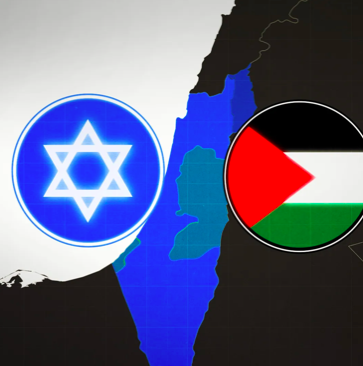
The global order goes through a phase of peril as age-old rivalries emerge and manifest itself in various forms of modern tactical warfare, afflicting the broader stability of the rule based international order. These confrontations have aggravated in the last decade. A significant instance of the same can be the conflict between Israel and Palestine, which recently gained traction after the recent confrontation between Israel and Hamas, which has been persistent for the last three years since its commencement on October 7, 2023.
The situation remains critical even today as the U.S. President Donald Trump’s 20-point plan has made it into the discussions. The United Stations have scaled up on the aid, as the confrontation in the region advances. However, the critical issue including the disarmament of Hamas, the humanitarian catastrophe and future structure for Gaza’s governance remain unclear. These uncertainties have led to a situation where a substantial number of suggestions, speculations, and predictions have made it into the deliberations.
The suggestions include adhering to the two-state solution, which talks about the peaceful co-existence of an independent and sovereign state for both Israel and Palestine. The plan is based on the pre-1967 lines which can probably include land swaps, with the state of Palestine making a compromise in the region of West Bank, and the Gaza strip. This framework has been a significant part of the discourse in international diplomacy for decades, with dwindling, but consistent support from entities like the United Nations, the United States of America, the European Union, etc. However, a major question that arises is the feasibility of this approach.
A Historical Context
The idea of the two-state policy as a solution for the Israel-Palestine war goes back to the UN Partition in 1947, where the British colonized region was divided into separate Arab and Jewish states. There was a stark disagreement, following the proposal as the Jewish leaders agreed, while the Arab leaders showcased resistance, causing the war of 1948 and establishment of Israel.
Israel went on to capture West Bank, Gaza, East Jerusalem and a few more territories. The United Nations Security Council Resolution 242 led to the withdrawal from occupied territories, to maintain peace and secure borders. Another critical juncture in the history of Israel and Palestine rivalry was the Oslo Accords. It led to the creation of the Palestinian authority and aimed at a successful final -status negotiations with a lasting solution on subjects like borders, security, refugees and Jerusalem.
They were followed by consecutive efforts, with talks conducted at the Camp David Summit in 2000, and Taba Summit in 2021, which failed as well. Palestinian Leaders rejected the proposals, on the grounds of inadequate concessions for refugees and Jerusalem. Israel also fueled this disagreement, as they raised the matter of Palestinian rejectionism and terrorism.
Positive Outcomes from following a Two – State Policy
Self-Determination for Both the States
The two-state policy satisfies the aspirations for people of both regions. A proper Palestine state would conclude the struggle for millions of people, decreasing the radicalization ensuring greater stability. The following pathway is considered a comparatively more viable path by the UN and an increasing number of countries to ensure lasting peace
Security Concerns for Israel
If the Palestinian state is demilitarized, and backed with firm international guarantees, Israel’s major security concerns might get resolved. Moreover, an environment that promotes a normalized relation with the Arab states can lead to a greater economic integration. These regional alliances could also provide incentives to uphold peace in the region.
A Demographic Motivation
Israel also risks becoming a binational state, where its Jewish character gets threatened, with speculations of the circumstances leading to apartheid like situations. Many Israelis and related diaspora support the two-state policy, to protect the Zionist ethos.
Technical Viability
There might be settlements, coupled with effective land swaps and a phased implementation strategy, which can lead to the creation of a sustainable Palestinian territory. After negotiations and deliberations, technical gaps can be bridged, with time.
Significant Obstacles to The Two-State Policy
Settlements
There are more than 700,000 Israelis living in regions like the West Bank and East Jerusalem. Thus, expanding the settlement can infringe Palestinian land, making a state which won’t survive without Large-scale evacuations, which Israeli Politics resist.
Hamas and Security
Israel is working towards getting iron-clad security guarantees. Hamas has rejected to accept Israel’s existence as it launched an attack on October 7 and has announced that it will continue with the violence. The Palestinian authorities have also expressed their issues regarding incitement and monetary payments to terrorist families. A Palestinian state can become a launch base carrying out attacks on Israel, in the eyes of the Israeli intelligence.
Claims on Jerusalem
Both countries consider their capital to be Jerusalem. A “right to return” provided to a million Palestinian refugees and their descendants would create a strong demographic impact on Israel, which will directly afflict the upheld Jewish identity of the state.
Trust deficit and Rejectionism
The polls and arguments made by both the entities over the years, illustrate an element of extremes, stemming out of the trust deficit, which has remained pertinent over the last few decades. While the Palestinian leaders have taken an “all or nothing” approach over gradual growth, the right-wing governments on the Israeli side base their arguments in historical claims over territorial withdrawal.
Governance Limitations
A stable two-state policy implementation demands a reduction in corruption, firm inclusive institutions, rogue militias demilitarized, and encouragement to an economy, whose credibility is not corroded by hostility. However, an internal rivalry of Hamas and the Palestinian Authority acts as a major obstacle to this dream.
What is the Current Situation?
The international world order continues to make efforts to facilitate a peaceful solution to this violent rivalry which has caused a catastrophe already. The international community has contributed to the form of UN Conferences, the New York Declarations, etc., where a global alliance asks for implementation.
While a process for a peaceful settlement has been initiated, the localized hostilities and humanitarian challenges continue to act as a barrier. Moreover, the ongoing air-strikes carried by Israel in Gaza and the West Bank area, causing civilian casualties and structural damage. Israel also expanded on the violence as Israeli forces and settlers raid localities in West Bank.
While the International communities try to intervene, amidst a fragile ceasefire and US brokers’ plans for the same, the elements of political polarization still exist. Palestinians view the two – state solution as a sign of perpetual weakness, while Israel under Prime Minister Benjamin Netanyahu have showed resistance to any kind of unilateral state recognition.
The public support reduces day by day, as the experts, through their research and surveys, show doubt and pessimism, regarding the two – state solution being a viable solution.
Alternate Scenarios
The two-state solution has been considered as the most viable option. However, there are alternate scenarios which might not be the most viable solution to the problem. Some of these alternatives are as follows:
A One – State Solution
Israel and Palestine clubbed into a singular democratic state with equal rights and opportunities to all. While the solution looks viable, a dive into the intricacies highlights the ignorance towards mutual national identities, which can lead to a civil war.
Confederation
Agreements for shared economic and security arrangements, with open borders, but a separate sovereignty. While this has also been considered a viable option, based on its pragmatism, the unfamiliarity in the domain makes it risky as it tends to depend on the interpretation of the agreements.
A Modified Status Quo Solution
An autonomous Palestine state, but under Israeli security, as a sign to normalize Arab-Israeli ties, and promote economic development. However, a scope of misuse of Israeli authority will always keep Palestinians in a dilemma.
A 23 – State Solution
This plan talks about disintegrating Palestine into broader regional divisions. However, this step could lead to severe instability.
Thus, a lot of alternatives exist. However, neither is there broad consensus, nor do they reduce the risk of deeper instability in the region.
An Assessment
The two – state solution can work, but it would require specific conditions to thrive, demanding cooperation from both parties. Palestinians will have to accept the Jewish identity of the Israelis and avoid violent measures. Israel on the other hand will have to compromise on its territorial gains and reduce violence as well. This must be complemented by third-party security guarantees coordinated by the international community, with economic incentives.
However, these conditions are far from fulfilling at the moment. The following situation trails by a series of failed negotiations, demographic changes, radical and extremist ideologies and tendencies of maximalism, which worsen the situation, gradually leaving no space for discussions. The situation has narrowed options, with political interests and leadership failures deepening the divide
The two-state solution is not the best framework. It just provides a comparatively safer option as compared to the other alternatives proposed, with the highest possibilities of upholding international law, self–determiningprinciples, with a shot at normalizing the situation in the region. The abandonment of the following prospect, without an alternative, could lead to worsening the situation. However, progress has to take a realist perspective, with both parties showing signs of progress. Palestine need to prove that they can govern peacefully, while Israel must demonstrate practicing non-interference.
Whether the two states choose to co-exist will depend more on society rather than the cartographic identity. History highlights less chances, with hopes on necessity and human agency. Without a bold and pragmatic leadership, willing to work on the extremists, the conflict will continue, harming both countries.



