
By: Suman Sharma
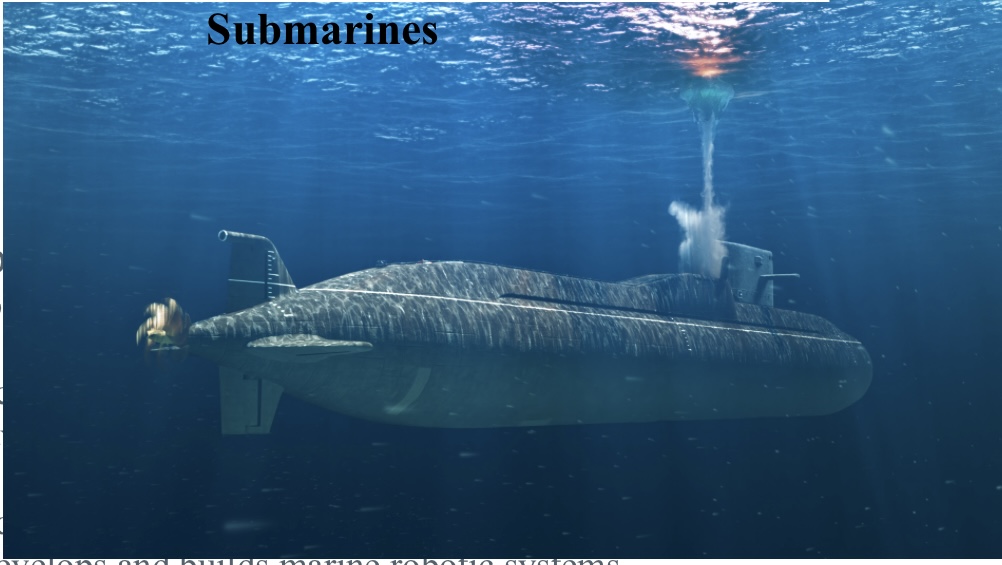
The Rubin Design Bureau of the United Shipbuilding Corporation (USC) has unveiled the advanced Amur 1650 conventional submarine equipped with a Vertical Launching System (VLS) and Air Independent Propulsion (AIP) at the International Maritime Defence Show and Fleet 2026, highlighting Russia’s latest underwater warfare capabilities.
The Amur 1650 stands out as one of the most heavily armed conventional submarines in the world, capable of carrying up to 28 weapons. Its VLS configuration enables the deployment of a formidable missile arsenal, including the Club-S cruise missile family and the Indo-Russian supersonic BrahMos missile, providing exceptional strike capabilities against both maritime and land-based targets.
Designed with a high degree of modularity and operational flexibility, the submarine can be customised to meet specific customer requirements. Its adaptable onboard systems and diverse weapons package allow it to undertake a wide spectrum of missions ranging from sea denial and anti-surface warfare to precision land attacks, making it a potent force multiplier for modern navies.
The integration of a Vertical Launching System significantly enhances the submarine’s combat effectiveness by enabling rapid missile deployment without compromising stealth. This transforms the Amur 1650 from a traditional attack submarine into a versatile underwater combat platform capable of executing strategic, operational and tactical missions across multiple theatres.
A defining feature of the Amur 1650 is its exceptionally low acoustic signature. Advanced noise-reduction technologies, a hydrodynamically optimized hull design and sophisticated acoustic protection measures ensure a high degree of stealth, enabling the submarine to operate undetected in contested waters. These characteristics substantially improve survivability while enhancing mission effectiveness.
The submarine’s stealth profile is further complemented by state-of-the-art combat management and electronic warfare systems, making it a highly effective platform for Intelligence, Surveillance and Reconnaissance (ISR) missions. Its advanced sonar suite provides long-range target detection and tracking capabilities, allowing operators to maintain situational awareness while remaining concealed. The effectiveness of these technologies has already been demonstrated during sea trials of the Project 677 lead submarine and subsequent vessels, which have earned the nickname “Sea Ghosts” for their remarkable stealth characteristics.
Powered by an Air Independent Propulsion system, the Amur 1650 can remain submerged for extended periods without surfacing, significantly enhancing operational endurance and reducing vulnerability to detection. The submarine is capable of undertaking missions lasting up to 60 days in both blue-water and littoral environments, even under intensive anti-submarine warfare (ASW) pressure.
With a submerged displacement of approximately 3,000 tonnes and a crew complement of 42 personnel, the Amur 1650 combines firepower, endurance, stealth and versatility, positioning it as one of the most capable next-generation conventional submarines available on the global defence market.

About the Author
Suman Sharma is a former instructor from the Indian Military Academy, Dehradun and has been a journalist for almost two decades in various respectable national and international media houses, covering and reporting on security, strategy, military diplomacy and international relations. She has won numerous national and international awards including the Great Women Achievers award.



