
By : Andey Vivaan, Research Analyst, GSDN
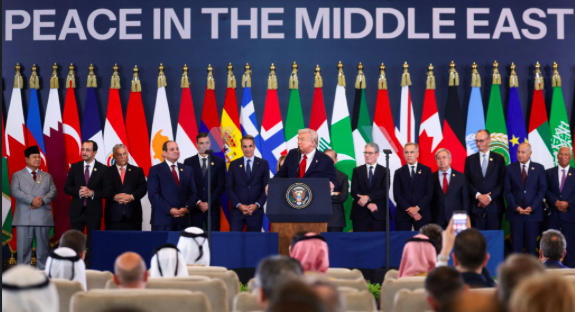
In global politics, the Middle East is a very important place. It is a region of rich in energy resources the foundation of many major civilizations and religions also it is a vital crossroads that links Europe, Asia and Africa. However, the region has come to be associated with violence, instability, and political rivalry despite its historical significance and huge potential. Over the past century the Middle East has been often changed by wars, revolutions, occupations, insurgencies and humanitarian disasters etc . As a result, the topic of how long the Middle East will not see peace remains central to debates among the policymakers, scholars and the common people
Many disputes like the Historical disputes, geographical disputes, ideological divides, religious splits, foreign interventions and opposing the national interests all contribute to the solution for this. The Oslo Accords, the Camp David Accords and the Abraham Accords are only a few of the several peace attempts that have already been started however neither of them have completely addressed the fundamental causes of war. Recent incidents involving Iran, Saudi Arabia, Israel, Hamas, Hezbollah and the US have further complicated to the situation in the area. However, some observers argue that economic cooperation and new diplomatic chances could eventually lead to the establishment of conditions for a sustainable peace
This article examines the historical roots of conflict in the Middle East and the challenges that continue to prevent peace and the possibilities for a more stable future. By examining these factors, we can better understand why peace remains difficult to achieve and what steps may help to create a more peaceful region in the future.
The Historical Foundations of Conflict
The early 20th century is the period in which the present-day instability in the Middle East began. While negotiating agreements that went against the claims of Arab independence, Britain supported Arab revolutions against the Ottoman Empire during World War I and the Sykes-Picot Agreement which Britain and France signed on May 16, 1916, that divided a large portion of the Ottoman Arab territory into zones of control in secret. A year later November 02, 1917, the Balfour Declaration expressed British support for the establishment of a Jewish homeland in Palestine.
The future of the region was significantly influenced by these decisions. Rather than true choice and new states developed under European influence after the collapse of ottoman empire and the Treaty of Sevres was signed on August 10, 1920. To establish governments with different populations with conflicting identities and interests. Artificial boundaries frequently disregarded the ethnic, tribaland religious reality.
Arab nationalism became stronger during the 1930s and 1940s. Tension between the Jewish and Arab communities grew along with an increase in Jewish migration to Palestine. On November 29, 1947, the United Nations agreed with a partition proposal in response to the Holocaust and growing worldwide demand for a Jewish homeland. The first Arab-Israeli War began on May 14, 1948, when Israel declared its independence.
After the centuries of oppression, freedom signified self-determination and the national survival to Israelis. Hundreds and thousands of Palestinians were uprooted from their homes during what they called the “Nakba,” or calamity. Middle Eastern politics are still shaped by the fallout from these incidents.
Arab Nationalism, Regional Wars, and the Rise of New Rivalries
Arab nationalism gained its importance in the 1950s and 1960s under the leadership of Gamal Abdel Nasser of Egypt. Arab nations encouraged regional unification and aimed for further independence from the Western influence. The strategic significance of the area and the willingness of other countries to get involved in its matters was made clear by Suez Crisis, which started on October 29, 1956.
The Six-Day War, which started on June 5, 1967, was another important event. Geopolitical issues in the region were drastically changed after Israel took control of the West Bank, Gaza Strip, Sinai Peninsula and Golan Heights. Arab resentment with Israel grew as a result of the conflict, which has also increased in the Palestinian displacement.
The 1970s was marked by both conflict and diplomatic efforts. Egypt and Syria began the Yom Kippur War on October 6, 1973, to reclaim the territories they had lost in 1967.The war demonstrated that Arab states were still willing to challenge the existing regional order. even if the Israel eventually maintained its military advantage. The oil shortage brought out by the war further demonstrated the importance of Middle Eastern countries energy resources on a worldwide scale.
When Egypt and Israel signed the Camp David Accords on September 17, 1978, this marked a significant turning point. The first Arab country to officially recognize Israel was Egypt. However, agreement’s larger impact on peace in the region was limited since it did not address the Palestinian question.
The Iran Revolution on February 11, 1979, was another significant event. Middle Eastern politics took on a new ideological dimension with the fall of the Shah and the creation of the Islamic Republic of Iran. Iran presented itself as a challenger to both the regional rivals, especially Israel and Saudi Arabia and the Western support. Conflicts today are still influenced by this rivalry.
Proxy Wars and Foreign Intervention
Throughout the 1980s and onward proxy wars became more prevalent in the Middle East. Between September 22, 1980, and August 20, 1988, the Iran-Iraq War resulted in significant damage and fatalities. The rise of Hezbollah and the civil war in Lebanon complicated regional politics.
Middle Eastern events have always been heavily influenced by foreign powers. Political, economic and military interventions have been made by the US, Russia and European nations. Some initiatives increased local disputes while others sought to maintain stability.
The Gulf War that followed Iraq’s invasion of Kuwait on August 02, 1990, further demonstrated the region’s strategic significance. Later regional politics were once again altered by the September 11, 2001, attacks and the US invasion of Iraq on March 20, 2003. Power vacuums brought about by Saddam Hussein’s overthrow fueled sectarian strife and the emergence of extremist groups. Unintended repercussions were frequently the result of these initiatives.
Many led to new types of instability rather than bringing about long-lasting peace thereby undermining confidence among regional players.
The Arab Spring and the Failure of Political Transformation
One of the most significant political events in the contemporary Middle Eastern history is the Arab Spring which was started in late 2010. Local people called for increased accountability from their authorities, economic opportunity, and political reform.
The result was uneven despite the overthrow of several dictators. Yemen developed one of the worst humanitarian crises in history, Syria went through a catastrophic civil war and Libya collapsed under instability. The Arab Spring highlighted the area’s state structures weakness and showing the general anger of people everywhere.
Skepticism about the likelihood of enduring peace was strengthened by the failure to implement stable governmental reforms. Political tensions became worse that many administrations put their safety and survival of the regime ahead of democratic development.
The Israel-Palestine Conflict and Contemporary Challenges
The Israeli-Palestinian war is the problem that has impacted Middle Eastern peace most significantly. Fundamental differences on limits, settlements, refugees, military arrangements, and Jerusalem’s status continue after the decades of negotiations.
By creating a structure for the upcoming talks, the Oslo Accords, which came into effect on September 13, 1993, encouraged confidence. However, the peace effort was harmed by the killing of Israeli Prime Minister Yitzhak Rabin and political events that followed on.
After the Hamas attack on October 7, 2023, the conflict was rapidly escalated. Significant destruction resulted from the subsequent bloodshed, especially in the Gaza. The conflict was growing and that split regional; the global views and the humanitarian crises were worsening significantly.
Defeating Hamas, according to some analysts, might eventually open doors for new diplomatic efforts. Supporters of this viewpoint to efforts aimed at improving relations between Saudi Arabia and Israel plans for Palestinian economic development and the possibility of further regional collaboration. Some maintain concerns, believing that military wins themselves are insufficient to resolve the fundamental issues that drive conflict.
The Era of “No War, No Peace”
Middle East countries may have entered what many analysts refer to as a “no war, no peace” age based on recent events. Although there are periodic ceasefires and diplomatic efforts in the region, the underlying causes of instability are rarely addressed.
This fact is made clear by the ongoing conflict between Iran, Israel and the United States. Tensions in the area have escalated due to military posturing, retaliation, and direct strikes. However, nobody has won a clear victory despite numerous escalations.
Rather, the region seems to be caught in a vicious cycle of intensification, moderation, and fresh conflict. The instability has now been symbolized by the Strait of Hormuz. The disruptions there had major worldwide consequences because it is one of the major energy chokepoints in the world.
Another example is Lebanon. Conflicts between Israel and Hezbollah still pose a threat to wider stability in the region, despite the occasional ceasefire deal. Syria continues to exist in a situation of prolonged instability, split between rival governments and the foreign forces.
In my opinion, the current situation shows that the Middle East is no longer facing isolated conflicts. Instead, different crises have become interconnected, making the regional stability much harder to achieve. If major actors continue to view security through military competition rather than cooperation, the cycle of conflict is likely to continue.
Religion, Identity, and the Search for Meaning
Middle Eastern politics are still strongly influenced by religion. Jerusalem is considered one of the world’s most disputed cities because it is so important to Judaism, Christianity and Islam.
Religious stories often affect national identities and political attitudes. The Abraham Accords, which was signed on September 15, 2020, was an attempt to highlight the common religious and historical connections across numerous cultures.
However, religious differences can also be used for political ends. For example, conflicts between Saudi Arabia and Iran are influenced by the Sunni-Shia division. Security concerns and territorial disputes are sometimes linked with religious symbolism.
While religion is often blamed for conflict in the Middle East, it is important to recognize that political interests frequently play an equally significant role. Religious identities are sometimes used by leaders to mobilize support, but the underlying issues often involve power, territory, and security.
Can peace still be achieved?
There are many reasons for cautious optimism despite many challenges. The Abraham Accords proved that Israel and several Arab nations could work together. New alliances have been sparked by similar security concerns, technology cooperation, and economic integration.
Prior to the conflict on October 7, 2023, Saudi Arabia’s growing ties with Israel showed that more peace might take place under appropriate circumstances. Long-term stability can also be supported by the economic initiatives that are meant to enhance Palestinian living conditions.
But diplomatic negotiations alone will not bring about permanent peace. It requires addressing historical grievances, encouraging inclusive governance, minimizing outside intervention, and providing common people with economic opportunity.
Military force cannot be used to impose peace. Neither can ceasefires be the only way to achieve it. Trust, cooperation and a willingness to confront the issues are essential for long-lasting peace.
Conclusion
In my view, the Middle East has remained trapped in cycles of conflict because of historical grievances, geopolitical rivalries, and unresolved territorial disputes that continue to influence present-day politics. Although many peace initiatives have been attempted, most have addressed the symptoms of conflict rather than its root causes. This has made it difficult to transform temporary ceasefires into a long-lasting peace.
Recent developments suggest that many governments in the region are focusing more on survival and security than on long-term peacebuilding. Peace is still threatened by shaky ceasefires, proxy wars, and geopoliticalrivalry. However, it would be insufficient to say that peace is unattainable.
The Middle East’s history shows both the capacity for transformation and the lasting impact of the conflict. Diplomatic development can be achieved even in challenging situations as shown by the various agreements like the Camp David Accords, the Oslo Accords, and the Abraham Accords. Prospects might result from enhanced diplomatic involvement, economic growth, and regional cooperation. In my opinion long lasting peace will only become possible when regional leaders are willing to address the deeper political and social issues that have fueled conflict for the generation
When will the Middle East not see peace? The ability of international and regional actors to address the root causes of the instability and move beyond the short-term crisis management will help to determine the outcome. Peace will remain elusive until it occurs. However, there will always be a hope for a more stable and peaceful Middle East region if communication, diplomacy, and collaboration are possible.




Super nanna
Good work by the research scholar.