Thousands of Balochis taking part in The Long March in Taunsa Sharif: source Internet
Of the four provinces of Pakistan, namely Punjab, Balochistan, Sindh and Khyber Pakhtunkhwa, the province having the largest area but the least population amongst these four provinces is Balochistan.
Balochistan is located in the southwestern region of Pakistan and has internal boundaries with all the three other provinces of Pakistan and also shares an international border with Iran and Afghanistan. It has the Arabian Sea on its south and the port city of Gwadar, which is an important point in the China Pakistan Economic Corridor (CPEC), which is the flagship project of China’s Belt Road Initiative (BRI).
Balochistan is rich in natural resources. Despite it having 44% of the land area of Pakistan, only 5% of it is arable. Still agriculture and livestock contribute to 47% of Balochistan’s economy.
On August 14, 1947 when the Britishers carved out Pakistan as a new nation out of India, Balochistan remained an independent nation but finally against the wishes of its people it acceded Pakistan on March 27, 1948. This resulted in resistiveness among the Balochis and till date the Balochis do not consider themselves as part of Pakistan and this led to insurgencies by the Balochis against the Pakistan Government and the Pakistan Army since 1948, with the period since 2003 seeing intense fighting between the Baloch nationalists and the Pakistan Government and the Pakistan Army.
It is in this background of Balochistan’s struggle for independence from Pakistan, that Balochistan Liberation Army (BLA) has launched severe and serious attacks on Pakistan Army. Since 2000, 1929 Balochis have been killed and 2052 Pakistani security forces have been killed. Thus, this dry and arid province of Pakistan is the witness to the biggest bloodbath taking place in Pakistan.
And in this backdrop of the mayhem being unleashed by Pakistan in Balochistan, thousands of innocent Balochis have mysteriously started disappearing. This has further increased the resentment amongst the Balochis who are quite upset with their near and dear family and friends disappearing.
On December 06, 2023 the Balochis initiated “The Long March” from the city of Turbat to oppose “Baloch Genocide”. The marchers received a thundering response in the city of Taunsa Sharif and later on in Quetta, which is the capital of Balochistan. The marchers intended to end their Long March in Islamabad, the capital of Pakistan where it would merge with the ongoing sit-in in the Press Club.
Fearful over the growing popularity and success of “The Long March”, the Pakistan Government has launched a brutal crackdown on the marchers in an attempt to break the will of the marchers, so that The Long March collapses and doesn’t reach Islamabad.
Many of the marchers have been arrested or have been physically assaulted by the Pakistani security agencies.
It is time that the international forums like the United Nations, the Organisation of Islamic Cooperation and the Arab League come to the aid of the Balochis and exert pressure on Pakistan to end their attacks on Balochis.
COP-28 which means Conference of the Parties more commonly known as COP-28 was the 28th United Nations Climate Change Conference held from 30 November to 12 December, 2023 at Expo City, Dubai, United Arab Emirates.
Sultan al-Jaber, the chief executive of COP-28 said that nearly eight years after the Paris Understanding and partially through the 2030 Plan, COP-28 is a convenient chance to leave upon another way towards powerful environment activity. As few UN reports show, the world isn’t on target to meeting the Paris Arrangement’s objectives, yet the expectation is that states at COP-28 will spread out a guide to speed up environment activity.
In 2020, individual nations thought of public environment activity plans pointed towards diminishing public outflows and adjusting to environmental change influences. With the following round of these plans booked for 2025, the result of the worldwide stocktake cycle could urge nations to raise desire and set new targets, surpassing existing arrangements and responsibilities. With such a huge amount in question, the Dubai meeting was a definitive second to transform environment plans into aggressive activity and reverse the situation against the environment emergency.
It was a gathering of all 195 countries where representatives came together to discuss and negotiate global climate policy and actions. COP-28 was very much important because there is this ongoing climate change and it is our responsibility to take some measures before it’s too late. COP-28 addressed the challenges of climate change, including reducing greenhouse gas emissions, adapting to the impacts of climate change, and mobilising financial resources for climate action.
As a result of COP-28 climate meeting there were some important outcomes namely, acknowledgement of the need to move away from fossil fuels to reduce methane emissions, capitalisation of the loss and damage fund.
The Expectations
The main motive of COP-28 was to carry out a Global Stocktake (GST), a comprehensive assessment of where the world was in its fight against climate change and what more needed to be done to meet the climate objectives. The GST was mandated by the Paris Agreement to be a periodic exercise, the first one in 2023 and every five years thereafter. It also thought to discuss and ensure that the world had some hope of keeping within the 1.5-degree Celsius warming threshold.
COP-28 was held while an Earth wide temperature boost was breaking new records. The year 2023 is now affirmed to arise as the warmest year of all time. This year set new temperature standards. Over 80 days this year turned out to be somewhere around 1.5 degree Celsius hotter than pre-modern times. Simultaneously, every evaluation showed that the world was not doing what’s needed, and that the 1.5 degree target was quickly getting insane. COP-28 accordingly was supposed to utilise the GST to invigorate more aggressive environment activities, especially among now and 2030.
Notwithstanding, COP-28 frustrated on that front. There was minimal in the last consent to speed up environment activity temporarily.
Outcomes
Fossil Fuel Phase-Out: This was one of the most important topic at COP28 and it had not been discussed before. The role of fossil fuel in causing global warming had never been even acknowledged in any earlier COP before. After much discussions, the final agreement called upon countries to contribute towards “transitioning away” from fossil fuels, so as to achieve net zero by 2050. Many countries got very much disappointed that the term “fossil fuel phase-out” had not been used. Though the production and consumption of fossil fuels are unlikely to be curbed but it is not possible within the 2050-time frame.
Tripling of Renewable Energy: This was an expected outcome, and the only one that contributes to additional emission reductions between now and 2030. The COP-28 agreement called upon countries to contribute to tripling of global installed capacity of renewable energy, and doubling of annual improvements in energy efficiency. Together, these two measures have the potential to avoid emissions of about 7 billion tonnes of carbon dioxide equivalent between now and 2030, more than all the net result of all the other climate actions being currently taken. Tripling is a global target, and it is not incumbent on every country to individually triple its current installed capacity. It is thus not clear how this tripling would be ensured.
Phase down of coal: Notwithstanding being a non-renewable energy source, very much like oil or petroleum gas, coal has gotten a different notice in the understanding. This is on the grounds that coal was at that point singled out for work down in the Glasgow gathering in 2021. There was a transition to specify that no new coal terminated power plants could be opened without an in-fabricated carbon catch and storeroom, however this was unequivocally opposed by India, China, South Africa and other nations. It was dropped. Lastly, the Glasgow language was repeated. There isn’t anything about how this stage down is to be estimated, or from what pattern.
Methane emission cuts: The game plan talks about “accelerating and essentially lessening non-carbon-dioxide outpourings around the world, recalling for explicit methane spreads by 2030”. Methane is the most expansive ozone hurting substance isolated from CO2, addressing practically 25% of all releases. It is similarly on various occasions major areas of strength for more CO2 in causing a perilous air deviation. Methane outpouring diminishes can therefore bring huge benefits. Nonetheless, a couple of countries, including India, are unimaginably against any request to cut methane spreads, basically considering the way that one of the huge sources is cultivation and tamed creatures.
Loss and Damage Fund: This was one of the most important outcomes for the poor and vulnerable countries. Though a decision was set up last year in Sharam el-Shaikh for the lost and damage fund but it had not been created and no money had been promised. Now COP-28 operationalised this fund on the opening day of the conference and several countries including host UAE, made funding commitments worth about US$ 800 million. The fund is meant for the countries for financial help trying to recover from climate-induced disasters.
Global Goal on Adaptation: This was another significant step emerging nations had been hanging tight for. All things considered, adaptation hasn’t got sufficient consideration, or assets, as contrasted and relief exercises, basically in light of the fact that variation is generally a local endeavour. Its advantages likewise are mostly local.
In any case, emerging nations had been contending that a worldwide system for adaptation was important to carry more consideration regarding it. As needs be, the Glasgow gathering had chosen to set up a two-year work program to characterize the forms of this system. The work program brought about the identification of some common objectives, significant for the whole world. These included decrease for environment actuated water shortage, reduction in climate induced water scarcity, attaining the climate resilience in food and farming creation, supplies and dissemination, and resilience against environment prompted wellbeing influences.
COP-28 embraced the structure, yet significantly more should be finished on this front, especially in distinguishing the markers to gauge progress on every one of the worldwide objectives. The transformation understanding presently needs monetary arrangements, and nations would have to keep chipping away at it to reinforce it before very long
Way Forward
What ought to be the Way Advance?
Focus on Environment Money Targets.
All respective benefactors should satisfy their environment finance responsibilities and set more aggressive targets.
The requirement for incorporating environment finance into public improvement plans and arrangements is much more prominent than previously.
Clear Guides and Timetables
Foster clear and nitty gritty guides with explicit timetables for accomplishing key achievements and targets.
Lay out interval objectives that add to the generally speaking long haul targets, encouraging a feeling of responsibility.
Upgraded Public Activity Plans (NDCs)
Nations ought to re-examine and reinforce their Broadly Resolved Commitments (NDCs) to reflect more aggressive and substantial environment activity targets.
NDCs ought to cover a great many areas, including energy, transportation, farming, and industry.
Regulation and Strategy Backing
Institute and reinforce home-grown regulation and approaches that help the execution of environment targets.
Coordinate environment contemplations into existing regulations and guidelines across different areas.
Put resources into limit working at nearby, public, and worldwide levels to upgrade the capacity to carry out environment activities really.
Give preparing and assets to help mechanical, monetary, and institutional limit.
Global Participation.
Work with the exchange of environment well-disposed advances, particularly from created to emerging nations.
Share encounters, examples learned, and best practices among nations to speed up the reception of harmless to the ecosystem arrangements across ventures.
Conclusion
COPs are pivotal in the fight against environmental change however the street ahead is both testing and promising. Its prosperity requires aggregate assurance, enduring responsibility. It requires determination, commitment and support from all the countries so that all can come together and work for the greater cause. Thus, the leading members of the countries must take initiatives in battle against climate change.
Hamas, derived from the acronym of its official title, the Islamic Resistance Movement (Harakat al-Muqāwamah al-Islamiyah), stands as a significant Palestinian Sunni Islamist political and military organization. It currently holds governance in the Gaza Strip, an area situated within the Israeli-occupied Palestinian territories. Headquartered in Gaza City, Hamas also maintains a presence in the West Bank, the larger of the two Palestinian territories, where its secular rival, Fatah, holds control.
Established in 1987 by Palestinian imam and activist Ahmed Yassin during the First Intifada against Israeli occupation, Hamas originated from Yassin’s Mujama al-Islamiyah Islamic charity, which had affiliations with the Muslim Brotherhood dating back to 1973.The history of Hamas has been marked by significant conflicts with Israel, including multiple wars in 2008–09, 2012, 2014, and most recently in 2021. The ongoing 2023 conflict erupted when Hamas launched an attack on Israel, targeting Israeli military bases and civilian communities, resulting in casualties among civilians and soldiers. This assault has been characterized as the most substantial military setback for Israel since the 1973 Arab–Israeli War. In response, Israel initiated an ongoing ground invasion of Gaza.
Hamas is designated as a terrorist organization by dozens of countries due to its history of armed resistance against Israel, including attacks targeting civilians. The group is known for its Islamist militant ideology and governs the Gaza Strip, where it maintains control over a significant population. While some nations differentiate between its political and military wings, the organization’s actions, including the recent massive surprise attack on Israel resulting in numerous casualties, have led to widespread condemnation and designation as a terrorist entity. The group’s hostility towards Israel, coupled with its backing from countries like Iran and harbouring of leaders in Turkey, continues to create instability in the region and hinders prospects for peace and stability in Gaza.
The United Nations has not labelled Hamas as a terrorist organisation due to various geopolitical reasons and differing perspectives among member states. Some member nations within the UN do not consider Hamas solely as a terrorist organisation but rather as a political entity representing certain Palestinian interests. Additionally, the UN operates under a complex framework where designating a group as a terrorist organisation involves a consensus among its member states, which can be influenced by diplomatic considerations, regional dynamics, and differing interpretations of terrorism. Hamas is recognized as a terrorist organisation by several countries, including the United States, Israel, the European Union, Canada, and others. However, the lack of a unified global consensus within the UN prevents the organisation from receiving a universal terrorist designation by the entire body.
Factors contributing to this lack of designation include:
1. Political Considerations: Some member states view Hamas as a legitimate political entity representing certain Palestinian interests. This viewpoint creates divisions within the Security Council, hindering unanimous agreement on labelling Hamas as a terrorist group.
2. Geopolitical Dynamics: The Security Council comprises diverse nations with varying geopolitical interests. Veto powers held by countries like Russia often impede actions against entities linked to Iran, such as Hamas and Hezbollah, due to their alignment with Iranian interests.
3. Lack of Consensus: Efforts to designate Hamas as a terrorist organization have faced opposition within the Security Council. Attempts, like the 2018 resolution introduced by former U.S. Ambassador Nikki Haley, received minimal support, highlighting the lack of consensus among member states.
4. Complexity of Definition: There may be differing interpretations of terrorism and its applicability to certain groups. Some nations might not categorize Hamas solely as a terrorist organization, viewing its actions within a broader political or resistance context.
5. Diplomatic and Legal Considerations: The UN operates under specific legal and diplomatic frameworks. Designating an entity as a terrorist organization involves legal intricacies, and disagreements among member states can hinder the legal criteria for such a designation.
These factors, among others, contribute to the absence of a UN Security Council designation of Hamas as a terrorist organization, despite declarations by individual nations and ongoing criticism from certain quarters for not taking a decisive stance against the group.
How Hamas is funded?
Hamas receives funding from various sources despite being designated as a terrorist entity by the United States and the European Union, restricting official assistance from these entities. Historically, Palestinian expatriates and private donors in the Persian Gulf have been significant contributors to Hamas’s finances. Some Islamic charities in the West have channelled funds to Hamas-backed social service groups, resulting in asset freezes by the U.S. Treasury.
Presently, Iran plays a significant role in supporting Hamas, providing funds, weapons, and training. Despite a brief rift due to conflicting positions in Syria’s civil war, Iran contributes approximately $100 million annually to Hamas, Palestinian Islamic Jihad (PIJ), and other designated Palestinian groups. Iran promptly praised Hamas’s 2023 assault on Israel and pledged continued support.
Turkey, under President Recep Tayyip Erdogan, has been a consistent supporter of Hamas. While Ankara claims to provide only political support, accusations have arisen regarding funding for Hamas’s activities, including potential diversion of aid from the Turkish Cooperation and Coordination Agency.
Division among member states within the United Nations
The response to labelling Hamas as a terrorist organization has been contentious and divided among nations, especially within the United Nations Security Council. The attempts made by the United States, notably under the leadership of former Ambassador Nikki Haley in 2018, to designate Hamas as a terrorist group faced significant resistance. Despite efforts, the resolutions brought forth by the U.S. received minimal support, highlighting a lack of consensus among Security Council members on this issue.
Russia, as one of the permanent members of the Security Council possessing veto power, has been a notable obstacle in taking decisive action against entities like Hamas. Its stance has often acted as a roadblock in pursuing measures against Iran and Iran-backed entities, further complicating efforts to condemn groups like Hamas at the international level.
In recent instances, the U.S. urged the Security Council to condemn terrorist attacks attributed to Hamas, but immediate action was not taken due to the lack of unanimity among council members. This underscores the challenges in achieving consensus on matters related to Hamas within the Security Council, with divergent opinions among member nations impeding unified action. The responses from different countries and officials also reveal broader tensions and accusations of bias within the United Nations. Israeli and U.S. officials have criticized the U.N., particularly the Security Council, for what they perceive as an anti-Israel bias.
Countries Designating Hamas as a Terrorist Organization:
Countries supporting and opposing the designation of Hamas as a terrorist organization display a significant divergence in their stances.
1. United States: Designated Hamas as a terrorist organization in 1995.
2. Canada: Followed suit in November 2002.
3. United Kingdom: Designated Hamas as a terrorist organization in November 2021.
4. European Union: Designated Hamas’s military wing in 2001 and, under pressure from the US, designated Hamas in 2003.
5. Japan and New Zealand: Designated the military wing of Hamas as a terrorist organization.
6. Jordan: Banned the organization.
Countries Not Regarding Hamas as a Terrorist Organization:
1. Afghanistan, Algeria, Iran, Russia, Norway, Turkey, China, Egypt, Syria, and Brazil: Do not classify Hamas as a terrorist organization.
2. Arab and Muslim World: Hamas has lost its pariah status in some regions, with its representatives being welcomed in capitals of Islamic countries.
3. Varied Opinions: Some governments and academics view Hamas as a multifaceted organization, with terrorism being just one facet.
Conclusion
The designation of Hamas as a terrorist organization remains a subject of contention and divergence among nations. While certain countries, notably Western nations, and some Asian states, have labelled Hamas as a terrorist group, others, especially in the Middle East and parts of Asia, do not share this viewpoint. This discrepancy in classification highlights the complexity and varying perspectives on the nature and actions of Hamas in different geopolitical contexts.
Overall, the response to labelling Hamas as a terrorist organization reflects a complex geopolitical landscape within the United Nations, marked by differing perspectives, accusations of bias, and challenges in achieving consensus among member nations, particularly within the Security Council.
Palestinian author Susan Abulhawa in a recent interview to Rajdeep Sardesai said, “It is sad to see how Indians have changed.”
India is an important stakeholder in any major and minor world event. The world views India’s response through the gaze of Israel-Palestine (Hamas), but the government of India/ Bharat sees this as an event in the Middle East with repercussions for a possible spillover to India. A biased western media has gone to the extent of interpreting New Delhi’s response as pro or anti-Hindutva, since the ruling party is the BJP, infamously identified as anti-minority (Islam) party. But the prism of India’s interpretation of this conflict is deeply embedded in the realities of internal affairs and external realism embedded in real-time geopolitics. Indian External Affairs Minister, Dr. S Jaishankar has ensured to mention in numerous other geopolitical fraught that, “Do not think it is necessary for India to join any axis. India is entitled to make its own choices which will be a balance of its values and interests.”
India views Israel as the lever of Middle East evidenced from the mini-lateral I2U2, followed by India-Middle East-Europe Economic Corridor. India cannot afford to get herself embroiled in the difficult annals of not siding with Israel. India has made its stance very clear regarding the vagaries of conflict of interest when it comes to the infighting between the human rights with that of territorial rights (Palestine), and retaliation to terrorism (Israel). India stood its stand by not opposing the U.N ceasefire resolution and abstaining from the UNGA resolution seeking a humanitarian cease-fire in Gaza. India has lessons to learn from this conflict for it to be future ready, considering the fact India is one of the worst placed geopolitically when it comes to its external and foreign borders.
We must understand and reinvigorate and reiterate the fact that along with a muscular foreign policy, there also must be the preparedness about the highest levels of military intelligence. The art of statecraft is an effective amalgamation and saturation of two things; Surprise and Deception. We have a lot of parallels that can be drawn from our unfortunate past episodes of ravaging our internal sovereignty in the case of Kargil War and the 26/11 Mumbai attack.
Military intelligence is all about hunch and the effective joining of the dots that play out in the domain of tactics, strategy, and intelligence. This brings us to the point that the Five Eyes alliance and the CIA got all the nodes correct in the case of Russia-Ukraine war, but in this case, all the points got whitewashed right in front of their eyes. The IDF and the Mossad got whitewashed and trapped onto an ‘Information Deception.’ The Hamas used every tactic and strategy by tearing out the pages of learning from that of the IDF and the Mossad. The way Israel was in for a battle shock, we do not want that for India, if God forbid, we see any escalation in any of our volatile and porous borders.
Deterrence is costly, but wars are always costlier. For deterrence to be effective and tech savvy and timely, there must be ramping up of the efforts for ensuring the Theatre Commands, and the necessary structural changes in the Intelligence. Howsoever technologically advanced we might get; Human Intelligence can never be undermined. HUMINT since the age of the genesis of nationhood and statehood, has remained an undeniable asset to any tactic solvation and strategy modulation. HUMINT is the conviction of truth, that transcends the boundaries of technology, neither undermining, nor demonizing the power of technology in effective war deterrence. Human source intelligence is and uniquely effective against the terrorist targets. And this becomes even more important for India, since we are in a limbo of vulnerability, both from an internal security (as reckless as that of a Lone Wolf attack) and an external security prism.
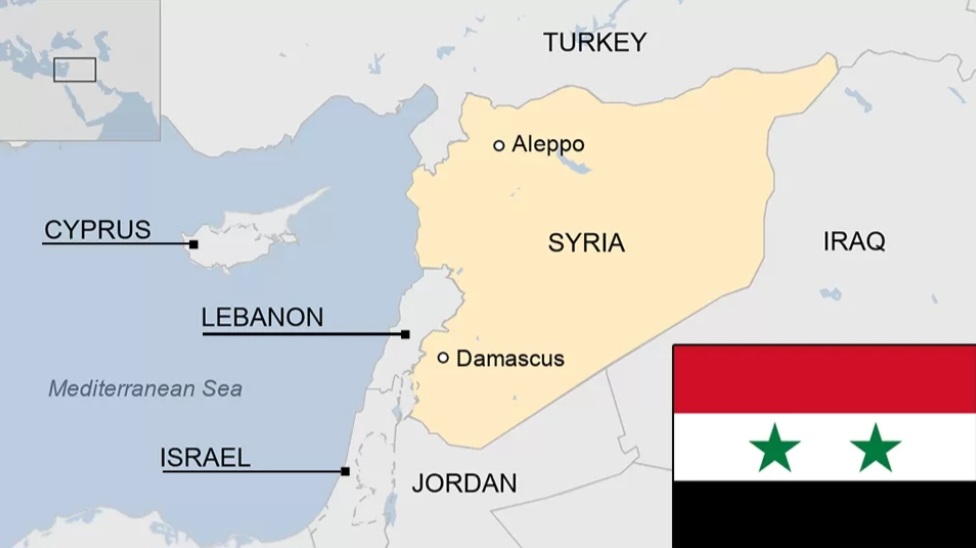
The year 2011 was a difficult and turning phase for many Middle East nations as it went through the Arab Spring movement which started in Tunisia and caused political upheaval, uprising and civil war in many Arab countries. Among many nations, Syria’s civil war against its President Bashar al- Assad has continued to be an issue for many nations as it re-ignites the issue of Kurds and has witnessed Russian and the US involvement in the war which has only worsened the situation. As the conflict caused economic and humanitarian (refugee) crisis in the country, situation in and for Syria has changed since 2011 and as President Assad has a firm control in the country, is back in the Arab League and conflict in the country appears to have settled into a frozen state.
Situation in Syria
To understand the situation in Syria, today, a roughly 30% of the country is controlled by the rebel or opposition forces. However, heavy fighting largely ceased to exist between the rebels and the government and there is a growing regional trend towards a normalisation ties between both the groups. Meanwhile, despite the West push to remove President Assad from the power and growing power politics between the West and Russia with Turkey playing a strategic role to address the Kurds issue, and after 13 years the power and hold of President Assad has become firm in the country.
With the Assad regime continues to operate with impunity in the areas controlled by its army and he has only continue to strengthened his power over the years. Despite accusations labelled against the crimes committed by his forces and government, the power centric politics between the US, Russia, Iran, Turkey and Israel and the sects politics and conflicts have made situation worse in the country and difficult for the 12 million Syrian refugee. The developments in Syria shows an impasse has been achieved in the recent years projecting the future of Syria has been frozen and prospects of a peace talk to bring normalisation and address humanitarian crisis situation in the country has become low.
With poverty and hunger widespread in the country and prospects of securing a safe place in Syria is minimal due to a stalemate in the Syrian civil war. As the West argues, regime and Russia and Iran have benefitted from the on-going situation in the country and the use of vetoes by Russia and China against West backed UN Security Council Resolution has impeded the roadmap/process to secure justice and accountability in Syria. Considering violence is low and combined with a collapsing economy and spread of diseases, natural calamity and situation like the Covid-19 pandemic has hardened the life of people in Syria. Despite such situation in Syria, conflict remains frozen, with status-quo is in fragile and armies from the US, Russia, Iran, Turkey and Israel are operating on different sides of the conflict have caused no progress in political negotiation, which is a worrying sign for the people.
Syria re-entry into the Arab League
Despite such situation and considering how the civil war unfolded in the first place and role played by vested countries which includes many nations in the Arab League. Since 2011, things have changed when Syria was removed from the league. As the league is often seen as disunited group and has not played a significant role in the Syrian peace negotiations. This became clear in 2018 when many members begin to repair their relationship with Syria, though, it was largely symbolically in the past such decision became beneficial for the Assad regime. As West Asian countries tilt towards Russia and China, this has cautioned the West which could impact the peace process in Syria like under the UNSC Resolution 2254 (2015) and Astana Talk proceeded in a right direction in the last few years.
Such aspects became prominent during the Russia-Ukraine war when many West Asian countries didn’t response to the West’s call to decouple from Russia and China. As many West Asian countries depend upon Russia and China for military hardware and the economic benefits respectively. Recent alignment between the Arab League and Syria is only after effect of such aligning of interest of West Asian countries and Russia and China. In May 2023, Syria was re-admitted into the Arab League shows a collective decision taken as they agree isolation of Syria hasn’t worked so far and need to address problems and challenges like refugees and the illicit drug trade which could spread to other nations. Such re-alignment highlights following aspects:
They recognise the Assad regime will remain in power in the country.
Seen as an attempt to reduce the influence of Iran in the country.
Want to push reconstruction plan in Syria which will provide them economic gains.
Such development allow them to diversify their alliance beyond the US.
The return of Syria into the league is a result of many factors and among them changing regional reality is seen as a main driver. With stalemate on the ground and realisation that the President Assad can’t be removed and the momentum for revolution failed to withstand with the time forced the opposition forces to come to a conclusion and to extent accept the reality in Syria for now. Furthermore, lack of a coherent US policy backed by force on the one hand and President Assad continue to exercise control with the backing of Russia and Iran over 70% of territory on the other hand is seen as a vital factor for normalisation process in the Arab world. Meanwhile, many analyst sees the development as Saudi Arabia push for region’s stability and economic growth in the region, facilitating the beginning of much needed reconstruction and renewed trade between Damascus and other Arab countries.
Way Forward
With this normalisation process, it does not give respite to the Assad regime who will gain new economic ties and a much-needed reconstruction. On the other hand, it also promotes Saudi Arabia role as a mediator, who already enjoyed tremendous political and economic clout in the Middle East. However, France issuing an arrest warrant for President Assad for the crimes he committed against his people, Russia, Syria and the US continue bombing in Syria and with winter approaching, the life of Syrian people will not change anytime soon. As West’s sanction against the Assad regime continues it will act as a hurdle in further normalisation between Arab nations and Syria and Arab’s leadership role. Thus, improvement of people’s situation in Syria and end to their misery is needed which has continued for long and should bring respite in Syria.
India-Pakistan border is one of the most vulnerable places in the world because of the nuclear capabilities in South Asia. India entered the nuclear arms race when first did the peaceful nuclear test in 1974, after the establishment of the Nuclear Non-Proliferation Treaty in 1968. India didn’t sign the Nuclear Non-Proliferation Treaty because India claimed it was discriminatory towards them. Pakistan, on the other hand, tested nuclear weapon much later in May 1998, just days after India tested for the second time, and became a nuclear armed state. India did its second nuclear weapon testing after India adopted No First Use (NFU) policy, which declared that India would use weapon of mass destruction only if the state was attacked by nuclear weapon first by other nuclear armed country.
India has not signed Nuclear Non-Proliferation Treaty but it has Credible Minimum Deterrence (CMD) and No First Use Policy (NFU), which has helped India to keep the nuclear weapon without any consequence. Pakistan has also not signed Nuclear Non-Proliferation Treaty and they don’t have No First Use Policy, infect they have First Use Policy in order to deter from India or any other nuclear threats. However, Pakistan keep nuclear warheads separately from the missiles and only assemble them if they are considered to be used.
India-Pakistan Border Conflicts
India and Pakistan had been at war multiple times since India got independence from the British empire in 1947 and Pakistan was created as a new nation. Thousands of people were killed in the separation in communal violence, resulting hostile environment between both sides for decades. India and Pakistan conflict was considered as the possible nuclear threats for the first time in the Kargil war in 1999, which happened nearly a year after both India and Pakistan had become nuclear armed states.
The possibility of the use of nuclear weapon was the closest between India and Pakistan in February 2019, when a terrorist group ‘Jaish-e-Mohammed’ attacked by suicide bomb car in the Pulwama region of the Kashmir Valley in India, killing nearly 40 Indian military personnel. India retaliated with air strikes near the Line of Control twelve days after the terrorist attack happened. Pakistan claimed that India staged the Pulwama attack to make an excuse to attack Pakistan for the political benefit. Although, this accusation war never proven more than a conspiracy theory. Pakistan also shot down an Indian aircraft and captured the pilot. This escalated the tensions between the nations. But two days later, Pakistan released the pilot back to India. However, in February 2021, both the nuclear state declared ceasefire on the borders. This decreased the tensions between them.
In the Pulwama crisis, India had indicated that they might reconsider its No First Use policy when the Defence Minister of India, Rajnath Singh implied that India might need to use the nuclear weapon first in the future. China believes that India’s ‘No First Use Policy’ has evolved to ‘No first use against non-nuclear weapon states’. Pakistan became active as well. Although, there has not been any nuclear escalations since Pulwama crisis in neither of the nuclear countries. However, nothing can be confirmed for the future.
The Global Nuclear Flashpoint
In 2000, American President Bill Clinton considered that Kashmir could transform into a “nuclear flashpoint”. All these nuclear countries are developing their nuclear program and try to increase the nuclear arsenal in order to deter from the potential nuclear threat. For instance, Pakistan have nuclear weapon to deter from India, India have it to deter from China, China have it to deter United States, and United States have it deter from Russia.
India don’t only have to deter from Pakistan but from China as well. There have been multiple military conflicts at Sino-Indian and Indo-Pakistani border, but only conventional arms were used. Both India and China has never used its nuclear capabilities to threaten each other but Pakistan has, since it entered nuclear arms race in 1998. Every time the leading global nuclear power had to intervene to handle the conflict for establishing peace. America supported Pakistan during the Russian occupation of Afghanistan with the military aid. Although, America was not actually supporting Pakistan, they were just fighting against Russia. These crises have highlighted the third party influence to the nuclear escalation in the border of India and Pakistan.
India’s nuclear arsenal is lower than the Pakistan’s and China’s nuclear arsenal. India having nearly 165 nuclear warheads and have 700 Kg of weapon grad plutonium to make up to 213 warheads by 2033. Pakistan tries to keep just a little more than India, i.e. nearly 170 warheads and have enough material to make up to 200 warheads by 2025. Much more than India and Pakistan, China has about 500 nuclear warheads and they are developing the nuclear program much faster and it is estimated to be up to 1000 warheads by 2035. However, China has signed Nuclear Non-Proliferation Treaty and have maintained No First Use Policy.
China has supported Pakistan in the previous wars between India and Pakistan. China’s increasing nuclear arsenal has raised concerns about the global security, especially in South Asia. The Biden Administration has declared that US currently does not need to increase its nuclear arsenal, despite China’s nuclear developments and Russia’s aggressive behaviour. China has refused to talks for any peace building or to stop the nuclear arms race, infact China has 60 more warheads in January 2023 compared to previous year. This might raise concerns in India and Pakistan in the future and both India and Pakistan might increase the number of nuclear warheads to deter for China’s potential nuclear threats.
Pakistan is estimated to have 106 warheads in six deferent types land based ballistic missile capable of nuclear payload. All of them are short range ballistic missiles. Pakistan has also tried to miniaturised nuclear missiles to make Multiple Independently Targeted Re-Entry Vehicles (MIRVs). Pakistan also have naval nuclear capabilities. Babar-3, a Sea Launch Ballistic Missile (SLBM), has been tested twice under the water. However, the completion of the development of Babar-3 has not been confirmed yet. Pakistan approved the purchase of 8 submarines from China, considered to be capable of carrying Babar-3 missiles. The F-16, Mirage-3 and Mirage-5 aircrafts are considered to be capable of carrying nuclear missile. Pakistan is estimated to have nearly 12 Mirage aircrafts.
India has nearly 64 warheads in four deferent types land based ballistic missiles capable of nuclear payload, 2 of them are short range, 1 is medium range and 1 is intermediate range ballistic missile. India has 1 ship-launched and 1 submarine-launched ballistic missile (SLBM), capable to be equipped on submarine but the nuclear capable submarine development in India has not completed yet. Mirage 2000H/I, Jaguar IS/IB and Rafale aircraft are considered to be able to deliver nuclear missiles.
It is considered that Pakistan has the nuclear power to use its own nuclear weapon in its own country in case of an invasion to kill the enemy force in the state along with killing of their own force. If Pakistan ever choses to use Weapon of Mass Destruction (WMD) they are most likely to use a small scale nuclear warhead with minimum destruction. But both the bordering states have to deal with the fallout and radiation contamination in the air, if it is used on the borders. Furthermore, even if the small scale low yield nuclear weapon is used, it could wipe out approximately 20 million people, depending on the population of the destroyed area and nearly 2 billion people will die, if the nuclear winter is triggered.
Just like America supporting Israel right now have raised concern of possible support to Pakistan against China or even India. It is less likely to happen but not impossible. The history of Pakistan being against India is long but the probability of India responding against Pakistan is much higher in Prime Minister Narendra Modi’s leadership. All these possible scenarios have the potential to lead to nuclear flashpoint and start the nuclear war in the world or at least between the nuclear armed states.
Conclusion
India have to maintain its nuclear diplomacy throughout the world to deter from Pakistan or any other possible nuclear threats. The possible way to avoid nuclear conflict for India and Pakistan and all the nuclear armed countries is to engage in to a serious dialogue to establish peace and take confidence building measures. All the nuclear states should stop or slow down the nuclear missile development program in order to reduce the nuclear weapon grade material stockpile resulting the reduction of warheads. However, many scholars believe that India-Pakistan border as a nuclear flash point might be a myth, due to the Geopolitical and environmental consequences Pakistan and India have to face. Nevertheless, both India and Pakistan should consider signing the Non-Proliferation Treaty to pledge to use nuclear power for peaceful purpose only.
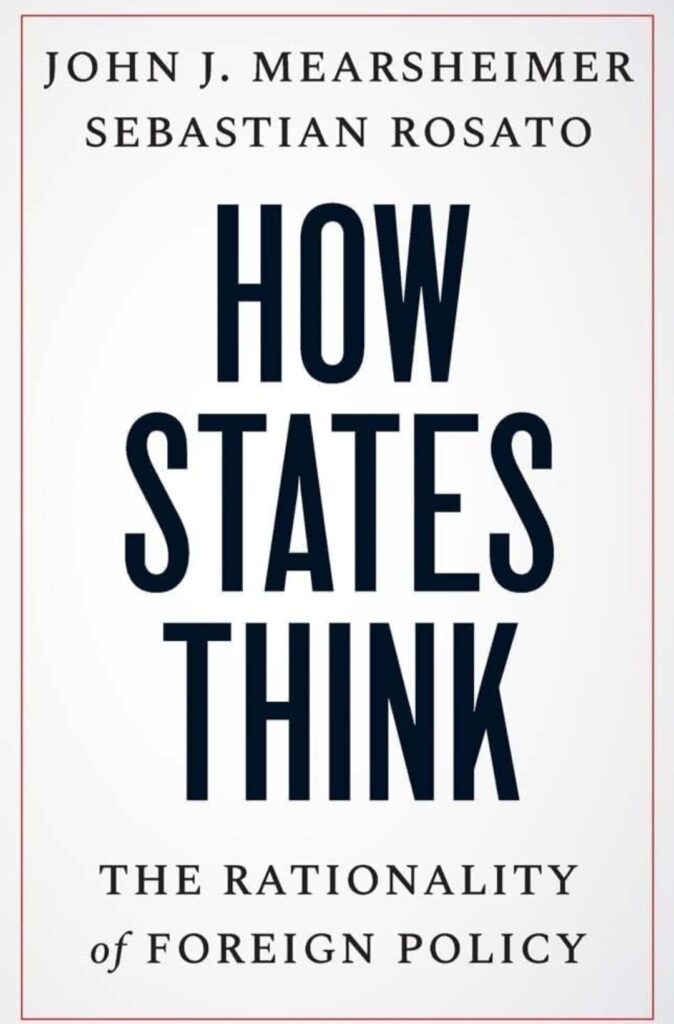
How States Think: The Rationality of Foreign Policy – source Internet
The domains of geopolitics and foreign policy are filled with many unsolved questions due to the association of inherently uncertain and somewhat bizarre dispositions with them. Often, academicians and scholars of international relations are propelled by questions such as “How do states think? Are they rational all the time? How do policy makers take decisions in a crisis? What is rationality in foreign policy, and how is it associated with the final outcome of policy?”
In a well-crafted manner, American political scientist and international relations scholar John J. Mearsheimer and political scientist Sebastian Rosato attempt to answer those questions through their new book, “How States Think: The Rationality of Foreign Policy,” published by Yale University Press. In this work, which is divided in nine chapters, John Mearsheimer and Sebastian Rosato (jointly referred to as ‘the Authors’ hereafter) not only define strategic rationality in international relations but also break popular notions by separating rationality from that of expected utility maximization.
Defining Strategic Rationality
When it comes to rationality and international relations, there are broadly two schools of thought: rational choice theorists and political psychologists, who argue that states are non-rational for the majority of the time. If true, such a hypothesis can prove to be catastrophic because in the majority of IR theories, especially liberal and realist theories, states are primarily rational actors—what we call a rational actor assumption.
How can we say that states are rational? Can we equate rationality with the end outcome? The authors argue that “states are rational if their policies are based on credible theories and result from a deliberative decision-making process,” which means rationality is strictly alien to the outcome of the policy decision.
Taking this definition as a reference, the authors highlighted how some of the most infamous decisions, such as Russia’s invasion of Ukraine in 2022, Hitler’s decision to invade the Soviet Union, and Japan’s attack on Pearl Harbor during World War II, were rational decisions despite not achieving their desired outcomes.
Expected Utility Maximization and Rationality
Both rational choice theorists and political psychologists correlate rationality with expected utility maximisation which propounds that rational actors take action to maximise their overall utility. The authors have rejected such a correlation, arguing that since the international system is an anarchic one and uncertainty is one of its prime components, it will be difficult for policymakers to identify the expected maximum utility under such conditions.
The authors further assert, “Rationality is often judged in terms of outcomes. In this view, a policy is rational if it brings success and nonrational if it fails. Rational thinking is associated with good outcomes, such as victory in war, and nonrational thinking with bad outcomes, such as defeat. But rationality is about process rather than outcomes. Rational actors employ their critical faculties to figure out how to operate in an uncertain world. This does not ensure that the policies they come up with will meet with success.”
Instead, they provide that rationality is independent of outcomes and utility maximization. This does not mean that rationality has nothing to do with outcome; rationality simply means that a decision has been taken based on credible theories and is the result of a deliberative decision-making process that can lead to the survival of the state. That is to say, rationality is not an end but a means to an end, where the end is the ultimate survival of the state.
Credible and Non-Credible Theories
As mentioned earlier, one of the two components of the definition of strategic rationality is a credible theory. The field of geopolitics and foreign policy is an information deficit field where, for the most part, uncertainty prevails, making it necessary for any state or policymaker to follow any particular theory that can help it formulate rational policy.
The authors put forth that any theory is credible if it has its own set of assumptions, causal logics, and empirical claims that are backed by evidentiary support. Conversely, a theory is non-credible if it commits one or more of the following errors: i) it rests on unrealistic assumptions; ii) its causal story is logically inconsistent; iii) there is little evidentiary support for their causal logics, overarching claims, or both.
Giving various historical and empirical examples, the authors term realist concepts and theories such as Balance of Power, Mutually Assured Destruction, and liberal theories such as Democratic Peace Theory, Economic Interdependence, and Liberal Institutionalism, along with Social Constructivism, as credible theories, while theories such as Domino Theory, Forcible Democracy Promotion Theory, and Neoclassical Realism Theory are non-credible.
Individual and State Rationality
To what extent do individual biases affect the actions of the state? The second component of the definition of rationality is the deliberative decision-making process. While the final decision has to be taken by an individual, that decision must be the result of deliberative discussions. Though it is possible for an individual to have particular biases in certain matters, due to collective deliberations, the final outcome of the policy will be alien to such a bias.
State rationality is a result of two-staged deliberative aggregation where key decision makers involve themselves in a robust debate where the final policy choice has to be made by the ultimate decider. In the first stage, every actor engaged in the discussion must have a credible theory, put forth their view on those theories, and discuss among themselves various merits and demerits of them, followed by robust and uninhibited debate, after which they settle on a guiding policy based on a credible theory or theories. In cases where policymakers involved in the debate fail to agree on a theory, the ultimate decider determines the way forward based on that debate.
Case Studies
The book further provides fourteen historical case studies, which include five grand strategy decisions, five crisis management decisions, and four non-rational decisions, solidifying an earlier argument that separates rationality from results. Out of those fourteen case studies, three merits to be mentioned here.
These days, due to the Russia-Ukraine conflict, one of the most discussed issues in common geopolitical debates is the expansion of the North Atlantic Treaty Organisation (NATO) after the end of the Cold War and the collapse of the Soviet Union. John Mearsheimer himself in the past contended that one of the reasons why Russia attacked Ukraine in February 2022 was the eastward expansion of NATO. While the authors may not agree with the policy, that ipso facto does presuppose the policy to be a non-rational one. The book asserts that the initial decision to expand NATO after the Cold War by the Clinton administration was based on the amalgamation of credible theories of Democratic Peace Theory, Economic Interdependence, and Liberal Institutionalism and was the result of a deliberative decision-making process between the stakeholders, thus making it a rational policy decision.
Similarly, two of the most consequential events during World War II—the Japanese attack on Pearl Harbour and Operation Barbarossa—were believed to have shifted the entire balance of power in favour of Allied powers. In 1940, as a result of Japanese military expansion in Asia, the USA passed the Export Control Act, which cut off Japan’s supply of many goods and raw materials, which by and large crippled the Japanese economy. It was further feigned by the American oil embargo in 1941. Eventually, on December 7, 1941, Japan attacked Pearl Harbor. The Japanese chose to attack the United States, reasoning that a risky war was preferable to a crippled economy and elimination from the ranks of the great powers. No matter how bad it has proven to be, the book argues that since the attack was based on a credible theory of balance of power and was followed by due deliberation, it was a rational decision.
Likewise, Hitler’s decision to invade the USSR on June 22, 1941 is often considered a non-rational decision, and it is widely, for ideological reasons, believed to be motivated by Hitler’s personal hatred towards communist ideology. While his personal anti-communist biases may align with Germany’s attack on the Soviet Union, the decision was based on credible realist theory, and during the deliberations with his generals, Hitler, based on the poor performance of the Red Army in the war with Finland (famously known as the Winter War) along with other factors, concluded that the Red Army was hardly a formidable opponent, paving the way for the full-fledged military invasion. Thus, making it a rational policy decision.
Conclusion
The concept of rationality, as argued in the book, relies on the assumption that policymakers, while taking a decision, solely rely on the existing theories, which is not the case all the time. However, the arguments offered in this book will provide a starting point for future scholars and researchers to delve deep into the subject of rationality and how it affects geopolitics and foreign policy of any State.
Ukraine’s domestic affair: New tensions have surfaced in the face of Ukraine. This time, it’s internal, the rift between Voldomyr Zelensky and the Ukrainian chief of army, Valery Zaluzhny. Valery’s opinion was published in ‘The Economist,’ which further stirred the rift and made it evident that something wasn’t right. The General said, “Stalemate has ensued in the war with Russia.” The mud and the rain in this autumn season have stopped the advances of both the forces on each side. No maneuver is possible, and drone reconnaissance and other technologies have made mechanized assaults by either side impossible. Zelensky advised the General to remain confined to the defence area, to keep its focus on winning this war, and to not indulge in public affairs outside his domain. There’s some rationality and logic behind Zelensky’s remark. Why would the European Union and the USA sanction US$ 57 and US$ 61 billion dollars respectively, for Ukraine in a stalemate situation? Why would they bet on the losing side?
Can Valery be the next Prigozhin?
Two grey areas which strengthen the claims of internal domestic differences are:
The President’s office replaced one of his deputies, the head of special operations forces, Gen Viktor Khorenko. President Zelensky had ordered regional governors to stop all communication with the Ukrainian chief of army, Gen Valery Zaluzhny. Under Ukraine’s Constitution, the President is empowered to appoint and dismiss the head of the special forces. Though the position is directly subordinate to the commander-in-chief, the firing appeared to undercut General Zaluzhny’s authority.
An American investigative journalist and political writer, Seymour Hersh, reported ongoing private talks between Ukrainian and Russian generals. The article says that the commanders of Ukraine’s and Russia’s armed forces, Valery Zaluzhny and Valery Gerasimov, are holding secret negotiations to end the war in eastern Ukraine. The talks are backed by the US and not influenced by the political leaders of both countries. Seymour further writes that the possible agreement between the generals involves recognizing Crimea as part of Russia and holding elections in the regions that joined Russia after the war, the Luhansk and the Donetsk region. In return, Russia would allow Ukraine to join NATO, but with conditions that NATO would not deploy troops or offensive weapons in Ukraine.
In a recent poll conducted by the Kyiv International Institute of Sociology, 58.6% disapproved, and only 26.4% approved the activities and decisions of their President. The approval rating for Zelensky has gone down. The idea of a unilateral deal is impossible because the resources of various other countries are involved. Zelensky is under no circumstances going to give up.
The support is waning. Ukraine’s defence and counter-retaliation solely depend on funds and weapons supplied by Western powers. But its stockpile is drying up. The geopolitical focus has shifted towards Israel- Hamas.
Europe’s differences and dilemma: Hungary’s PM Viktor Orban has led arguments against the package. He has demanded that the council should remove opening talks about Ukraine’s accession to the EU from the agenda for the December 14-15 European Council summit. He repeatedly emphasizes that “this is not our war” and says it is a “dispute that the relevant parties should settle among themselves.”
Geert Wilders, a far-right politician who has won the presidential election of the Netherlands, stands in the way of giving its support to Ukraine. He has pushed for the opinion that it is America’s interest that Europe is serving by perceiving Russia as a threat. Wilder boycotted Zelensky’s speech in the Dutch parliament in May 2023. According to Wilders, Dutch supplies are limited, so military aid to Ukraine should end.
USA’s internal politics
A recent vote for the aid package of US$ 61 billion to Ukraine has been turned down by the Republicans over demands for stricter immigration controls. The funds allocated to Ukraine will likely run out by the end of the year. Zelensky said his army needed to receive more weaponry to advance. General Zaluzhny’s conclusion could further discourage some allies from sustaining their military aid. For Zelensky, he has to work on his approval rating and put an end to the rising internal disputes.
Russia’s masterstroke in West Asia is another challenge for Ukraine
The reports show how the Wagner group is supporting Hezbollah in Lebanon against Israel. If the war spreads in West Asia, it would be difficult for the USA to manage and fund. All these signs do not bode well for President Zelensky. Before being isolated and completely sidelined, he must recall General Zaluzhny and constructively build an atmosphere of resilient negotiations. These issues have led to a growing worry in Ukraine that this tendency could spread throughout the European Union. Therefore, Ukraine’s Struggle for Survival has several challenges ahead of them. Domestic Rifts, European Divisions, American Politics and spreading West Asia conflict.
Jordan is a young state, an Arab country called the Hashemite Kingdom of Jordan, a desert land with traces of ancient civilizations. Jordan is bounded north by Syria, east by Iraq, southwest and south by Saudi Arabia, and west by Israel and West Bank. It has a pivotal role in the Middle Eastern region. Jordan’s population is mainly Arabs, principally Jordanians and Palestinians. It is a relatively modern state carved from a desert after the great Arab revolt and has marked a pivotal role in the history
History of Jordan
Jordan is rich in archaeological and religious traditions, and the Jordanian desert was home to many hunters from the early Palaeolithic era. There, flint tools were found at Palaeolithic sites. A site at Tulayat al Gazal in Jordan Valley, a well-built village with painted plaster walls, also represents developments from the Neolithic to the Chalcolithic period.
The early bronze age is found through deposits from Dibon. Many sites were not excavated, and Al Shawak was where evidence of settlement was located. Nomadic invasions destroyed the Bronze Age culture, villages, and towns and the peaceful development of civilization. This area was believed to be occupied from 1300 to 1900 BC, but several archaeological surveys found traces of settlement only when the Egyptians came. It was confirmed by the founding of a temple at Amman, which imported objects from Egyptian, Mycenaean, and Cypriot. Prominent kingdoms dating from the middle bronze age onwards, Gilead in the north, Moab in central Jordan, and Midian in the south.
From (1300- 1000 BCE) there were invasions from both sides of the Jordan River. David attacked kingdoms like Moab and Edom. Modern Amman then Ammon regained its independence after the death of David. Assyrians were the successive invaders who took the eastern part of the country as far as Edom. Revolts happened against Assyrian rule in the 760s to 750s, but they again captured and ruled until the fall of the Assyrian empire; the country was divided under Assyrian governors. The Assyrian texts were the first source to refer to the Nabataeans. The country prospered only during the Hellenistic rule of the plutonomy. They built a new town, Ammon, and was renamed Philadelphia.
In 64-65, the Nabataean kingdom was conquered by the Romans under Pompey. They restored destroyed cities by the Jews and set up Decapolis. The country remained independent, but taxes in Jordan prospered under Roman rule. Many towns and villages were established after Christianity became recognized, and several churches were built.
In the early 7th century, Jordan was ruled by the new Arab Islamic Umayyad empire (the first Muslim dynasty). Later, in (750-1258) the successors of the Umayyads Abbasids took over power.
After the decline of the Abbasids, different regions of Jordan were ruled by Crusades, Ayyubids, mamelukes, and the Ottomans. 1516 Ottoman forces led Jordan and witnessed prosperity in the 16th century. Wasabi forces occupied Jordan after four centuries of Ottoman rule (1516 – 1918) ended during World War 1. Arabs joined the British army against the Ottomans, and the British took over the administration. On May 25, 1923, the British recognized Trans Jordan’s independence under the rule of Emir Abdulah. Still, matters of finance, military, and foreign affairs were in the hands of the British after World War 2, and he was proclaimed king. Later on in the interwar period, the British financially supported Jordan. Larter Abdullah was assassinated, and then his eldest son, Hussein ibn Tala, was crowned king in 1953. his policies were sharpened for regaining the west bank for the Hashemite dynasty, and after Husein Abdullah 2 took over the power.
Constitution and Political Landscape
The Hashemite Kingdom of Jordan is a monarchy with a representative government based on a constitution established in 1952. King Abdullah II is the head of the state. Islam is the official religion. King is the commander of the armed forces. He excuses his duties through the prime minister and the council of ministers. The judiciary is an independent part of the government, with three categories of courts. The first category consists of regular courts that include courts of first instance and courts for appeals. The constitution also provides a special council that interprets laws on their constitutionality. The second category consists of courts for exercising jurisdiction over personal matters. The third court category consists of courts for land government, government, property, municipal tax, and custom courts.
The political process in Jordan is through the constitutional monarchy system. Political parties were banned before the elections, and the Arab national union, not a political party, was the only political organization allowed, they engage in socially active functions and they won in the 1989 elections. In 1992, political parties were recognized as long as they acknowledged the monarchy’s legitimacy.
Economy of Jordan
Jordan is a small country with limited resources; the country is facing a significant problem with water security. Jordan depends on others for energy requirements.
Trade and finance constitute Jordan’s one-third of GDP, transportation and construction represent one-fifth of the GDP remittances, and liquidity from Jordanians working abroad is a significant source of foreign exchange.
Jordan has been plagued by recession, debt, and employment because of the small size of the Jordan market and the presence of large numbers of refugees. Jordan sought financial aid from the International Monetary Fund and World Bank to boost the private sector, clear the country’s debt and loans from the World Bank, and revitalize the Jordanian economy. In 2000, Jordan joined the World Trade Organisation.
Jordan’s geographic location is a reason for political instability and a vulnerable economy. Agriculture in Jordan is only a tiny amount of cultivable land, and they import most food products.
Mineral resources like deposits of phosphates, potash, and marble. Quartic, gypsum, and baric were recently discovered. Jordan has no oil deposits and natural gas reserves are located in the eastern deserts.
Water scarcity led to conflict among states in the region overusing the Jordan River. In 2000, Jordan and Syria secured funds to construct a dam on the Yarmouk River. It also helps in generating electricity. Major products manufactured in the city where cement and extra traction of phosphate and petroleum refining were primarily exported were clothes, chemicals potash, and phosphates; imports are machinery ‘crude petroleum and food products.
Regional influence and foreign relations
Jordan has close connections with Western countries through its participation in enforcing UN sanctions against Iraq. Jordan has trade agreements with the USA. It also has good relations with the European Union and is part of European neighbourhood policy to increase the ties between its neighbours.
Jordan shares borders with Israel, Syria, and Iraq. There have been wars between the boundaries, so Jordan is maintaining diplomatic relations with its neighbours.
Jordan stands for an independent Palestinian state as part of a two-state solution; the ruling dynasty in Jordan has custodianship of holy sites in Jerusalem, which reinforced the Israel-Jordan peace treaty; there are also tensions in protecting the Muslim and Christian religious sites in Jerusalem.
The political position of Jordan changed after the conflict between Hamas and Israel, and the Jordanian prime minister expressed disapproval of Israel’s action in Gaza by calling back the ambassador from Israel and declaring that he would not be permitted to return, following the Hamas attack. Khasawneh argued that the Israel blockade in the Gaza Strip could not be justified as self-defence but criticized the genocide of Israel, which included safe zones and ambulances as targets.
Palestinian refugees (Jordanian residents) conducted protests against Israel’s attacks in Gaza. Jordan’s population has sympathy with Hamas; there was a massive fear of migration from Palestine to Jordan due to the Israel-Hamas war. Western allies see Jordan as a mediator in case Israel and Hamas agree to negotiate. King Abdullah has been part of meetings with Europe to secure the safe passage of humanitarian aid. The government is also fighting problems such as inflation, unemployment, and the trafficking of arms and drugs through Jordan to the West Bank.
Jordan has affiliations with the UN and related organizations, like the Food and Agriculture Organization and the World Health Organization. Jordan is a core member of the Organisation of Islamic Cooperation and the Arab league. It is also a member of the World Bank, the International Monetary Fund, the Islamic Cooperation, and the Non-Aligned Movement.
Conclusion
Jordan’s geopolitical position, history, and political landscape mark a significant regional influence in the Middle Eastern region. Jordan was always committed to maintaining peace and stability in the area. Facing problems like water scarcity, managing the refugee population, and addressing economic issues, the country is trying to maintain active participation in regional diplomacy and promote interfaith between the nations to underscore its significance.
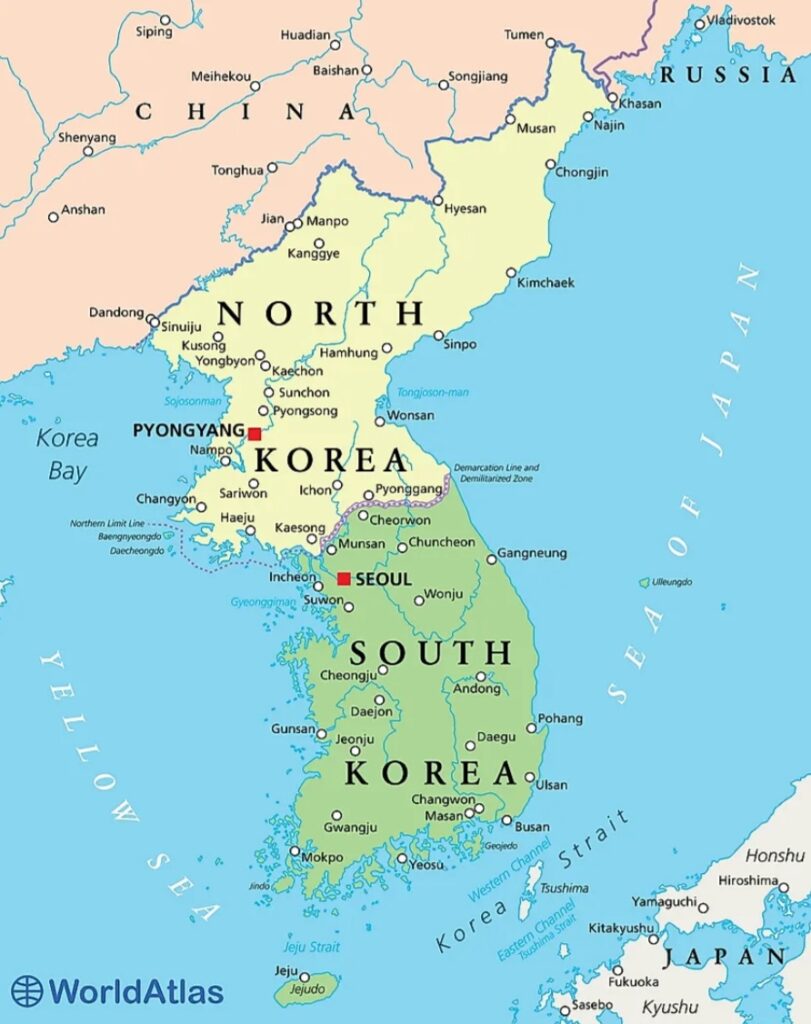
The recent events surrounding North Korea’s missile launch and South Korea’s response have catalyzed a surge in tensions, marking a significant escalation in the already volatile situation in the Korean Peninsula. North Korea’s apparent missile test, closely following its claimed successful satellite launch, has provoked strong reactions from neighboring countries and the international community at large.
South Korea’s Joint Chiefs of Staff reported a suspected unsuccessful missile launch from North Korea’s capital region recently. This launch, directed towards the sea east of North Korea, was believed to have ended in failure. Despite this failure, the specifics regarding the type of missile fired and the reason for the launch’s unsuccessful outcome were not disclosed.
This missile launch came hot on the heels of South Korea’s decision to suspend parts of the 2018 inter-Korean military agreement, a response to North Korea’s satellite launch a day earlier. The 2018 agreement had established demilitarized zones and restricted aerial surveillance along the heavily fortified border between the two Koreas. North Korea’s subsequent missile test was seen as a direct challenge to South Korea’s stance, exacerbating the already strained relations.
In retaliation, North Korea issued a stern response, threatening to bolster its armed forces and deploy additional military equipment at the border while renouncing the terms of the 2018 military agreement. This move heightened military tensions, with North Korea condemning South Korea’s actions as provocative and claiming they were responsible for pushing the situation into an uncontrollable phase.
North Korea’s claimed success in launching the Malligyong-1 satellite was presented as part of its endeavor to enhance its surveillance capabilities against the US and South Korean forces. However, while South Korea acknowledged the satellite’s entry into orbit, further assessments were underway to verify its functionality.
The international community’s response to these provocations was swift and unequivocal. The White House expressed concerns over the missile launch, highlighting the risks it posed to regional stability and security. Japanese Prime Minister Fumio Kishida lodged a strong protest against North Korea’s actions, emphasizing the need for adherence to international norms and the maintenance of regional stability.
Amidst widespread opposition and criticism, North Korea remained steadfast in defending its sovereign right to strengthen its surveillance capabilities through satellite launches. This unyielding stance has exacerbated the already heightened tensions on the Korean Peninsula, raising concerns about the prospects for diplomatic resolution.
North Korea’s repeated attempts at satellite launches in the current year have faced setbacks, with previous efforts ending in failure. However, the recent escalation marked by missile tests and satellite launches underscores the precarious state of affairs in the region and the pressing need for diplomatic intervention.
The evolving scenario in the Korean Peninsula necessitates concerted diplomatic efforts and multilateral engagement to de-escalate tensions and prevent further provocations that could potentially destabilize the region. As the situation unfolds, the delicate balance between assertive deterrence and diplomatic dialogue assumes paramount importance in mitigating the risks posed by escalating tensions in the Korean Peninsula.
This recent chain of events, including the missile test, North Korea’s satellite launch, and the subsequent geopolitical responses, has not only heightened regional anxieties but also brought into focus the fragility of peace in the Korean Peninsula. The complex interplay between geopolitical rivalries, security concerns, and the aspirations for diplomatic resolution underscores the challenges in finding a sustainable path towards peace and stability in the region.
As tensions continue to simmer, diplomatic channels must remain open, fostering dialogue and negotiations to prevent further escalations and uphold the prospects for peaceful coexistence between the two Koreas and their regional counterparts. The need for cooperative frameworks and diplomatic initiatives that prioritize peace and security in the Korean Peninsula has never been more imperative.