
By: Brigadier KGK Nair, SM (Retired)
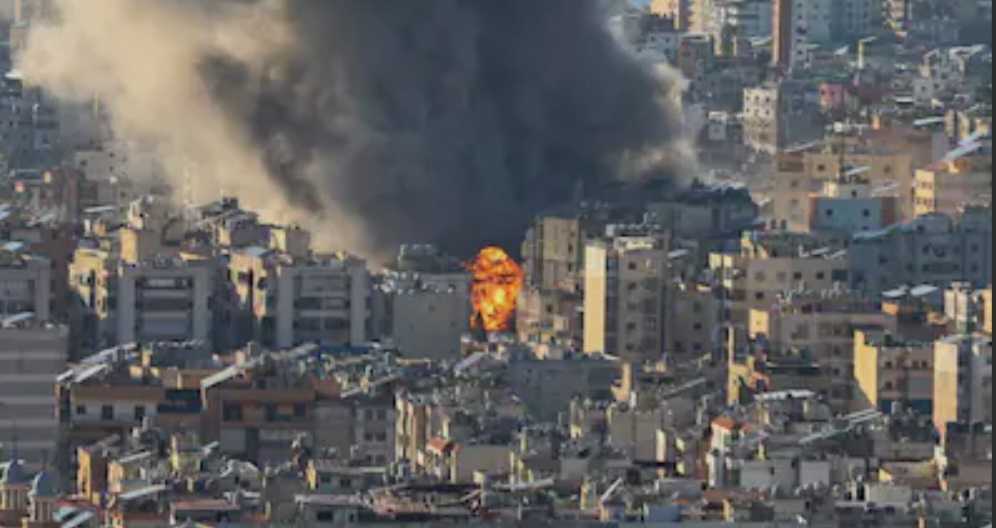
I am certain that the lessons learnt from the U.S.–Iranian conflict will be more than just a few slides and a casual discussion in Ops rooms and War Colleges. In fact, if we do not consign this latest conflict to mere academic discussions, and instead use this treasure trove of others’ mistakes and even brilliance to pivot our own doctrines and strategies, we will do ourselves a big favour! Purely from this perspective, the recent Russo-Ukraine, Israel-Hamas, and U.S.–Iran conflicts are a Godsend for a military thinker. For my part, here are the critical strategic points worth dissecting and actively incorporating from the U.S.–Iranian tango.
- DATA-CENTRIC WARFARE: EVOLVING BEYOND KINETIC JOINTNESS. The U.S.–Iran conflict delivers a vital realization for Indian military planners: physical decentralisation is useless without digital and data resilience. While Operation Sindoor masterfully validated India’s kinetic jointness and integrated strike capabilities, the global battlefield has shifted toward multi-domain digital sabotage. Iran’s capacity to sustain a coherent military response after systemic decapitation was entirely dependent on its transition from a vulnerable network-centric model to an air-gapped, data-centric framework. By deploying a highly decentralized cyber offensive capability like Handala, they proved that localized units can function independently. Building upon the tactical successes of Operation Sindoor, the Indian Armed Forces must aggressively reform their digital doctrines. India must move away from vulnerable centralised command servers toward an AI-driven, distributed command infrastructure. By ensuring that local theater commands possess isolated, autonomous data redundancies, India can guarantee that even if a superpower’s electronic warfare or cyber attacks blind New Delhi, local field commanders retain full operational data to execute retaliatory responses.
- ASYMMETRIC CYBER POWER: DCA AS AN OFFENSIVE DETERRENT. We must urgently evolve our Defence Cyber Agency (DCA) from a purely defensive, reactive posture into an active, asymmetric deterrent. Handala’s devastating operations against U.S. critical infrastructure, military personnel, and global corporate networks (like the Stryker Corporation wipe-out) demonstrate that cyber tools can inflict strategic-level economic and operational paralysis. An offensive cyber doctrine allows a nation to impose unacceptable, asymmetrical costs on a technologically superior adversary at a fraction of the cost of conventional kinetic warfare. The DCA must be empowered to map, infiltrate, and hold at risk an adversary’s critical information infrastructure long before a physical bullet is fired.
- SOFTWARE SUPPLY-CHAIN INTEGRITY: ZERO-TRUST PARADIGMS. Handala’s ability to factory-reset over 200,000 devices globally via compromised Microsoft Intune credentials underscores that our cyber defence must aggressively enforce a Zero-Trust Architecture across all defence and civilian networks. The conflict exposes the reality that a military network is only as secure as the commercial software and identity mechanisms it relies on. The Indian Armed Forces must systematically purge any reliance on global commercial cloud administration tools for mission-critical networks. We must mandate an entirely sovereign, strictly audited code-base for military supply chains, shifting the defence focus from malware detection to hunting for compromised insider credentials and hidden supply-chain backdoors. Knowing that there are legacy systems to which we are tethered as an organization, the time to do this is now! We need to wean ourselves away from centralized and off-the-shelf (OTS) systems immediately if we want to maintain any semblance of a robust, functional framework on which we can ride during conflicts.
- RESILIENT SPACE ARCHITECTURES: LEVERAGING LEO & D2D MESH NETWORKS. Beyond the digital domain, this conflict exposes the structural fragilities of modern space and communication architectures. The ease with which satellite downlinks and GPS signals were degraded over the Gulf highlights that fixed, heavy satellite ground terminals are a critical single point of failure when facing high-tier Electronic Warfare (EW). The Indian Armed Forces must pivot toward resilient, low-Earth orbit (LEO) satellite clusters equipped with Direct-to-Device (D2D) communication protocols. Our tactical field radios, unmanned systems, and mobile command nodes must be capable of establishing ad-hoc networks directly with overhead indigenous space assets, bypassing the need for vulnerable terrestrial ground infrastructure.
- KINETIC SURVIVABILITY: ACCELERATING THE INTEGRATED ROCKET FORCE (IRF). Iran’s survival underscores a critical kinetic lesson: traditional air power is highly vulnerable to early, systemic decapitation strikes on static infrastructure like runways, fuel lines, and maintenance hubs. We ourselves inflicted heavy damage on Pakistani infrastructure during Operation Sindoor and proved how vulnerable these assets are! India must rapidly institutionalize its planned Integrated Rocket Force (IRF) as an independent, highly mobile, and decentralized deterrent. Operating separately from traditional Air Force infrastructure, a land-mobile IRF utilizes heavy camouflage, decoy arrays, and highly dispersed launch nodes. By shielding our civilian critical infrastructure alongside this independent, survivable rocket architecture, India will ensure that its capacity to launch deep precision stand-off strikes remains fully functional under the heaviest multi-domain pressure.
- MARITIME DENIAL: ACCELERATING THE ANDAMANS STRATEGIC NAVAL HUB. The maritime dimension of the Gulf conflict proves that controlling critical chokepoints does not require a massive blue-water navy; it requires a dense network of asymmetric denial tools. Iran successfully challenged superior naval forces through the saturation deployment of low-cost loitering munitions, anti-ship cruise missiles (ASCMs), and smart sea mines. For the Indian Navy, the lesson is clear for the Indian Ocean Region (IOR), particularly the Malacca Strait and the Nine Degree Channel. While building aircraft carriers adds to power projection, our immediate defensive doctrine must prioritize sea-denial. This underscores the absolute urgency of transforming the Andaman and Nicobar Islands into a premier strategic naval hub. We must rapidly accelerate the militarization and infrastructural development of this tri-service outpost into an impregnable, permanent Anti-Access/Area-Denial (A2/AD) bastion. By stationing long-range mobile missile batteries, runway-independent drone fleets, and underwater drone swarms across the island chain, India can effectively slam the door on any adversarial naval entry into the IOR, rendering the chokepoints logistically suicidal for foreign forces.
- CONTESTED AIR DOMAINS: THE DEMISE OF AIR SUPERIORITY. The conflict has demonstrated the virtual impossibility of achieving absolute air superiority against an adversary equipped with layered, mobile, and integrated air defence systems (IADS) combined with swarms of low-cost drones. Heavy, expensive fourth- and fifth-generation fighter aircraft are increasingly forced into stand-off roles due to the high risks of attrition. The Indian Air Force must adjust its doctrine from seeking total “air superiority” to executing localized air denial. We must mass-produce indigenously developed loitering munitions, counter-UAS (unmanned aerial systems), and highly mobile surface-to-air missile systems (like Akash and Kusha) that can move seamlessly with ground forces, rendering our airspace too costly for an invading superpower to contest.
- CULTIVATING THE NEIGHBORHOOD: NEUTRALIZING NORTH-EAST VULNERABILITIES. While we fortify our kinetic and digital assets, we must recognize that a nation’s military doctrine cannot succeed in a diplomatic vacuum. The modern conflict landscape shows that hostile superpowers look to squeeze an adversary’s geopolitical fault lines. For India, our most sensitive vulnerability remains the North-East, a risk now magnified by the increasing, coordinated collaboration between Nepal, Bangladesh, and Pakistan across diplomatic, economic, and political fronts. This emerging axis aims to create a strategic squeeze around the Siliguri Corridor and isolate our eastern flank. To systematically dismantle this axis, India must discard passive diplomacy and aggressively “cultivate” a neutral, if not actively pro-India, regional outlook through a calculated, multi-tiered framework:
- Asymmetric Economic Tethering: We must make our neighbors’ economic survival fundamentally dependent on Indian baseline infrastructure. This means expanding cross-border electricity grids, oil pipelines, and digital payment systems into Nepal and Bangladesh. When Dhaka’s industrial power grids and Kathmandu’s energy exports are physically integrated with India, the structural cost of their political elite taking an anti-India stance becomes economically ruinous.
- Monopolizing Security and Defense Cooperation: India must position itself as the default security provider in the immediate neighborhood. We must expand our defense lines of credit, mandate that their military officer corps undergo mandatory training at our institutions (like the NDA and IMA), and bundle our defense exports with lifecycle support. By deeply embedding Indian military systems and doctrines within the armed forces of Bangladesh and Nepal, we organically crowd out Pakistani intelligence networks and Chinese defense hardware.
- Aggressive Cultural and Digital Statecraft: We must counter hostile narrative warfare by actively projecting India’s soft power. This requires a dedicated state policy to fund regional satellite channels, university scholarships, and tech incubators across Dhaka, Kathmandu, and Colombo. We must ensure that the younger, tech-savvy demographics in these nations view India as their primary economic and cultural anchor, neutralizing the ideological infiltration sponsored by Islamabad and its external handlers. By binding our neighbours into this matrix of mutual dependency, we break Pakistan’s proxy manoeuvres in the region and transform our immediate neighbourhood from a historical vulnerability into a resilient geopolitical buffer zone.
- LAND ASSAULT DETERRENCE: THE ‘FRICTION STRATEGY’ AND HUMAN ATTRITION. Perhaps the most profound lesson is how Iran successfully prevented a full-scale U.S. ground invasion: they made the cost of a land assault unacceptably high in terms of human casualties. Superpowers and technologically advanced nations—including the United States and potentially China—have an incredibly low tolerance for body bags and prolonged human attrition. Iran achieved this through its Decentralized Mosaic Defence Doctrine, training its population and local militias to fight a protracted, asymmetric insurgency using a dense network of underground tunnels, hidden mountain fortifications, and pre-delegated authority to fight even if central command is eliminated. For India’s borders along the Northern and Western fronts, our doctrine must explicitly shift toward a “Friction Strategy.” We must signal to any adversary that a land assault will not result in a swift, clean, digitized victory. By leveraging the rugged terrain of the Himalayas, embedding highly trained, decentralized scout and special forces teams with local border populations, and creating vast, hardened underground defense networks, India can guarantee an invader faces a bloody, grinding war of attrition. By ensuring that any territorial gain by an adversary is met with immediate, heavy human casualties through decentralized guerrilla tactics and autonomous sniper/drone cells, we turn our geography into an unsustainable meat-grinder, breaking the political will of even the most powerful nation.
- CONCLUSION: THE IMPERATIVE FOR DOCTRINAL TRANSITION. The strategic landscape of 2026 has made one reality undeniably clear: the traditional, linear ways of warfighting are dead. While Operation Sindoor brilliantly demonstrated our capability to achieve crushing joint-service success in a localized, kinetic theatre, the U.S.–Iran conflict reminds us that a technologically advanced adversary will rarely fight on terms of our choosing. They will instead strike at our central command structures, blind our space assets, disrupt our software supply chains, and exploit our regional borders through proxy diplomatic alliances. The Indian Armed Forces cannot afford to treat these global upheavals as remote case studies. The lessons from Hormuz to Handala demand that we transition from a reactive defence posture to an active, resilient, and multi-domain deterrent strategy. We must rapidly build an air-gapped, data-centric command network, empower the Defence Cyber Agency with offensive teeth, accelerate the standalone Integrated Rocket Force, and slam the door on foreign navies by heavily fortifying the Andaman and Nicobar hub. Concurrently, our military objectives must be matched by a fierce, deliberate economic and security cultivation of our immediate neighbours to permanently secure our North-Eastern flank. If we choose to innovate now, we secure India’s position as an unassailable global power. If we relegate these lessons to mere academic debates within our War Colleges, we invite strategic surprise. The choice is ours, and the time to act is now.




Nicely articulated !!! Kudos !!