By: Pragathi Kowndinya, Research Analyst, GSDN

Trumpism’, lately, a term in the trend. Scholars opine that ‘Trumpism’ was coined to mark the outright personality, high dominance charismatic leadership and distinctive attributes of Donald Trump which are deep-rooted in American nationalism and pragmatic conservatism. Since his landslide victory in the 2024 US Presidential elections, Trump has unapologetically advocated economic protectionism, hostility to taxation and immigration and has championed the motto of ‘America First’. The world nations, thus, are on the path to decode their respective socio-economic and geopolitical prospects under the new regime unfolding in Washington DC.
The USA: A pivotal geopolitical power
The United States of America is the world’s largest economy accounting for 26% (more than a quarter) of the global GDP. The USA is also a global financial powerhouse, as 60% of the international claims and liabilities are denominated in US dollars. The USA is also the largest shareholder in the World Bank and IMF, having 15.85% and 17% of voting shares respectively, thus a key decision maker in the multilateral lending ecosystem.
The dollar is the principal reserve currency in the global forex market which makes up for 58%. As an impact, the US Federal Reserve’s decisions affect the global economy. For Example, when the Federal Bank raises the rate of interest, the value of the dollar appreciates making exports expensive and debts costlier, thus adversely affecting the overall business and transnational trade ecosystem and slowing down the global economy. Henceforth, the monetary decisions of the central banks across the globe are sometimes contingent upon the US Federal’s monetary policy.
Concerning the global trade, the US is the world’s second-largest trading nation. It is a crucial export destination for 1/5th of the world’s countries. The dollar is involved in 88% of all trade in the global foreign exchange market. The USA also dominates the vital global trade routes. For Example, the US is responsible for 73% of the traffic over the Panama Canal. The USA is also a key strategic stakeholder in the global energy sector. The US is the world’s largest producer of oil and natural gas and a net exporter. With regard to clean energy, the US is ranked second in solar and wind energy production.
The remarkable feat accomplished by the US in the defense sector makes it the world’s mightiest military power. The defense budget of the US is a staggering amount of US $831 billion. The US military has the world’s most advanced and state-of-the-art military technology which includes F-22 and F-35 fighter jets. The US has 750 active military bases across 80 countries. The USA is also a key defense exporter worth US$ 238 billion. The US controls 40% of the global arms export, especially to European countries.
As a champion of capitalism, neo-liberalism and laissez-faire traditions since the Cold War era, from defense and energy security to Artificial Intelligence and encapsulating the world’s most skilled manpower in Silicon Valley, the US is revolutionizing every arena as a tool to seek its hegemonic aspirations. Given such a humungous stake of the USA in the geopolitical and geoeconomic circuit, the political current emerging from the Oval Office of the White House transmits across the globe and affects every actor from the deserts of Africa to the frozen lands of the Arctic and Antarctica.
Thus, in this era of geopolitical uncertainty and spiking challenges, the global expectations from Trump 2.0 are massive. From dealing with proxy wars to pandemic and addressing inflation, economic burden to tackling climate catastrophes the world nations expect a fair solution from the fundamental superpower, the USA and its supreme elected leader. Whether this presupposition is in symphony with the core nature of Trump’s distinctive stewardship in an era of realpolitik, is a serious question to deliberate upon!
Panacea for a jeopardized power struggle
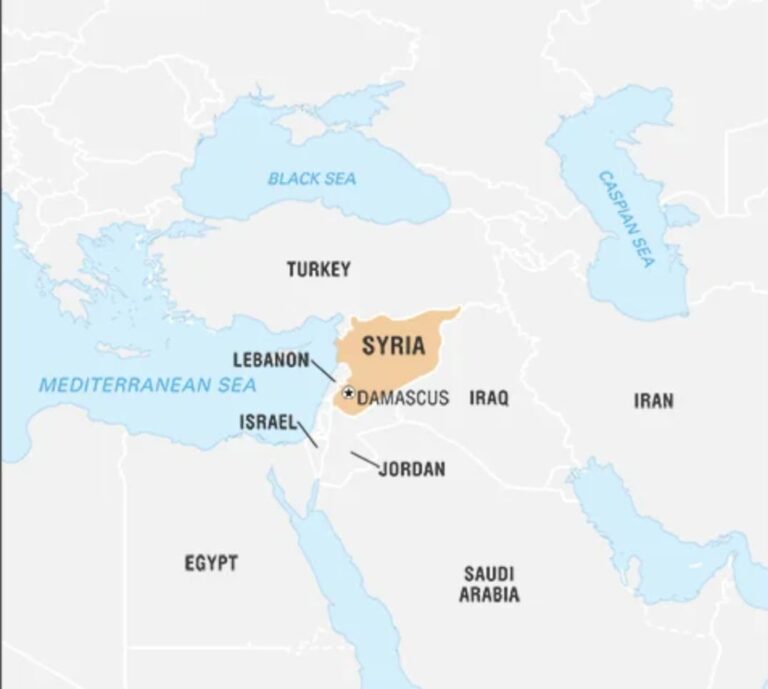
Be it the chaotic seashores of the Black Sea in Southeastern Europe or the Red Sea on the borders of Africa and Asia, the current timeline is witnessed as an era of geopolitical upheaval. From Russia’s ‘special military operation’ in Ukraine to the Israel-Hamas conflict in the narrow strip of Gaza and the regime change in Syria, the unravelling conflicts reflect how the international system is truly anarchic, where a foreseeable solution is faint and vague.
The warring nations are not even liable to the verdicts of the United Nations, International Criminal Court and other international institutions. At such a critical juncture, the expectations on the Trump presidency are mounting to quest for an ultimate solution to the enduring political, economic and humanitarian crisis in the conflict zones, as the US is a key stakeholder in the growing geopolitical menace.
With respect to Russia-Ukraine conflict, as an ardent advocate of protectionism, Trump believes that the military and financial support to Ukraine is cumbersome on the US domestic economy. Thus, he owes to end the war that has been unravelling for almost 3 years now with no sight of giving a strategic victory to either of the sides, but only costing burden on the US exchequer. But Kyiv fears that a ‘quick deal’ and acute cut down of the defense supplies would lead to unfair border agreements and high chances of escalation and annexation in the future, especially at this juncture when Moscow is in an offensive mode in Kursk, Kharkiv and other regions. Kyiv, thus expects continued and comprehensive support from the US and also an early induction into the NATO alliance and not leave it in the middle of geopolitical crossroads. But Ukraine’s aspirations are bound to be a distant dream under Trump 2.0.
Trump’s transactionalism however, has a completely different outlook towards the Middle East Crisis. Nations such as Saudi Arabia, UAE and other powers of the world expect a lasting ceasefire among the state and non-state actors of the region and a beckon of hope for the humanitarian crisis in Palestine. On the other hand, Israel is expounding its confidence in the unwavering support of the US in its mission to be a hegemonic power in the region. As a reflection of the aspirations of Tel Aviv, Trump had recognized Jerusalem as Israel’s capital in his preceding term and also, he is a hardcore adversary to the theocrats of Iran.
The world awaits to witness, how Trump balances between, his stronghold towards Israel and bounds to his election promise of ‘stopping wars’. The crisis in the Middle East encompasses a wide spectrum of actors. The state actors of Israel, Iran and Palestine and the non-state actors such as the Houthis in Yemen, Hamas in Palestine and Hezbollah in Lebanon. How Trump pulls everyone to the negotiating table and strikes a fair deal along with the release of hostages and ensures a lasting peace and security in the region, determines the peace or conflict dynamics of the Middle East and beyond in the future.
An anticipation regarding climate action
Climate Change and the associated catastrophes are exceeding the threshold. Recent analysis exclaims that 2024 was the first year in history, where the mean global temperature has breached the limit of 1.5 degrees Celsius as per the Paris Agreement. Trends also suggest that there is no going back and the world is on the path of exceeding 2 degrees Celsius by 2050. Given such an apex crisis with an alarming rate of heat waves, wildfires, untimely cyclones and other natural disasters, the predisposition on the Trump presidency is mammoth. 2024 witnessed a series of UN environmental summits including UNFCCC at Baku, UNCBD in Colombia, the UN Plastic Treaty in South Korea etc. However, none was able to script a fair, inclusive and sustainable conclusion for the global good. Yet, the hope on the world’s largest economy under the Trump administration remains glare with respect to mitigating Climate Change.
Donald Trump, a climate sceptic, during his first term Trump withdrew from the ambitious Paris Agreement. It seems that history repeats during Trump 2.0. Climate experts believe that Trump would give a blow to climate justice and the US’s CO2 emissions would soar by 4bn tonnes by 2030, as Trump unapologetically echoes for heightened fossil fuel (oil and natural gas) production. As Republicans control the US Congress, there is a high possibility of rolling back from the vital Inflation Reduction Tax and other clean energy policies. He might target Europe for its ambitious Carbon Border Adjustment Mechanism and other carbon market-related regulations and can cut the US’s contribution to the key global climate pledges. The years ahead, hence, are truly challenging for already paralyzed and inconclusive climate efforts, whose major victims will be the low-developed nations.
No antidote to the perplexed global economy?
With a capitalist and protectionist regime unleashing at the helm of the world’s largest economy, a structural shift in the global economy is much anticipated. The world is yet to fully recover from the high inflation, supply chain shocks posed by the pandemic, outbreak of the Russia-Ukraine war and the Israel-Hamas conflict. Meanwhile, Trump’s ‘America First’ narrative may escalate trade wars, supply chain disruptions and adversely affect the global export-import market.
For example, Trump has repeatedly reiterated that he would hike the tariff rate by 10% for all imports and by 60% especially for China because the latter enjoys a favourable position with respect to the US with a surplus of more than US$ 380 billion. If brought into reality, increased tariff rates would propel inflationary pressure on the US economy that gradually reciprocates globally as the majority of the world trade and purchasing power is determined via dollars. Such a measure will surely escalate trade wars between the world’s two largest economies.
Trump, also threatening to take back the Panama Canal and Greenland is a testimony to his economic aspirations enroute to ‘Make America Great Again’. The Panama authority imposing the highest transit fees on the US vessels and the increased presence of Chinese vessels in the passage has triggered Trump to echo such a statement, as it is a strategically vital passage for the US vessels. With regard to buying/coercing Greenland, Trump ascertained the idea, as Greenland is a rich repository of critical minerals and helps the US explore new maritime trade routes. This gives the US a strategic edge against China which is aiming to carve new trade routes in the Arctic and also helps to counter China which is the world’s leading producer and supplier of the majority of the critical minerals.
Trump has even asked Europe to purchase more of the US oil and gas otherwise warned that he will impose higher tariffs, on European imports to the US. Trump has also warned the de-dollarization efforts of the BRICS nations and has claimed to impose high tariffs against those countries that ascribe to de-dollarization. Given these developments, expecting an antidote to the already structurally fragile global economy under Trump 2.0 is vain. But the major sufferers of these repercussions are predominantly small and import-dependent economies, which are caught in the geopolitical game played by the superpowers.
African angle for Trump’s presidency
Trump’s policy towards Africa was on a low profile in his preceding term. Few African nations expect Trump 2.0 to be a helpful endeavour in their geopolitical calculations, while for some other states, it may not be so. For Example, Egypt, a key mediator between Israel and Hamas, expects Trump to quickly resolve the conflict, given Trump and the Egyptian President’s close relationship. But Africa’s expectations towards Trump to resolve the political crisis of Syria, Sudan etc. may not be materialized, because in the backdrop of Trump’s agenda of ‘America First’, these are not his foreign policy priorities.
Also, Trump’s broader foreign policy perspectives such as economic sanctions, aversion towards climate action and hostility towards immigration might adversely affect the African nations that are reeling under military coups, civil wars and have low socio-economic potential.
The chapter of India and the Indo-Pacific
Indo-Pacific will be one of the apex foreign policy goals of the US, given the current geopolitical gravity and to counter the growing footprint of China across the Indo-Pacific. Infact, the QUAD initiative gained momentum during Trump 1.0 and the QUAD partners expect the same or even higher threshold and frequency in their relations, as the hegemonic aspirations of China keep multiplying.
Apart from the QUAD, even the AUKUS nations, South Korea, Japan and the Philippines that are at loggerheads with China expect greater security, defense and strategic cooperation with the US. But, despite the Indo-Pacific being a key focal area of the US foreign policy, will the US echo the same aspirations as other vital players of the region is unclear, given Trump’s high economic inclinations. On the other end, the trade wars and economic rivalry between the US and China may be manipulated in the maritime and security domain, thus, chances of imperilling the larger region.
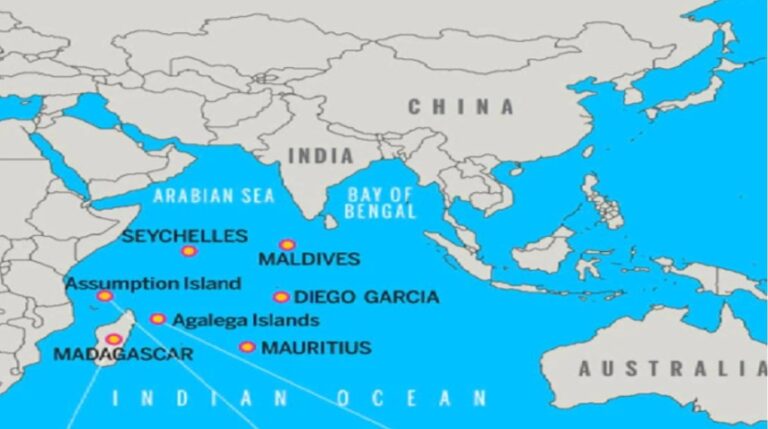
India and the USA have scripted a steady growth in bilateral relations for more than a decade now, inspite of changes in leadership at every successive election in the USA. President Trump and Prime Minister Narendra Modi sharing cordial relations on a personal note is an added advantage. India is a key security and strategic partner for the US to navigate its goals in the Indo-Pacific and Indian Ocean Region (IOR). India too aspires to strengthen its relations with the US under Trump 2.0 to achieve its strategic priorities. India expects the US cooperation to take forward its ambitious initiatives such as IMEC and I2U2. To materialize these, a major roadblock is the Middle East Crisis, which needs to be decoupled soon under the leadership of Donald Trump.
India also looks forward to accelerate partnerships in the domain of Artificial Intelligence, transfer of critical and cutting-edge technology, maritime and military security, energy security, ease of business, FDI & trade and ofcourse smooth exchange of skilled manpower etc. by successfully harnessing a wide range of forums such as IPEC, iCET etc. India also wishes to reopen the halted FTA negotiations with the US. However, there are a few irritants between India and the US under Trump 2.0 that act as an adverse harbinger for smooth relations.
Trump might pressurize India to continue its ban on importing oil from Iran and might ask India to purchase the same from the US. This might hinder the India-Iran relations which are negotiating towards fully operationalizing the Chabahar port and reopening the dormant International North-South Transport Corridor (INSTC). Further, Trump’s economic sanctions might have repercussions on the Indian economy, especially as he compels India to tariff cuts and not go for de-dollarization. Also, Trump’s antipathy to immigration policy may be a catch-22 for the millions of Indian diaspora and skilled manpower. However, India hopes that all these flashpoints are navigable diplomatically and the prospects for cooperation are huge.
Trump 2.0 with its hawkish political and economic policies will be an era of intense geopolitical calculations for the global powers which are hitherto stuck amidst regional conflicts, proxy wars, economic turmoil and climate catastrophes. How Trump rolls the dice to redefine the global balance of power to America’s advantage and in turn how the rest of the world navigates their geopolitical motives to ensure respective strategic victory, will be a game of dice. Ultimately how every actor on the geopolitical chessboard quest for collective security, climate action, inclusive and sustainable development in the era of Trump’s realism is what nations have to interrogate!