
By : Dhritiman Banerjee, Research Analyst, GSDN
Introduction
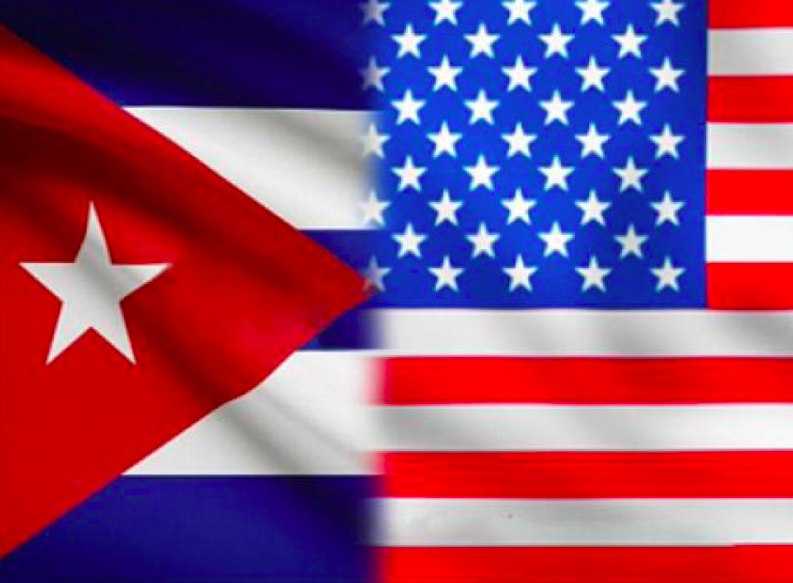
The Monroe Doctrine, one of the earliest pillars of American foreign policy envisaged the Western Hemisphere as a distinct zone of US influence. Cuba, a country in that region extremely close to the US coast of Florida is a prominent feature of the region and a country which has been influenced by the socialist ideals with support from the erstwhile USSR. This has perpetually raised concerns in Washington which views these developments as a threat to its own sovereignty. However, it should be noted that, while US-Cuba relations have been strained, policymakers in Washington have seen the Cuban region as a zone requiring US intervention with the Guantanamo naval base of the US navy located in Cuba. This article maps out the strategic importance of Cuba to the United States and why the US emphasizes on regime change in Cuba as a strategic goal.
US-Cuba relations and the factors at play
US-Cuba relations deteriorated rapidly after the Fidel Castro led Cuban Communist Revolution overthrew the US backed Batista regime. The new regime rapidly nationalized all American assets and industries in Cuba affecting American industries and trade between America and Cuba. The US responded by imposing a trade embargo on Cuba and suspending diplomatic relations. However, due to the proximity of the US Coast to Cuba, legal and illegal immigration from Cuba to the United States became a major issue and is now a prominent part of the US discourse on national security. American companies were also locked out of Cuban natural resources which led to major losses in business. Furthermore, support of the USSR to the Castro regime affected Cold War dynamics and posed a direct threat to the goals of the Monroe doctrine. Cuba’s proximity to strategically important waterways near the Gulf shipping route and the Panama and its erstwhile support of the USSR and current close relations with US adversaries like Russia and China pose an existential threat to the continental United States. This can be seen during the dynamics of the Cuban Missile Crisis where Soviet missiles in Cuba posed a direct nuclear threat to America. The events during the Cuban missile crisis highlights the importance of a friendly regime in Havana to Washington which views Cuba not as an insignificant small Caribbean nation but as a strategic chokepoint in the US sphere of influence which can be used by America’s enemies to directly attack the US mainland.
Thus, Cuba remains one of the perennial foreign policy challenges of the United States. While the Obama administration attempted to thaw US-Cuba relations by restarting diplomatic relations between America and Cuba, relations did not improve and the Trump administration again adopted a hardline approach regarding Cuba. This is mainly due to the proximity of Cuba to the United States and Cuban cooperation with Russia and China. The US previous experience with Cuba makes it wary of Cuban relations with its adversaries as this poses a security dilemma for the United States.
The American security dilemma regarding Cuba
America is a country with a unique location with the Atlantic Ocean to the East and the Pacific Ocean to the West, it is largely immune to most military interventions as only large-scale naval invasions are possible directly on the United States which can mitigated by the vast US Navy. However, a potential adversary with a strong military presence in Cuba to strengthen Cuba’s security capabilities against US threats, circumvents this requirement and can directly pose a threat to the Continental United States. The lack of a friendly regime in Havana and its cooperation with Moscow and Beijing therefore poses a direct security challenge for Washington. This is a unique security dilemma faced by the US which sees Cuban cooperation with its adversaries as a threat to its own sovereignty.
Therefore, while Cuban military and economic capabilities are vastly inferior compared to the United States, its geographic location allows it to become a major adversary of Washington by at once allowing Russian and Chinese military presence within its borders as well as continuing its historical stance of supporting revolutionary movements in Latin America and oppose US backed regimes in the region. Therefore, America’s position with respect to Cuba can be compared to the Russian view of Ukraine as Nato expansion in Eastern Europe poses the same security dilemma to Moscow as Chinese and Russian presence in Cuba poses to Washington. Thus, it can be said that the tyranny of geography makes Cuba a major strategic adversary to the US as although their capabilities are asymmetric, Cuba’s geographical features augment its foreign policy position with respect to the US. Thus, it can be said that while the two sides are unequally matched, great power rivalry complicates this relationship which makes Washington cautious with respect to its position on Cuba.
Conclusion
This article notes that, Havana matters to Washington mainly because of its geographical proximity and its socialist regime as well as its cooperation with American adversaries. This makes regime change in Cuba a major strategic goal for the United States. However, since the 1961 Bay of Pigs invasion, Washington has failed to achieve its foreign policy objective of regime change in Cuba. The presence of an adversarial regime in Havana poses a direct threat of the US vision of the Western Hemisphere as a distinct zone of American influence, a key goal of the Monroe doctrine. This also allows American adversaries including Russia and China to establish a presence in the US zone of influence to directly pose a challenge to American hegemony in the region and use Cuba’s strategic location to gain influence in Latin America, an event that would weaken American dominance over the Caribbean and Latin America and allow its adversaries to have influence on strategic waterways like the Panama Canal. This poses an existential threat for the United States because of which it seeks to assert control over Havana and establish a friendly regime in the country. But US historical strategic failures in Cuba and the recent policies of the Trump administration appear to indicate that tensions are expected to continue.




Great content! Keep up the good work!