
By : Bhavika Bhartiya, Research Analyst, GSDN
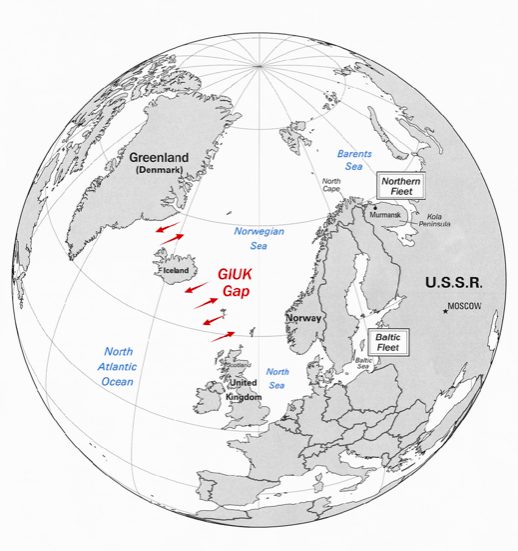
A body of water refereed as GIUK Gap separates the countries of Greenland, Iceland, and the UK. While it may sound like an insignificant stretch of water, it is one of the most crucial and problematic areas for the control of naval power operations in the North Atlantic. As for the US, the GIUK Gap is of huge importance for the protection of the country’s coastline and ships, and its alliance with Europe. This article explains, in simple terms, why the GIUK Gap still matters so much to America today.
Importance during the Cold War
The rise of the GIUK Gap dates to the Cold War period, when the Soviet Union had most of its powerful submarines placed at the bases in Kola Peninsula located on the far north of Russia. To reach the Atlantic Ocean and threaten the US and the European countries, these submarines had to pass through the GIUK Gap. This became the reason for the USA and its NATO allies to develop SOSUS (an underwater sound surveillance system) that was supposed to detect submarine activities in the area. This made the Gap a frontline in the naval side of the Cold War.
Why Russia Cares About It Again
During the period after the defeat of the USSR, NATO showed a diminishing interest in this area and reduced the number of submarines. However, Russia revitalized its Northern Fleet and went back to the usage of submarines in the GIUK Gap. The reports point to the increasing level of Russian submarines’ activity in the area like that during the Cold War period, and some experts even started to call the situation a new “Battle of the Atlantic”. Furthermore, Russia has obtained advanced icebreakers and continues its activity in building new bases in the Arctic area due to the melting ice, and this has generated new navigational ways. Thus, the old combat area has become relevant in modern times.
Why This Matters to the United States
From the point of view of the United States, the security of the GIUK Gap serves various purposes. First and foremost, the Gap is necessary to ensure the safety of the sea lanes used by the USA to transfer soldiers and deliveries to Europe, something that has been utilized since World War II. Furthermore, the Gap is essential for blocking Russian submarines from reaching the United States since such a submarine carries missiles that can strike the United States. Finally, the area guarantees protection to the essential underwater cables that are responsible for the data flow between Europe and America and are always subjected to sabotage attempts. In brief, maintaining security in the GIUK Gap is very important for the United States for the reasons of protection of both its own territory and its ability to help its allies.
The Role of Iceland, Greenland and the UK
Because of its location, this area relies predominantly on a few important alliances. Iceland does not have a military force but serves as a significant air hub, known as Keflavik, that is utilized by the United States and NATO for monitoring the nearby air space and water body. Greenland, which is part of Denmark, is directly located in front of the Arctic and has been a subject of interest in recent times as Donald Trump made headlines with his desire to acquire it because of its important location. The UK has been spending financial resources and investing in submarine defense technology to protect its section of the Gap. These three geographic areas help in the accomplishment of American and NATO goals and missions in the region.
A Renewed Focus in NATO
NATO has stepped up its focus on this region as well. There are more naval patrols in the Gap, and plans for initiatives like “Operation Arctic Sentry” have been suggested, to keep up to date with Russia’s activities. Military exercises like Nordic Response gather thousands of soldiers from various NATO nations to practice fighting in cold, icy conditions. There is sufficient evidence to support the claim that both the U.S. and its allies are aware of the importance of the GIUK Gap and its growing significance as the security issue of today.
Conclusion
The GIUK Gap is only a small section of the ocean, but it still plays major role in Americans’ strategic thought processes. It used to be the gateway for submarines in the past and will still perform the same function for the new Russian Navy. For the U.S. securing this route means protecting not only its territory and communications but also enabling it to help its European partners during the crisis. As the Arctic opens due to climate change and Russia become more active in the region, the GIUK Gap is likely to remain an important area for American security planning in the years ahead.



