
By : Jaiwant Singh Jhala , Research Analyst , GSDN
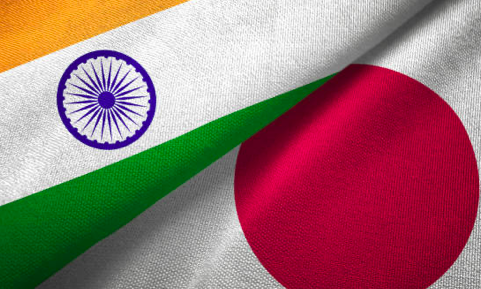
India and Japan share one of the most important strategic partnerships in the Indo-Pacific region. Although the two countries have different histories, cultures, and geographical locations, they are connected by shared democratic values, mutual trust, and a common vision for peace, stability, and economic prosperity. Over the last three decades, their relationship has expanded from limited economic cooperation into a comprehensive partnership covering trade, infrastructure, defence, technology, energy, education, and regional security. Today, Japan is one of India’s most trusted development partners, while India has emerged as a key strategic partner for Japan in Asia.
The importance of this partnership has increased because of the changing global politics. China’s growing influence in the Indo-Pacific, disruptions in global supply chains after the COVID-19 pandemic, and rapid technological competition have encouraged both countries to work more closely. India and Japan support a rules-based international order where international law is respected, sea routes remain open, and disputes are settled peacefully. Recent meetings between the leaders of the two countries in 2025 and 2026 have further strengthened cooperation in areas such as artificial intelligence, semiconductors, clean energy, defence technology, and economic security.
Historical Evolution
The relationship between India and Japan has deep cultural roots. Their earliest connection came through Buddhism, which spread from India to Japan through East Asia more than a thousand years ago. Buddhism greatly influenced Japanese religion, philosophy, art, and architecture, creating a lasting cultural bond between the two countries. Modern diplomatic relations began in 1952 after Japan regained its sovereignty following the Second World War. India was among the first countries to establish peaceful diplomatic relations with Japan by signing a separate peace treaty. During the Cold War, however, relations remained limited because India followed a policy of non-alignment while Japan remained closely allied with the United States. The situation changed after India’s economic reforms in 1991. As India opened its economy, Japan recognized the country’s growing economic potential and increased investments in manufacturing and infrastructure. In 2000, both countries established a ‘Global Partnership’. This was upgraded to a ‘Strategic and Global Partnership’ in 2006 and further elevated to a ‘Special Strategic and Global Partnership’ in 2014. These developments reflected the growing political trust and expanding cooperation between the two nations.
Economic Cooperation
Economic cooperation remains the strongest pillar of India–Japan relations. Japan is one of India’s largest investors and one of the biggest providers of Official Development Assistance (ODA). Japanese companies such as Suzuki, Toyota, Honda, Sony, Panasonic, Hitachi, and Mitsubishi have made major investments in India’s automobile, electronics, manufacturing, and technology sectors. Among these companies, Maruti Suzuki has played a particularly significant role in transforming India’s automobile industry. Japanese investment has not only created employment opportunities but has also introduced advanced technology, modern management practices, and high manufacturing standards. Japan has also contributed significantly to India’s infrastructure development. Through low-interest loans and technical assistance, it has supported landmark projects such as the Delhi Metro, the Delhi–Mumbai Industrial Corridor, the Dedicated Freight Corridors, and metro rail projects in several Indian cities. These projects have improved connectivity, strengthened industrial growth, and boosted India’s economic development. The Mumbai–Ahmedabad High-Speed Rail Corridor, commonly known as the Bullet Train project, remains one of the biggest symbols of India–Japan cooperation. Built using Japan’s famous Shinkansen technology, the project reflects the high level of trust between the two countries. Although construction has faced delays because of land acquisition and administrative challenges, both governments reaffirmed during their meetings in 2025 and 2026 that the project remains a priority. Economic cooperation has recently expanded into emerging sectors such as artificial intelligence, semiconductor manufacturing, quantum technology, digital infrastructure, and critical minerals. Both countries are working together to build resilient supply chains and reduce dependence on a small number of countries for advanced technologies. During the 2026 India–Japan Annual Summit, new initiatives were announced to strengthen cooperation in these sectors, reflecting the importance of technology in future economic growth. India’s large market, skilled workforce and rapidly growing manufacturing sector complement Japan’s advanced technology, financial strength and industrial expertise. This combination has made the economic partnership stronger than ever and has laid the foundation for broader strategic cooperation.
Defence and Security Cooperation
Over the past decade, defence and security cooperation has become one of the most significant aspects of India–Japan relations. The changing geopolitical environment in the Indo-Pacific has brought the two countries closer than ever before. Both India and Japan are concerned about the growing security challenges in the region, including China’s increasing military presence, tensions in the East and South China Seas, cyber threats, and the need to protect important sea lanes through which a large portion of global trade passes. India and Japan support a free, open, and inclusive Indo-Pacific where international law is respected and disputes are resolved peacefully. Their shared commitment to a rules-based international order has strengthened strategic trust and encouraged closer military cooperation. The two countries regularly conduct joint military exercises involving their navies, armies, and air forces. The Japan-India Maritime Exercise (JIMEX) has become an important platform for improving coordination between their naval forces. Japan is also a permanent participant in the Malabar Naval Exercise, along with India, the United States and Australia. These exercises enhance interoperability, improve maritime security, and prepare the participating countries for humanitarian assistance and disaster relief operations. Another major milestone was the signing of the Acquisition and Cross-Servicing Agreement (ACSA), which allows the armed forces of both countries to use each other’s military facilities for logistics, fuel, maintenance, and supplies during joint exercises and humanitarian missions. In recent years, defence cooperation has expanded further to include cyber security, space security, maritime domain awareness, intelligence sharing, and defence technology. During the 2026 India–Japan Annual Summit, both governments agreed to strengthen cooperation in defence innovation and emerging technologies, reflecting the increasing strategic importance of the partnership.
Challenges
Despite remarkable progress, some challenges continue to affect the relationship. Bilateral trade remains below its true potential, and Japanese companies sometimes face delays related to land acquisition, regulatory procedures, and project implementation in India. Differences in language, work culture, and business practices can also slow commercial cooperation. Another challenge is managing relations with China. While India and Japan share concerns regarding China’s growing strategic influence in the Indo-Pacific, both countries also maintain important economic ties with Beijing. Therefore, they must carefully balance strategic competition with economic engagement while avoiding unnecessary tensions.
Despite these challenges, the future of India–Japan relations appear extremely promising. India’s rapidly growing economy, expanding manufacturing sector, young workforce, and digital transformation complement Japan’s advanced technology, financial resources, and industrial expertise. Both governments have identified cooperation in defence production, artificial intelligence, semiconductors, clean energy, critical minerals, cybersecurity, and resilient supply chains as priorities for the coming decade. The recent developments of 2025 and 2026 clearly demonstrate this commitment. New agreements on economic security, emerging technologies, defence innovation, and supply-chain resilience show that both countries are preparing together for future global challenges. Japan has also continued to support India’s aspiration for permanent membership of a reformed United Nations Security Council, highlighting the growing political trust between the two nations. India–Japan relations have evolved into one of the strongest and most comprehensive strategic partnerships in Asia. Built on shared democratic values, mutual trust and common strategic interests, the partnership now extends far beyond trade and investment. Japan has played a vital role in India’s economic development through infrastructure financing, technology transfer, and industrial investment, while India has become an indispensable strategic partner for Japan in maintaining peace and stability in the Indo-Pacific. Although certain challenges remain, they are outweighed by the vast opportunities for cooperation. The expanding collaboration in defence, advanced technologies, clean energy, infrastructure, and regional diplomacy demonstrate that the partnership is becoming deeper and more future-oriented. As global politics continues to evolve, India and Japan are expected to work even more closely in promoting a peaceful, stable, and prosperous Indo-Pacific. Their growing partnership is not only beneficial for the two countries but also contributes significantly to regional security, sustainable development, and a more balanced and rules-based international order.



