
By : Pratyush Raj, Research Analyst, GSDN
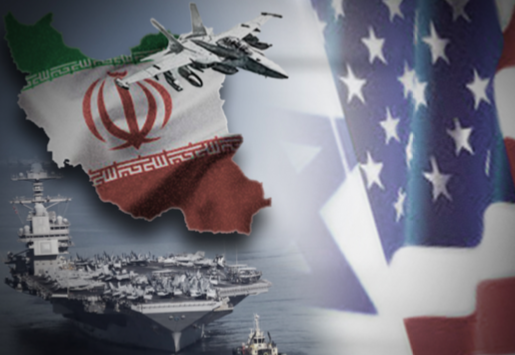
For years, Iran has lived with the possibility of a direct confrontation with Israel and the United States. While such a conflict was once largely seen as a possibility, growing tensions in the Middle East have made it a much more serious strategic concern. Iran has therefore spent years preparing for the possibility that it could be forced to fight on more than one front at the same time.
But how does a country prepare to face two militarily superior adversaries? Iran’s answer has not been to compete with them weapon for weapon. Instead, it has built a strategy around missiles, drones, asymmetric warfare, regional partnerships, and the ability to absorb an initial strike while retaining the capacity to retaliate.
This article attempts to examine how Iran prepared for the possibility of a two-front war with the United States and Israel, the strategic thinking behind these preparations, and the extent to which they have helped Iran withstand and respond to such a conflict.
Introduction: Preparing for and Fighting a Two-Front War
Iran is no longer preparing for a possible war with the United States and Israel it is already fighting one. The conflict that began on February 28, 2026, after the United States and Israel launched major strikes against Iran, has turned into a wider and much more serious confrontation. Iran responded with missile and drone attacks against Israel and U.S. military positions in the region, while the fighting has also affected the wider Gulf.
For Iran, this is the kind of situation it has been preparing for over many years. Tehran has always understood that it would face a major disadvantage in a direct conventional war with the United States and Israel. Both countries have stronger air forces, advanced intelligence and surveillance systems, and far greater military resources. Instead of trying to match them directly, Iran has built its military around missiles, drones, air defence, underground facilities, naval forces and other forms of asymmetric warfare.
The importance of these preparations can now be seen during the ongoing war. Iran has used its missile and drone capabilities to strike targets far beyond its borders, while its military infrastructure and underground facilities are designed to help it continue operating even after heavy attacks. Its ability to produce weapons domestically has also become important as the war continues, and access to foreign supplies remains limited.
The Strait of Hormuz has become another major part of the conflict. Iran has used its position around the waterway as a source of pressure against the United States and its regional partners. The fighting and restrictions around the strait have also affected international shipping and global energy supplies, showing how a conflict centered on Iran can quickly create consequences far beyond the Middle East.
Iran is also not fighting only from its own territory. Its long-standing relationships with armed groups and partners across the region have created additional pressure points for the United States and Israel. This regional reach has become an important part of Iran’s wider strategy, allowing the conflict to extend beyond a simple Iran-versus-US-and-Israel battlefield.
What makes the current war important, therefore, is that it provides a real test of the military strategy Iran has spent years developing. The missiles, drones, protected facilities, naval capabilities, and regional networks that were built as tools of deterrence are now being used under actual wartime conditions. The conflict is showing both the strengths of this strategy, and the serious challenges Iran faces when confronting two technologically superior military powers at the same time.
Iran’s Military Preparation: Building for a Long War
Iran has spent many years preparing for the kind of war it is facing today. It knew that it could not compete with the United States and Israel in terms of fighter jets, advanced technology or overall military power. So instead of trying to build the same kind of military, Iran focused on weapons and strategies that could help it survive a long conflict and continue attacking its opponents.
Missiles and Drones: Iran’s Main Weapons
Missiles have always been one of the most important parts of Iran’s military strategy. According to the Center for Strategic and International Studies (CSIS), Iran has the largest and most diverse missile arsenal in the Middle East. Its missiles include short-, medium- and longer-range systems that can reach targets across much of the region.
Iran has also built a large drone programme. Drones are relatively cheaper than fighter aircraft and can be used for surveillance as well as attacks. This gives Iran another way to strike targets without having to depend on its ageing air force.
This focus on missiles and drones is partly because Iran knows that its air force cannot compete directly with the United States or Israel. Instead, it has invested in weapons that can be launched from the ground and used against targets at long distances. The U.S. Defense Intelligence Agency has assessed that Iran’s missile forces can reach targets at distances of up to around 2,000 kilometers.
Underground Facilities: Protecting What Matters
Iran has also spent years building underground military facilities. This is important because one of the biggest advantages of the US and Israel is their ability to carry out powerful air strikes.
By placing missile launchers, weapons and other important equipment underground or in protected locations, Iran makes it harder for an enemy to destroy everything in a single attack. These facilities do not make Iran completely safe from air strikes, but they can help some of its military forces survive the first wave of attacks.
The U.S. Defense Intelligence Agency has previously described Iran as having a large network of underground military facilities, including sites connected to its missile programme.
Building Weapons at Home
Another important part of Iran’s preparation has been producing more weapons inside the country. Years of sanctions have made it difficult for Iran to buy many advanced weapons from foreign countries. As a result, Iran has tried to develop its own missiles, drones and other military equipment.
This has become especially useful during a long conflict because Iran cannot simply depend on new weapons arriving from abroad. If it can continue producing missiles and drones at home, it has a better chance of replacing some of the weapons it uses.
SIPRI estimated that Iran spent about $7.4 billion on its military in 2025. SIPRI also reported that planned funding for Iran’s Aerospace Industries Organization, which is involved in ballistic missile production, increased by 44% in Iran’s 2025 budget. Funding for Iran Aircraft Manufacturing Industrial Company, which produces aircraft and drones, increased by 50%.
These figures show that Iran has continued investing in its missile and drone programmes even while dealing with economic pressure and sanctions.
The Strait of Hormuz: Iran’s Geographical Advantage
Iran also has an important advantage that does not come from weapons it comes from geography. The Strait of Hormuz lies between Iran and Oman and connects the Persian Gulf with the Gulf of Oman. It is one of the most important oil routes in the world.
According to the U.S. Energy Information Administration, around 20.7 million barrels of oil per day passed through the Strait of Hormuz in 2024. That was about one-fifth of global petroleum consumption.
This gives Iran a powerful source of pressure during a war. Any serious disruption in the Strait can affect oil supplies, shipping, and prices far beyond the Middle East. In the current conflict, the importance of the Strait has become even clearer as shipping through the area has been heavily disrupted.
Preparing to Keep Fighting
All these preparations point to the same basic idea. Iran does not need to be stronger than the United States or Israel to make a war difficult for them. It needs to make sure that it can survive the first attacks, continue launching weapons, and keep the conflict going.
Missiles and drones give Iran the ability to strike at long distances. Underground facilities help protect important military assets. Domestic production helps it continue making weapons despite sanctions. And its position around the Strait of Hormuz gives it another way to put pressure on the global economy.
The current war is now testing whether these preparations can actually work under real battlefield conditions. Iran built many of these capabilities over decades. The question now is how well they can help the country continue fighting against two much stronger military powers.
Iran’s Two-Front Strategy: Fighting on Multiple Fronts
Iran is fighting a difficult war because it is dealing with two much stronger military powers at the same time. Israel is attacking targets inside Iran, while the United States is also involved in the conflict. Instead of putting all its strength into one type of attack, Iran is trying to create problems for both countries in different ways.
Keeping Pressure on Israel
Missiles and drones are at the centre of Iran’s attacks on Israel. Iran’s air force is much weaker than Israel’s, so it cannot depend on fighter aircraft to fight at the same level. Missiles give Iran a way to attack from a distance without sending its aircraft deep into Israeli airspace.
Iran has one of the largest missile programmes in the region. The Center for Strategic and International Studies (CSIS) says that Iran has the largest and most diverse missile arsenal in the Middle East, including missiles with ranges of up to about 2,000 kilometers. This gives Iran the ability to reach Israel and other targets across the region.
Drones add another layer to this strategy. They are generally cheaper than missiles and fighter aircraft and can be used in large numbers. Even when many of them are intercepted, they can force Israel to use its air-defence systems and expensive interceptor missiles.
So, for Iran, the purpose is not only to hit a target. It is also to keep Israel under pressure and make it spend resources on defence.
Making Things Difficult for the US
Iran is also trying to put pressure on American forces in the region. The United States has military bases and troops across the Middle East, which gives Iran several possible targets and pressure points.
Iran does not have to destroy these bases to create an effect. Even the threat of repeated attacks can force the US to increase security around its bases, move military equipment, and use more defensive weapons.
The cost of defending against Iranian attacks can also become significant. Reuters reported in August 2026 that the US had used almost all of its long-range ATACMS and PrSM missiles during the conflict, along with large numbers of Patriot and THAAD interceptors.
This shows one of the less obvious parts of Iran’s strategy. Iran is not only trying to damage its opponents; it is also trying to make them use up valuable military resources.
Bringing Pressure from Outside Iran
Iran’s influence in the region gives it another tool. For years, Tehran has maintained relationships with armed groups in countries such as Lebanon, Iraq and Yemen. These groups have their own military capabilities and have been part of Iran’s wider regional strategy.
This means that the conflict does not necessarily stay inside Iran or between Iran and Israel. Pressure can appear in different parts of the Middle East. For the US and Israel, this makes the situation harder to manage because they must watch several areas at the same time.
However, this strategy also has risks for Iran. The more conflict spreads, the more difficult it becomes for Tehran to control what happens. Regional groups have their own interests and decisions, so Iran cannot always control every action taken in its name.
Why the Strait of Hormuz Matters
Iran also has an important advantage that comes from its location. The Strait of Hormuz, which lies between Iran and Oman, is one of the world’s most important routes for oil shipments.
According to the U.S. Energy Information Administration, around 20.7 million barrels of oil per day moved through the Strait in 2024. That was roughly one-fifth of the world’s petroleum consumption.
This makes the Strait extremely important during the war. If shipping through the area is seriously disrupted, the effects can be felt far outside the Middle East. Oil prices, shipping costs and energy supplies can all be affected.
For Iran, the Strait therefore becomes more than just a military location. It gives Tehran a way to create economic pressure on countries that may not even be directly involved in fighting.
A Strategy Based on Pressure, Not Direct Superiority
Iran knows that it cannot win a traditional military competition against the United States and Israel. Its approach is different. It is trying to use the weapons and advantages it does have to make the conflict harder and more expensive for its opponents.
Missiles and drones allow Iran to attack from a distance. Its regional connections create pressure in different parts of the Middle East. The Strait of Hormuz gives it an important economic advantage. Together, these tools allow Iran to fight a much stronger opponent without having to match its military power directly.
The biggest question now is how long Iran can maintain this strategy. The war is using large amounts of weapons and resources on all sides, while Iran is also dealing with damage to its military infrastructure. Its ability to replace weapons, protect its remaining forces and continue putting pressure on both the US and Israel will be an important test of the strategy it has built over many years.




Excellent Work! Well Done!!
Quite Informative article. Keep it up