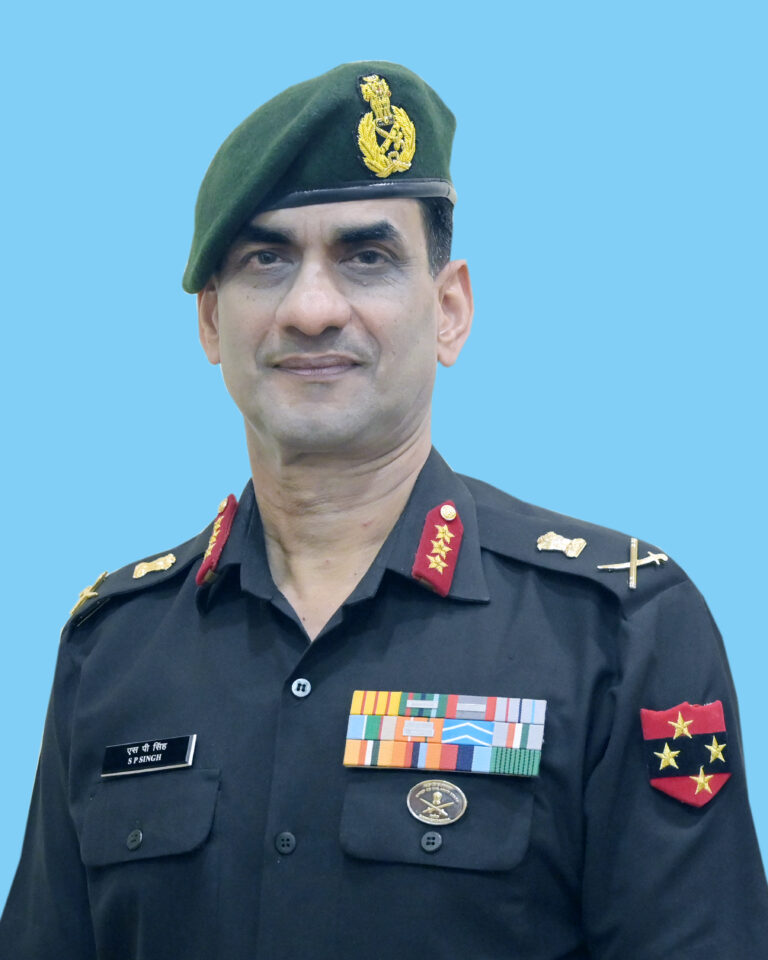
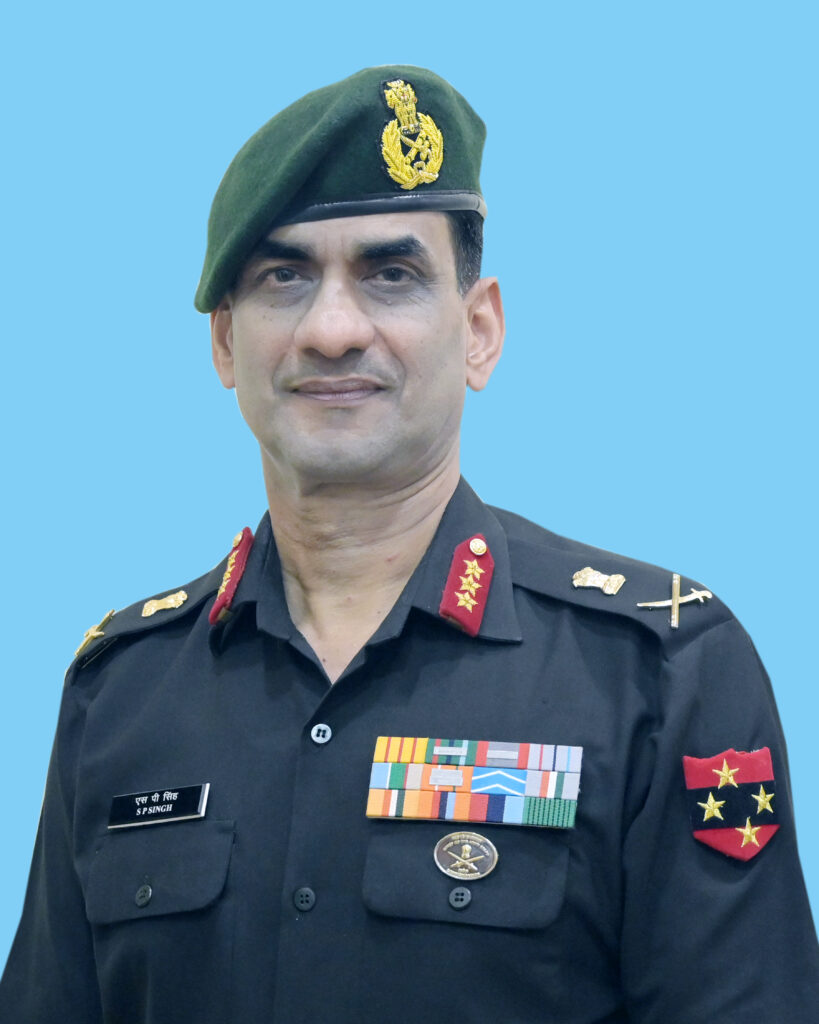
Lt Gen SP Singh, YSM: Chief of Staff, Southern Command, Indian Army
Lieutenant General Shrinjay Pratap Singh, Yudh Seva Medal has assumed the appointment of Chief of Staff of the Pune-based Southern Command of the Indian Army on October 01, 2024. The Southern Command is the biggest operational command of the Indian Army that has the onerous task of guarding the western borders of India.
An alumnus of the National Defence Academy, Khadakwasla and the Indian Military Academy, Dehradun, the General Officer is a second-generation Officer and was commissioned into Infantry on June 10, 1989. He has served in varied terrain and operational areas, having commanded an Infantry Battalion in the semi-desert sector, a Brigade in Counter-Insurgency/Counter-Terrorist operations in the Kashmir Valley, Division on northern borders and a Corps on the western front in Jammu & Kashmir and Punjab. For his exemplary achievements as Brigade Commander, the General Officer has been conferred with Yudh Seva Medal.
The General Officer made it in the competitive list of Defence Staff Selection Course which is a prestigious course in the Indian Army, attended Higher Command Course at Army War College, Mhow and also has the distinction of undergoing the National Defence College Course from Army War College, Carlisle, USA.
Lt Gen SP Singh, YSM holds a Master’s degree from Madras University, Chennai, M Phil degree from Devi Ahilya University, Indore and is a Masters in Strategic Studies from Army War College, Carlisle Barracks, PA, USA. He has also served in numerous staff appointments, some of the important ones being the Military Operations Directorate, Colonel (General Staff) of an Infantry Division in the Kashmir Valley and has also been the Brigadier General Staff Headquarters of Chinar Corps.
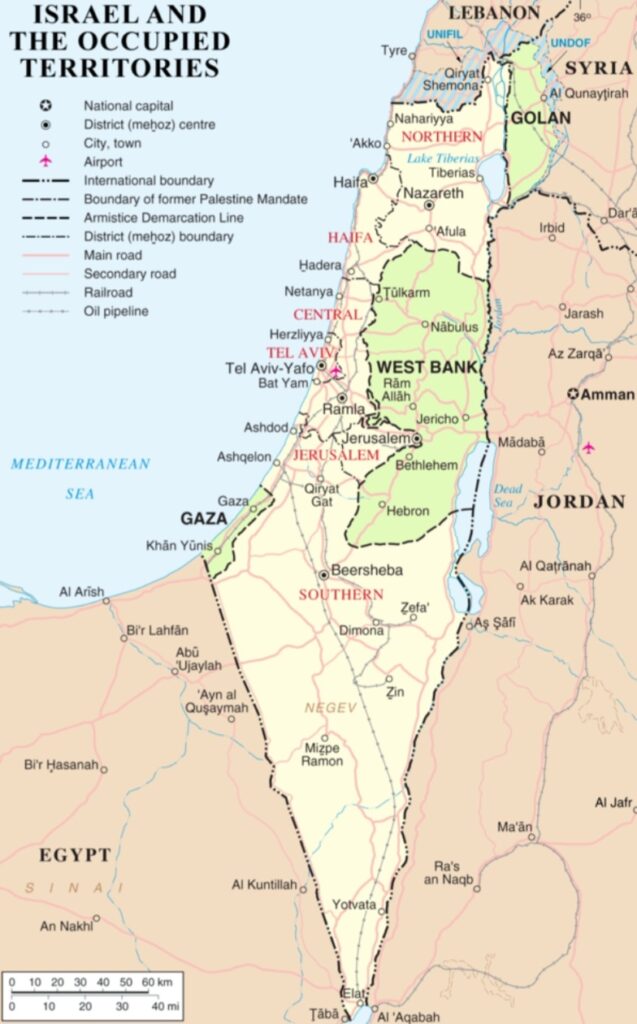
The recent calculated action against Hezbollah operating across Lebanon, involving the application of explosive-laden pagers and other electronic devices, has brought out one of the world’s most daring intelligence agency back in the headlines over again. Mossad, Israel’s national intelligence agency, has been regarded as one of the most formidable and secretive intelligence agencies in the world. Its prominence has increased significantly over the decades on the strength of its successful espionage operations, covert potency, and considerable counter-terrorism tactics. Its time for a flashback of the story of Israel’s elite spy agency.
West Asia, which has been a relatively unstable region for years, the existence of Mossad has been worthy of attention for its bold and secretive missions. The source of Mossad, can easily be traced back to the ‘Haganah’, or the pre-state Zionist paramilitary organisation operated in the British mandate for Palestine. Haganah, was formed back in the year 1920, with the objective of defending the Yishuv’s presence in the region.
Mossad as an intelligence agency officially established on December 13, 1949, under the name “Institute for Coordination” by then Prime Minister of Israel, David Ben-Gurion, keeping in mind the need for a sophisticated intelligence apparatus for ensuring the security interests of Israel, a country residing in a conflicting geographical location. Back in the year, 1951, it was restructured and given its current name, “HaMossad leModi’in uleTafkidim Meyuchadim” which can be translated as ‘The Institute for Intelligence and Special Operations’, commonly known as Mossad.
The first notable victory came in the year, 1960, when the agents of the agency captured Adolf Eichmann, a high-ranking Nazi official accused of having a role in the holocaust. The Israeli intelligence agency’s operatives with its planned and calculated moves tracked him down, and brought him to Israel, later where he was executed after trails. Subsequently, after few years, the Summer Olympics of 1972, organised in Munich, West Germany shocked the entire world, with the terrorist attack carried out on 11 Israeli athletes by eight members of the Palestinian militant organisation ‘Black September’. What followed next was a hard retaliation by the Israeli forces with members of Mossad and the Israeli Defense Force (IDF), who spent years tracking down, and killing those suspected of planning or participating in the massacre.
In the year, 1996, Yahya Ayyash, a Hamas bomb maker, who was famously identified as ‘The Engineer’ was killed in the Gaza Strip, using a cellular device that had explosives within it. Later on, in the year 2004, Syria blamed Mossad for the death of a senior member of the military wing of Hamas, Izz El-Deen Sobhi Sheikh Khalil. It was later discovered that he was killed by setting up an automobile booby trap. There are few more notable operations carried out by Mossad over the years, some of which even inspired filmmakers worldwide, bringing these operations to the screen. Operation Entebbe (1976), Operation Orchard (2007), in which Israeli Air Force jets destroyed a Syrian nuclear reactor that was under construction, or the 2018 event in which Mossad agents carried out theft of documents related to Iranian nuclear secrets from a warehouse in Tehran, are few that have made headlines.
What sets Mossad apart from other intelligence agencies is its willingness to take calculated risks and operate beyond the confines of traditional espionage. Mossad’s emphasis on human intelligence (HUMINT), signal intelligence (SIGNIT) and its extensive network of assets worldwide give it a unique advantage in gathering actionable intelligence. Also, it doesn’t just rely upon single-thread of information, instead they plan for multiple routes like tapping of phones, messaging devices, adversary’s communication channels, manipulations, etc. On the front of tactics, its mainly relies on tactical methods like ‘strategic navigation’, ‘escape and evasions’, surveillance, ‘counter-surveillance’ and so on that have also inspired the working of other such agencies around the world.
Over the years, Mossad has developed an excellent profile in neutralising threats to national security. Its operations have scaled across borders, often carried out deep inside enemy’s safe heavens. However, the deadliest attack of October 7, 2023 on Israel, in which few thousand militants breached the Gaza-Israel barrier, followed by brutal attacks on Israeli citizens, and military bases. After this attack, various strategic thinkers and experts around the world, questioned “Whether Israel’s intelligence agency issued warnings of such attacks?”, Emily Harding, an intelligence security expert made a significant statement “An intelligence failure is like a plane crash: it is never just one thing that goes wrong, it is instead a series of things that add up to a disaster.” Many also argued that, how can such a specialised agency mishear security inputs?
However, to elucidate the working of an intelligence agency is often challenging due to its secretive way of working, sometime things may not go well calculated, yet there are instances where they outperformed in securing the interest of the country. For instance, in a span of two days, waves of explosions erupted across Lebanon targeting members of Hezbollah. Though, Israeli officials have not commented on the blasts, but security sources across the globe, believes that Israel’s spy agency Mossad is behind the attacks. One Hezbollah official said ‘the episode was the biggest security breach in the group’s history’. The psychological impact of this attacks may lead to a pervasive sense of paranoia within the organisation.
This operation also signals a prominent shift in Mossad’s focus on cyber and electronic warfare. In an information age, where the entire world is connected through electronic networks, digital communication, employing such tactics as an approach to track down adversaries, hindering their operational capabilities, ability to coordinate attacks, proves their constructed way of carrying out major operations.
The operation against Hezbollah is the perfect example of its continued relevance and adaptability. Operating within a playing field that is equally complex and unstable. Mossad continues to be one of the most needed entities in a country like Israel for security preservation. With years of experience in daring missions and the creativity to come up with solutions in most circumstances, the organization remains at the top of the list of world’s finest intelligence agencies.
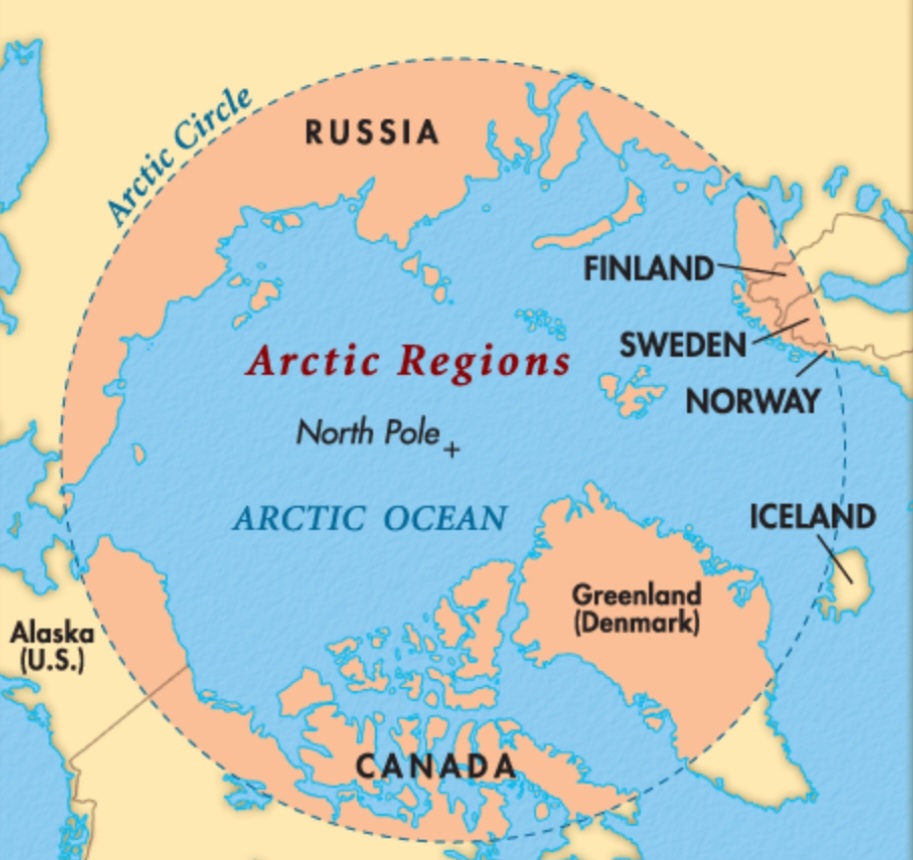
The Arctic region, located at the northernmost part of the Earth, encompasses the Arctic Ocean and surrounding territories, including parts of Canada, Russia, Norway, Sweden, Finland, Denmark (Greenland), Iceland, and the United States (Alaska). This unique region is characterized by extreme climatic conditions, with long, harsh winters and short summers. The Arctic’s geographical significance lies not only in its ecological diversity but also in its strategic position as a gateway to vital shipping routes and untapped natural resources.
In recent years, the Arctic has gained considerable attention in global geopolitics. The melting ice due to climate change has opened new maritime pathways, such as the Northwest Passage and the Northern Sea Route, which could significantly shorten shipping times between major global markets. Additionally, the region is believed to hold substantial reserves of oil and natural gas, making it a focal point for energy exploration and international competition.
Climate change acts as a critical catalyst for geopolitical shifts in the Arctic. The rapid warming of the region—occurring at a rate several times faster than the global average—has led to the disappearance of vast areas of sea ice. This not only impacts local ecosystems and indigenous communities but also intensifies geopolitical tensions as nations vie for control over newly accessible areas. The interplay between environmental changes and geopolitical interests highlights the complex challenges facing the Arctic today
Historical Context
The geopolitical landscape of the Arctic region has undergone significant transformations since the end of the Cold War. For nearly three decades, the Arctic was characterized by a period of relative peace and cooperation among the eight Arctic states: Canada, Denmark, Finland, Iceland, Norway, Russia, Sweden, and the United States. This era was marked by collaborative efforts to address common challenges such as climate change, environmental protection, and sustainable development, largely facilitated through institutions like the Arctic Council. The Council was established in 1996 to promote dialogue and cooperation among Arctic nations and to include Indigenous Peoples in discussions affecting their communities
However, this cooperative spirit began to wane in the early 2010s as geopolitical tensions resurfaced. Key events such as Russia’s annexation of Crimea in 2014 and its subsequent military activities in Ukraine heightened concerns among Arctic nations regarding security and territorial integrity. These developments prompted a re-evaluation of military strategies and increased military presence in the region, particularly by Russia and NATO member states. The situation escalated further following Russia’s full-scale invasion of Ukraine in February 2022, which led to a significant freeze in Arctic cooperation. The Arctic Council paused its operations, affecting approximately one-third of its projects due to Russia’s involvement.
Security Challenges in the Arctic
The melting ice in the Arctic has opened new maritime routes and revealed untapped natural resources, prompting a renewed focus on territorial claims and resource extraction. This has led to heightened tensions among Arctic states, as they navigate overlapping claims and interests. The security landscape is complicated by the presence of non-Arctic states like China, which has expressed interest in the region’s resources and shipping routes, thereby intensifying the geopolitical competition. The interconnectedness of various security issues—military presence, environmental challenges, and indigenous rights—creates a multifaceted security dilemma. As nations bolster their military capabilities to protect their interests, the risk of miscalculation and conflict increases. The Arctic has transitioned from a zone of cooperation to one where military readiness has regained prominence, reflecting broader global power dynamics.
In response to perceived threats, Arctic nations have ramped up military activities in the region. Russia has significantly increased its military presence, conducting exercises and establishing new bases to assert its claims over Arctic territories. Similarly, NATO members have enhanced their military readiness in response to Russia’s actions, particularly following its annexation of Crimea in 2014 and subsequent aggressions. Potential conflict scenarios include confrontations over resource-rich areas or disputes arising from increased maritime traffic. The presence of military assets raises the stakes for all involved parties; any incident could escalate into broader conflicts that draw in neighbouring states or even global powers. The risk of accidental clashes is heightened by the challenging Arctic environment, which complicates navigation and communication.
As Western nations impose sanctions on Russia in lieu of ongoing war, Moscow is increasingly turning to non-Western allies like China for economic support and collaboration in Arctic resource development. This bifurcation creates two distinct spheres of influence within the Arctic: a Russian-Asian bloc and a European-North American bloc. The resulting geopolitical fragmentation poses challenges for collective security efforts and complicates diplomatic relations.
The future of Arctic
The future geopolitical landscape of the Arctic is poised for significant transformation, shaped by a confluence of factors including climate change, resource competition, and evolving international relations. As the region becomes increasingly accessible, the potential for both conflict and cooperation will define how Arctic states and non-Arctic actors navigate their interests.
The Arctic is likely to remain a focal point of geopolitical rivalry, particularly between major powers such as the United States, Russia, and China. As nations vie for control over shipping routes and resource-rich areas, we can expect a continuation of military build-up and strategic posturing. However, the dynamics may also shift towards more collaborative frameworks as countries recognize the shared challenges posed by climate change and environmental degradation.
The Arctic Council, despite recent disruptions due to geopolitical tensions, remains a critical platform for dialogue. Its role may evolve to address not only environmental concerns but also security issues arising from increased military activities. The potential for non-Arctic nations to exert influence in the region will also grow, as seen with China’s ambitions to be recognized as a near-Arctic state.
While the risk of conflict in the Arctic is palpable—especially over territorial claims and resource extraction—the opportunities for diplomatic resolution should not be overlooked. Historical precedents indicate that Arctic nations have successfully collaborated on various issues despite underlying tensions. The establishment of agreements such as the Arctic Environmental Protection Strategy (AEPS) demonstrates a commitment to cooperative governance.
Future diplomatic efforts could focus on creating binding agreements that address both security concerns and environmental protection. For instance, initiatives aimed at sustainable development could serve as a common ground for cooperation among Arctic states. By prioritizing dialogue and collaboration over competition, nations can work towards mitigating risks while fostering economic development that respects indigenous rights and environmental integrity.
Sustainable development will be crucial in shaping future policies in the Arctic. As economic opportunities arise from melting ice and accessible resources, there is a pressing need to balance these interests with environmental protection. The region’s fragile ecosystem is already under threat from climate change; thus, investments must prioritize sustainability to avoid exacerbating existing challenges.
Conclusion
The Arctic region stands at critical crossroads, where the interplay of geopolitical competition, climate change, and environmental challenges shapes its future. As nations navigate the complexities of territorial claims and resource extraction, the potential for conflict looms large. However, history has shown that cooperation is not only possible but essential for addressing the shared challenges faced by Arctic states and indigenous communities alike.
As we look ahead, the Arctic presents both challenges and opportunities. The choices made today will have lasting implications for global stability, environmental sustainability, and the well-being of communities in this vital region. By fostering cooperation over competition, Arctic nations can work together to secure a peaceful and prosperous future for all stakeholders involved.
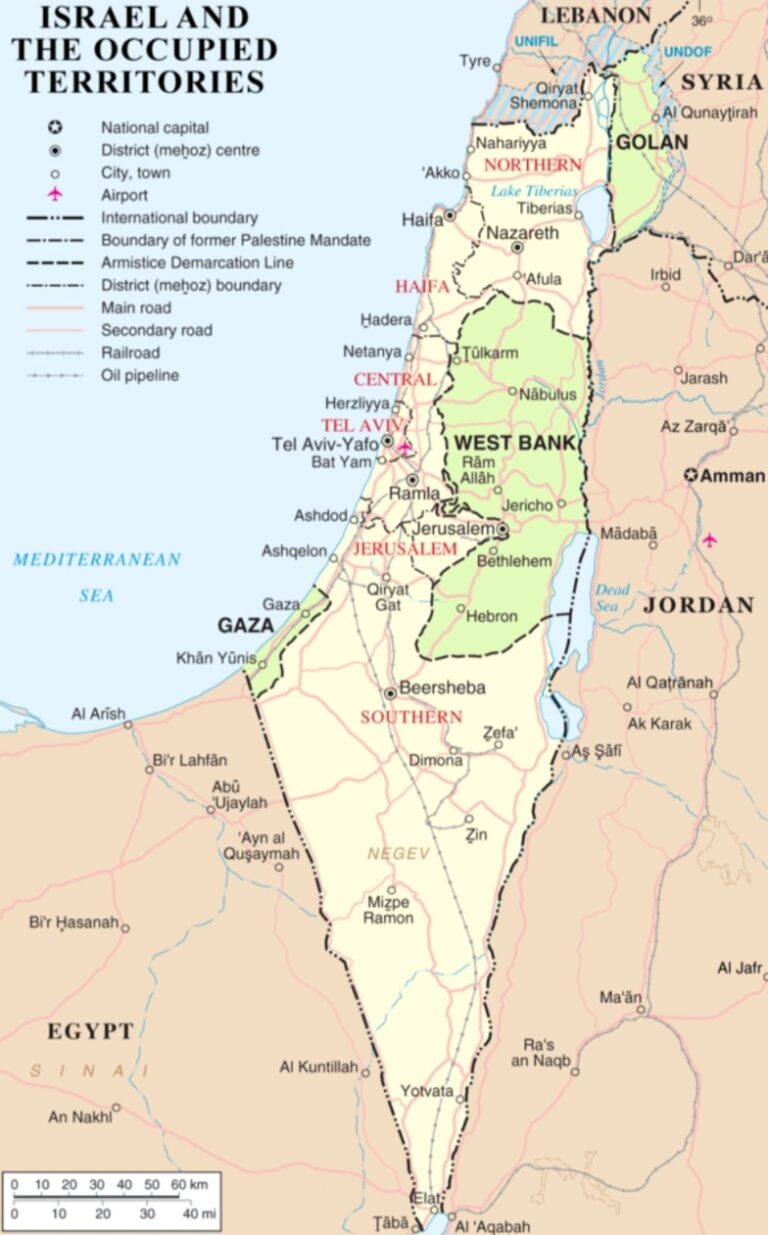
Both Jews and Palestinians are victims of the ongoing conflict. Negating one against the other will not lead to a solution. You may disagree, but the only thing Palestinians can do now is forgive the violence and horror that Zionists have inflicted upon them and vice-versa. Of course, I am not here to suggest what they both should or should not do. Forgiveness is powerful but painful and necessary for a peaceful future. However, acts of forgiving from their side won’t be possible as long as Israeli political leaders’ heinous obsession with war and the United States’s biassed approach towards the Israel-Palestine conflict. Israel gives nearly zero importance to UN resolutions as well as the ruling of the International Criminal Court (ICC). Furthermore, these organisations lack the necessary enforcement mechanisms to effectively implement their rulings.
Answering the following question is crucial to avoid falling into false narratives in a world where information is abundant. Is the Israel-Palestine conflict a religious conflict or a product of colonialism? Drawing from Edward Said’s critique of the clash of civilisation, Prof. A.K. Ramakrishnan often says, “Please don’t fall into the trap of the clash of civilization.” In my opinion, it is indeed an offshoot of colonialism, which gradually triggered hatred against each other and took the form of what appears to be a religious conflict. Colonial Zionism interrupted peace and harmony and instilled poisons of sectarianism and hatred in the minds of the people, which destroyed the coexistence between diverse communities living in Palestine. Ussama Makdisi clearly states in his book “The Age of Coexistence,” “Advents of British-backed colonial Zionism in Palestine sought to transform the multireligious land of Palestine into a national Jewish state, led by Ashkenazi Jewish settlers.” He further argues that the British Mandate viewed Arabs and Jews as irreconcilable antonyms. It started with dividing the ruins of the Ottoman Empire under British and French colonial rule, which resulted in sowing the initial seeds of Zionism into the land of Palestine. As a result, the Arab-Jew distinction, or the process of othering, was later orchestrated in the form of a Zionist agenda. Be it the Nabi Musa riots, the Hebron Massacre, the pogrom of Jews in Baghdad, or the Hadessah medical envoy incident, almost everything was an outcome of a well-articulated colonial project that spread disinformation and instilled fear among the people against each other. A thorough reading of history without subscribing to any false narrative is inevitable to understand the complexity and different layers of the conflict. On the one hand, anti-colonial resistance and years of pain involuntarily mixed with anti-Jewish sentiment; on the other hand, anti-Arab perception combined with Zionist arrogance led to a further acceleration of hatred towards each other. Hatred was inevitable.
The crucial question is, Can Israelis and Palestinians Achieve a New Era of Coexistence? The answer is yes. A two-state solution is still possible to revive the age of coexistence, but only side by side. Looking back into history, Jews, Christians, and Muslims lived harmoniously in the land of Palestine before the British invasion and the rise of settler colonialism. Zionism’s political project acted as a catalyst for communal riots, inciting suspicion and hatred among Arabs and Jews alike. Zionism was highly successful in turning the Jews against Arabs and vice versa by employing crooked strategies, deceit, and betrayal of innocent indigenous people. No need to say more; the UN partition plan in 1947 itself was a colonial baked cake where only one child got the cake, but the other remained starving. In other words, the partition plan paradoxically produced only one state, the state of Israel, while implicitly allowing the newly formed state to oppress and dehumanize the other.
If someone is labelling Hamas as a terrorist organisation, I will have a different say on it. The current ruling party of Israel, Likud itself, traces its roots back to a ruthless terrorist organisation named Irgun, later renamed to Lehi and taking the current form. However, for Israelis, Irgun and Haganah militants represented the pillar of their right to self-determination. In my opinion, if someone argues that the Likud party embodies the democratic ethos and the current Israeli government is democratic, I will view it from a different perspective. Former Prime Ministers of Israel, such as Menachem Begin and Yitzhak Shamir, actively participated in far-right nationalist and aggressive military organisations such as Irgun and Lehi, all while enjoying complete impunity. Using the same logic, I would like to argue Hamas cannot be considered a terrorist organisation since it is a democratically elected body.
Indeed, Hamas’s 7th October attack on Israel was a condemnable act of violence. Innocent civilians should not be indiscriminately killed, even for the sake of liberation. However, accepting and understanding the underlying reasons behind the formation of a so-called terrorist organisation and the later democratic victory of Hamas is equally important. The earlier Palestinian resistance to colonialism had subscribed to numerous forms, which include non-violent gatherings, petitions, public speeches, discussion, pleas, etc. However, it failed to achieve the objective of preventing the British from unwaveringly supporting the colonial Zionists. Thus, for Palestinians, Hamas is an integral part of their resistance against occupation. Moreover, they consider it an organisation that could reach and address Palestinian grassroots issues. It has emerged as their representative body, democratically winning both elections and the hearts of the people, while the Palestinian Liberation Organisation has consistently failed to find a solution to Palestinians’ ongoing suffering.
Highlighting Israel as the only democratic country in the so-called war-torn West Asia region is nothing more than an organized attempt to whitewash genocide, assisted by the weaponization of artificial intelligence and targeted killing of civilians in Gaza. Similarly, we cannot use the historical baggage of Jews and the ongoing persecution of Jewish minorities worldwide as a justification for the surveillance, dehumanisation, and indiscriminate killing of Palestinians.
People on both sides have suffered a lot. Enough is enough. The issue requires immediate resolution. Reviving an age of coexistence again is the need of the hour today. A two-state solution is essential, or else one country will treat the other as second-class citizens, and the chain of discrimination will be never-ending. Israel’s treatment of people in the so-called Occupied Palestine Territory (OPT) exemplifies the same. An ecumenical framework, existing side by side, and a method of coexistence should be the way ahead.
But again, the question arises: is that possible? Though the other ministers in his own cabinet demand the end of war and a ceasefire, Netanyahu, backed by his minions like Itamar Ben-Gvir, won’t let that happen. There is a growing allegation against Netanyahu that he merely seeks to maintain his power in the States, using it as a tool to conceal corruption and political instability within the country. These allegations are neither mere rhetoric nor unsubstantiated.
Regarding the role of the United States, will US election results provide any hope for the future of Palestinians? I would say, no. Neither Trump nor Harris will be interested in mediation or permanently settling the issue. Although Harris attempts to portray her as a progressive and saviour of the oppressed, she will also follow in Biden’s footsteps in a different way. Harris is in fact equal to Biden; the opinion and stance are the same, with a marginal change in the nature and tone of talking. Israel is now digging their own grave. As Prof. Bansidhar Pradhan from Jawaharlal Nehru University once said, “I am not afraid of the future of Palestine. But I am afraid of the future of Israel.” Almost the majority of the international community has turned against the Netanyahu-led, horrendous war on Gaza. The ego and arrogance of Israel’s political leaders could potentially incur significant costs for the country.
Along with the Himalayas and Eurasia, the Indian Ocean has also emerged as an important hot-bed of geopolitical rivalry between India and the People’s Republic of China (PRC) or China. The Indian Ocean is the third largest ocean and covers some 20 per cent of the global water surface. Its heightened importance stands from its geographic location as a key trade and energy supply conduit straddling between the economic engines and commercial ports of North Atlantic and the emerging and high energy consuming economies of Asia- Pacific. The Indian Ocean Region (IOR) encompasses international shipping lanes connecting the economies of East Asia and South East Asia, South Asia, West Asia, and the East African states. The IOR is home to an emerging market of 2 billion people in 32 littoral states and is a rich reservoir of resources in terms of huge deposits of rare earth elements (REE), 15 per cent of fish deposits and around 40 per cent of the world’s offshore oil production. The real value of IOR lies in the presence of critical Sea-Lanes of Communication (SLOCs) located in its expanse notably the Straits of Hormuz, the Bab-el-Mandeb and the Straits of Malacca which saw around 39 per cent of the global energy maritime trade pass through its spaces in 2017. Among these straits, the Straits of Hormuz and Straits of Malacca are quite significant. A major portion of the oil and energy supplies originating from West Asia passes through these two SLOCs before reaching their destination in the East Asian economies of China, Japan, and South Korea and in the Malacca alone, the global trade value passing through its waters are valued a US$ 3.5 trillion. This includes two-thirds of China’s trade volume, 40 per cent of Japan and a third of global maritime trade. For China, the Malacca becomes crucial as around 80 per cent of its energy imports including oil and Liquified Natural Gas (LNG) are shipped through this narrow SLOC which are vital for the functioning of the world’s second largest economy.
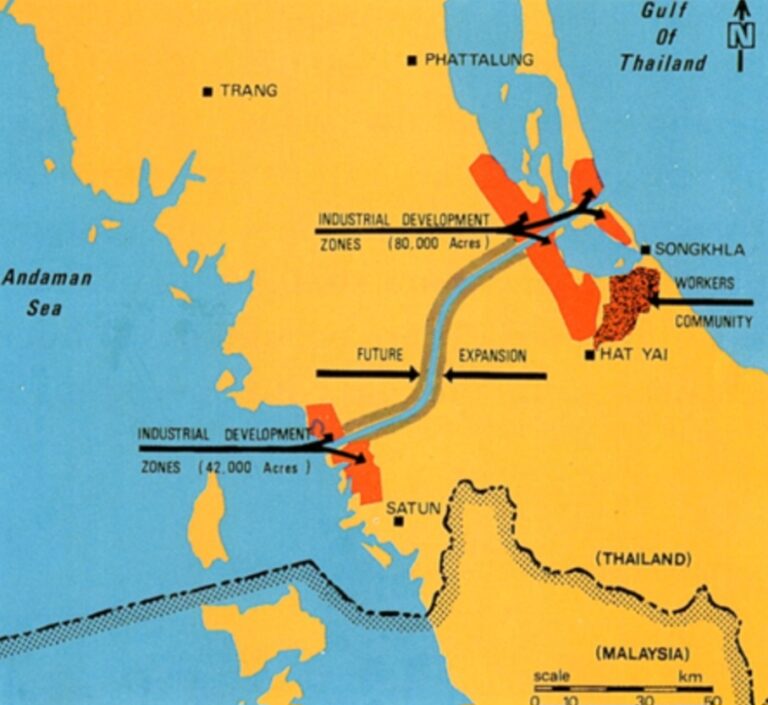
Given the above situation, it is no surprise that the IOR and especially the need for control over the SLOCs especially Malacca has emerged as high agendas in the Chinese strategic perception. In the case of Malacca, considering its role in terms of energy supplies mentioned above, there has emerged anxieties about the SLOC being used as a chokepoint by powers such as the US and increasingly India by placing a naval blockade on the same−a sentiment highlighted by then Chinese President Hu Jintao as the ‘Malacca Dilemma’. This anxiety or dilemma has led Beijing to search for alternative routes to secure its energy shipments through projects such as the China Pakistan Economic Corridor (CPEC) connecting the city of Kashgar in Xinjiang province through an overland route to the Pakistani port of Gwardar and the laying out of pipelines between Yunnan in Southern China and the port of Kyaukphu in Myanmar as part of the Chinese led Belt and Road Initiative (BRI) of global infrastructure development and connectivity initiative announced in 2013. This search for alternative routes has also sparked Chinese interest in the long-buried but recently re-emerged idea of the Kra Canal− a canal across the narrow Kra Isthmus in Thailand joining the Gulf of Thailand with the Andaman Sea and thereby offering an alternative route to the Straits of Malacca. While the arguments in favor of the proposed Canal range from reducing the burden of traffic in Malacca and providing a shorter route in terms of time taken and cost reduction to boosting the Thai economy, concerns have also been raised over Beijing’s participation in the Kra Canal which could allow the latter to bring Thailand under its ‘debt trap’ thereby eroding Thai sovereignty as well as the Canal’s potential as a shorter route for Chinese naval ships to enter the Indian Ocean. For India, the latter part is crucial given its own security and strategic interests in the Indian Ocean, especially the Andaman Sea which abuts the Union Territory of Andaman and Nicobar Islands as well as the eastern Indian seaboard. However, if India plays its cards well, it can turn the potential strategic disadvantage of the Kra Canal into an opportunity to increase its influence in the IOR. This constitutes the central theme of the paper which begins by outlining the history and basic features of the Kra Canal followed by the potential ways through which India can engage with the Canal to its own advantage.
The Kra Canal/Land Bridge
The Isthmus of Kra is a narrow strip of land in southern Thailand linking the Malay Peninsula with mainland Southeast Asia. As mentioned above, the Kra Canal is a proposed man-made canal across the Isthmus which plans to connect the South China Sea (SCS) via the Gulf of Thailand to the Andaman Sea in the Indian Ocean. It would be located 500 miles south of Bangkok and 120 miles north of Thailand’s border with Malaysia. The principal motivation driving the construction of the Canal has been its potential to reduce the sailing time as well as provide a shorter connectivity route between eastern Asia and the Indian Ocean. As per certain studies, the canal if and when constructed would reduce the distance between the two regions by 700 miles or around two-three days of sailing time as compared to the conventional routes around the Straits of Malacca.
The idea of exploiting this canal can be traced back to the 17th century during the reign of monarch Narai the Great who in 1677 had mooted the idea of a canal connecting the western and eastern coasts of the Ayutthaya Kingdom (then Thailand) in order to facilitate the rapid movement of troops to counter the neighbouring Burmese kingdom. To that end, the monarch had sought the assistance of the French colonial power in order to transform his vision into reality; however, the idea was dropped as it was unfeasible. Yet, the idea of a canal connecting the Gulf of Thailand with the Andaman Sea was subsequently pursued by the British and French colonial powers who undertook studies in 1843, 1849, 1863, 1872 and 1883 respectively. Because of the number of studies taken during these years, several prospective routes for the Canal were identified, especially the one titled ‘9A’ was thought to hold the most promising potential. However, the plans for construction were scrapped until it was revived again by a Thai industrialist KY Chow in 1972 but it did not see the light of the day owing to the Arab-Israeli War of 1973 and the resultant oil crisis. At the same time, powers such as Japan, in the wake of the crisis, had shown interest in the Kra as an alternative route for securing oil supplies vis-a vis the over-crowded and pirate infested Malacca straits. The idea was revived again in 2000 by the then Thai Prime Minister (PM) Thaksin Shinawatra who constituted a committee to conduct a feasibility study. Again, the project was sent to the backburner by the military coup in 2006. However, the idea lingered within circles such as the Thai Canal Association (TCA) and the Thai-Chinese Cultural and Economic Association (TCCEAT). A Memorandum of Understanding (MoU) was signed in 2015 between the private entities of China-Thailand Kra Infrastructure Investment & Development Company and the Asia Union Group for constructing the canal, but both the Chinese and Thai governments later backtracked and denied any ‘official involvement’ in the project. Moreover, the government of PM Prayuth Chan-o-cha which came to power following a military coup in 2014, did not give much priority to the canal. Yet the potential of the Canal in bringing economic windfall to the tottering Thai economy led the Government to form an ad hoc committee in 2020 to re-examine the feasibility of the project whose report was submitted to the Thai parliament in 2022 but was rejected by the House with 144 votes against as opposed to 121 votes for the Canal. The latest re-iteration of the idea was done by PM Srettha Thavisin in the forums of the third Belt and Road Forum (BRF) and the Asia Pacific Economic Cooperation (APEC) but in a different avatar as a land-bridge instead of the old idea of Canal.
The proposed land-bridge over the Kra Isthmus, which seeks to replace the Canal, is envisioned as connecting the eastern and western coasts of Thailand through overland dual track rail and road links extending around 120 km. The multi-modal transport corridor would connect the deep-sea port in Chumphon province on the Gulf of Thailand with the upgraded port of Ranong on the Andaman Sea into a deep-sea port. The rationalisation for the project, whether in the form of Canal or Land-bridge has been the need to address the congestion of maritime traffic along the Straits of Malacca as well as the benefits of time and cost reduction to vessels plying between the Indian Ocean and the SCS. The Straits of Malacca is witness to 80,000 vessels transiting its waters on an annual basis[i] and by 2030, it is expected to rise to 140,000 vessels as per World Bank data[ii]. Hence, if realised the Kra project could potentially help re-route most of this traffic given its advantages such as reduction of distance and time in terms of 700 miles and two to three days.
However, there have raised serious issues and doubts regarding the feasibility of the project. Firstly, the benefit of time reduction by two-three days is not enough to induce large vessels to take the Kra route. Moreover, the construction cost of the canal would have to recovered through the levying of a transit fee upon ships, which, as per some estimates, would amount to US$ 115,000 per vessel, per transit. In such a scenario, it would make sense to use the International Shipping Lane of Malacca which does not charge any transit fee. In addition, the functioning of the Canal or the Land-Bridge would require the development of Special Economic Zones (SEZs), transhipment and bunkering infrastructure which would necessitate finding funding of around US$ 30-80 billion. Another major area of concern is the ecological and environmental impacts of the project due to the differing water level between the Andaman Sea and Gulf of Thailand. This would especially affect the livelihood of 40,000 fishermen in both the Andaman Sea and Gulf of Thailand given the project’s potential adverse implications upon marine ecologies and fishing reserves. Along with fishermen, the construction of the canal would also lead to the displacement of 65,000 villagers. The brunt of the Canal would have to borne by the Thai tourism industry in the Isthmus of Kra which is estimated to contribute around 40 per cent of revenue to the Thai economy. The third major concern about the project is its impact upon the neighbouring port and transhipment facilities such as Singapore and Port Klang in Malaysia which given their efficiency and other logistical advantages would be able to mount considerable challenge to the Kra. The fourth major factor hindering the realisation of the project is its potential negative consequences upon Thailand’s internal and external security. The construction of the Canal would lead to a physical bifurcation of sorts between Thailand’s northern regions and its southern parts which has been a hot-bed of Malay insurgency and separatism which has led to the loss of 7000 lives since the movement’s resurgence in 2004. In this context, the canal or any project in the Kra Isthmus would be interpreted as separating the ‘deep south’ from the rest of the country while the insurgency itself would hinder any efforts at construction[iii].
On the external front, the nature of the Kra Canal and its strategic implications would draw Thailand into the midst of the increasing Sino-US rivalry thereby affecting its traditional ‘bamboo diplomacy’ or the flexible way of conducting diplomacy without bending to either side. It is to allay such concerns that the Thai government has also approached countries such as US, India, and Australia to fund the project. With regard to Chinese investment, anxieties have also been expressed over the project becoming ‘a white elephant project’ like Hambantota in Sri Lanka and Gwadar in Pakistan and making Thailand similarly dependent on China through the policy of ‘debt trap’. Meanwhile, the removal of Thavisin from the post of PM by the order of the Constitutional Court on account of ethical violation over appointment of a Cabinet member accused of bribe charges only serve to highlight the volatile nature of Thai domestic politicsand their implications on the fate of big projects like the Kra which now seems to be in limbo.
A Strategic Opportunity for India
Despite the speculations regarding its strategic value for the Chinese, the Kra Canal or Land-bridge has certain limitations which raises doubt as to its strategic utility. Given its geographic location, shipments destined to pass through the Kra Canal or from it to other parts of the IOR would have to navigate through the maritime space of the Indian Ocean and its chokepoints such as the Straits of Hormuz and the Palk Straits which could be interdicted by hostile navies. In addition, the ships bound for the canal would have to pass through the Andaman Sea which falls under the Exclusive Economic Zone (EEZ) of India and thus would not carry the immunity of ‘innocent shipping’ as in the case of Malacca or Sunda. In addition, the difficulties as well as the volatility of domestic Thai politics mentioned earlier would prevent Beijing from putting much impetus in the project for the time being.
However, the apparent strategic benefits of the Canal also cannot be overlooked by Beijing, especially in a time of increasing pressure on its manoeuvres in the IOR due to the actions of countries like US, India, and groupings like QUAD and AUKUS. As pointed out earlier, the construction of the canal would provide the Chinese People’s Liberation Army Navy (PLAN) with a relatively easier gateway to the Indian Ocean and the Andaman Sea in particular as compared to the Malacca Straits from the SCS. Moreover, the construction of the Canal through Chinese funding and as part of the Maritime Silk Road (MSR) of the BRI would allow Beijing to wield considerable influence in the functioning of the project, especially in case it ends up increasing Thailand’s dependency on Beijing. In addition, the project would also allow the diverting amount of significant shipping activity northward towards Chinese controlled ports or ports with Chinese influence such as Kyaukphu and Chittagong.
The most important and crucial takeaway for Beijing regarding the Kra Canal is its strategic value in the larger scheme of ‘String of Pearls’ or Chinese controlled/ influenced ports dotting strategic points in the Indian Ocean. Along with the Chinese-upgraded Ream naval base in Cambodia situated at the entrance of the Gulf of Thailand, the control of the Kra Canal or the ports of Ranong and Chumphon would allow Beijing the ability to monitor the passage between the Andaman Sea and the SCS. Moreover, along with its control over the transhipment ports of Kyaukphu in Myanmar and Hambantota in Sri Lanka, the Kra Canal would ensure the smooth and safe passage of Chinese shipments bound for West Asia and Europe while also facilitating the unhindered movement of Chinese energy shipping. Finally, from the perspective of India, the Chinese control of the Kra Canal or its ports would buttress Beijing’s encirclement of the Indian Ocean and allowing the PLAN power projection opportunities in the Andaman Sea close to India’s eastern coastline and strategic territories such as the Andaman and Nicobar Islands. More adversely for India, the Kra Canal in the ‘String of Pearls’ would also facilitate the unhindered movement of Chinese ‘research’ vessels mapping the Indian Ocean seabed destined for Maldives and Sri Lanka whereas the current route taken by these vessels through the Sunda Strait does not ensure a smooth passage given the patrolling by Indonesian Coast Guard.
What should India do? While some critics have labelled the Indian concern over the Kra project as ‘much ado about nothing’ given the uncertainties surrounding the latter and the lack of any official formal announcements regarding the same by either the Thai or Chinese governments, yet given the stakes involved India cannot ignore the potential consequences of a Chinese controlled Kra Canal/ Land-bridge. The re-iteration of the idea again in 2023 in the forums of APEC and the BRF, together with the Chinese search for overcoming the Malacca dilemma. Hence, as has been opined by former foreign secretary Vijay Gokhale, while much about the Kra project remains tentative, yet given the ‘emergence of the Bay of Bengal (encompassing the Andaman Sea) as new economic hub as well as arena of geopolitical competition, India should also start preparing itself. The following paragraphs will highlight the possible steps which can be taken by New Delhi to turn the Kra Canal into a ‘strategic opportunity’.
As a first step, the Indian government should ramp-up the development of naval and transhipment infrastructure of the Andaman and Nicobar Islands in order to utilise their strategic location straddling major sea lines of communication. Located around 700 miles southeast of the Indian landmass, the islands share Indian maritime delimitation zones with Myanmar, Bangladesh, Indonesia, and Thailand. Moreover, the islands are just a day’s sailing distance away from the Straits of Malacca and share proximity with strategic locations such as Sabang in Indonesia and the Coco Islands of Myanmar. Most importantly, the mouth of the Kra Canal would be 350 miles east of Port Blair the capital of the archipelago. Along with the steps taken to develop military infrastructure such as revamped airfields and jetties, focus should also be put on fast-tracking the development of the transhipment facility of the Galathea Bay in the Great Nicobar Island which plans to act as a feeder to the ports of Colombo and Singapore as well as handling cargo from Myanmar and Bangladesh. Given the proximity of the Galathea Bay to Thailand’s Ranong deep-sea port at the mouth of the Kra Isthmus, both these projects could be synergised to benefit each other thereby increasing Indian stakes and participation in the Kra project. This could be further explored as to how the Kra connection via the Galathea Bay could be further utilised to benefit Indian states along the Bay of Bengal.
Along with this the link between the Galathea Bay and the Kra Canal could also be synergised with the evolving Andaman-Aceh Initiative connecting the Islands with the port of Sabang in Aceh province. This triangular web of connectivity between the Andaman and Nicobar Islands, Sabang port at the mouth of the Malacca and the Ranong port at the Kra Canal would allow India not only multiple options for shipping its trade destined for the SCS but also could be utilised for its strategic value in enabling greater Indian naval presence in the Bay of Bengal. Such a linkage would fit well with India’s own ‘Necklace of Diamond strategy’ designed to counter Beijing’s String of Pearls. The ‘Necklace’ entails seeking access to strategic locations such as Duqm in Oman, Changi Base in Singapore, Chabahar Port in Iran and Assumption Island in Seychelles by entering agreements with the countries concerned while strengthening strategic partnerships with oceanic countries like Japan, Vietnam and Australia. The (informal) inclusion of the Kra Canal in the ‘Necklace’ is further enhanced by the interest expressed by countries such as US, Australia and Japan in developing the project, all of which are currently major partners of India in the Indo-Pacific. Along with Sabang, another potential connection which could be utilised is that between Kra and the developing Hon Khoai deep sea port in southern Vietnam. To be developed with mostly US financing, the port and its interest in utilising the canal could lead to greater Indo-Vietnamese engagement with Vietnam already being an integral part of the Necklace. Hence, before the potential transformation of the Kra into another Chinese pearl, India along with its partners should seize the initiative and include it as a Diamond.
However, a question arises as to whether India can generate enough capital on its own to able to unilaterally invest and influence the Kra project akin to China. This is all the more evident in the fact of the extent of availability of surplus capital in China which resulted in the BRI− such level of capital cannot be matched by the US nor major powers like Japan on their own. Hence, the ideal way would be to invest in the project through partnerships or through multilateral initiatives of which India is a part. Firstly, given the ambivalence among ASEAN countries towards the project, India should try to use its relations with the latter through the various ASEAN-India forums to bring them all, including Thailand on the negotiating table to discuss the collective costs and benefits of the project as well as try to promote joint India- ASEAN partnership especially with Myanmar, Thailand, Cambodia, and Vietnam to invest and develop the Canal/ Land-bridge. Following the Indian principle of emphasis on ‘ASEAN Centrality’ with regard to the Kra Canal would also prevent any form of total Chinese takeover of the project and its unnecessary tangling in major power competition with US. The interest of US, Australia, and Japan in the Kra Canal could be channelised along with India through the Quadrilateral Security Dialogue (QUAD) under the working group on infrastructure development. This is also helped by the fact that the Thai government had also invited investment from the QUAD countries as mentioned above in 2020-21.
Along with QUAD, multilateral platforms such as the Bay of Bengal Initiative on Multi Sectoral Technical and Economic Cooperation (BIMSTEC) and the Indian Ocean Rim Association (IORA) of which India and Thailand are both members as well as the multilaterals’ focus on infrastructure development, connectivity and trade and investment facilitation. Another forum for initiating Indian investment is the Indo-Pacific Oceans Initiative (IPOI) forum led by India where the Kra project could be covered under the pillar of ‘Maritime Connectivity’ of the IPOI. The multilateral and multi-partner nature of these investments as well as the emphasis on transparency, debt sustainability and respect for sovereignty in the official statements of India and US on connectivity would allay the Thai anxieties over loss and erosion of sovereignty compared to unilateral Chinese initiatives.
Finally, the strategic naval benefit of the Kra can be utilised through the Indian forum of Security and Growth for All in the Region (SAGAR) which entails maritime domain awareness, anti-piracy operations, Humanitarian and Disaster Relief (HADR) and naval cooperation and naval exercises with allied and friendly navies in the Indo-Pacific. The Thai Navy stationed in the ports or across the Kra Canal could be invited to be a part of the exercises thereby increasing Indo-Thai naval cooperation. At the same time, such exercises involving the Indian and Thai navies in the Canal or at the port of Chumphon, with participation from Vietnam would send signals to Beijing to not involve in any adventure across the Canal to Andaman Sea while highlighting Indian Navy’s ability to enter the SCS. Such signalling could also be buttressed with occasional joint Indo-Thai-Vietnamese patrols in the SCS thereby transforming the Canal’s initial disadvantage for India into an advantage.
Conclusion
The Indian Ocean has emerged as the new ground of Sino- Indian rivalry with Beijing and New Delhi jostling for influence in the maritime domain. It is in this background that the Kra Canal/ Land-bridge project rises to importance especially for India. The project, if realised under Chinese investment and subsequent control, would allow Beijing a smooth passageway from the SCS to the Andaman Sea and Indian Ocean bypassing the Straits of Malacca. Such a situation would be detrimental for Indian security which is intertwined with the maritime space of Andaman Sea and the Indian Ocean. Hence, despite the project’s apparent non-appearance as of now but given the stakes involved, India should be prepared with possible steps to be taken should the project see the light of the day or is able to garner enough attention from China to transform into a reality. On the first sight, India should try to seize the initiative through the developments of its assets in the Andaman and Nicobar Islands, seeking investment through multilateral forums like QUAD, IORA and BIMSTEC and even seek to include the canal in its ‘Necklace of Diamonds’ given the convergence of its major partners like US, Japan, Australia, and Vietnam in the project. Further strategic utilisation of the project to counter Chinese adventurist moves vis a vis the Andaman Sea and Indian Ocean could be done by including the Canal and the Thai Navy in the SAGAR activities.
Indian Minister of External Affairs (MEA) Dr S Jaishanker had noted, back in 2016, the ‘interactive dynamic between strategic interests and connectivity initiatives−a universal proposition−is on particular display in our (Asian) continent’ and warned against countries using connectivity ‘as an exercise in hard-wiring that influences choies’−evident in Chinese projects in South Asia and the IOR that has the capability to undermine our security and interests. At the same time, in The India Way, Dr Jaishankar emphasises on the Indian vision of connectivity which ‘underlined the importance of trust and respect for sovereignty, transparency, viability and sustainability’ which in ‘essence was a call for an Asia of cooperation, rather than of rivalry’[iv]. Hence, the definition of an India −defined Asia of cooperation could be realised in the Kra project.
In his latest work Why Bharat Matters Jaishankar draws analogies between the events of the epic Ramayana and its principal characters Lord Rama and Lord Hanuman with India’s current foreign policy experience. Just like Rama had to undergo various trials and tribulations to realise his warrior prowess, India too would have to pass through difficulties in the external environment to realise its potential. Similarly, like Lord Hanuman who was made unaware of His own divine powers as a result of a curse and would later realise it after being reminded of the same and by performing his role in the events of the epic, India too would realise its potential as it engages more with the world and its extended neighbourhood. Perhaps the Kra Isthmus provides an opportunity for both.
Hamesha A-One Engineer Regiment in counter-IED Operation in Manipur
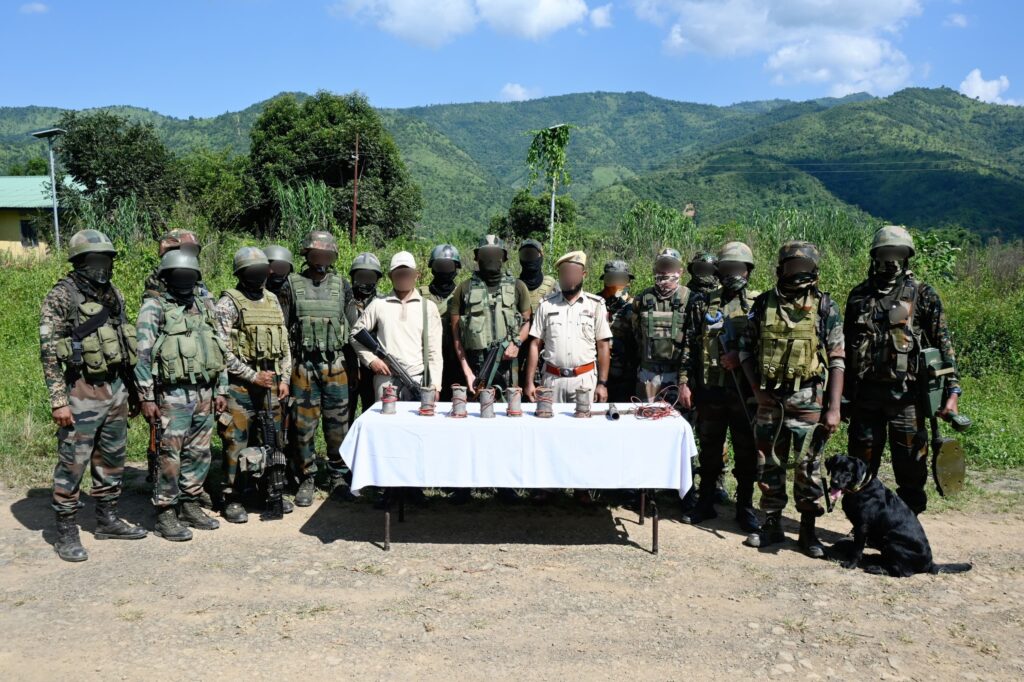
In a swift and major operation launched by the Indian Army with Manipur Police, a significant threat to life and property was averted when a large quantity of Improsived Explosive Devices (IEDs) was recovered in the hilly areas near Bongjang and Itham villages in Imphal East district.
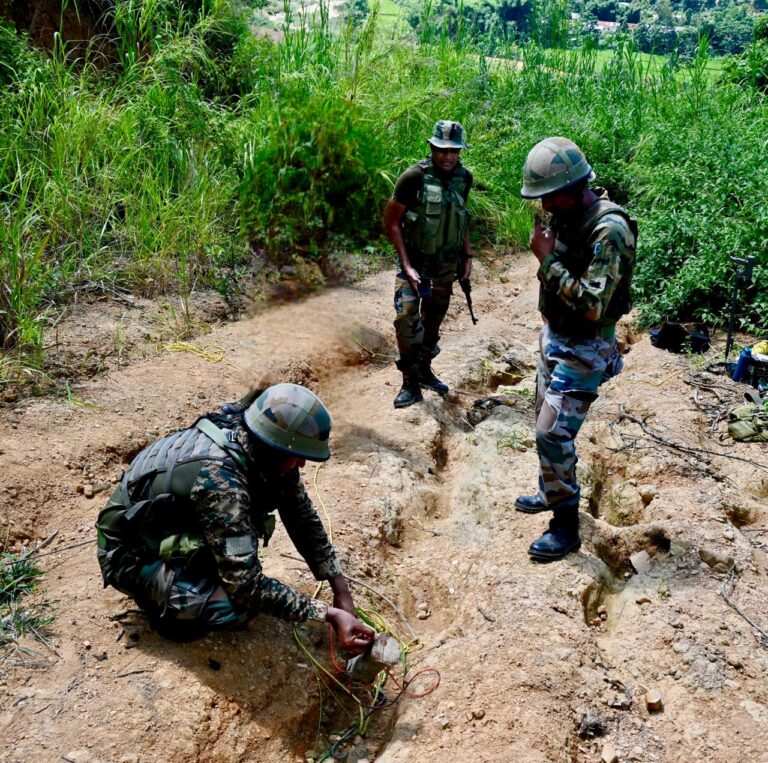
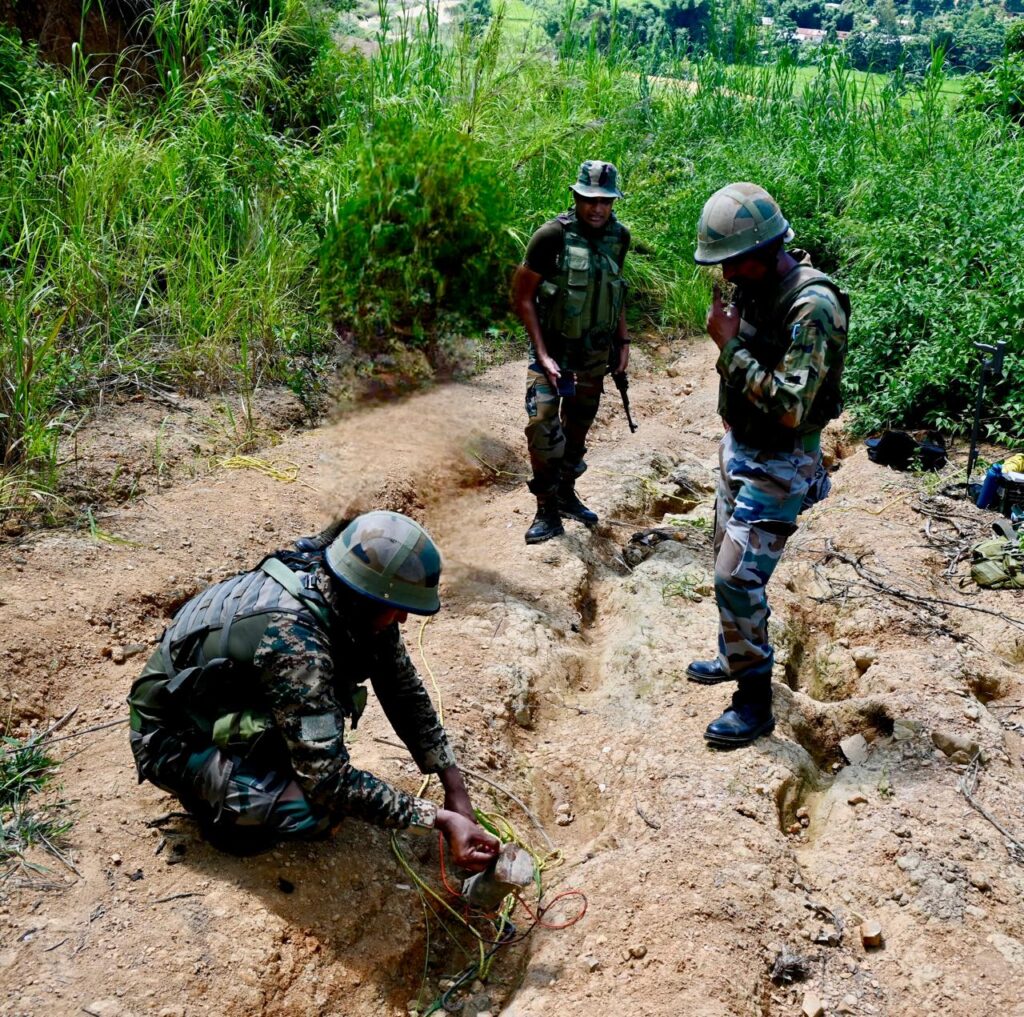
Acting on specific intelligence, columns of the Engineer Regiment of the Red Shield Division of the Indian Army and Manipur Police acted speedily and launched a search operation with Army Explosives Detection Dogs and recovered seven IEDs weighing approximately 28.5 kgs. The recovered IEDs were diffused by experts from the Red Shield Engineers. Thus, preventing a major disaster and ensuring saving of precious lives of innocent civilians.
Hamesha A-One and Manipur Police after successfully neutralizing the seven IEDs
With utter disregard to personal safety and security the adept and skilled professionals of the elite Red Shield Engineers took control of the situation and in a race against time diffused all the seven IEDs thus averting a major disaster.
This recovery of IEDs is the second major haul for the security forces in the past three months, wherein on July 20, 2024 eight IEDs weighing 33 Kgs were successfully recovered in the hilly areas of Saichang Itham, Imphal East and neutralized earlier too by the expert Engineers of the Red Shield Division of the Indian Army
The expeditious response of the Indian Army in sync with the Manipur Police has once again exhibited seamless coordination amongst the security forces and also ensured the safety and security of the region, sending a strong message to anti-national elements.
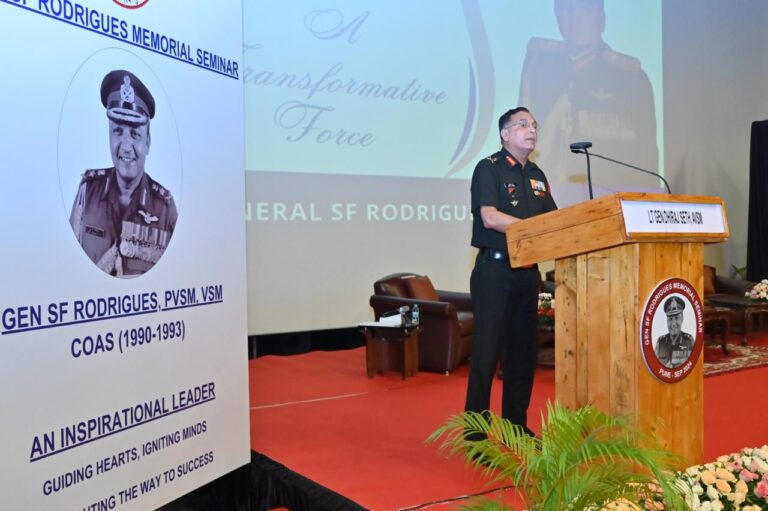
Lieutenant General Dhiraj Seth, AVSM, GOC-in-C, Southern Command addressing the Seminar
The Regiment of Artillery in conjunction with the Centre for Land Warfare Studies (CLAWS), hosted the 2nd Edition of ‘Gen SF Rodrigues Memorial Seminar’ at General Bipin Rawat Auditorium, Pune on September 19, 2024. The prestigious event paid tribute to the late Chief of Army Staff and deliberated on the critical theme of National Security @2047.
The seminar commenced with a keynote address by Lieutenant General Dhiraj Seth, Ati Vishisht Seva Medal, General Officer Commanding-in-Chief, Southern Command, which set the tone for the event. Comprehensive Fireside Chat Sessions were held on “Audit of India’s Defence Posture” and “Amrit Kaal-The Road Ahead (Blueprint on Capacity Building)”. Additionally, Air Marshal (Dr) Diptendu Choudhury (Retd) Param Vishisht Seva Medal, Ati Vishisht Seva Medal, VM (Devotion of duty), Vayu Sena Medal delivered a special address on Atmanirbharta (self-reliance) emphasizing the importance of self-reliance in achieving national security objectives.
Distinguished guests in the Seminar
The seminar witnessed enriching deliberations on national security issues from military, economic and diplomatic perspectives. Esteemed veterans, with their diverse experience, contributed meaningfully to the discussions, generating implementable options for the future. The event had a large attendance of distinguished participants, including serving and retired officers, scholars and experts.
In his concluding remarks, Lieutenant General Adosh Kumar, Ati Vishisht Seva Medal, Sena Medal, Director General Artillery and Senior Colonel Commandant, Regiment of Artillery, delivered a vote of thanks to the esteemed speakers, participants and organizers for their valuable contributions to the seminar. The seminar concluded on a high note, with a renewed sense of purpose and commitment to addressing the complex challenges of national security.
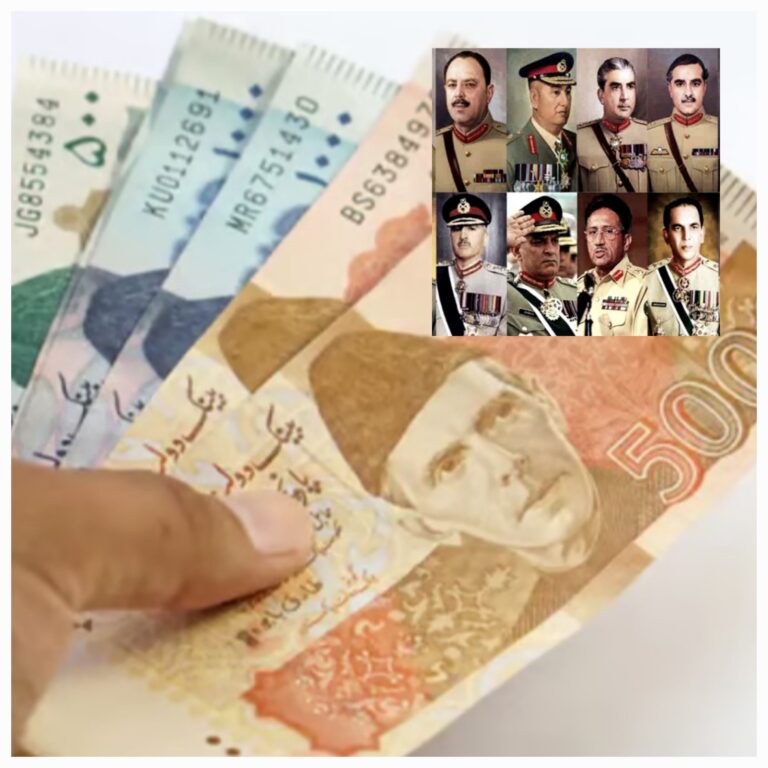
For years, the Pakistan Army has ventured far beyond its primary role of national defence, entrenching itself in sectors that have little to do with its core responsibilities. One glaring example is its involvement in the Special Investment Facilitation Council (SIFC), where the military secured nearly five million acres of land across provinces for corporate farming under the Green Pakistan initiative. These army-owned companies now control massive swaths of fertile land, leaving little room for civilian entrepreneurs and small farmers. The military’s penchant for expanding its influence, especially when it comes to financial gains, knows no bounds.
Time and again, the establishment seizes any opportunity to secure more funds under the banner of national security. One such instance is the recent PKR 60 billion ‘Special Allotment’ for the floundering counterterrorism operation ‘Azm-e-Istehkam’, aimed at combating groups like the Tehreek-e-Taliban Pakistan (TTP), Balochistan Liberation Army (BLA) and Balochistan Liberation Front (BLF). Far from achieving its objectives, the operation has been a spectacular failure, with the recent Balochistan attack laying bare its ineffectiveness and tarnishing the government’s reputation.
In the fiscal year 2022-23, Pakistan’s defence services were allocated a staggering PKR 1,563 billion, later revised to PKR 1,592 billion. Despite this colossal sum, the military boasted of saving PKR 379.848 million, as proudly announced by Lt Gen Ahmed Sharif during a recent DG ISPR press conference. What truly stood out in this conference was the army’s suggestion that other institutions should follow its lead in “serving the nation.” But one must ask: Is this really the path to follow? A path marred by the misuse of defence funds, secret land grabs and a disturbing history of corruption?
A recent audit of the Pakistan Army’s finances for 2023-24 has exposed yet another instance of public funds being misused under the guise of national security. The report reveals a troubling pattern of financial irregularities, including unauthorized transactions, extravagant spending and manipulation of documents to siphon off taxpayer money. Procurement irregularities alone amounted to a staggering PKR 2,845.310 million with PKR 2,429.073 million spent beyond authorized limits. High-priced contractors were hired over lower bidders without justification, causing substantial losses to the state.
Additionally, PKR 1,506 million from the Al-Mizan fund, intended for operational areas, was diverted to non-operational regions a clear violation of financial regulations. Military land meant for defence purposes was used for unauthorized commercial projects, with profits pocketed while rent remained unpaid to the government.
The audit also uncovered luxurious perks enjoyed by the military elite, including officers living in high-end apartments while still receiving house rent allowances, costing PKR 41.813 million in unauthorized payments. Meanwhile, contracts for items like “Bhoosa” (fodder) were awarded repeatedly to the same contractor, further fuelling personal extravagances.
Despite detailed evidence of these fraudulent activities, accountability remains elusive. While the military thrives in luxury funded by public money, Pakistan’s economy continues to suffer, weighed down by debt and a struggling population.
Who will dare to forget the Dubai based military mighty properties revealed by ‘Dubai Leaks’. This revealed that several high-ranking military officers had acquired properties abroad, including luxury real estate in Dubai. These revelations have further fuelled suspicions that military officials are enriching themselves at the expense of the state. This exposed the financial impropriety of military officials who had amassed vast wealth far beyond their official earnings. These revelations not only raised questions about the source of these funds but also about the military’s role in facilitating corruption. For a military that presents itself as the custodian of national security, the sight of its officers accumulating foreign assets raises serious concerns about priorities.
The military’s involvement in large-scale corruption is not confined to a few individuals. Over the years, numerous reports have surfaced about military officials engaged in illicit activities, from embezzling public funds to manipulating contracts for personal gains like former Pakistan Army chief General Qamar Javed Bajwa. These “military millionaires” have built fortunes through corrupt practices, often exploiting their positions of power and influence. The lack of transparency in military affairs has only compounded the problem, with whistleblowers silenced and investigations into corruption either stifled or derailed.
Recent press conference once again echoed one of the most high-profile cases i.e. the court martial of General Faiz Hameed, former head of Pakistan’s intelligence agency, the Inter-Services Intelligence. Hameed, once a rising star in the military establishment, was charged with pursuing political agendas during his tenure as ISI chief. His downfall underscores the dangerous intersection of military power and political influence in Pakistan. He was accused of manipulating political outcomes, aligning himself with certain political factions, and using his position to shape the political landscape in Pakistan. His actions reflected the broader problem of military interference in civilian governance, a trend that has plagued the country for decades. Hameed’s court martial, while a step toward accountability, is only a small piece of a much larger puzzle.
The allegations against Hameed also highlight the military’s role in undermining democratic institutions in Pakistan. His involvement in political manoeuvring, particularly in the context of the Faizabad sit-in done by TLP party and other significant political events, demonstrates the extent to which the military seeks to control the political narrative in the country. While Hameed may have been singled out, his actions are emblematic of a military establishment that routinely interferes in civilian matters to maintain its grip on power.
In light of these issues, the suggestion that other sectors follow the military’s example appears misguided at best. Instead of copying an institution riddled with financial scandals and political meddling, Pakistan’s other institutions should prioritize transparency, accountability, and the public good—values that seem glaringly absent from the military’s current approach.
The recent expansion of China’s nuclear arsenal has put China’s Nuclear Program into limelight. Other Nuclear and Non-Nuclear states have always been a little sceptical about the China’s progress toward great-power status. Even during the most intense periods of Cold War rivalry, China managed to maintained remarkably vulnerable number of nuclear power that was assumed to be probably around 200 warheads. Chinese nuclear modernization continued after the Cold War ended, it has truly accelerated only over the last decade by more than doubling the number of warheads deployed since 2020. It makes clear that China’s historical reliance on a “minimum deterrent” has markedly shifted. Although, China is one of the P5 countries which has signed the Non-Proliferation Treaty, the credibility of China for never using the Weapon of Mass Destruction seems to be questionable.
China’s Nuclear Program
Since its first nuclear test in 1964, China has maintained a consistent narrative about the purpose of its nuclear weapons. China has the largest number of nuclear warheads in South-Asia including India, China, and Pakistan, although only China has signed the ‘Non-Proliferation Treaty’, ‘Credible Minimum Deterrence’ and ‘No First Use Policy’. This narrative was recently restated in China’s updated 2023 national defense policy: “China is always committed to a nuclear policy of no first use of nuclear weapons at any time and under any circumstances”. Chinese production of weapon-grade plutonium reportedly ceased in 1980s. However, Beijing is combining its civilian technology and industrial sector with its defense industrial base to leverage dual-use infrastructure.
To extract plutonium from its spent nuclear fuel, China has nearly completed its first civilian “demonstration” reprocessing plant at the China National Nuclear Corporation (CNNC) Gansu Nuclear Technology Industrial Park in Jinta, Gansu province, which is expected to be operational in 2025. China has started the construction of a second plant at the same location, which should be up and running before the end of the decade. The 200 tonne-per-year fuel reprocessing capacity at Jinta and the 50 tonne-per-year capacity at Jiuquan (Plant 404) could support the plutonium needs of the two CFR-600 reactors, especially since the first of these reactors will begin operation with highly enriched uranium (HEU) rather than mixed oxide (MOX) fuel through a supply agreement with Russia.
The ambiguity of Chinese nuclear warhead types and uncertainty on the exact amount of fissile material required for each warhead design makes it difficult to estimate how many weapons China could produce from its existing HEU and weapons-grade plutonium stockpiles. Once both fast-breeder reactors come online, they could potentially produce large amounts of plutonium and, by some estimates, could enable China to acquire over 330 kilograms of weapon-grade plutonium annually for new warhead production.
China’s Nuclear Stockpile and Capabilities
How much and how fast China’s stockpile can grow will depend upon its inventories of plutonium, highly enriched uranium (HEU), and tritium. The International Panel on Fissile Materials assessed that at the end of 2022, China had a stockpile of approximately 14 metric tons of HEU and approximately 2.9 tonnes of separated plutonium available for nuclear weapons. The Pentagon assesses that China is expanding and diversifying its capability to produce tritium. In 2023, China also reportedly began operating two large new centrifuge enrichment plants, and also took a significant step forward with its domestic plutonium production capabilities.
The Pentagon’s 2023 report to Congress assessed that China’s nuclear stockpile now includes over 500 warheads. This is a significant growth since it used to be around 200 till 2019. According to Pentagon estimates, Beijing is on track to producing 1,000 nuclear warheads by 2030. If expansion continues at the current rate, the Pentagon’s previous projections say that China might field a stockpile of about 1,500 nuclear warheads by 2035. The existing inventories were sufficient to double the stockpile over the past five years. However, as estimated by the Pentagon, additional production would require additional fissile material production.
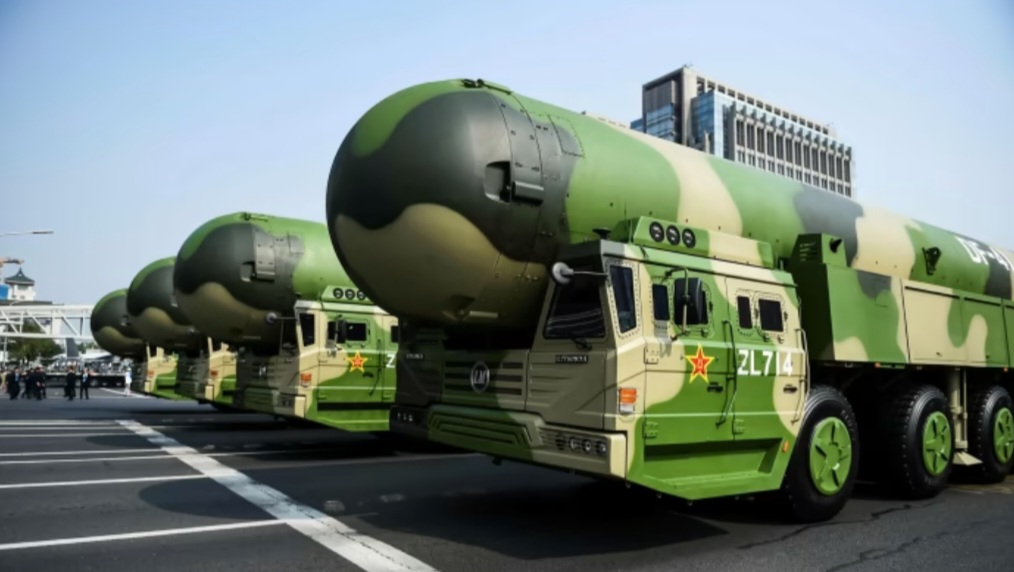
It is estimated that China has produced a stockpile of approximately 440 nuclear warheads for delivery by land-based ballistic missiles, sea-based ballistic missiles, and bombers. Roughly 60 more warheads have thought to have been produced, with more in production, to eventually arm additional road-mobile and silo-based missiles and bombers. Many of these will probably be “deployed at higher readiness levels” and most “fielded on systems capable of ranging the continental United States”.
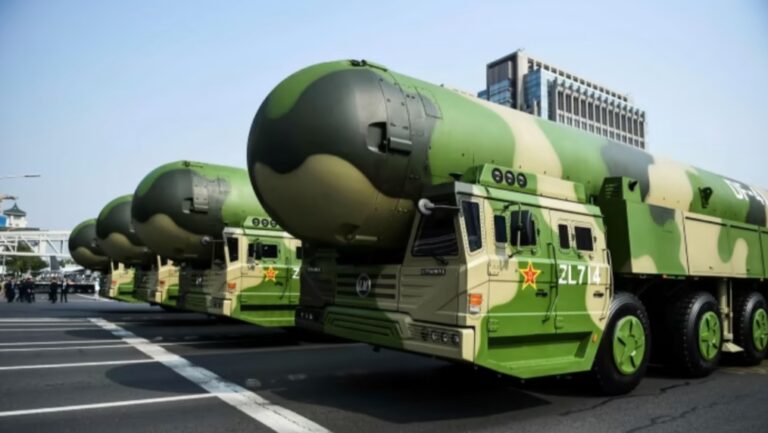
China has significantly increased the speed of the long-term modernization of its land-based, nuclear-capable missile force, with the construction underway of approximately 350 new missile silos that can deliver nuclear warheads and several new bases for road-mobile missile launchers. Most of China’s ballistic missile launchers are for short-range, medium-range, and intermediate-range missiles intended for regional missions, and most of those do not have nuclear strike missions. SIPRI estimates that the number of Chinese Intercontinental Ballistic Missile (ICBM) launchers exceeded 450, of which 142 are believed to be operational. From those missiles, about 135 can reach the continental United States, according to the Pentagon assumption.
Recently, the People’s Liberation Army Navy reportedly conducted its first test of the JL-3 in November 2018 and appears to have conducted at least two to three additional tests since. China currently fields a submarine force of 6 Jin-class (Type 094), second-generation nuclear-powered ballistic missile submarines (SSBNs), which are based at the ‘Yalong’ naval base near Longposan on Hainan Island. These SSBNs include a more prominent hump, which initially triggered some speculation as to whether they could carry up to 16 submarine-launched ballistic missiles (SLBMs), instead of the usual 12 (SLBMs).
The People’s Liberation Army Air Force (PLAAF) nuclear mission became dormant as the rocket force improved and older intermediate-range bombers were unlikely to be useful or effective in the event of a nuclear conflict. China used aircraft to deliver at least seven of nuclear weapons while developed several kinds of WMD by nuclear testing program between 1965 and 1979. According to US Department of Defense reported in 2018, currently China is focused on H-6 “Badger” bomber, which may have two distinct nuclear-capable variants. The first is H-6K version has “dual nuclear-conventional bomber” with extended-range than H-6. The H-6N is another variant accommodate a nuclear-capable air-launched ballistic missile (ALBM) that can be refuel in the air. To eventually replace the H-6, China is developing a stealth bomber with longer range and improved capabilities. The Pentagon asserts that the new bomber, known as H-20, will have both a nuclear and conventional capability with a range exceeding 10,000 kilometres, and may be revealed sometime during the next decade.
Impact on Global Security
Under Chinese President Xi Jinping, the increase in nuclear stockpile, combined with China’s defence investments in modernizing its armed forces, has caused deep concern in the world. In 2023, the Congressional Commission on the Strategic Posture of the United States insisted that China’s nuclear expansion should prompt U.S. policymakers to “re-evaluate the size and composition of the U.S. nuclear force.” However, the Biden administration has made clear that the United States has enough stockpile and does not currently need to increase its nuclear arsenal.
The Pentagon believes that China probably seeks a “lower-yield” nuclear warhead. Recently, the United States has publicly shared its concerns about activity at China’s Lop Nur nuclear test site. Open-source satellite imagery analysis indicates that China appears to be expanding the Lop Nur test site with the construction of what appears to be new drainage areas, drill rigs, roads, spoil piles, and covered entrances to potential underground facilities, as well as new construction at the main administration, support, and storage areas. If China did conduct low-yield nuclear tests at Lop Nur, it would violate its responsibility under the Comprehensive Test Ban Treaty it has signed but not ratified.
China’s nuclear capabilities also affect the military strategy in East Asia. China helps North Korea’s nuclear program in order to have more powerful allies on their side. North Korea’s value as leverage or a bargaining chip for China in Beijing’s relations with South Korea and the United States has been well recognized. In 2024, however, China may consider adding another layer to this leverage by supporting North Korea’s nuclear program. In response to that United States has significantly ramped up its military presence on and around the Korean Peninsula, in consultation with its ally, South Korea.
South Asia is considered one of the nuclear flashpoint due to the three nuclear armed bordering countries. India worries about the continuing deep links between China and Pakistan. The links between Pakistan and China for the developments if the nuclear weapon has been found multiple times. For instance, in February 2020, India caught items being shipped by China to Pakistan. According to the DRDO, this item can be used for the manufacturing of rocket motors for ballistic missiles. This has further deteriorated the bilateral relationship between India with China and Pakistan.
Conclusion
Historically, China has consistently rejected efforts at bilateral or trilateral engagement on its nuclear arsenal. However, recently China might be softening on its position toward talks related to nuclear and arms control. In November 2023, the counterparts of Bureau of Arms Control, Deterrence and Stability met with their Chinese counterparts for “candid and in-depth discussion on issues related to arms control and non-proliferation”. In January 2024, China participated in military-to-military dialogues for the first time in years. While these dialogues did not yield any concrete arms control agreements, they have the potential to be a meaningful foundation for future progress.
All these nuclear countries are developing their nuclear program and try to increase the nuclear arsenal in order to deter from the potential nuclear threat. For instance, Pakistan have nuclear weapon to deter from India, India have it to deter from China, China have it to deter United States, and United States have it deter from Russia. Therefore, the best way to reduce nuclear risks and prevent a nuclear arms race is for the United States and China to keep engaging in serious dialogue to explore possible transparency, crisis management, and confidence-building measures.