
By : Suman Sharma
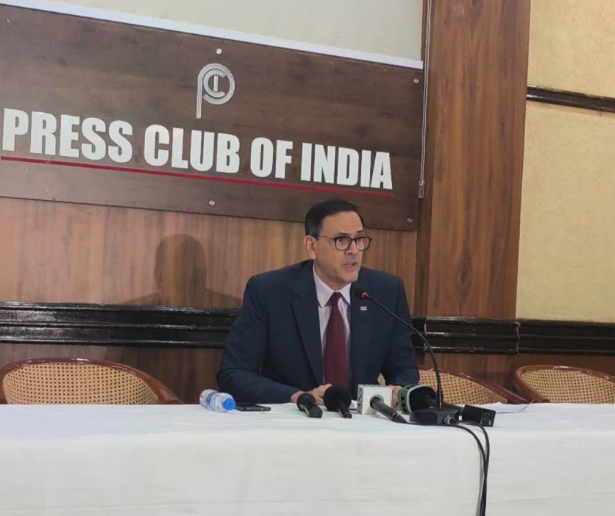
Cuba’s Ambassador to India, Juan Carlos Marsán Aguilera, has accused Washington of escalating economic warfare against Havana, alleging that an oil blockade, secondary sanctions and financial restrictions are inflicting severe humanitarian costs on the island. Addressing a press conference in New Delhi, he urged the international community to reject the US embargo ahead of a United Nations General Assembly vote on Cuba’s resolution on October 27–28.
Marsán said that the more than 65-year-old embargo had reached unprecedented levels under the current US administration. He cited US executive orders threatening 25 percent tariffs on countries exporting oil to Cuba and imposing secondary sanctions on foreign companies doing business with the island. According to the Ambassador, these measures have effectively choked off fuel supplies, with Cuba receiving no oil during the past ten months apart from a Russian shipment that arrived on March 30 for humanitarian reasons.
Ambassador Aguilera argued that Washington’s measures violate Cuba’s sovereignty and pressure third countries to curtail legitimate trade. He also rejected Cuba’s designation on the US list of state sponsors of terrorism, claiming it restricts the country’s access to international financial institutions. He alleged that the sanctions extend beyond the Cuban government to private businesses and ordinary citizens.
The humanitarian toll, Marsán warned, is mounting. Citing Cuba’s report to the United Nations, he put the economic damage at US$8.083 billion during the reporting year and US$178.7 billion cumulatively over 65 years, at current prices. He said Cuba’s 2025 GDP would have been 10.8 percent higher without the embargo. By the end of May 2026, the country faced a fuel shortfall of 2.67 million tonnes, while average residential power cuts reportedly reached 20 hours. Nearly two million people were said to lack regular water supplies, while 100,000 patients, including 12,000 children, were awaiting surgery.
Fuel shortages have also disrupted healthcare, agriculture, transport, and food distribution, according to the Ambassador. He cited the power-dependent treatment needs of 2,888 hemodialysis patients, curtailed irrigation and interruptions affecting 2,900 tonnes of contracted humanitarian food aid. Marsán accused Washington of imposing collective punishment on the Cuban population, warning that the consequences were costing lives.
Cuba, he insisted, posed no threat to the United States or any other country and remained committed to peace and international cooperation. He also criticized what he described as threats of military action against the island, pointing to the US naval base at Guantánamo Bay as the only foreign military base on Cuban territory.
Seeking international backing, Marsán said 136 countries had supported taking up the issue at a special UN General Assembly session in July, while 43 countries had called for an end to the blockade or related coercive measures during the Assembly’s September general debate. He further alleged that Washington was pressuring governments and UN representatives to change their positions ahead of the vote.
The Ambassador framed the coming UN deliberations as a test of international solidarity and national sovereignty. “Today is Cuba; tomorrow it could be any other country,” he warned, expressing confidence that the international community would once again vote against the embargo.


