
By : Sourishree Ghosh, Research Analyst, GSDN
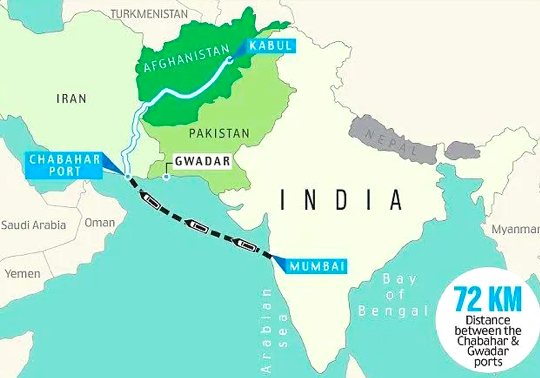
Why is India’s Gateway to Central Asia stuck?
The geopolitical deadlock is a combined factor of the regional crisis in West Asia and the unfavorable domestic situation in Iran. The first reason is US Sanctions and Tariffs. Currently, the Chabahar Port is again under the US sanctions under the Iran Freedom and Counter-Proliferation Act after the temporary “wind-down waiver” expired in April 2026. US revoked the 2018 IFCA exception on Sep 15, 2025, and this conditional waiver lapsed on April 26, 2026, without any replacement for the same. Moreover, the Naval Blockade by the US applied on all the vessels entering or leaving Iran’s ports choking the maritime traffic irrespective of the readiness of the infrastructure. New Delhi is also strained due to an impending tariff threat from the US as it issued an ultimatum which penalizes the countries trading with Iran with an additional 25% tariff on exports to the US.
The second reason is the Insurance Lapse. Major global Protection and Indemnity clubs (P&I) and other war-risk insurers have completely suspended the coverage of the ships travelling through the Oman and Iranian waters. So, the commercial feasibility of the project has decreased significantly.
The third is the domestic crisis in Iran. The land controversy arose in October 2026 when the Iranian MP Mohsen Zangeneh stated that the territory had been handed over to Afghanistan. The later clarification was that Iran was only allocating 10 hectares of land at the port and 100 hectares within the free zone for Afghan Investment for building a dry port with the facilitation of Kabul’s transit needs and maintaining Iranian sovereignty. This kind of domestic crisis risk is always present.
Some other International Forums where this issue was brought up include. During the 2026 BRICS Summit, Tehran pressured New Delhi to unitedly condemn the western economic and military blockades. New Delhi chose to walk the diplomatic tightrope balancing open bilateral channels with Iran and the US.
Current Operational Status
India signed a 10-year-old contract agreement in May 2024. IPGIL operates the Shahid Beheshti Terminal, and this is the first time India is managing an overseas port. Under this, India has fulfilled its main contractual obligations of $120 million for the purpose of the port equipment at Shahid Beheshti terminal. India offered a $250M rupee credit window. Indian assets from the satellite imagery dated October 2026 confirm that the Indian equipped terminals are physically safe and intact. Delhi has recently allocated a zero-funding budget for this project in this budget to prevent more flow to the project. This is the first India has not allocated funds for the project in decades shows the dilemma. This saves New Delhi from the sanctions by the US Treasury OFAC. New Delhi is not running the terminal at present and has indicated the handover of the terminal to Iran till the situation stabilizes. India has withdrawn its on-site administrative personnel and port management officials.
Trade Statistics
Since the operationalization in 2018, the Shahid Beheshti terminal, a cumulative of the 8.7 million metric tons of bulk cargo and 134082 TEUs across the 450 vessels. The current cargo velocity is almost zero for the international shipping lines, and commercial cargo has been affected. The Humanitarian corridor is open, and the regional flagged small-to-medium vessels do not rely upon the western maritime infrastructure. Moreover, maritime intelligence shows that the traffic outside the terminal is highly active. This is due to the ship-to-ship (STP) transfers of Iranian crude and energy derivatives which primarily services China. This is not conducive to New Delhi’s interests on account of the growing Chinese influence in the region.
The 730 km Chabahar-Zahedan railway line is in the logistical fiasco allowing the cargo to reach Central Asian bypassing the Suez Canal route. The maritime blockade has put blockade on the high-volume international liners and is currently catering to the low-volume locally sourced regional trade. The average vessel wait time is about 5.8 days which is driven by the stringent compliance screenings rather than congestion. This is the logistical status of the Port.
Potential Geostrategic Importance of the Chabahar Port: Important Stakeholders of the Project
India: For India, the port provides a direct connection to Afghanistan and Central Asia and the broader Eurasian region through Iran and bypasses Pakistan’s refusal to grant overland transit access. The cost of inaction is the concession of the $5oo million sunk investment in the region. The other risk is that China is also trying to integrate Iran into its regional security architecture. This would impact India’s direct access to Afghanistan bypassing Pakistan. The exit from the project should be the last resort only, and New Delhi has clarified that the exit from the project is not an option and will exhaust all other means. That is the official stance.
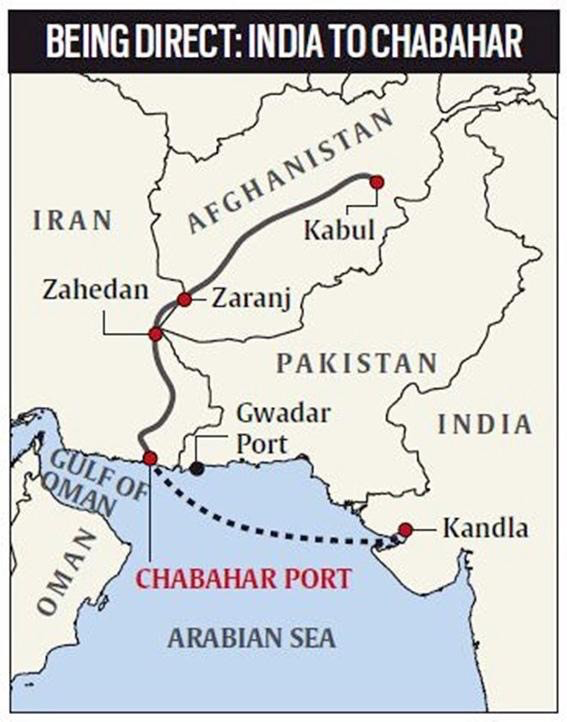
For Afghanistan: This is favored by the country as it would ensure its trade lifeline as the tensions between the Afghanistan-Pakistan rises. In 2024, Afghanistan’s imports had increased to over US$127 million in this corridor.
For Iran: If Chabahar port is not operationalized, Iran’s option is the Bandar Abbas which relies on the Chabahar-Zahedan railway linked to the country’s national grid. The main trade off is that this port is in the Strait of Hormuz which becomes a maritime bottleneck during any regional conflict. Given that this is a politically volatile region, for Iran, the strategic importance of the Chabahar port is that it is located outside the chokepoint in the open Arabian Sea.
For Central Asia: This region has historically been dominated by the Soviet Union. The current landscape is seeing a heavy infrastructure competition between Russia, China and the West. When the US pressurizes the Chabahar Port, the trade from Central Asia seeks other routes. The alternative path to the Chabahar port is the Gwadar Port which is heavily backed by Beijing. The trans-Afghan railway is in the development phase. However, this alternative is not at all feasible for India and it suffers from the chronic security threats from the security threats in the Baluchistan region. This is neither a great scenario for the United States.
If there is complete choking of the Iranian network, the Central Asian states need to completely bypass the Indian Ocean entirely and look west via the Caspian Sea. This would not be feasible for India as it would cut off India’s access to Central Asia and logistically, it will be very difficult as the Caspian Sea water fluctuates.
For the United States: Washington must issue the narrow specific sector specific carve out for the project. It is in the interest of Washington’s strategic objectives as it would deter the Central Asian trade from being tilted towards Russia and China. For the China factor, India and the US can converge on this point. So, New Delhi’s diplomatic pitch should move from defining the Chabahar as a “Iran Transit” to the “Central Asian Transit”. New Delhi should provide the critical minerals argument that the sanctions would force the Central Asian states to route 100% of their critical mineral exports through China or Russia’s infrastructure networks and their networks are also in place. So, it serves western interests as well.
New Delhi’s Diplomatic Options: Potential Risks and Successes
The first short term option for New Delhi is negotiating through maneuvering the loophole in the sanction regime. It is considering the temporary transfer of its operational stake to a local non-sanctioned Iranian maritime entity from India Ports Global Limited and including a technical buy back clause that would allow India to revert to its position in future when the West Asia crises dwindles down. This would allow India to keep its footprint without the operational liability and prevent the rise of the Chinese influence. The port should be physically managed by the Ports and Maritime Organization of Iran (PMO) of Iran. The probability of the continuation of the US-Iran tensions is still high soon: Iran has recently rejected the US response to the seven conditions for the reopening of the Strait of Hormuz as tensions have escalated.
This option will be potentially low cost and saves the Indian firms from the US sanctions but from the Iran side, it would amount to India hedging, potentially reducing the port to a ghost terminal. This would also impact India’s visibility in the long term. This is at best the short-term legal option. However, the physical assets remain under the custody of the Indian State via IPGL. This does not breach the contract and only keeps in operational suspension. This also insulates India’s core banks like SBI and Union Bank of India and IPGL from the secondary sanctions.
Tehran must also accept the legal flexibility regarding temporary stakeholder transferring. The country should avoid the high-profile container movements which might escalate the already volatile relations. Iran for the time being must accept the non-sovereign legal arrangement structure. Tehran might be resisting this as it thinks that India is stepping back under American pressure. To tackle this, India must maintain the humanitarian cargo flow through the latest Chabahar-Zahedan railway link to keep the access open and show interest in the project. However, this is the best option for both countries to keep the operations working.
Another option that can be explored is the decoupling from the US dollar through non-SWIFT Rupee settlement. India and Iran should explore the Rupee-Rial Escrow architecture where all port fee collections, handling charges and transit tariffs through this. India’s $250 line of Credit rather than securing external loans.
The global insurance companies are refusing to cover the Gulf of Oman. India recently utilized the Bharat Maritime Insurance Pool which has an underwriting capacity of Rs 1.5 billion managed. There is the Sovereign Guarantee from the Government of India in this case. But this move might invite the tariff penalty due to US retaliation. That measure is more suitable in the long run with risks associated with the internationalization of the Rupee (this might not be successful as we have seen in the Russia-India exchange in local currencies failed).
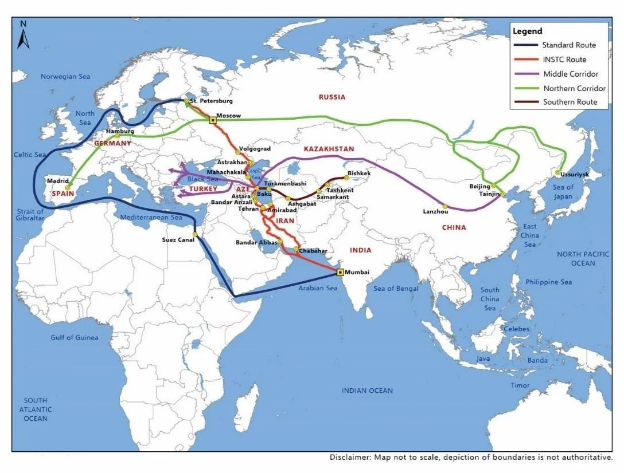
The long-term option with New Delhi is the Diplomatic delinking via the INSTC (International North South Corridor) from a bilateral transit to a multi-nation nodal hub. This would expand to bring in the Central Asian states, and the focus would shift to regional rail diplomacy. So, New Delhi is basically diversifying its options into two transit corridors. The first one is the Western INSTC Corridor (Azerbaijan Link) wherein the Cargo moves from India’s western ports to Iran’s northern border, and then directly into Europe and Russia via the Caucasus. So, the Indian cargo reaches the Bandar Abbas, and it moves by rail north to the Rasht-Astara border crossing into Azerbaijan and towards the Russian Baltic gateway. This would require a diplomatic rest of ties with Baku as India blocked Azerbaijan’s SCO membership due to the country’s alignment with Pakistan and Turkey.
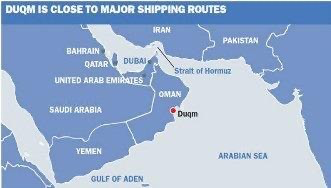
There is currently an infrastructure gap as well, mainly the critical gap persists in the 162 km Rasht-Astara railway line which requires financing from Russia. India currently uses the road-to-rail transfer network through the Caucasus. The second corridor is the Eastern INSTC Corridor which is the Central Asian Rail link. The cargo moves from Bandar Abbas via the Kazakhstan-Turkmenistan-Iran (KTI) railway corridor. This is also a strategic option that New Delhi can consider balancing the relations between West and Russia. This is of considerably lower risk from the West and Russia. It would also potentially lower the risk of the direct naval blockade and maritime insurance bans compared to the volatile waters of the Persian Gulf. Besides, New Delhi can also increase the utilization of the Port of Duqm in Oman which is located outside the Strait of Hormuz wherein the cargo can be moved in the smaller low profile feeder vessels.
The Central Asian Republics specifically Uzbekistan and Kazakhstan have shown interest in the same, but India should push for the formal cargo routing guarantees for the internationalization of the project. This would require Washington to acknowledge the wider regional framework and focus on regional rail diplomacy. This would potentially require a lot of diplomatic negotiation with the Central Asian countries and the United States. This is the most long-term option as bringing the entire region to the same table would take time. have to be set up. This bypasses the US naval blockade zone and ensures long term connectivity via Azerbaijan/Kazakhstan. This is a feasible option for New Delhi because the 730km Chabahar-Zahedan railway link was completed in September 2026- 33 stations, 39 tunnels, 201 bridges, to be operational in 3-4 months. This made India’s long tending connectivity link to INSTC. India and international exporters are re-routing non-humanitarian Central Asian cargo through the Jebel Ali and Duqm which absorbs the higher terminal handling costs to avoid secondary sanctions.
Lastly, New Delhi should also work on the speedy conclusion of the FTA Agreement between India and Eurasia Economic Union (EAEU) and coordination with the India-Central Asia Rare Earth Forum. New Delhi should pose itself as a supply chain alternative to China. The critical mineral argument would provide the much-needed argument to the West. so, New Delhi’s strategy should be a mix of the above options and a crucial test for India’s strategic autonomy.


