BY : Col Diganta Choudhury, Guest Author, GSDN
Introduction
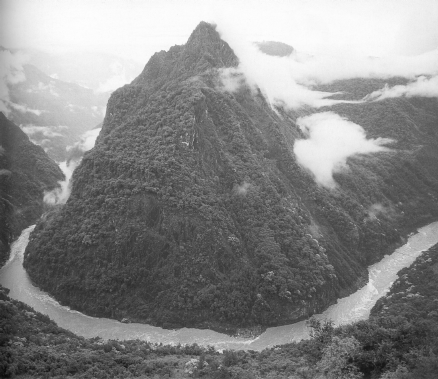
There is a tradition in Tibetan folklore of Beyul, the secret or hidden land. Deep in the remote region of Tibet, the mighty Yarlung Tsang-po River, which flows into the Indian subcontinent as the Brahmaputra, churns around a Great Bend. At the base of this Great Bend is a massive canyon, believed to be the world’s largest and deepest on land. The river then disappears, lost in this inaccessible canyon flanked by the sheer peaks of Namcha Barwa (26000 feet) and Gyala Peri (23891 feet). The celebrated author and cultural historian, Ian Baker, was mesmerized by this Beyul in his book, The Heart of the World: A Journey to Tibet’s Lost Paradise. The Tibetans highly revere this place, and it is here that China is building the world’s first and biggest super-dam.
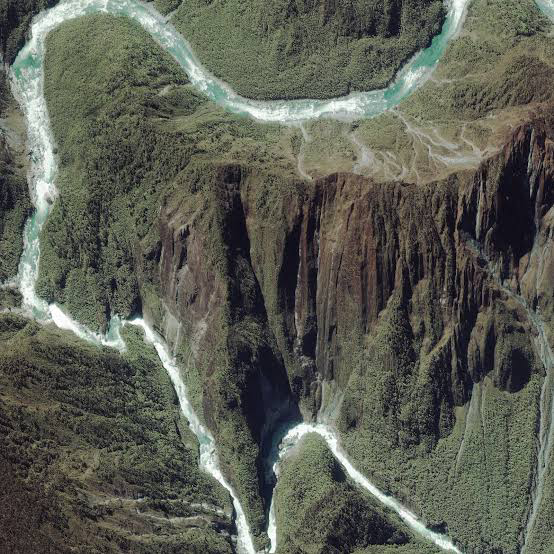
Two of the dam sites have been identified to be in Metok country and Daduo, located very close to the Line of Actual Control (LAC) with India.
The Super Dam
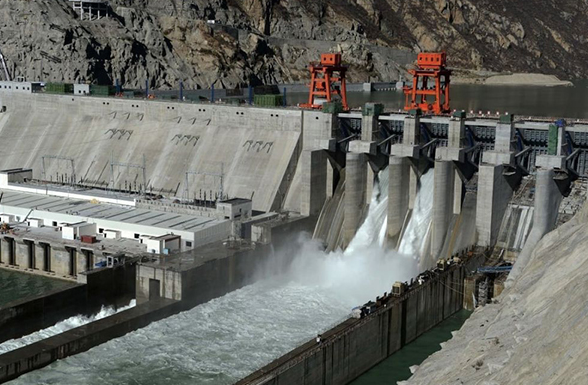
China is unmatched in the world of hydro-hegemony, with more large dams in service than every other country combined. It has already operationalized the Three Gorges Dam, which is a colossal hydroelectric gravity dam. It is believed that the Three Gorges Dam has altered local ecosystems, increased risks of seismic activity, and measurably affected Earth’s rotation due to the immense mass of stored water (the reservoir holds about 10 trillion gallons of water).
By all accounts, the super dam being constructed at the Great Bend will be a behemoth in terms of size, technical dexterity and immense capacity. The construction has already begun in July 2025. The plan at its core is an unprecedented and technologically challenging project that includes plunging mind-boggling volumes of water down by about 2000 metres through 40-50-kilometre-long tunnels. Both the Metok and Daduo dams involve diverting water from the river through a made-made shortcut tunnel. The tunnels will be dug underneath mountains beneath which the frothing Tsang-po takes an 180-degree turn. The project makes maximum use of a drop of more than 2000 metres to drive enormous turbines and produce electricity on a scale that dwarfs the Three Gorges Dam. Not only have Chinese hydro-engineers formalized such plans, but they have also published proposed routes for the ultra-high voltage cables that would span deep gorges of nearby rivers to reach cities in Western China. While the Metok Dam is said to have a power-generating capacity of 38000 megawatts (MW), the Daduo Dam will have a capacity of 43,800 MW. At 18,600 MW production capacity, the Three Gorges Dam pales in comparison. It is also established that a dam of much smaller capacity is already operational at Zangmo (510 MW), which is further upstream on the Tsang-po.
Threats and Implications
It is inconceivable that the world’s biggest super dam of such colossal scale and magnitude will retain its integrity in the foreseeable future. Beijing has stated that the super dam will prioritize ecological protection and boost local prosperity, especially in the Tibetan region. Chinese media has also reported that the enormous power generated will be used to supply electricity to Nepal and China’s neighboring countries. But it will also empower China to control and divert the trans-border Tsang-po, which flows into Arunachal Pradesh, Assam, and Bangladesh, where it feeds into the Siang, Brahmaputra, and Jamuna rivers.
While it will produce cheap hydropower, the super dam is likely to pose colossal danger to the lower riparian regions in Arunachal Pradesh, Assam, and Bangladesh. It will have a huge impact on millions of Indians and Bangladeshis living downstream as well as the surrounding environment. Arguably, in the event of any reduction of stream flow due to climate change or artificial flow diversion in the coming years, it will have a very serious impact on the quantum of water resources in downstream areas of the Brahmaputra in India and Bangladesh, besides depleting the non-monsoon dry-weather flows. Furthermore, due to any river diversion of the Tsang-po, other important water uses like ecology, inland navigation and drinking water will be severely hit.
Seismological studies have indicated that in the event of a major earthquake and any possible failure of the above series of big dams on the Tsang-po, which sits at an altitude of approximately 2.7-3 kilometres above the Assam plains in Eastern Tibet, it may pose very serious flooding hazards for the Indian plains in Arunachal Pradesh and Assam.
Already, alarm bells have gone off across the Indian establishment and elsewhere. A 2020 report published by Lowy Institute, an Australia-based think tank, noted that control over these rivers in the Tibetan plateau effectively gives China a chokehold over India’s economy. The BBC, in a report published in July 2025, states that the super dam will impact millions of Indians and Bangladeshis living downstream. The Ministry of External Affairs (MEA) has expressed its concern to China and urged it to ensure that the interests of the downstream states are not harmed. Furthermore, it has sought transparency and consultation with all stakeholders. Bangladesh too has raised its concerns with China.
Conclusion
India is planning to construct a hydropower dam on the Siang River, in the upper Siang district of Arunachal Pradesh. Named the Siang Upper Multipurpose Project (SUMP), it is also designed to act as a strategic countermeasure against China’s upstream plan on the Tsang-po, besides being the largest hydroelectric project in the Indian subcontinent. However, in recent times, the local communities have opposed the project, fearing submerging of ancestral lands and displacement. Whether India can address these concerns collaboratively and thereafter proceed with the project will determine whether India’s countermeasures and a possible riposte is successful.
The geo-political rivalry between India and China, spilling over into border skirmishes and clashes, now threatens to turn into a geo-strategic contest between two Asian rivals. China often adopts an assertive stance as an upstream superpower. This is in line with the ‘Harmon Doctrine’, which asserts that a state has absolute control and authority over all water and resources within its borders. However, this doctrine has largely been replaced by the Principle of Equitable and Reasonable Utilization, which dictates that all states sharing an international river have an equal right to use the water system in a way that is fair, rational and maximizes benefits, while minimizing harm to neighboring countries. The Principle of Equitable and Reasonable Utilization has also been enshrined in the United Nations (UN) Watercourses Convention. Therefore, India must engage with China while keeping this principle in mind, as per the existing convention. Equally, both India and Bangladesh must push for legally binding water-sharing agreements with China to ensure transparency and equitable water distribution.