
By : Shaurya Pandey, Research Analyst, GSDN
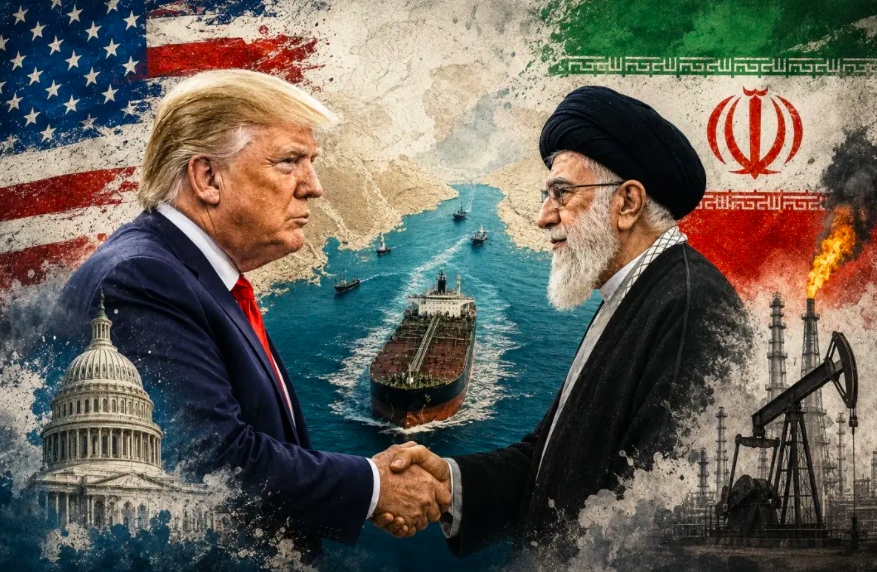
On June 18, 2026, United States President Donald Trump signed a memorandum of understanding (MoU) with Iran at the Palace of Versailles, France, during the Group of Seven (G7) summit, marking a significant, if fragile, milestone in a conflict that had shaken the Middle East and rattled the global economy for nearly four months. Iranian President Masoud Pezeshkian signed the document separately. The agreement, brokered with Pakistan’s assistance after weeks of difficult negotiations, declares an immediate and permanent termination of military operations on all fronts, reopens the strategically vital Strait of Hormuz to commercial shipping, and establishes a 60-day window for further negotiations on Iran’s nuclear program, sanctions relief, and regional security. Yet, as seasoned observers of the region have quickly noted, an MoU is not a final peace treaty. The harder work lies ahead, and the path from this preliminary agreement to a durable, comprehensive settlement remains treacherous.
Background: A War That Changed the Middle East
The roots of the current crisis stretch back through decades of hostility between Washington and Tehran, punctuated by failed diplomatic attempts and escalatory cycles. The most recent chapter began in earnest on February 28, 2026, when the United States and Israel launched large-scale strikes on Iran, targeting its nuclear and ballistic missile infrastructure. The strikes resulted in the death of Iran’s Supreme Leader, Ali Khamenei, as well as senior officials, including Ali Larijani, a key figure in prior diplomatic efforts. Iran responded by unleashing a series of counterstrikes against Israel, United States military bases in the region, and targets in Arab states. Most consequentially, Iran shut down the Strait of Hormuz, the narrow waterway through which approximately 20 percent of the world’s oil passes, bringing global energy markets to the brink.
Following intense international pressure and Pakistan’s mediation efforts, the United States and Iran agreed on a temporary ceasefire on April 7, 2026. Months of tortuous negotiations followed, mediated by Pakistan, with several near collapses before the June 15, 2026, preliminary agreement was announced. Iran had effectively weaponized the Strait of Hormuz, forcing an economic calculation on the United States and its allies that, ultimately, incentivized compromise. The price of United States crude oil fell more than 4.5 percent to US$ 80 per barrel upon news of the deal, reflecting the enormous economic stakes involved.
What the MoU Contains
The 14-point MoU is, by design, a framework rather than a resolution. It extends the ceasefire for 60 days, a period extendable by mutual consent, during which the two sides are expected to address the most contentious unresolved issues. The agreement formally reopens the Strait of Hormuz to commercial traffic and lifts dueling blockades that had throttled global trade. President Trump authorized what he described as a toll-free opening of the strait, declaring on June 20, 2026, that no fees would be charged for passage during or after the ceasefire window. The MoU also indicates that oil and some financial sanctions on Iran will be lifted, and that allies will submit plans for reconstruction assistance. According to Iranian state media, an estimated US$ 24 billion in frozen Iranian assets are to be released during the 60-day window, with half disbursed before final negotiations begin, though Washington disputed that characterization.
Critically, Iran also reaffirmed its commitment under the Nuclear Non-Proliferation Treaty (NPT) to abstain from producing nuclear weapons. Final negotiations during the 60-day window are expected to address uranium enrichment levels, the size and disposition of Iran’s stockpile of highly enriched uranium, the fate of advanced centrifuges, and verification and monitoring arrangements. The Council on Foreign Relations noted that early reporting suggests Tehran will be permitted to continue enriching uranium at some level and will not be required to dismantle its network of proxy groups, both of which are significant concessions given the stated objectives with which the United States entered the war.
The Nuclear Question: The Heart of the Matter
No issue is more central to the long-term durability of this agreement than Iran’s nuclear program. The International Atomic Energy Agency (IAEA) has documented that Iran enriched uranium to near-weapons-grade levels, well beyond what is needed for civilian purposes, and by May 31, 2026, it reported Iran had amassed a record stockpile of military-grade enriched uranium. The Trump administration maintained throughout the conflict that preventing Iran from acquiring nuclear weapons was its primary objective. President Trump repeatedly stated that Iran will never have a nuclear weapon.
The problem is that the MoU leaves the nuclear question almost entirely unresolved. As Al-Jazeera noted in its analysis, nothing substantive has been negotiated yet on the nuclear program. A wide gap already exists between the two sides’ interpretations of what even the preliminary agreement entails: United States Vice President JD Vance suggested nuclear inspectors would return to Iran to help destroy the highly enriched uranium stockpile, while Iranian officials insisted that nuclear negotiations would not even begin until after the initial MoU was formally signed. Experts such as Ali Vaez, Director of the Iran Project at the International Crisis Group, have emphasized that the final agreement must address the location of Iran’s stockpile of highly enriched uranium, verifiable disposal of that material, and the establishment of long-term restrictions and transparency measures on Iran’s nuclear program.
There are no issues that can be resolved in 60 days. The 2015 Joint Comprehensive Plan of Action (JCPOA), which involved far more modest and narrowly defined nuclear concessions, took years to negotiate, involving teams of specialist technical experts and multiple rounds of talks involving Iran, the United States, and other major powers. The current framework is significantly broader in scope, yet the negotiating window is a fraction of the time. Analysts such as Ben Rhodes, who served as United States Deputy National Security Adviser under former President Barack Obama, observed that the deal effectively reopened a waterway that was open before the war began, while starting a nuclear negotiation far narrower than what the Trump administration had originally sought.
The Israeli Dimension: A Spoiler in Waiting
One of the most immediate threats to the deal’s viability is Israel’s continued military campaign in Lebanon against Hezbollah, the Iranian-backed militant group. Iran had made an end to the Lebanon fighting a condition for any agreement with the United States. Yet Israel was not a direct party to the MoU negotiations and has made clear it does not consider itself bound by the agreement’s terms. Israeli Defence Minister Israel Katz declared on June 15, 2026, that Israeli forces would remain in the security zones in Lebanon, Syria, and Gaza without any time limit. Far-right Israeli National Security Minister Itamar Ben-Gvir was even more explicit, writing that the agreement does not bind Israel.
The strain this creates in the United States-Israel relationship has been palpable. Trump publicly criticized Israeli Prime Minister Benjamin Netanyahu for ordering the bombing of Hezbollah targets in southern Beirut, and reportedly told The New York Times that Netanyahu is a very difficult person to deal with. Israeli opposition politicians have grown increasingly vocal in their criticism, with former Prime Minister Ehud Barak declaring that Iran emerged stronger and Israel weaker from the conflict, and that this represented Netanyahu’s strategic responsibility and failure. A poll conducted in April 2026 revealed that 80 percent of Israeli respondents favoured continuing the war against Hezbollah even if it created friction with the United States, illustrating the domestic political pressures Netanyahu faces.
Ali Vaez of the International Crisis Group explained that from Iran’s perspective, the MoU is a test for President Trump to see if he can rein in Prime Minister Netanyahu. Iran views Israel as the party that pushed the United States into this conflict in the first place and believes that if Netanyahu remains unhappy with any arrangement, he has the capability to relaunch the war after a few months. This assessment underscores a structural vulnerability in the deal: any sustained Israeli military action that Iran views as a violation of the ceasefire could provide Tehran with justification to close the Strait of Hormuz again, sending the entire diplomatic framework into collapse.
Domestic Politics and the Durability Question
The political dimensions of this deal are inseparable from its prospects for durability. In the United States, President Trump faces pressure from two directions simultaneously. On one hand, his administration needs to demonstrate tangible progress on reducing energy prices and ending an unpopular war ahead of mid-term congressional elections, where Republicans risk losing their majorities in the House of Representatives and the Senate. On the other hand, hawkish members of his own Republican Party are deeply skeptical of any arrangement that does not result in a complete dismantlement of Iran’s nuclear program and destruction of its enriched uranium stockpile. Trump will also need to sell the deal to congressional skeptics who remember his own decision during his first term to withdraw the United States from the JCPOA in 2018.
In Iran, the political landscape is also complex. The new Supreme Leader, Mojtaba Khamenei, son of the assassinated Ali Khamenei, has significantly less consolidated authority than his father commanded. As Vaez noted in April 2026, Mojtaba is not supreme in the way his father was, and factionalism is built into the DNA of the Iranian political system. Iranian hardliners associated with the Islamic Revolutionary Guard Corps (IRGC) have been hostile to negotiations from the outset. The IRGC’s Aerospace Force Commander publicly accused the United States of violating the ceasefire through its naval operations and threatened a decisive response. Iran’s new Supreme Leader himself declared in June 2026 that United States military bases in the Middle East were no longer safe, indicating a continuing hawkish faction within the Iranian system capable of undermining any deal.
Regional Implications: Winners, Losers, and Bystanders
The ripple effects of the United States-Iran conflict and the subsequent deal have reordered regional calculations in significant ways. Gulf Arab states, who had long depended on American security guarantees against Iran, are now re-evaluating their strategic positions. Iran’s demonstrated ability to bring the Strait of Hormuz to a standstill, effectively holding the global economy hostage, revealed that the United States’ conventional military superiority does not translate automatically into strategic dominance. Analysts at the Council on Foreign Relations observed that while nations like Saudi Arabia and the United Arab Emirates have alternative maritime routes for their energy exports, countries such as Kuwait, Qatar, and Bahrain do not and will be compelled to accommodate Iranian demands on maritime transit arrangements or face economic dislocation.
The G7 nations welcomed the agreement, with French President Emmanuel Macron indicating that discussions would focus on the long-term reopening of the Strait of Hormuz and the broader diplomatic opportunity created by the framework. The G7 joint declaration called the deal a historic opportunity to prevent Iran from acquiring nuclear weapons and to tackle threats related to its regional and ballistic activities. Pakistan’s Prime Minister Shehbaz Sharif, whose country played an indispensable mediating role throughout the negotiations, announced the deal alongside Trump, reflecting Islamabad’s elevated diplomatic profile. United Nations Secretary-General Antonio Guterres described the agreement as a critical step, while expressing hope that both parties would build on the momentum to reach a final resolution.
Will the Deal Hold? An Assessment
The question of whether the Iran-United States peace deal will hold can be approached at two levels: whether the initial 60-day MoU survives to produce a final agreement, and whether any final agreement, if reached, proves durable over time. At both levels, the outlook is uncertain but not hopeless.
The 60-day window faces immediate structural challenges. Israel’s continuation of military operations in Lebanon threatens to provide Iran with a legitimate grievance to walk away, and Tehran has already demonstrated its willingness to close the Strait of Hormuz in response to perceived violations. The freeze on nuclear negotiations, with the two sides unable to agree even on what the preliminary deal commits them to, is another alarming indicator. Vaez has noted that both Washington and Tehran are approaching the deal with very different narratives: the Americans speak of peace while the Iranians speak of victory, and so many essential issues have been deferred that the agreement is more of a political roadmap than a substantive settlement.
And yet there are strong structural incentives for the deal to hold, at least in the short term. Both sides are exhausted. Iran has suffered enormous casualties, the death of its Supreme Leader, extensive damage to its military infrastructure, and the pounding of its civilian economy. The United States, for its part, is facing political pressure at home, rising oil prices, and the reputational costs of a war that did not achieve its maximalist objectivesof regime change. As Vaez put it bluntly, the reason either side has walked away from the table is that the alternatives to a deal range from unpalatable to outright ugly. The question is whether this shared interest in avoiding renewed conflict is sufficient to bridge the enormous substantive gaps that remain.
Conclusion
The United States-Iran MoU signed in June 2026 is a genuine and significant diplomatic achievement, but it is emphatically not a peace deal in any final or settled sense. It is a fragile truce between two adversaries who have not resolved the fundamental disagreements that drove them to war. The coming 60 days will be among the most consequential in modern Middle Eastern diplomacy. The international community faces a narrow window to transform an armistice into something more enduring. The obstacles are formidable: an unresolved nuclear program, a defiant Israeli government pursuing its own agenda in Lebanon, domestic hawks in both Washington and Tehran ready to torpedo any arrangement, and a history of broken commitments that makes trust between the two parties nearly non-existent.
The words of Ali Vaez of the International Crisis Group capture the moment well: for the first time in more than a decade, the world is seeing images of Iranian officials and American officials meeting face to face in the same room. That image alone, however, is not enough. Whether the Iran-United States peace deal holds will ultimately depend not on the symbolism of a signing ceremony in France, but on the painstaking, unglamorous work of technical negotiation, political compromise, and regional diplomacy that must now follow. The world, battered by months of conflict and soaring energy prices, can only hope that both sides have the wisdom and the will to see it through.
Author



