
By : Sonalika Singh, Consulting Editor, GSDN
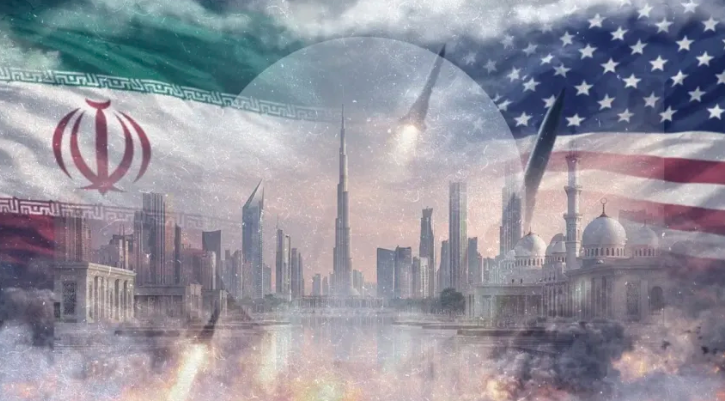
The war with Iran exposed a gap between Washington’s expectations before the conflict and the strategic reality that emerged after it began. What was expected to be a relatively controlled military campaign developed into a prolonged confrontation in which Iran demonstrated an ability to impose costs on U.S. forces, disrupt regional military infrastructure and threaten the economic foundations of the conflict. The central problem was not that the United States lacked military power. Rather, its planning appears to have underestimated how Iran would adapt, how vulnerable forward-deployed forces could become, and how quickly a limited operation could expand into a wider contest involving military, political and economic pressures.
One of the most important planning errors was the tendency to generalize from the earlier 12-day Iran-Israel war. That conflict demonstrated the effectiveness of modern air power and precision strikes against Iranian targets, and it may have encouraged the assumption that a larger U.S.-led campaign could achieve decisive results quickly. But a direct confrontation between Iran and the United States was fundamentally different. Israel and the United States have different geographic positions, military structures and regional vulnerabilities. The United States operates through a network of bases, logistics hubs, aircraft, tankers, surveillance platforms and command facilities spread across the region. Iran therefore did not need to defeat American forces in a conventional sense. It only needed to make the infrastructure supporting U.S. operations sufficiently vulnerable and costly.
This distinction became particularly important as Iran shifted its focus from Israel to the U.S. military presence in the region. American bases and associated facilities became central targets. The strategic logic was straightforward: rather than attempting to destroy the most sophisticated U.S. combat aircraft in direct engagements, Iran could attack the broader system that makes American power projection possible. Radar installations, communications nodes, runways, fuel supplies, ammunition storage, command centers and logistics facilities all became potential pressure points. This challenged an assumption that American forces could operate from regional bases with a high degree of sanctuary while concentrating offensive power against Iran.
The vulnerability of forward bases was therefore a major weakness in the original planning concept. U.S. military strength depends partly on its ability to move large quantities of people, weapons, fuel and equipment through established regional networks. Those networks are efficient under conditions of air superiority and secure access. They become more complicated when an adversary can threaten the bases and routes on which they depend. Iran did not need to permanently eliminate these facilities to create disruption. Repeated strikes, alerts, damage, temporary closures and the need to disperse aircraft and personnel could impose costs while reducing operational efficiency. The resulting pressure was not necessarily visible through traditional measures of battlefield victory, but it affected the sustainability of the campaign.
Another apparent miscalculation concerned Iran’s military adaptation. Iran’s missile and drone capabilities were not new, but the war demonstrated the importance of viewing them as part of a broader operational system rather than as isolated weapons. Precision strikes against military infrastructure, combined with drones, missiles and efforts to challenge air-defence and surveillance networks, allowed Iran to contest the environment in which U.S. forces operated. Even when American forces retained significant defensive and offensive capabilities, the need to intercept incoming weapons consumed resources and required continuous attention. This created an asymmetric dynamic: relatively inexpensive systems could force a technologically superior opponent to spend substantial resources on defence.
The conflict also raised questions about the assumption that advanced U.S. air power could guarantee uncontested operations throughout the campaign. Destroying or suppressing elements of an opponent’s air-defence network does not automatically eliminate the broader challenge. Modern air defence is increasingly distributed, mobile and difficult to neutralize completely. Radar, communications, launchers, and command systems can be relocated, concealed, or reconstituted. If an adversary retains enough of this architecture to threaten aircraft and support infrastructure, the attacking side must devote additional resources to maintaining air superiority. This can complicate operational planning and extend the duration of a campaign.
A second major weakness was the apparent underestimation of Iran’s ability to absorb military pressure. Planning that assumes rapid political or social breakdown can become dangerous when the target government can present the conflict as a struggle for national survival. Expectations of domestic instability or protests may not account for the rally-around-the-flag effect created by external attacks. Military pressure can weaken a government, but it can also encourage segments of the population to prioritize national sovereignty over domestic political grievances. In Iran’s case, the continuation of resistance demonstrated why military planners cannot treat internal political opposition as an automatic indicator of imminent state collapse.
The same problem applies to the wider regional environment. A conflict with Iran cannot easily be separated from the network of states and armed groups connected to the country’s regional strategy. Attacks on U.S. forces created the possibility of a wider escalation involving partners and aligned groups. This increased the number of potential targets and forced Washington to consider not only operations inside Iran but also the protection of personnel and infrastructure across several countries. The regional military footprint that provides the United States with strategic reach can therefore become a liability when an adversary could threaten multiple locations simultaneously.
The war also exposed the limits of assuming that regional partners will automatically provide unrestricted military access. Countries hosting U.S. forces have their own security concerns, domestic politics and relationships with Iran and other regional actors. During a major conflict, governments may seek to limit the use of their territory or airspace to reduce the risk of retaliation. This creates an important distinction between having military facilities in a region and having complete freedom to use them in a war. Effective planning must account for the political conditions surrounding bases, not merely their physical availability.
Perhaps the most consequential strategic miscalculation involved the economic dimension of the conflict. Military planners can focus on targets, aircraft, missiles and bases while underestimating how quickly war affects energy markets and domestic economies. The possibility of disruption around the Strait of Hormuz was particularly significant because of its importance to global energy flows. Any sustained threat to shipping through the Strait can increase oil prices, insurance costs and transportation risks. Higher energy prices can then feed into inflation and increase political pressure at home. A military campaign that appears manageable in operational terms can therefore become far more difficult when its economic consequences accumulate.
This highlights a broader problem with measuring success in a modern war. Destroying enemy targets is only one component of strategic effectiveness. A campaign must also consider whether the opponent can continue fighting, whether military access can be sustained, whether economic costs remain manageable, and whether political objectives remain achievable. If the United States can inflict severe damage but cannot prevent the adversary from imposing persistent costs, the relationship between tactical success and strategic success becomes uncertain.
There are also lessons about decision-making itself. Complex military operations require commanders and policymakers to test assumptions rather than simply reinforce them. If early assessments strongly favor a short campaign, there is a risk that contradictory intelligence will be discounted or interpreted as temporary resistance. Effective planning requires serious consideration of alternative scenarios prolonged missile attacks, attacks on bases, disruption of logistics, restrictions by regional partners, economic shocks and the possibility that the adversary adapts faster than expected. The ability to challenge optimistic assumptions is especially important when political leadership has already committed itself to a particular strategic narrative.
The Iran war therefore raises a larger question about the sustainability of the U.S. model of power projection. For decades, American military strategy has benefited from an extensive network of overseas bases and logistical infrastructure. This system provides reach, speed, and flexibility, but it also creates identifiable dependencies. An adversary that cannot match the United States aircraft for aircraft may instead target the infrastructure that allows those aircraft to operate. The challenge is not unique to Iran. Other major powers could study the same vulnerabilities and develop their own approaches to disrupting forward-deployed forces.
The implications extend beyond the Middle East. The experience offers lessons for any future confrontation involving a technologically sophisticated adversary with missiles, drones, cyber capabilities, long-range fires, and the ability to target logistics. Dispersed forces, hardened infrastructure, mobile command systems, resilient communications, protected fuel and ammunition supplies, alternative logistics routes and greater reliance on unmanned systems may become increasingly important. So will the ability to sustain operations without depending excessively on a small number of vulnerable bases.
Diplomacy is another part of the lesson. Military planning often treats diplomacy as something that follows from battlefield developments, but in a geographically complex conflict, political arrangements can directly affect military effectiveness. Access to agreements, regional de-escalation mechanisms, communication channels, and contingency planning with host governments can reduce the risk that military operations become constrained by political developments. The ability to end a conflict on acceptable terms is also part of strategic planning and should be considered before hostilities begin.
Ultimately, what went wrong in U.S. planning was not simply an underestimate of Iranian military capability. It was a broader mismatch between the assumptions of a short, controlled campaign and the realities of a contested regional war. Washington appears to have underestimated Iran’s ability to shift the focus of the conflict toward U.S. vulnerabilities, sustain missile and drone pressure, exploit the dependence of American forces on regional infrastructure, and generate wider economic and political costs.
The United States retained substantial military advantages and the ability to conduct powerful offensive and defensive operations. Yet the war demonstrated that overwhelming technological superiority does not automatically translate into control over the strategic environment. Iran did not need to defeat the United States symmetrically. By targeting the foundations that support American power projection, it could impose costs and complicate the campaign.
The broader lesson is therefore about expectations. The ability to start a war is not the same as the ability to control its duration, geography, or consequences. Future U.S. planning will need to account more carefully for adversary adaptation, base vulnerability, regional political constraints, economic interdependence and the possibility of prolonged conflict. The Iran war shows that in modern warfare, the decisive question is not only what an army can destroy, but whether it can sustain its own system of power while preventing the opponent from changing the terms of the conflict.



