
By: Khushbu Ahlawat, Consulting Editor, GSDN
The commercial logic for India to buy more Canadian oil and gas is easy to state and, on its face, hard to argue with. Russia supplied roughly 39 percent of India’s crude-import bill in 2025-26, a concentration that would worry any energy planner even without the added complication that Washington is now actively legislating against it. Add a more volatile West Asia, and a Pacific-coast alternative that is neither Russian nor Gulf-origin looks like an obviously sensible hedge. But the gap between “sensible hedge” and “functioning supply relationship” is wider than the commercial case alone suggests, and it is worth walking through why, because the answer says as much about politics and shipping logistics as it does about barrels and price.
A door that was shut two years ago
The most important fact missing from any purely commercial reading of the Canada-India energy opportunity is how recently, and how completely, the political relationship underpinning it was broken. In September 2023, then-Prime Minister Justin Trudeau told Canada’s parliament there were “credible allegations” linking agents of the Indian government to the killing of Sikh separatist Hardeep Singh Nijjar in British Columbia. India called the charge absurd; both countries expelled diplomats through 2024, New Delhi suspended visa services for Canadians, and trade talks that had been progressing toward a bilateral trade agreement went into a deep freeze that lasted the better part of two years.
The thaw is real, but it is young. Mark Carney’s election as Canadian prime minister in May 2025 created the political space for a reset that neither side had been willing to attempt under Trudeau; Carney and Narendra Modi met at the G7 summit in Kananaskis in June 2025, agreed to restore full diplomatic representation, and by February-March 2026 Carney was in New Delhi signing eight agreements spanning trade, energy, agriculture and space, alongside a push to fast-track a Comprehensive Economic Partnership Agreement targeting $50 billion in bilateral trade by 2030. Canadian officials have said they believe Indian government-linked interference activity in Canada is “not continuing,” which is itself a significant, if carefully hedged, statement. But the underlying dispute has not disappeared — the World Sikh Organization said as recently as this year that a prominent Canada-based activist and his family had been warned by police of threats it attributed to Indian government agents, and four Indian nationals remain before Canadian courts on charges related to the Nijjar killing. Analysts who have tracked the relationship closely describe the current state as “a meaningful thaw, moving in the right direction, but not a clean slate.”
This matters for the energy conversation specifically because long-term crude and LNG off-take agreements — the kind of multi-year commercial architecture that would actually move Canadian barrels into India’s refining system at scale — are not the sort of commitment either government’s companies sign lightly against a backdrop that a single diplomatic incident could reopen. The commercial case for diversification away from Russian and Gulf supply has existed for years. What has changed only in the past eighteen months is that the political container for building it has reopened at all.
Why the barrels aren’t already moving
Even with the politics stabilising, the physical and commercial mechanics of getting Canadian crude to India remain genuinely difficult in ways that go beyond the simple fact of distance. The Trans Mountain Expansion, operating since May 2024, loads its Pacific-bound crude at the Westridge terminal in Burnaby, where Burrard Inlet’s draft restrictions mean that even Aframax-class tankers — the largest vessels the terminal can handle — typically load only around 96,000 of their roughly 120,000-tonne capacity, well short of the size that makes a long-haul voyage to Asia economical. For a nearby buyer like China or a US Gulf Coast refiner, that is a manageable constraint. For a shipment all the way to an Indian refinery, it usually is not: the more cost-efficient method is to sail the partially loaded Aframax down to a ship-to-ship transfer zone off the Mexican Pacific coast and top up a much larger Very Large Crude Carrier there before the long Pacific and Indian Ocean crossing — an operation that shipping analysts estimate adds several dollars a barrel in lightering costs on top of the pipeline’s own roughly $11-a-barrel tariff from Alberta to the coast. None of this is prohibitive at scale, and it is exactly the kind of cost that long-term contracts and dedicated shipping arrangements can absorb more efficiently than one-off spot cargoes. But it explains, in very concrete terms, why “Canadian crude to India” so far means occasional cargoes rather than a standing trade lane, and why China — closer, with more established lightering logistics already built around its own volumes — has been able to import roughly three times as much Canadian crude as India despite both countries discovering the Pacific route at roughly the same moment.
There is also a first-mover problem that goes beyond logistics. Chinese refiners moved quickly once TMX opened, and by 2025 were taking nearly a third of everything shipped out of British Columbia to non-US destinations. Those relationships — refinery-specific crude assays, established trading desks, existing lightering arrangements — are the kind of infrastructure that compounds over time; each additional cargo makes the next one cheaper and easier to arrange. India’s Reliance and Indian Oil have already bought Canadian heavy grades for Jamnagar and other refineries capable of processing Western Canadian Select’s sour, heavy characteristics, which is a genuine technical advantage India holds over some competing buyers. But turning a capability into a habitual trade flow requires exactly the kind of longer-term commercial commitment that the diplomatic freeze delayed India from pursuing at the same pace China did.
The sanctions clock
The case for urgency is not hypothetical. In late July 2026 the US Senate voted 86-11 to advance the Lindsey O. Graham Sanctioning Russia and Iran Act of 2026 — renamed after Senator Graham’s death, and now covering both Russia and, at President Trump’s request, Iran. The bill as passed by the Senate has been scaled back from an earlier proposal to impose a blanket 500 percent tariff on any country doing business with Russia’s energy sector; as advanced, it would instead authorise tariffs of up to 100 percent specifically on the top handful of importers of Russian oil and gas, a list that currently includes India, China, Azerbaijan, Hungary and Slovakia, alongside a presidential waiver that gives the White House discretion over whether and when to actually impose it. The bill still needs to clear the House of Representatives, which reconvened at the end of August, before it becomes law, and Indian officials have already raised concerns that penalising India while several European buyers of Russian gas escape equivalent treatment amounts to a double standard. It would be premature, as the case for Canadian diversification itself acknowledges, to redesign Indian energy policy around a bill that has not passed. It would be equally imprudent for Indian refiners to assume the current arrangement — Russian crude accounting for more than half of India’s imports in some recent months, according to trade data — can simply continue unexamined while that legislation sits one procedural step from the president’s desk.
LNG and uranium: the longer game
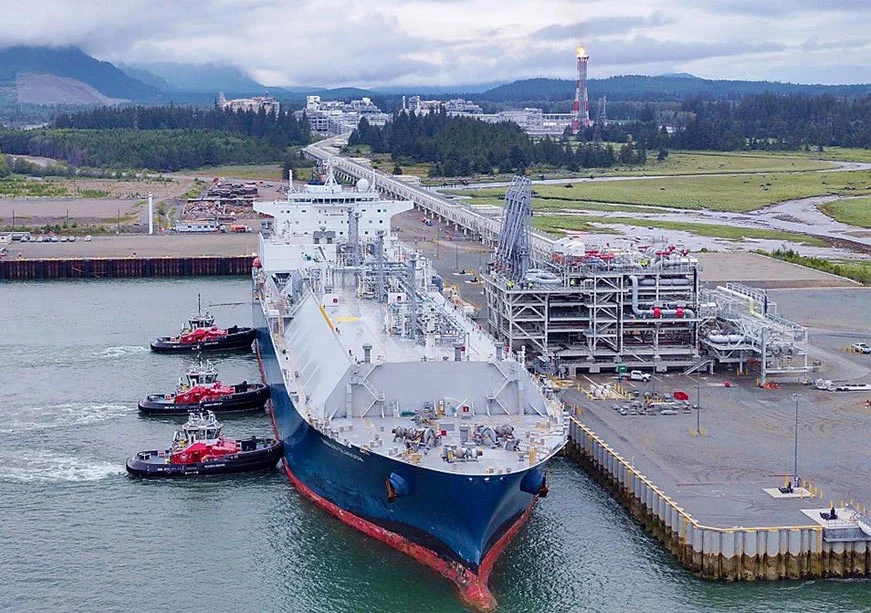
If crude oil diversification is a near-term hedge, Canadian LNG is closer to a decade-long infrastructure bet. LNG Canada’s Kitimat facility only began shipping in the past two years, giving Western Canadian gas its first serious Pacific export route; Ottawa’s targets of 50 million tonnes of annual LNG capacity by 2030, rising to 100 million by 2040, are ambitious relative to where the industry stands today, and Canadian volumes will have to compete on price and reliability against Qatar, the United States and Australia, all of which sit closer to India or have more mature supply relationships already. The India-Canada Strategic Energy Partnership announced this year gives the two governments a framework to work from, but a framework is not a contract, and turning it into one will likely take longer than the crude story precisely because Canadian LNG export capacity is still being built rather than already flowing.
The one part of this relationship that has moved with more institutional weight is civil nuclear cooperation. India and Canada have advanced toward a long-term uranium supply arrangement even as the broader relationship was being rebuilt, and it sits alongside India’s own 2025 legislative push — the SHANTI Bill, aimed at accelerating domestic nuclear capacity toward a stated goal of 100 gigawatts by 2047 — giving the uranium relationship a domestic Indian policy driver independent of the oil-and-gas diversification argument. That combination, a recovering bilateral relationship plus a genuine domestic Indian demand signal, may end up making uranium the most durable strand of the emerging Canada-India energy relationship, even if it attracts less attention than tanker cargoes of heavy crude.
What actually needs to happen next
None of this is an argument against pursuing the Canadian option; if anything, the specific obstacles point toward what would need to happen for the relationship to move from occasional cargoes to a real trade lane. On the commercial side, that means exactly what off-take negotiations are meant to solve: multi-year contracts that let shipping and lightering arrangements be planned around predictable volumes rather than spot-market opportunism, and that make Indian equity participation in Canadian production or export infrastructure a realistic proposition rather than a talking point. On the infrastructure side, it means Canadian federal and provincial governments actually resolving the Burrard Inlet dredging question that currently caps how much crude even a fully committed Aframax can carry out of Vancouver — a domestic Canadian political and environmental debate that will shape Indian import economics as much as anything New Delhi does. And on the political side, it means both governments continuing to manage a relationship that is stabilising but not yet fully repaired, with enough care that a future diplomatic flashpoint does not once again freeze exactly the kind of long-term commercial commitments this opportunity depends on.
The comparison that matters more than price
It is worth being precise about what kind of diversification this actually is, because the temptation in energy-security writing is to treat every new supplier as interchangeable insurance against every existing risk. Canadian crude does not solve the same problem that a Gulf disruption creates. Russian barrels are priced at a discount that exists specifically because sanctions risk has driven other buyers away; Canadian barrels carry no such discount; and Gulf supply, whatever its political volatility, still benefits from short transit times and an already-built tanker and refining ecosystem that decades of Indian imports have optimised around. What Canada offers is not a cheaper or faster alternative to either. It is a third pole of supply that happens to sit outside both the sanctions architecture threatening Russian barrels and the maritime chokepoints — the Strait of Hormuz above all — that periodically make Gulf supply expensive to insure and risky to route. That is a genuinely different kind of value, but it is a slower and more expensive one to build, which is precisely why it needs to be built during a calm period rather than assembled in a hurry once a crisis has already narrowed India’s options.
The historical pattern in Indian energy diversification is instructive here. India’s pivot toward discounted Russian crude after 2022 happened remarkably quickly, but only because the commercial incentive — a steep price discount — was large enough to override the usual frictions of building new supplier relationships from scratch. Canada offers no equivalent price signal; its crude sells close to global benchmarks once shipping costs are included, and its LNG will have to compete on delivered cost against suppliers with a decade’s head start into the Indian market. That means the Canada relationship will not build itself the way the Russia relationship effectively did. It will only be built if Indian refiners, Canadian producers and both governments treat the current diplomatic opening as a limited window for doing the unglamorous work — contracts, equity stakes, dredging permits, shipping arrangements — that a price-driven pivot never required. The barrels can move. The question is whether the politics, the shipping economics, and the negotiating timelines can all move together before either a Russian sanctions bill or the next diplomatic crisis forces India’s hand on a timeline it did not choose.



