
By: Anamika Tiwari, Guest Author, GSDN
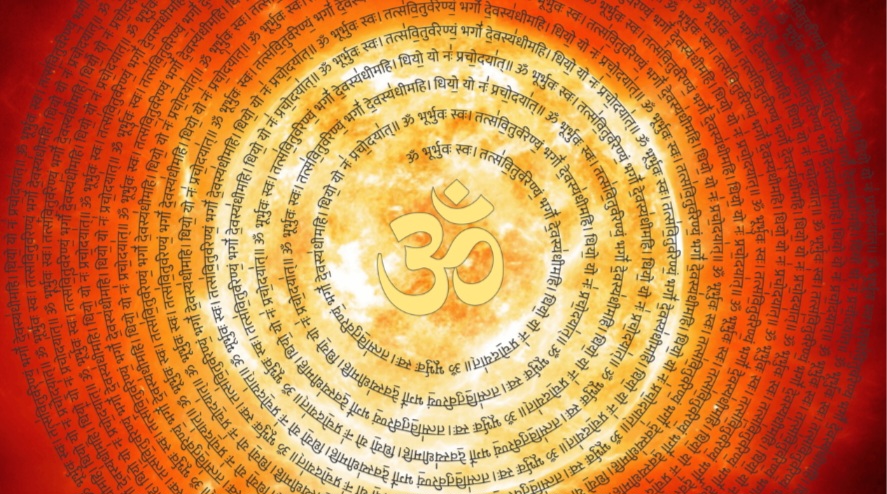
Are we discovering something new—or rediscovering the wisdom of our ancient Indian Knowledge Systems?
In today’s world, “Positive Affirmations” have become a popular term for building confidence, changing thought patterns and developing a positive mindset. People repeat statements such as:
“I am capable.”
“I am strong.”
“I believe in myself.”
“I can overcome challenges.”
These practices are often presented as modern techniques for psychological well-being.
But when we look deeper into the Indian Knowledge Systems (IKS), we find that the idea of using sound, repetition, contemplation, self-reflection and powerful statements to shape the mind has a very long history.
We have called many such practices Mantra, Japa, Svādhyāya, Sankalpa, Smarana and contemplation.
The terminology may be different. The philosophical frameworks are different. And we should not assume that a modern psychological technique and a traditional mantra are exactly the same thing.
But there is an important question worth asking:
Have we become so accustomed to looking towards the West for new ideas that we sometimes fail to recognise the wisdom within our own traditions?
MANTRA — Meaning
The Sanskrit word Mantra is traditionally associated with manas (मन), the mind, and tra (त्र), often interpreted in traditional explanations in relation to protection, support or liberation. Mantras occupy diverse roles across Indian traditions, including ritual, meditation, devotion and contemplation.
Depending on the tradition, the sound, pronunciation, meaning, repetition, intention and spiritual context of a Mantra can all be significant.
This is where an important distinction needs to be made.
A person repeating:
“I am confident.”
and a person Chanting:
काल हर, कष्ट हर, दुःख हर, दरिद्र हर।
सर्व रोग हर, सर्व पाप हर।
ॐ नमः पार्वती पतये।
हर हर महादेव॥
“ॐ नमः शिवाय”
are not necessarily engaging in the same practice,yet both remind us of something that modern life often forgets;What we repeatedly bring to the mind, matters and this principle appears repeatedly throughout Indian philosophical literature.
The words themselves carry a sequence of remembrance, prayer and surrender.
“कष्ट हर” — May suffering be removed.
“दुःख हर” — May sorrow be removed.
“दरिद्र हर” — May deprivation be removed.
“सर्व रोग हर” — May afflictions be removed.
“सर्व पाप हर” — May wrongdoing and its consequences be overcome.
And then:
ॐ नमः पार्वती पतये — हर हर महादेव।
The practitioner turns the mind towards Mahadev, invoking devotion, surrender and inner strength.
This is where the distinction between a modern “positive affirmation” and an Indian mantra becomes particularly interesting.
A positive affirmation may say:
“I am strong. I can overcome this. I am capable.”
A devotional mantra may instead express:
“I remember the Divine. I surrender my difficulties. Give me the strength to face them.”
The psychological experience may overlap in certain respects—repeated words can focus attention and influence what occupies the mind—but the philosophical and spiritual frameworks are different.
**The Indian tradition did not merely ask us to “think positive.”It asked us to transform the way we relate to the mind, the self, action and the Divine.**
The Bhagavad Gita: Strengthening the Mind from Within
Long before the modern language of self-help, mindset and positive thinking, the Bhagavad Gita presented a profound exploration of the human mind, fear, doubt, action, resilience, self-mastery and inner strength.
Arjuna stands before Krishna overwhelmed by confusion and despair.
Krishna does not simply tell him:
“Think positive.”
Instead, he guides him through a deeper process of understanding the self, duty, action, attachment, equanimity and mastery of the mind.
Some verses from the Gita can therefore serve as powerful sources of reflection and inner strength.
1. “Uddhared Ātmanātmānam” — Lift Yourself by Yourself
भगवद्गीता Chapter 6- Verse 6.5
उद्धरेदात्मनात्मानं नात्मानमवसादयेत्।
आत्मैव ह्यात्मनो बन्धुरात्मैव रिपुरात्मनः॥
Uddhared ātmanātmānaṁ nātmānam avasādayet
Ātmaiva hyātmano bandhur ātmaiva ripur ātmanaḥ
Meaning:
“Let a person uplift oneself by oneself and not degrade oneself. For the self alone can be one’s friend, and the self alone can be one’s enemy.”
Modern reflection:
Imagine turning this into a daily reminder:
“I will uplift myself. I will not allow my own mind to pull me down.”
This is much deeper and generates a responsibility within an individual.
2. “Ātmāiva Ripur Ātmanaḥ” — Your Mind Can Become Your Friend
The same verse gives us another profound insight:
आत्मैव ह्यात्मनो बन्धुः
आत्मैव रिपुरात्मनः॥
The self can become one’s friend or one’s enemy.
This is remarkably relevant in an age of anxiety, comparison and constant stimulation.Our circumstances matter—but so does the way we train and direct the mind,Instead of constantly saying:
“I cannot do this.”
“I am not good enough.”
“Everything is going wrong.”
“Why bad things are happening with me only” and son on……
Indian philosophy encourages us to examine the mind itself. What we are repeatedly telling our mind is very important. It reflects on our faces, words and actions.
3. “Karmanye Vādhikāraste” — Focus on Your Action
भगवद्गीता 2.47
कर्मण्येवाधिकारस्ते मा फलेषु कदाचन।
मा कर्मफलहेतुर्भूर्मा ते सङ्गोऽस्त्वकर्मणि॥
Meaning:
“You have a right to action alone, never to its fruits. Do not let the fruits of action be your motive, nor let your attachment be to inaction.”
This is one of the most widely known teachings of the BhagavadGita.
Consider its relevance to modern life.
We often tell ourselves:
“What if I fail?”
“What will people say?”
“What if I don’t get the result?”
The Gita redirects our attention:
Do your work with sincerity. Don’t let anxiety about the outcome paralyse you.
This is not merely “positive thinking.”
It is a philosophy of action and mental balance.
This is not giving up.
This is learning to let go.
4. “Samatvam Yoga Uchyate” — Equanimity Is Yoga
भगवद्गीता 2.48
योगस्थः कुरु कर्माणि सङ्गं त्यक्त्वा धनञ्जय।
सिद्ध्यसिद्ध्योः समो भूत्वा समत्वं योग उच्यते॥
Meaning:
“Established in yoga, perform your actions, abandoning attachment, and remaining even-minded in success and failure. Such equanimity is called Yoga.”
Think about the modern obsession with:
Success = I am good.
Failure = I am a failure.
Bhagavadgita Says:-
Success and failure are outcomes. They do not have to determine your inner balance.This is a powerful lesson for all of us who are navigating life with unpredictable,unimaginable circumstances and uncertainities.
5. “Nānyacintayanto Mām” — Single-Pointed Focus
भगवद्गीता 9.22
अनन्याश्चिन्तयन्तो मां ये जनाः पर्युपासते।
तेषां नित्याभियुक्तानां योगक्षेमं वहाम्यहम्॥
Meaning:
“Those who are steadfast and devoted to Me, contemplating Me without distraction, are sustained in their spiritual pursuit.”
The Gita repeatedly emphasises focused attention and steadiness.
Today we talk about:
- mindfulness
- focus
- concentration
- mental clarity
- reducing distractions
Indian traditions have explored these questions through Dhyāna, Dharana, Japa and Yoga for centuries.
Again, these concepts should not simply be equated with modern techniques—but the conversation between them is worth having.
6. “Na Hi Kalyāṇa-kṛt Kaścit” — No Good Effort Is Lost
भगवद्गीता 6.40
न हि कल्याणकृत्कश्चिद् दुर्गतिं तात गच्छति।
Meaning:
“One who strives for what is good does not come to an unfortunate end.”
What a powerful thought for someone who feels that their efforts have been wasted.
A student who failed an examination.
An entrepreneur whose business did not work.
A person beginning again after years.
Someone learning a new skill late in life.
The message can become a personal reflection:
“My sincere effort has value. I can learn, grow and continue.”
7. “Mā Śucaḥ” — Do Not Grieve
At the conclusion of the Gita, Krishna says:
भगवद्गीता 18.66
सर्वधर्मान्परित्यज्य मामेकं शरणं व्रज।
अहं त्वा सर्वपापेभ्यो मोक्षयिष्यामि मा शुचः॥
The verse concludes with:
मा शुचः — Mā śucaḥ
“Do not grieve.”
This phrase itself carries a powerful reminder:
Do not remain imprisoned by despair.
From “Positive Affirmations” to “Sankalpa”
Another beautiful concept from Indian traditions is Sankalpa — संकल्प.
A sankalpa can refer to a firm intention, resolve or solemn determination, with its meaning varying by context and tradition.
“I will act with discipline, awareness and integrity towards my goal.”
This connects thought with action and this is an important characteristic of Indian philosophical thought:
Knowledge is not merely to be accumulated. It is to be lived.
How is this Ancient knowledge of Mantra different from the concept of Positive Affirmations?
Mantra is a diverse and sophisticated category within Indian traditions. It has already addressed human questions in their own distinctive ways.”
That is the spirit in which Indian Knowledge Systems deserve to be studied.
Not through blind glorification.
Not through blind rejection.
But,through curiosity and research. Our ancestors through their culture and wisdom already explored:
Mantra → sound and repetition
Japa → disciplined repetition
Dhyāna → meditation
Dharana → concentration
Sankalpa → resolve/intention
Svādhyāya → self-study
Yoga → integration and discipline
Samatva → equanimity
Atma-vichara → inquiry into the self
These are not interchangeable with modern psychological terminology.
But they provide an enormous intellectual heritage that deserves to be studied rather than forgotten.
Reviving Indian Knowledge Systems does not mean rejecting everything Western,but thinking of ways to combine the Ancient Indian Knowledge with the modern Education System and make it more effective and practical.
It means developing the confidence to say:
“Let us learn from everywhere—and also remember to learn from our own roots.”
A civilisation does not become modern by forgetting its past.
It becomes stronger when it can carry its wisdom forward while engaging critically with the present.
**Our roots are not outdated.
Perhaps we simply stopped looking at them.**
And maybe the next generation should not have to rediscover its own heritage through someone else’s vocabulary.
I think that the real journey is not from ancient to modern,Perhaps it is from forgotten to rediscovered.
Let us explore our Indian Knowledge Systems.
Let us question. Let us research. Let us understand.
The real task is to remember the wisdom behind our own words.
And above all—let us pass the knowledge forward.
हरे कृष्ण हरे कृष्ण | कृष्ण कृष्ण हरे हरे |
हरे राम हरे राम | राम राम हरे हरे | 🙏
हर हर महादेव। 🙏



