
By: Khushbu Ahlawat, Consulting Editor, GSDN
Introduction: The Transformation of Strategic Hierarchies in Warfare
The evolution of warfare in the 21st century is marked by a fundamental reordering of strategic priorities, where traditional domains of land and sea are increasingly subordinated to the expanding capabilities of air and space power. Contemporary conflicts reveal that control over the battlespace is no longer determined solely by territorial occupation or naval dominance, but by the ability to achieve superiority in the aerospace domain. This shift reflects a deeper transformation in military thought, wherein technological advancements in aviation, missile systems, drones, and space-based assets have redefined the nature of power projection and strategic deterrence. For instance, the extensive use of unmanned aerial systems in the Russia-Ukraine War has demonstrated how relatively low-cost drone technologies can neutralise high-value assets, thereby redefining asymmetries in warfare.
Within this changing landscape, classical geopolitical theories are being re-evaluated. The maritime-centric doctrines of Alfred Thayer Mahan and the land-centric framework of Halford Mackinder are increasingly challenged by the airpower-centric vision articulated by Giulio Douhet. While Mahan emphasised naval supremacy as the foundation of global power and Mackinder highlighted control of the Eurasian heartland, Douhet argued that command of the air would ultimately determine the outcome of wars. In the contemporary era, marked by rapid technological innovation and complex multi-domain operations, Douhet’s once-contested ideas are gaining renewed relevance, as evidenced by modern doctrines of integrated air and missile defence adopted by major powers.
Historical Evolution: From Sea Power to Airpower Dominance
Historically, control of the seas has been synonymous with global influence. Maritime empires such as the Dutch, British, and later the United States leveraged naval supremacy to secure trade routes, establish overseas bases, and project power across continents. Alfred Thayer Mahan’s doctrine of sea power significantly shaped U.S. strategy, emphasising the importance of a strong navy, merchant marine, and strategic chokepoints. A classical example is British dominance in the 19th century, where control over sea lanes enabled imperial expansion and economic supremacy.
However, the emergence of airpower in the early 20th century introduced a new dimension to warfare. Giulio Douhet, in his seminal work The Command of the Air (1921), posited that air superiority could decisively break an enemy’s capacity and will to fight through strategic bombing and rapid offensive operations. Although his ideas were initially criticised, later events such as the Allied strategic bombing campaigns during World War II validated aspects of his thinking by demonstrating the ability of airpower to cripple industrial infrastructure and morale.
The institutional recognition of airpower was exemplified by the establishment of the United States Air Force as an independent service in 1947 under the National Security Act. This marked a turning point in military doctrine, acknowledging airpower as a decisive domain. More recently, U.S. air campaigns during the Gulf War showcased the effectiveness of precision air strikes in achieving rapid battlefield dominance with minimal ground engagement.
Technological Transformation and the Revolution in Military Affairs
The accelerating pace of technological innovation has fundamentally altered the conduct of warfare, giving rise to what is often described as a Revolution in Military Affairs (RMA). Advances in drones, hypersonic missiles, artificial intelligence, quantum technologies, and space-based systems have significantly enhanced the reach, precision, and lethality of modern military operations. These developments align with patterns similar to Moore’s Law, where rapid technological progress leads to exponential improvements in capability. The increasing deployment of hypersonic glide vehicles by powers such as China and Russia exemplifies this transformation.
In this context, airpower has emerged as the central pillar of modern military strategy, providing critical functions such as intelligence, surveillance, reconnaissance (ISR), rapid mobility, and precision strike. The integration of these capabilities enables the compression of decision-making cycles, often referred to as “kill chains.” For example, the use of real-time satellite intelligence combined with drone strikes in counterterrorism operations has drastically reduced response times and increased operational precision. As a result, aerospace dominance not only enhances combat efficiency but also reshapes doctrines and force structures globally.
Empirical indicators from recent defence assessments further illustrate the scale at which aerospace capabilities are reshaping military priorities. Global inventories now include over 25,000 military aircraft, with a growing share consisting of advanced multirole fighters, airborne early warning systems, and unmanned aerial vehicles. The United States operates more than 13,000 military aircraft, including a rapidly expanding fleet of fifth-generation platforms such as the F-35, while China has significantly modernised its air force with stealth aircraft like the J-20 and an extensive drone ecosystem. In parallel, the proliferation of unmanned systems has accelerated, with estimates suggesting that over 100 countries now possess some form of drone capability, fundamentally democratising access to airpower. In the maritime context, the vulnerability of naval assets is increasingly quantifiable: modern anti-ship missile systems, supported by satellite-based targeting and airborne sensors, can strike targets at ranges exceeding 1,000–1,500 kilometres, thereby compressing reaction times and limiting defensive manoeuvrability. Additionally, global satellite constellations—numbering over 8,000 operational satellites—provide continuous ISR coverage, enabling real-time tracking of maritime movements. These trends collectively demonstrate that investment, capability expansion, and operational reliance are decisively shifting toward aerospace dominance.
Air Superiority and Maritime Strategy: Redefining Sea Control
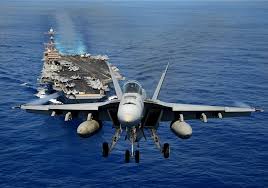
The relationship between airpower and maritime strategy has undergone a profound transformation. While naval forces remain essential for controlling sea lanes and projecting power, their effectiveness is increasingly contingent upon air superiority. Modern warships and aircraft carriers, once symbols of maritime dominance, are now vulnerable to long-range precision strikes. The development of anti-ship ballistic missiles such as China’s “carrier killer” DF-21D illustrates how air and missile capabilities can challenge traditional naval supremacy.
The Gulf of Guinea and other maritime zones highlight the importance of integrated air-naval operations. Airborne surveillance systems and maritime patrol aircraft have proven critical in countering piracy and illegal trafficking. India’s deployment of P-8I aircraft in the Indian Ocean Region has significantly enhanced maritime domain awareness and anti-submarine capabilities.
Furthermore, the rise of anti-access/area-denial strategies has increased risks for large naval fleets. For instance, tensions in the South China Sea demonstrate how layered missile and air defence systems can restrict freedom of navigation. In this context, the traditional dictum that “command of the sea decides the fate of nations” is increasingly being replaced by the assertion that command of the air determines maritime control.
Empirical Validation: Contemporary Conflicts and Airpower Dominance
Recent conflicts provide compelling evidence of the centrality of airpower. The ongoing Russia-Ukraine War has demonstrated the extensive use of drones, loitering munitions, and air defence systems in shaping battlefield outcomes. Similarly, military engagements involving Israel and Iran have highlighted the decisive role of air strikes and missile systems in achieving strategic objectives.
India’s airstrike at Balakot in 2019 serves as a significant example of precision airpower being used for strategic signalling without escalating into full-scale war. More recently, operations like Op Sindoor (2025) further demonstrate how airpower enables rapid and calibrated responses in complex security environments.
A quantitative assessment of contemporary military capabilities and conflict trends further substantiates the growing centrality of air superiority in determining maritime and overall strategic outcomes. According to global defence expenditure data, worldwide military spending surpassed US$2.2 trillion in 2025, with a significant proportion allocated to aerospace capabilities, including advanced fighter aircraft, unmanned aerial systems, missile defence, and space-based assets. The United States alone accounted for nearly 40 percent of global military expenditure, investing heavily in fifth-generation aircraft such as the F-35, strategic bombers, and integrated air and missile defence systems. Simultaneously, China has increased its defence budget by consistent double-digit growth over the past decade, prioritising anti-access/area-denial (A2/AD) capabilities, hypersonic missile systems, and advanced drone swarms designed to neutralise high-value naval assets, including aircraft carriers. In operational terms, recent conflicts demonstrate the scale and intensity of airpower utilisation. In the Russia-Ukraine War, tens of thousands of drones have been deployed annually, fundamentally altering battlefield dynamics by enabling persistent surveillance and precision targeting at relatively low cost. Estimates suggest that unmanned systems now account for a substantial share of battlefield casualties and equipment losses, underscoring their disruptive impact. In the maritime domain, the vulnerability of naval platforms is increasingly evident: anti-ship missiles with ranges exceeding 1,500 kilometres, combined with real-time targeting enabled by satellites and airborne sensors, have significantly reduced the survivability of large surface combatants. Furthermore, the South China Sea has witnessed extensive militarisation, with China constructing fortified artificial islands equipped with airstrips, radar systems, and missile batteries, thereby extending its aerial reach deep into contested waters. Similarly, data from the Gulf of Guinea indicates that maritime insecurity—particularly piracy and armed robbery at sea—continues to impose economic costs estimated in the billions of dollars annually, reinforcing the need for integrated air-maritime surveillance systems. From a technological standpoint, the proliferation of satellite constellations has enhanced global intelligence, surveillance, and reconnaissance (ISR) capabilities, enabling near real-time tracking of naval movements and reducing the element of surprise in maritime operations. Additionally, the development of hypersonic glide vehicles, capable of travelling at speeds exceeding Mach 5 and evading traditional missile defence systems, represents a paradigm shift in strike capabilities, further diminishing the defensive advantage of naval forces. Collectively, these data points illustrate a clear trend: the increasing allocation of resources, technological innovation, and operational reliance on aerospace capabilities are reshaping the hierarchy of military power, reinforcing the argument that air superiority is becoming the decisive factor in controlling not only the skies but also the seas.
Geopolitical Implications: Great Power Competition and Strategic Adaptation
The growing importance of airpower has significant geopolitical implications. The United States continues to dominate through advanced aerospace capabilities, while China is rapidly expanding its military footprint, particularly in the Indo-Pacific. China’s militarisation of artificial islands in the South China Sea illustrates how air and missile systems are reshaping regional power dynamics.
Additionally, the proliferation of drone warfare in conflicts such as those in the Middle East highlights how non-state actors can leverage airpower technologies, thereby challenging traditional notions of state-centric warfare.
Jointness and the Future of Warfare
Despite the growing dominance of airpower, the importance of joint operations remains critical. Effective military strategy requires integration across land, sea, and air domains. Land forces continue to hold territory, while naval forces secure trade routes. However, airpower acts as a force multiplier.
For instance, coordinated air-naval operations during U.S. interventions in the Middle East have demonstrated how integrated forces can achieve rapid dominance. Airpower enables real-time intelligence, mobility, and precision strikes, enhancing the effectiveness of all domains.
Conclusion
The shifting balance between sea and air power underscores a broader transformation in warfare. While traditional doctrines emphasised sea control, contemporary realities highlight the decisive role of air superiority. As technological advancements continue, aerospace capabilities will increasingly shape military outcomes. Ultimately, the strategic dictum must be reframed: it is no longer sufficient to command the seas; one must first command the air to do so.
In this evolving strategic environment, the implications extend beyond immediate battlefield dynamics to the very foundations of global power projection and deterrence. States that are able to integrate air, space, and maritime capabilities into a coherent operational framework will possess a decisive advantage in both conventional and hybrid conflicts. The increasing convergence of technologies—ranging from artificial intelligence and autonomous systems to space-based surveillance and hypersonic delivery platforms—suggests that future conflicts will be characterised by speed, precision, and multi-domain coordination at unprecedented levels. This reinforces the centrality of aerospace dominance not merely as a tactical enabler but as a strategic determinant of national power.
Moreover, the growing vulnerability of traditional naval assets, including aircraft carriers and large surface fleets, necessitates a doctrinal shift toward more agile, distributed, and network-centric force structures. In regions such as the South China Sea and the Indian Ocean Region, where great power competition is intensifying, the ability to secure air superiority will directly influence control over critical sea lanes and chokepoints. This underscores a broader transformation in geopolitics, where dominance is no longer defined solely by physical presence but by the capacity to control information, perception, and precision engagement across domains. In essence, the future of maritime strategy lies not in the decline of naval power, but in its integration with aerospace capabilities. The enduring relevance of sea power will thus depend on its alignment with air superiority, reaffirming that in the contemporary era, the skies have become the gateway to the seas.

About the Author
Khushbu Ahlawat is a research analyst with a strong academic background in International Relations and Political Science. She has undertaken research projects at Jawaharlal Nehru University, contributing to analytical work on international and regional security issues. Alongside her research experience, she has professional exposure to Human Resources, with involvement in talent acquisition and organizational operations. She holds a Master’s degree in International Relations from Christ University, Bangalore, and a Bachelor’s degree in Political Science from the University of Delhi.




I appreciate the depth and clarity of this post.
Thank you for offering such practical guidance.
It’s great to see someone explain this so clearly.
Thank you for being so generous with your knowledge.
You’ve clearly done your research, and it shows.
It’s great to see someone explain this so clearly.
Thank you for being so generous with your knowledge.
Thanks for making this so reader-friendly.
This was very well laid out and easy to follow.
This was very well laid out and easy to follow.
I enjoyed your take on this subject. Keep writing!
Thank you for making this topic less intimidating.
Your content never disappoints. Keep up the great work!
This content is gold. Thank you so much!