
By: Khushbu Ahlawat, Consulting Editor, GSDN
Introduction: Recalibrating Security in an Age of Interconnected Threats
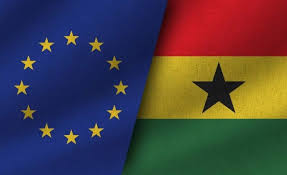
Contemporary international relations are increasingly characterised by the erosion of clear boundaries between regional and global security dynamics, giving rise to a condition of deep security interdependence. In this evolving landscape, threats such as terrorism, transnational crime, maritime insecurity, and cyber vulnerabilities are no longer confined to discrete geographies but are embedded within interconnected networks that span continents. Within this context, the formalisation of the Security and Defence Partnership (SDP) between the European Union and Ghana on 24 March 2026 represents a significant empirical case through which to examine the transformation of security cooperation between Europe and Africa.
Rather than constituting a conventional bilateral arrangement, the EU–Ghana SDP reflects a broader paradigmatic shift in international security governance—from interventionist and externally driven models toward partnership-based frameworks that emphasise capacity building, local ownership, and multidimensional engagement. By encompassing domains such as counterterrorism, maritime security, cyber threats, and hybrid warfare, the agreement underscores the extent to which contemporary security challenges are both transnational and multidimensional. As such, the partnership serves not merely as a policy instrument but as a manifestation of evolving strategic thinking within the EU and its external engagements.
Strategic Rationale: Preventing the Spillover of Sahelian Instability
The signing of the SDP must be understood against the backdrop of a rapidly deteriorating security environment in West Africa, particularly in the Sahel region. Over the past decade, countries such as Burkina Faso, Mali, and Niger have experienced escalating violence driven by extremist organisations linked to Al-Qaeda and Islamic State. Burkina Faso, in particular, has emerged as one of the epicentres of global terrorism, accounting for a significant proportion of worldwide terror-related fatalities and mass displacement. These developments have not only destabilised the Sahel but have also heightened the risk of spillover into relatively stable coastal states such as Ghana.
Although Ghana has thus far avoided large-scale terrorist attacks, it is increasingly vulnerable to cross-border instability, refugee inflows, and localized violence, including attacks on traders and disruptions in border communities. These emerging threats highlight the fragility of Ghana’s security environment and justify the urgency of preventive measures. In this context, the EU–Ghana SDP represents a proactive effort to contain Sahelian instability before it permeates deeper into the Gulf of Guinea region.
From a strategic standpoint, the partnership reflects the EU’s attempt to recalibrate its engagement following the suspension or withdrawal of missions such as EUTM Mali and EUCAP Sahel Niger, which were undermined by political instability, military coups, and declining local support. By shifting its focus to Ghana—a democratic state with relatively robust institutions, a professional military, and a strong track record in UN peacekeeping—the EU is adopting a more sustainable and partnership-driven approach to regional security.
Scope and Operational Dimensions: A Comprehensive Security Framework
The EU–Ghana SDP distinguishes itself through its comprehensive scope, addressing both traditional and non-traditional security challenges. Central to the partnership is a strong emphasis on counterterrorism, crisis management, and capacity building. To this end, the EU has provided a €50 million package of non-lethal military equipment under the European Peace Facility, including surveillance drones, anti-drone systems, and mobility assets such as motorcycles. These resources are intended to enhance Ghana’s ability to monitor its borders, detect and deter militant incursions, and respond effectively to emerging threats.
In addition to counterterrorism, the partnership prioritises the fight against transnational organised crime, intelligence sharing, and improved border management. Given the porous nature of borders in West Africa, such measures are critical to preventing the movement of armed groups, illicit goods, and human trafficking networks. By strengthening Ghana’s institutional and operational capacities, the SDP seeks to disrupt the networks that enable insecurity to thrive across the region.
Maritime security constitutes another key pillar of the partnership. The Gulf of Guinea is a vital artery for global trade but is increasingly threatened by piracy, drug trafficking, and illegal maritime activities. Through the EU’s Coordinated Maritime Presences mechanism, European navies will collaborate with Ghana’s naval forces to enhance situational awareness, improve deterrence, and secure critical shipping lanes. This cooperation also aligns with broader international efforts such as the Yaoundé architecture, which aims to strengthen maritime governance in West and Central Africa.
Notably, the SDP extends beyond conventional security domains to include emerging challenges such as cyber threats, disinformation, and climate-related risks. By incorporating these elements, the partnership acknowledges the evolving nature of conflict in the 21st century, where technological and environmental factors increasingly intersect with traditional security concerns.
The Broader EU Strategy in Africa: From Development Partner to Geopolitical Actor
The EU–Ghana SDP must also be situated within the broader context of Europe’s evolving strategy in Africa. Historically, EU engagement with the continent has been rooted in development cooperation and economic partnerships, exemplified by agreements such as the EU-Ghana Economic Partnership Agreement of 2016. Under this framework, the EU has become Ghana’s largest trading partner and a key destination for its exports, particularly cocoa.
In recent years, however, the EU has sought to transition from a primarily economic actor to a more assertive geopolitical player. Initiatives such as the Global Gateway and the NDICI funding mechanism, which allocates substantial financial resources for development, governance, and infrastructure projects, reflect this shift. By integrating security cooperation with economic and development initiatives, the EU aims to create a holistic approach that addresses both the symptoms and root causes of instability.
This strategic pivot is also driven by increasing competition from other global powers, notably China and Russia, which have expanded their influence in Africa through infrastructure investments and security partnerships. In this context, the EU–Ghana SDP serves as a mechanism for maintaining relevance and influence in a rapidly changing geopolitical landscape.
From a theoretical perspective, the EU–Ghana Security and Defence Partnership can be interpreted through multiple lenses within International Relations scholarship. A realist reading would situate the agreement within the broader context of shifting power balances and strategic competition, particularly as the European Union seeks to maintain influence in West Africa amid the expanding presence of China and Russia. In this sense, the partnership reflects a pragmatic effort to secure geopolitical interests, safeguard trade routes, and prevent the emergence of security vacuums that could be exploited by rival powers. Conversely, a liberal institutionalist perspective would emphasise the cooperative and rules-based dimensions of the SDP, highlighting its focus on capacity building, institutional strengthening, and multilateral coordination with regional organisations such as ECOWAS. The emphasis on dialogue mechanisms, joint operations, and shared norms underscores the EU’s enduring commitment to governance-based security frameworks. Additionally, constructivist interpretations draw attention to the role of identity, norms, and discourse in shaping the partnership. Ghana’s status as a democratic and stable state aligns with the EU’s normative preferences, facilitating a convergence of strategic cultures and legitimising deeper cooperation. Importantly, the SDP also reflects the growing salience of the concept of “security interdependence,” wherein the security of one region is intrinsically linked to that of another. This is particularly evident in the EU’s recognition that instability in West Africa—manifested through terrorism, migration, and maritime insecurity—has direct implications for European security. Thus, the EU–Ghana SDP is not merely a bilateral arrangement but a manifestation of evolving global security logics, where power, institutions, and norms intersect to shape cooperative outcomes in an increasingly complex international system.
Contemporary Relevance: Why the SDP Matters More Than Ever
Recent global developments further underscore the importance of the EU–Ghana partnership. The decline of Western influence in the Sahel, marked by the withdrawal of European forces and the rise of alternative security actors, has created a strategic vacuum that threatens regional stability. At the same time, intensifying geopolitical competition and the emergence of a more fragmented global order have heightened the need for diversified partnerships.
Additionally, disruptions in global supply chains—exacerbated by events such as the COVID-19 pandemic and the Russia-Ukraine War—have highlighted the critical importance of securing maritime routes and trade corridors. The Gulf of Guinea, as a key node in global trade, has therefore gained renewed strategic significance.
Migration pressures also play a crucial role in shaping EU policy. By enhancing stability and economic opportunities in partner countries like Ghana, the EU aims to address the root causes of irregular migration and reduce the burden on its borders. A data-driven assessment of the West African security environment further reinforces the strategic necessity of the EU–Ghana Security and Defence Partnership. According to multiple global security databases and reports, the Sahel region has, in recent years, accounted for over 40 percent of global terrorism-related deaths, with Burkina Faso alone contributing a disproportionately high share. Between 2021 and 2025, incidents of violent extremism in the broader Sahel increased by nearly 200 percent, reflecting both the territorial expansion and operational sophistication of armed groups affiliated with Al-Qaeda and Islamic State. Simultaneously, the humanitarian dimension of the crisis has intensified, with over 2.5 million internally displaced persons recorded across Mali, Niger, and Burkina Faso, placing additional pressure on neighbouring coastal states such as Ghana. In the maritime domain, the Gulf of Guinea continues to account for a significant proportion of global piracy incidents, with estimates suggesting that more than 80 percent of kidnappings at sea in recent years have occurred in this region. Economically, instability in West Africa has measurable global repercussions: disruptions in trade routes and illicit activities are estimated to cost regional economies billions of dollars annually, while also affecting European supply chains, particularly in commodities such as cocoa and energy resources. Furthermore, irregular migration flows from West Africa toward Europe have shown periodic spikes during phases of heightened instability, underlining the direct linkage between regional insecurity and European domestic concerns. Collectively, these data points illustrate the scale, intensity, and transnational implications of the security challenges confronting West Africa, thereby underscoring the strategic logic behind the EU’s investment in Ghana as a stabilising partner.
Challenges and Limitations: Navigating Complex Realities
Despite its ambitious scope, the EU–Ghana SDP is not without challenges. One of the primary concerns is the gap between capability and capacity. While the provision of advanced equipment is a significant step, its effectiveness depends on adequate training, maintenance, and integration into existing systems. Without these elements, there is a risk that resources may be underutilised.
Furthermore, local political dynamics and sensitivities regarding foreign military involvement could complicate implementation. While Ghanaian stakeholders generally support capacity-building initiatives, there remains a degree of caution regarding external assistance, particularly in light of past experiences in the region.
The limitations of previous EU engagements in the Sahel also serve as a cautionary tale. These experiences underscore the importance of aligning external support with local priorities, ensuring community engagement, and addressing underlying socio-economic drivers of conflict. Additionally, the sustainability of EU commitment may be tested by competing priorities, including ongoing conflicts in other regions.
Conclusion: Toward a More Resilient and Interconnected Security Architecture
The EU–Ghana Security and Defence Partnership represents a significant milestone in the evolution of EU-Africa relations and offers a promising framework for addressing the complex security challenges of West Africa. By combining political dialogue with operational support and integrating traditional and non-traditional security domains, the SDP reflects a nuanced understanding of contemporary threats.
For the EU, Ghana provides a stable and reliable partner in a volatile region; for Ghana, the partnership offers valuable resources and strategic support to enhance its national and regional security role. More broadly, the SDP exemplifies a shift toward a more interconnected and cooperative approach to global security, where stability in one region is intrinsically linked to prosperity in another. Looking ahead, the long-term effectiveness of the EU–Ghana Security and Defence Partnership will depend on its ability to evolve beyond a primarily capacity-building framework into a genuinely adaptive and locally embedded security architecture. This necessitates sustained investment not only in military capabilities but also in governance reforms, socio-economic development, and community-level resilience across vulnerable border regions. Furthermore, deeper coordination with regional institutions such as ECOWAS will be essential to ensure that the partnership complements, rather than duplicates, existing African-led security initiatives. The integration of early warning systems, intelligence-sharing networks, and civil-military cooperation mechanisms could significantly enhance the partnership’s preventive potential. Equally important is the need for the European Union to maintain strategic consistency and long-term commitment, particularly in the face of competing geopolitical priorities, thereby reinforcing credibility and trust among African partners.
As Ghana prepares for a leadership role within the African Union in the coming years, the success of this partnership could have far-reaching implications, not only for West Africa but also for the future of international security cooperation. Ultimately, the EU–Ghana SDP underscores a fundamental reality of the modern world: that security, like prosperity, is shared—and must be collectively safeguarded.

About the Author
Khushbu Ahlawat is a research analyst with a strong academic background in International Relations and Political Science. She has undertaken research projects at Jawaharlal Nehru University, contributing to analytical work on international and regional security issues. Alongside her research experience, she has professional exposure to Human Resources, with involvement in talent acquisition and organizational operations. She holds a Master’s degree in International Relations from Christ University, Bangalore, and a Bachelor’s degree in Political Science from the University of Delhi.



