
By: Sonalika Singh, Consulting Editor, GSDN
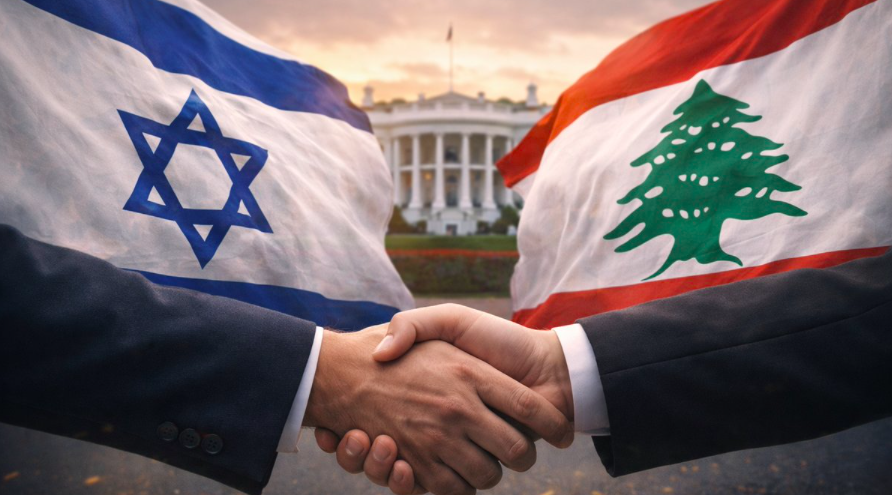
In regions where history is layered with conflict and fragile understandings, a ceasefire rarely signals resolution; more often, it represents a pause tenuous, conditional, and shaped by forces both visible and unseen. The recent ceasefire between Israel and Lebanon emerges within such a context, carrying with it cautious optimism alongside deeply rooted skepticism. While the announcement of a temporary halt in hostilities has been welcomed across diplomatic circles, the critical question remains whether this cessation of violence can endure beyond its initial phase or whether it will follow the familiar trajectory of past agreements that ultimately unraveled.
At its core, the ceasefire reflects a convergence of immediate strategic interests rather than a comprehensive alignment of long-term goals. For Israel, the pause offers an opportunity to reassess military positioning and reduce the intensity of cross-border threats, particularly those attributed to Hezbollah. For Lebanon, the agreement provides much-needed relief from sustained military pressure and humanitarian strain. For external actors, especially the United States and regional intermediaries, the ceasefire represents a diplomatic foothold a chance to prevent further escalation in a region already strained by overlapping conflicts. However, these overlapping motivations, while sufficient to initiate a truce, may not be robust enough to sustain it over time.
One of the most defining features of the current situation is the distinction between the Lebanese state and Hezbollah, the Iran-aligned armed group that operates with significant autonomy within Lebanon’s borders. While the ceasefire is formally between Israel and Lebanon, the operational dynamics of the conflict are largely shaped by Hezbollah’s actions. This creates a structural challenge: the entity capable of escalating or de-escalating tensions is not fully integrated into the diplomatic framework governing the ceasefire. As a result, the durability of the agreement depends not only on state-level commitments but also on the behavior of a powerful non-state actor whose strategic calculations may not align with those of the Lebanese government.
This disconnect raises fundamental questions about enforcement and accountability. A ceasefire, to be effective, requires mechanisms to ensure compliance and address violations. In the current scenario, such mechanisms appear limited. While international mediators and observers may play a role in monitoring developments, their ability to influence on-ground realities remains constrained. The Lebanese government, despite its formal authority, faces well-documented limitations in asserting control over all armed actors within its territory. This institutional constraint complicates efforts to translate diplomatic commitments into sustained operational restraint.
The role of external influence further complicates the equation. Hezbollah’s strategic orientation is closely tied to Iran, which views the group as a critical component of its regional posture. Consequently, developments in Lebanon cannot be fully understood in isolation from broader geopolitical dynamics. Any shift in Iran’s strategic priorities, whether driven by negotiations, regional tensions, or global pressures, is likely to have a direct impact on Hezbollah’s actions. This interconnectedness means that the ceasefire is not merely a bilateral arrangement but part of a wider network of strategic considerations that extend beyond the immediate actors involved.
At the same time, the involvement of the United States as a mediator introduces both opportunities and challenges. On one hand, U.S. engagement lends diplomatic weight to the ceasefire, signaling a level of international commitment to de-escalation. On the other hand, it also places the agreement within the broader context of U.S. regional policy, which includes parallel considerations involving Iran, Gulf states, and other stakeholders. This layered diplomatic environment can both facilitate dialogue and introduce competing priorities, potentially affecting the consistency and focus required to sustain the ceasefire.
From a humanitarian perspective, ceasefire offers immediate and tangible benefits. Communities on both sides of the border, many of which have experienced displacement, infrastructure damage, and economic disruption, stand to gain from even a temporary reduction in violence. The cessation of hostilities allows for the delivery of aid, the restoration of basic services, and the gradual return of civilians to affected areas. However, the provisional nature of the agreement means that these gains remain vulnerable. Without a clear pathway toward longer-term stability, the risk of renewed displacement and disruption persists.
Historical precedent provides a sobering lens through which to assess the current situation. Previous ceasefires between Israel and Lebanon, including those following major conflicts, have often succeeded in halting immediate violence but failed to address underlying drivers of conflict. Issues such as territorial disputes, security arrangements, and the presence of armed non-state actors have remained unresolved, creating conditions for future escalation. The current ceasefire, while significant in its timing and diplomatic context, does not appear to fundamentally alter these underlying dynamics.
Another critical factor influencing the durability of the ceasefire is the domestic political environment within Lebanon. The country is navigating a complex landscape marked by economic crisis, institutional fragility, and public dissatisfaction. In this context, the government’s capacity to implement and sustain policy decisions, including those related to security and defense, is inherently constrained. While there are indications of a desire to assert greater state authority and move toward more stable governance, the practical challenges of doing so remain substantial. The presence of competing political interests and external influences further complicates efforts to establish a unified national approach.
Public sentiment within Lebanon also plays a nuanced role. While there is widespread fatigue with conflict and a desire for stability, there are also deeply entrenched loyalties and perceptions that shape attitudes toward actors like Hezbollah. Any effort to alter the existing balance of power, particularly through disarmament or restructuring of security arrangements, must contend with these social and political realities. This underscores the importance of considering not only formal agreements but also the broader societal context in which they are implemented.
On the Israeli side, strategic considerations are equally complex. While a ceasefire reduces immediate security risks, it also requires confidence that the underlying threats are being addressed. Israel’s position that any lasting agreement must involve constraints on Hezbollah reflects a broader emphasis on long-term security guarantees. However, achieving such guarantees within the current framework presents significant challenges, particularly given the limitations of the Lebanese state and the external dimensions of the conflict.
The question of implementation is therefore central to assessing whether the ceasefire will hold. Initial compliance, while encouraging, is only the first step. The true test lies in the ability of all parties to maintain restraint over time, respond constructively to incidents, and engage in continued dialogue. This requires not only political will but also effective communication channels, clear rules of engagement, and mechanisms for conflict resolution. In the absence of these elements, even minor incidents have the potential to escalate into broader confrontations.
Economic considerations also influence the sustainability of the ceasefire. Prolonged conflict imposes significant costs on both Israel and Lebanon, affecting trade, investment, and overall economic stability. A sustained ceasefire could create conditions for economic recovery and development, providing incentives for maintaining peace. However, these incentives must be balanced against security concerns and political priorities, which may at times take precedence.
The regional dimension adds yet another layer of complexity. Developments in neighboring countries, shifts in alliances, and broader geopolitical trends all have the potential to impact the trajectory of the ceasefire. The Middle East is characterized by a high degree of interconnectivity, where local conflicts often intersect with regional and global dynamics. As such, the stability of the Israel-Lebanon ceasefire cannot be viewed in isolation but must be understood within this broader context.
Ultimately, the durability of the ceasefire will depend on a combination of factors, including the alignment of strategic interests, the effectiveness of implementation mechanisms, and the evolution of regional dynamics. While the current agreement represents a meaningful step toward de-escalation, it remains inherently fragile. The absence of a comprehensive framework addressing core issues limits its potential to serve as a lasting solution.
Taking all factors into account, the ceasefire is best understood as a transitional moment rather than a definitive outcome. It creates space for dialogue, reduces immediate risks, and offers a glimpse of what stability might look like. However, without sustained effort to address underlying challenges, it is unlikely to endure its current form. The path forward will require not only diplomatic engagement but also structural changes that enhance governance, strengthen institutions, and align the interests of key actors.
In this sense, the question is not simply whether the ceasefire will hold, but what conditions are necessary for it to evolve into something more enduring. The answer lies in a combination of political will, strategic alignment, and sustained international engagement. Until these elements converge, the ceasefire will remain what it has always been in this region with a fragile pause in a longer and more complex narrative.

About the Author
Sonalika Singh began her journey as an UPSC aspirant and has since transitioned into a full-time professional working with various organizations, including NCERT, in the governance and policy sector. She holds a master’s degree in political science and, over the years, has developed a strong interest in international relations, security studies, and geopolitics. Alongside this, she has cultivated a deep passion for research, analysis, and writing. Her work reflects a sustained commitment to rigorous inquiry and making meaningful contributions to the field of public affairs.



