
By: Suman Sharma
ICEYE, a Finnish aerospace company that owns and operates the world’s largest constellation of Synthetic Aperture Radar (SAR) satellites and is a global leader in disaster intelligence from space has launched its deforestation monitoring solution. This technology is designed to provide law enforcement agencies, government officials, and conservation organisations with near real-time visibility into forest loss, even in the most cloud-covered regions of the world, as SAR-powered monitoring delivers reliable insights through cloud cover, enabling near real-time response to illegal logging and mining
The launch comes amid sustained pressure to protect the Amazon rainforest. According to Global Forest Watch, Brazil lost 28 million hectares of tree cover between 2000 and 2020, which is a nearly six percent net decline, reflecting a long-term trend that continues to challenge enforcement efforts in remote and cloud-covered regions. While enforcement efforts have reduced deforestation from peak levels seen earlier this decade, illegal clearing remains persistent and highly adaptive.
Traditional optical satellites often struggle in tropical regions where heavy cloud cover can obscure imagery for days or weeks at a time. These monitoring gaps create enforcement blind spots, limiting authorities’ ability to respond proactively when illegal clearing occurs. Without reliable evidence and verification, forest loss can expand before action is possible.
ICEYE’s synthetic aperture radar constellation closes that gap. SAR imagery operates day and night through all weather conditions providing persistent monitoring even in the cloudiest parts of the Amazon. The system delivers incremental deforestation detections with pre- and post-event imagery for a clear evidence trail.
“When forests are under threat, timing is everything,” said Andy Read, Vice President of Government Solutions at ICEYE, further adding, “SAR removes the blind spots that have historically limited monitoring and enables a continuous stream of trusted intelligence. That shift in speed and persistence is game-changing for the authorities and conservation partners responsible for protecting these landscapes.”
ICEYE has monitored forest change across Brazil for several years, observing deforestation patterns in remote regions where optical monitoring has been intermittent. The formal launch of this solution marks an expansion of ICEYE’s environmental intelligence capabilities to deliver structured, repeatable monitoring designed specifically for enforcement agencies, conservation NGOs, and government ministries.
“Reliable, persistent monitoring is critical for protecting wildlife and natural habitats,” said Dr. Lilian Pintea, Vice President of Conservation Science at the Jane Goodall Institute, adding, “Illegal mining and deforestation are accelerating in remote regions. Access to near real-time, cloud-penetrating data strengthens our ability to document impacts, prioritise threats, and advocate for immediate action.”
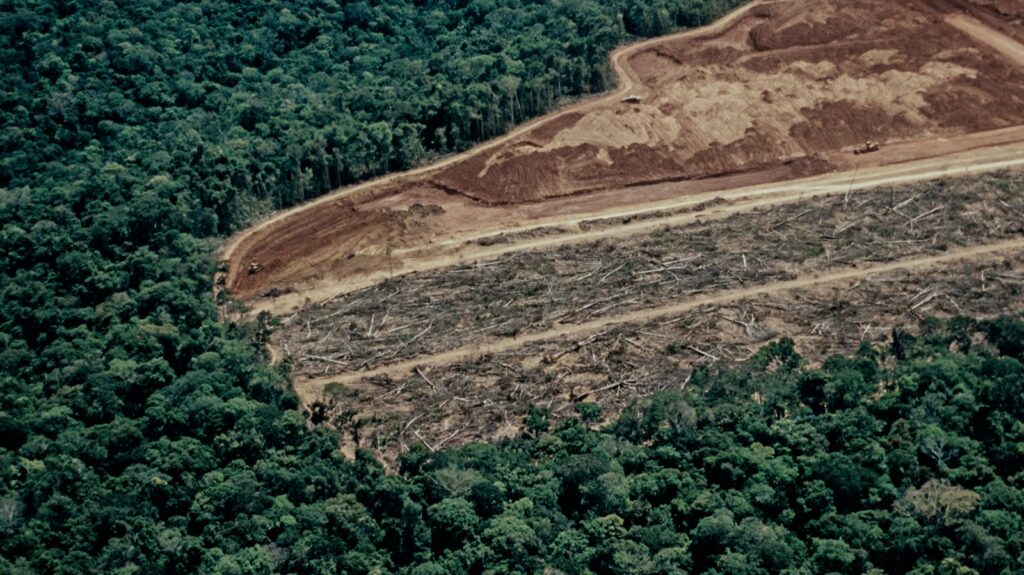
ICEYE’s monitoring supports the full ecosystem of forest protection, from NGOs’ advocacy and donor transparency to national climate reporting and environmental compliance. Meanwhile, enforcement agencies gain access to evidence-based deforestation data, enabling intervention during active operations. As pressure on tropical forests intensifies, persistent and reliable monitoring is foundational to global conservation efforts. ICEYE’s approach links continuous monitoring with forward-looking analytics to support long-term conservation strategies in Amazonia, Congo Basin and other threatened forest biomes around the world.
ICEYE is known for delivering intelligence in sectors such as defence and intelligence, insurance, natural catastrophe response and recovery, security, maritime monitoring, and finance, enabling decision-making that contributes to community resilience and sustainable development.
ICEYE Strengthens Engagement with India’s Defence-Space Ecosystem at DEFSAT 2026
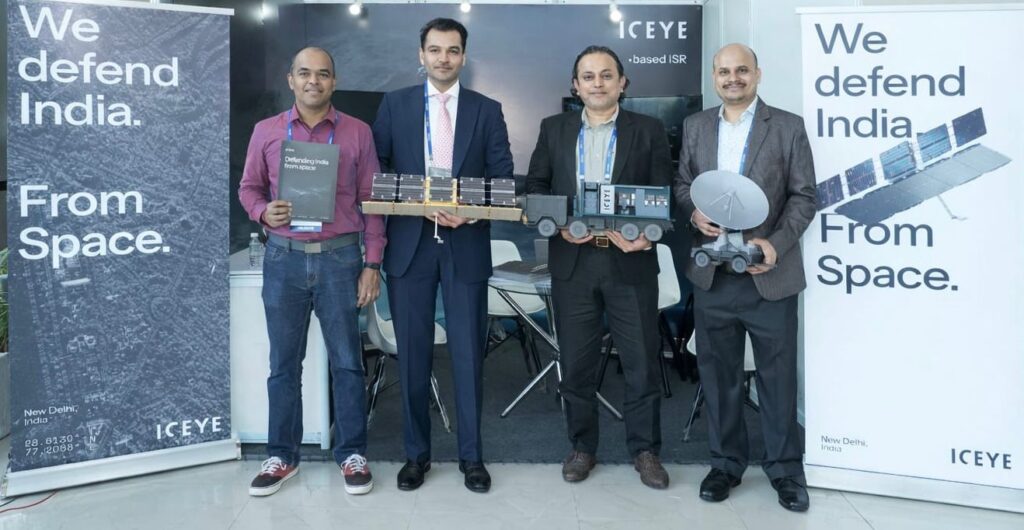
ICEYE strengthened its engagement with India’s defence-space ecosystem through its active participation in DEFSAT 2026, held from 24–26 February at the Manekshaw Centre in New Delhi. With the theme “Space at the Core of National Security”, the flagship defence-space conference and exposition brought together military leaders, government policymakers, industry stakeholders, and international innovators to advance dialogue on space security, operational resilience, and strategic autonomy.
The event provided ICEYE with an opportunity to showcase its advanced SAR capabilities and to engage with key decision-makers on how resilient, all-weather Earth observation data can support defence, intelligence, and national security operations in India.
Partha P. Roy Chowdhury, Vice President, Missions, ICEYE, addressed stakeholders on the evolving role of space technology in India’s strategic landscape. In his keynote, he outlined how allied nations across Europe are now fielding sovereign SAR constellations within months of contract signature, and how ICEYE’s ITAR-free, turnkey approach can support India’s own ambitions for space-based surveillance at scale. Reflecting on ICEYE’s participation, he said, “DEFSAT 2026 provided a tremendous platform to engage with the defence, space, and technology community in India. The dialogues reinforced the critical importance of space-based data for national security, and we are grateful for the opportunity to deepen partnerships across services, government, and industry.”
ICEYE’s strategic engagement extended into key thought-leadership forums, including a high-level panel discussion on “EU–India Defence and Space Industrial Cooperation: From Strategic Alignment to Industrial Collaboration.” Abhishek Agarwal, Director of Business Development, ICEYE, represented the company alongside industry and government experts.“The dialogue clearly reflected the shift from strategic intent to tangible industrial collaboration, particularly in areas such as sovereign SAR capabilities, technology partnerships, and resilient supply chains,” remarked Agarwal, adding, “Flexible access to space-based intelligence is no longer optional; it is central to strengthening operational readiness and enabling trusted, long-term cooperation between European and Indian defence ecosystems. ICEYE is an active partner to defence and intelligence organisations in India, supporting critical monitoring requirements across the northern and eastern frontiers. Platforms like DEFSAT 2026 play a pivotal role in translating alignment into actionable collaboration.”
ICEYE’s contributions at DEFSAT-2026 highlighted the role of commercial SAR in augmenting situational awareness, disaster response, and security operations for India’s defence and civil authorities.
ICEYE operates internationally with offices in Finland, Poland, Spain, the UK, Australia, Japan, UAE, Greece, and the US. With its more than 900 employees, inspired by the shared vision of improving life on Earth by becoming the global source of truth in Earth Observation. Through its largest SAR constellation, ICEYE provides objective, near real-time insights, ensuring that customers have unmatched access to actionable data, day or night, even in challenging environmental conditions.
About the Author
Suman Sharma is a former instructor from the Indian Military Academy, Dehradun and has been a journalist for almost two decades in various respectable national and international media houses, covering and reporting on security, strategy, military diplomacy and international relations. She has won numerous national and international awards including the Great Women Achievers award.




You’ve clearly done your research, and it shows.