
By: Khushbu Ahlawat, Consulting Editor, GSDN
Reform, Representation, and the Federal Question
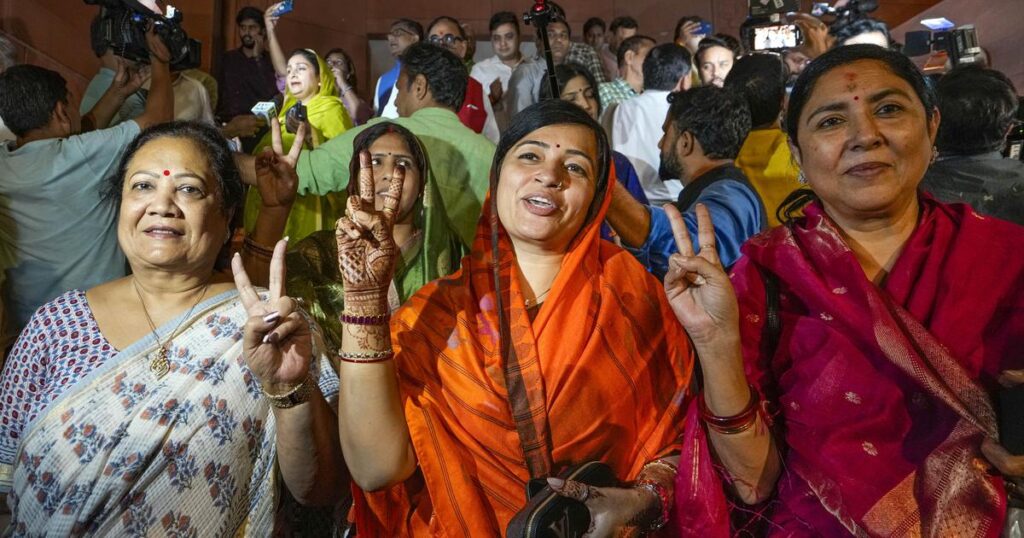
India’s push for women’s reservation promises a historic leap toward gender equality, yet its coupling with delimitation signals a deeper political recalibration. Beneath the reform lies a contentious shift in representation, raising critical questions about federal balance, electoral fairness, and whether empowerment is being used to quietly redraw the nation’s power map. In April, a special Parliament session marked a significant moment in India’s constitutional journey as the Union government introduced the Constitution (131st Amendment) Bill, 2026, alongside a Delimitation Bill, ostensibly to advance women’s empowerment through the operationalisation of the Nari Shakti Vandan Adhiniyam (106th Amendment, 2023). The promise of reserving one-third of Lok Sabha and Assembly seats for women was widely celebrated as a long-overdue corrective to gender imbalances in political representation. However, beneath this progressive veneer lies a far more complex—and contentious—restructuring of India’s electoral and federal architecture.
The central argument emerging from the developments is that women’s reservation, while normatively desirable, is being strategically linked with delimitation—a process that redraws electoral boundaries and reallocates parliamentary seats based on population. This coupling raises fundamental questions about federal equity, political intent, and the redistribution of power across India’s states. Critics argue that the reservation initiative risks becoming a political instrument to justify a sweeping reconfiguration of parliamentary representation, potentially advantaging certain regions while disadvantaging others.
This article critically examines the intersection of gender justice and federal restructuring, arguing that the current legislative approach risks undermining the delicate balance of India’s quasi-federal system. It explores how the sequencing of Census, delimitation, and reservation reforms may reshape India’s political landscape in ways that extend far beyond the stated goal of women’s empowerment.
At the heart of this unfolding debate lies a deeper structural concern about how democratic representation is defined and operationalised in a country as vast and diverse as India. Representation is not merely a function of population size; it is also a reflection of historical compromise, developmental trajectories, and the need to balance competing regional interests within a federal framework. Since the 1970s, India consciously adopted a calibrated approach to seat allocation, recognising that an unrestrained population-based formula could penalise states that invested in human development and family planning. This implicit social contract ensured that states demonstrating governance efficiency were not disadvantaged politically. However, the proposed changes signal a departure from this philosophy, reintroducing raw demographic weight as the primary determinant of political power. Such a shift risks altering the incentive structure that has guided state policy for decades. If political representation becomes directly proportional to population growth without safeguards, it could inadvertently discourage investments in population stabilisation, public health, and education—areas where several southern and western states have made significant progress. Furthermore, this transition raises concerns about the nature of India’s representative democracy itself: whether it is evolving toward a purely majoritarian system driven by numbers, or whether it will continue to uphold a balanced federal ethos that accommodates diversity and asymmetry. In this context, the linkage between women’s reservation and delimitation appears even more consequential, as it embeds a transformative change within a seemingly progressive reform, thereby limiting the scope for critical scrutiny and informed public discourse.
The Political Context: Census Delay and Strategic Timing
One of the most significant yet underexplored aspects of the current reform package is the delay in conducting India’s decennial Census. Originally scheduled for 2021, the Census was postponed due to the COVID-19 pandemic. While the initial delay was understandable, the continued absence of a revised timeline raised concerns about the government’s intentions. Under the Constitution, the delimitation of Lok Sabha seats is tied to Census data. Historically, seat allocation has been based on population figures to ensure proportional representation. However, the 42nd Amendment (1976) froze this allocation until after the 2001 Census, a freeze later extended by the 84th Amendment (2001) until 2026. This freeze was intended to protect states that successfully implemented population control measures from losing political representation. By delaying the Census to 2026–27, the government effectively ensures that delimitation will be based on more recent population data rather than the anticipated 2031 Census. This shift in timeline is not merely administrative—it is deeply political. It allows the government to initiate delimitation before the 2029 general elections, thereby influencing the composition of the next Lok Sabha.
Moreover, there are indications that the government may proceed with delimitation using the 2011 Census data, bypassing the need to wait for updated figures. This possibility is enabled by amendments proposed in the 131st Amendment Bill, which alter the constitutional definition of “population” and allow Parliament to determine which Census data to use through ordinary legislation. This flexibility introduces a level of discretion that could be exploited for political gain. The timing of these reforms—just ahead of crucial state and national elections—further reinforces the perception that the legislative package is driven by electoral considerations rather than purely normative goals. The convergence of Census delay, delimitation readiness, and reservation implementation suggests a carefully orchestrated strategy to reshape India’s political geography.
Constitutional Engineering: Redefining Representation and Power
The Constitution (131st Amendment) Bill introduces several significant changes that collectively amount to a reengineering of India’s representative framework. First, it proposes increasing the strength of the Lok Sabha from 543 to 850 seats, with 530 seats allocated to states and 35 to Union Territories. This expansion is justified on the grounds of accommodating population growth and enhancing representational equity.
However, the implications of this increase are far-reaching. A purely population-based allocation of seats would disproportionately benefit states with higher population growth rates—primarily those in the Hindi heartland such as Uttar Pradesh, Bihar, Madhya Pradesh, and Rajasthan. These states would see a substantial increase in their parliamentary representation, while states that have successfully controlled population growth—such as Tamil Nadu, Kerala, and Karnataka—would experience a relative decline in their share of seats.
The amendment also replaces the existing constitutional definition of “population,” which specifies the use of the 1971 Census for seat allocation and the 2001 Census for boundary demarcation. The new formulation allows Parliament to determine the relevant Census data through legislation, effectively removing a key constitutional safeguard.
Additionally, the Bill deletes provisions that ensured states would not lose seats due to population control efforts. This removal undermines the principle of cooperative federalism and penalises states that invested in health, education, and family planning. It signals a shift from a balanced federal structure to one that prioritises demographic weight over developmental performance.
The assurance by government leaders that existing proportions of seats will be maintained lacks constitutional backing. Article 81(2)(a) mandates that the ratio between seats and population should be uniform across states “as far as practicable.” This clause inherently favours proportionality and does not support the preservation of existing seat shares.
In effect, the proposed constitutional changes dismantle longstanding safeguards and introduce new mechanisms that centralise power and alter the federal equilibrium. The transformation is not merely technical—it is structural, with enduring consequences for India’s लोकतांत्रिक fabric.
Regional Imbalances: The North-South Divide and Federal Strain
The most visible impact of the proposed delimitation is the widening of regional disparities in political representation. Based on 2011 Census data, a population-proportional allocation in an 850-seat Lok Sabha would result in significant gains for northern states and corresponding losses for southern and eastern regions. For instance, the Hindi-speaking states—currently holding 207 of 543 seats—could see their representation rise to 366 seats, marking a 77% increase. Their share of total seats would grow from 38.1% to 43.1%. In contrast, southern states, which currently hold 132 seats, would increase to only 176 seats—a 33% rise—resulting in a decline in their share from 24.3% to 20.7%. Eastern and northeastern states would also experience marginal declines in their share of representation. The eastern region’s share could drop from 14.4% to 13.7%, while the Northeast might see a reduction from 4.4% to 3.8%. Western and northern non-Hindi states would remain largely unchanged.
These shifts have profound implications for fiscal federalism and policy prioritisation. States with greater parliamentary representation wield more influence over national legislation, budget allocations, and policy direction. As representation shifts northward, the political voice of southern states—often leaders in economic growth, human development, and governance innovation—may be diminished. This imbalance raises critical questions about fairness and incentive structures. Should states be rewarded for higher population growth, or should developmental achievements be recognised? The current approach appears to favour the former, potentially disincentivising efforts toward population control and sustainable development.
Moreover, the erosion of political representation for certain regions could exacerbate existing tensions and fuel demands for greater autonomy or even structural reforms. The federal compact, already under strain, may face new challenges as states reassess their position within the Union.
Women’s Reservation: Progressive Reform or Political Cover?
The central justification for the legislative package is the implementation of women’s reservation—a goal that commands broad support across the political spectrum. Increasing women’s representation in legislative bodies is essential for inclusive governance, policy diversity, and democratic legitimacy. However, the decision to link reservation with delimitation raises concerns about intent and necessity. There is no inherent requirement to redraw constituency boundaries or reallocate seats in order to implement a one-third reservation. As critics have pointed out, reservation could be introduced within the existing 543-seat Lok Sabha through a rotational system that designates certain constituencies as reserved for women in each election cycle. Such an approach would avoid the need for complex and contentious delimitation exercises, while still achieving the objective of gender inclusion. It would also preserve the current balance of representation across states, thereby maintaining federal stability. The insistence on coupling reservation with delimitation suggests that the former may be serving as a political cover for the latter. By framing the reform as a gender justice initiative, the government may be seeking to deflect criticism and build consensus for a broader restructuring of the electoral system. This strategy risks undermining the legitimacy of the reservation itself. If perceived as a tool for political gain rather than a genuine effort toward empowerment, the reform could face resistance and erode public trust. It also raises ethical questions about the use of progressive causes to advance partisan objectives. Furthermore, the rushed passage of the legislation—without adequate public debate or consultation—contradicts the principles of deliberative democracy. Constitutional amendments of this magnitude require careful consideration, stakeholder engagement, and institutional scrutiny. The absence of such processes weakens the credibility of the reform and heightens the risk of unintended consequences.
Safeguarding Federalism in the Pursuit of Reform
India stands at a critical juncture in its democratic evolution. The twin goals of enhancing women’s representation and updating electoral boundaries are both valid and necessary. However, the manner in which these objectives are being pursued raises serious concerns about federal equity, constitutional integrity, and political intent.
The current legislative approach conflates two distinct issues—gender justice and territorial representation—into a single reform package. This conflation obscures the trade-offs involved and limits the scope for nuanced debate. It also creates the risk that one objective may be compromised in the pursuit of the other.
A more prudent path would involve decoupling reservation from delimitation, allowing each reform to be evaluated on its own merits. Women’s reservation can and should be implemented without delay, using existing mechanisms that preserve federal balance. Delimitation, on the other hand, should be undertaken with transparency, consensus, and safeguards that protect the interests of all states. Equally important is the question of institutional precedent. Constitutional amendments of this scale, if passed without rigorous debate and bipartisan consensus, risk normalising a pattern where structural changes to India’s democratic framework are undertaken with limited scrutiny. This not only weakens parliamentary deliberation but also reduces the role of states as equal stakeholders in the Union. In the long run, such precedents may erode trust between the Centre and the states, making cooperative federalism more difficult to sustain in practice, even if it continues to exist in principle.
Ultimately, the strength of India’s democracy lies not only in its ability to reform but in its commitment to fairness, inclusivity, and institutional integrity. As the country navigates this complex transition, it must ensure that the pursuit of progress does not come at the cost of its foundational principles.

About the Author
Khushbu Ahlawat is a research analyst with a strong academic background in International Relations and Political Science. She has undertaken research projects at Jawaharlal Nehru University, contributing to analytical work on international and regional security issues. Alongside her research experience, she has professional exposure to Human Resources, with involvement in talent acquisition and organizational operations. She holds a Master’s degree in International Relations from Christ University, Bangalore, and a Bachelor’s degree in Political Science from the University of Delhi.



