
By: Khushbu Ahlawat, Consulting Editor, GSDN
Origins of NATO and the Foundations of Collective Security
The debate surrounding a possible U.S. withdrawal from NATO cannot be understood without revisiting the alliance’s foundational purpose. Established in 1949, NATO emerged as a direct response to the geopolitical anxieties of the early Cold War. The United States, alongside Canada and ten Western European nations, sought to create a unified military structure to deter Soviet expansion. At its core lies the principle of collective defence, enshrined in Article 5 of the North Atlantic Treaty—an attack on one member is considered an attack on all.
This principle was not merely symbolic. It institutionalized military cooperation, intelligence sharing, and strategic coordination across the Atlantic. Over time, NATO expanded both geographically and functionally. Countries like Greece, Turkey, and later Spain joined, followed by a significant eastward expansion after the collapse of the Soviet Union. This expansion included former Eastern Bloc nations, fundamentally altering NATO’s strategic landscape and bringing it closer to Russia’s borders.
However, NATO’s relevance has often been questioned, particularly after the Cold War. Without the Soviet Union as a unifying threat, critics argued that the alliance lacked a clear purpose. Yet, NATO adapted by engaging in crisis management operations beyond its traditional geographical scope. Interventions in Kosovo (1999), Afghanistan (2001), and Libya (2011) demonstrated its evolving role in global security.
Interestingly, NATO does not maintain a standing army. Instead, it relies on contributions from its member states, coordinated through a unified command structure led by the Supreme Allied Commander Europe (SACEUR), traditionally an American general. This structure underscores the disproportionate leadership role played by the United States within the alliance.
The alliance’s significance was reaffirmed after Russia’s annexation of Crimea in 2014 and further strengthened following the 2022 invasion of Ukraine. Countries like Finland and Sweden sought NATO membership, signaling renewed faith in the alliance’s deterrence capabilities. Yet, this resurgence also intensified debates within the United States about the costs and benefits of continued participation.
Trump’s Critique: Burden-Sharing, Strategic Autonomy, and Political Messaging
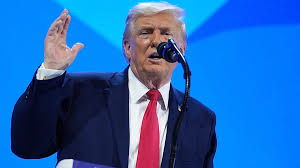
Donald Trump’s criticism of NATO is rooted in a mix of financial, strategic, and political concerns. A central argument has been the issue of burden-sharing. Trump repeatedly pointed out that many NATO members fail to meet the agreed benchmark of spending 2% of their GDP on defence. According to available data, the United States contributes approximately 62% of NATO’s total defence expenditure, a figure that has fueled perceptions of imbalance.
Trump’s frustration is not entirely new—previous U.S. administrations have also raised concerns about unequal contributions. However, his approach was markedly more confrontational. He openly questioned whether the U.S. should defend allies who do not meet their financial commitments, thereby challenging the unconditional nature of Article 5.
Another dimension of Trump’s critique relates to strategic autonomy. He argued that NATO allies often depend excessively on American military capabilities while pursuing independent foreign policies that do not always align with U.S. interests. For instance, tensions arose over European responses to conflicts in the Middle East, particularly Iran. Some European countries were reluctant to support U.S.-led operations, highlighting divergences within the alliance.
Recent developments in 2026 have significantly intensified tensions between the United States and its NATO allies, transforming what was once rhetorical criticism into a tangible geopolitical strain. The immediate trigger has been the ongoing U.S.-Iran conflict and the strategic importance of the Strait of Hormuz, through which nearly 20% of global oil supply passes. Several key NATO allies, including major European powers, refused to support the United States in enforcing a naval blockade against Iran, citing legal, strategic, and diplomatic concerns. This refusal has deeply frustrated U.S. President Donald Trump, who has publicly labeled NATO a “paper tiger” and questioned its utility in modern conflict scenarios. The fallout has been immediate: reports suggest that the U.S. administration is actively considering reducing its military footprint in Europe, a move that could fundamentally weaken NATO’s deterrence posture. Simultaneously, European nations have begun contingency planning for a reduced U.S. role, including military simulations and independent defence coordination mechanisms within the European Union framework. NATO Secretary General Mark Rutte has acknowledged Trump’s dissatisfaction while attempting to reassure member states that a complete U.S. withdrawal remains unlikely, emphasizing the continued importance of the American nuclear umbrella. However, the alliance is increasingly divided, not just over financial contributions but over strategic priorities and military engagement norms. These developments indicate that NATO is no longer facing just external threats, but also internal fractures that could redefine the future of transatlantic security cooperation.
Trump also linked NATO’s relevance to contemporary geopolitical challenges. He described the alliance as “obsolete” at one point, arguing that it was not adequately equipped to handle modern threats such as terrorism and cyber warfare. Although he later moderated this stance, the statement underscored his broader skepticism.
Domestically, Trump’s stance resonated with segments of the American electorate that favor reduced international commitments and a focus on domestic priorities. His “America First” doctrine emphasized economic nationalism and questioned the value of longstanding alliances. In this context, NATO became a symbol of perceived overextension.
It is also important to note that Trump’s rhetoric had tangible diplomatic consequences. European leaders expressed concerns about the reliability of U.S. commitments, prompting discussions about greater European defence integration. Initiatives such as the European Union’s Permanent Structured Cooperation (PESCO) gained momentum as a potential counterbalance.
Legal, Strategic, and Operational Implications of a U.S. Exit
The prospect of the United States withdrawing from NATO raises complex legal and strategic questions. Article 13 of the North Atlantic Treaty allows any member to leave after providing a one-year notice. However, in the U.S. context, the process is not straightforward. Recent legislative measures have sought to restrict the president’s ability to unilaterally withdraw without Congressional approval, reflecting bipartisan recognition of NATO’s importance.
From a strategic perspective, a U.S. exit would fundamentally alter the global security architecture. NATO’s operational effectiveness heavily depends on American military capabilities, including advanced technology, intelligence networks, and logistical support. The U.S. also maintains critical military bases in Europe that enhance deterrence against potential adversaries.
The strategic implications of a potential U.S. withdrawal from NATO have become more concrete in light of recent defence spending trends and military capability assessments across the alliance. As of 2025–2026 estimates, the United States continues to account for nearly two-thirds of NATO’s total defence expenditure, spending over $850 billion annually, compared to a combined European contribution that still struggles to match American technological and logistical superiority. While countries like Poland, Germany, and the Baltic states have significantly increased their defence budgets—Poland alone exceeding 4% of its GDP—capability gaps remain stark in critical areas such as missile defence systems, satellite intelligence, cyber warfare infrastructure, and rapid deployment forces. The war in Ukraine has further exposed these vulnerabilities, particularly Europe’s dependence on U.S. military aid, advanced weapon systems, and intelligence-sharing frameworks. In operational terms, more than 70% of NATO’s high-end military assets, including strategic airlift, aerial refueling, and precision strike capabilities, are U.S.-provided, making the alliance structurally reliant on Washington’s participation. A withdrawal would therefore not only reduce troop numbers but also dismantle the backbone of NATO’s integrated command and control systems. Additionally, the U.S. maintains approximately 80,000 troops stationed across Europe, acting as a forward deterrent against potential aggression from Russia. Their removal could create immediate security vacuums, particularly in Eastern Europe, forcing nations to rapidly militarize or seek alternative security arrangements. Defence analysts have also warned that without the U.S. nuclear umbrella, NATO’s deterrence credibility could weaken significantly, potentially triggering an arms race within Europe itself. These evolving realities underscore that a U.S. exit would not be a symbolic shift, but a profound structural rupture with far-reaching consequences for global security stability.
Without the United States, NATO would face significant challenges in maintaining its current level of readiness and deterrence. European members would need to substantially increase defence spending and develop independent capabilities. While some countries have already begun this process, the gap remains considerable. Operationally, NATO missions across the globe would be affected. The alliance has been involved in maritime security operations, counter-terrorism efforts, and crisis response initiatives. The U.S. plays a leading role in these operations, providing both manpower and resources. A withdrawal could disrupt ongoing missions and weaken coordination. Moreover, the geopolitical consequences would extend beyond Europe. NATO serves as a cornerstone of the broader Western alliance system. Its weakening could embolden rival powers such as Russia and China, potentially reshaping global power dynamics. The credibility of collective defence commitments would also be called into question, affecting alliances in other regions. The economic implications are equally significant. Defence industries, joint procurement programs, and military interoperability initiatives are deeply intertwined within NATO. A U.S. exit could disrupt these networks, leading to inefficiencies and increased costs.
The Future of NATO: Adaptation, Resilience, and Global Relevance
Despite the challenges and criticisms, NATO has demonstrated remarkable resilience over its seven-decade history. The alliance has continually adapted to changing geopolitical realities, from the Cold War to the War on Terror and now the renewed focus on great power competition. One of the key factors behind NATO’s longevity is its ability to evolve. The alliance has expanded its scope to include cyber defence, hybrid warfare, and emerging technologies. It has also strengthened partnerships with non-member countries, enhancing its global reach.
The ongoing conflict in Ukraine has underscored NATO’s continued relevance. While Ukraine is not a member, the alliance has provided substantial support, including military aid, training, and intelligence sharing. This has reinforced NATO’s role as a central pillar of Western security. At the same time, internal debates about burden-sharing and strategic priorities are likely to persist. The United States will continue to push for greater contributions from European allies, while Europe may seek greater autonomy. Balancing these dynamics will be crucial for the alliance’s future. Importantly, public opinion in many NATO countries remains supportive of the alliance. This provides a strong foundation for its continuation . However, political leadership will play a decisive role in shaping its trajectory. The question of a U.S. withdrawal, therefore, is not merely a hypothetical scenario but a reflection of deeper structural tensions within the alliance. Addressing these tensions will require a combination of policy reforms, increased cooperation, and renewed commitment to shared values.
Looking ahead, the future of NATO will likely be shaped by a complex interplay of strategic adaptation, technological transformation, and shifting political will within member states. One of the most significant emerging trends is the growing emphasis on “European strategic autonomy,” led by countries such as France and Germany, which are advocating for independent defence capabilities that can operate with or without U.S. support. Initiatives within the European Union, including joint defence procurement programs and rapid deployment forces, have gained renewed urgency amid uncertainties triggered by Donald Trump’s rhetoric. At the same time, NATO itself is undergoing internal transformation, expanding its focus beyond traditional military threats to include cyber warfare, artificial intelligence in defence systems, and hybrid warfare tactics increasingly employed by adversaries. Recent NATO summits have also highlighted the importance of strengthening partnerships in the Indo-Pacific region, with countries like Japan, South Korea, and Australia participating in strategic dialogues, indicating a broader global outlook. However, this expansion of scope brings its own challenges, as it risks overstretching the alliance’s resources and blurring its core mission. Another critical dimension is the political cohesion within member states, where rising populism and domestic economic pressures are influencing foreign policy priorities and defence spending commitments. Public opinion, while still broadly supportive of NATO, is becoming more conditional, particularly in countries facing economic constraints. If current trends continue, NATO may evolve into a more flexible, multi-tiered alliance, where core members maintain high levels of military integration while others participate more selectively. Ultimately, the alliance’s survival will depend not just on military strength, but on its ability to redefine collective security in a rapidly changing global order marked by multipolarity, technological disruption, and strategic uncertainty.
Conclusion
The debate over why Donald Trump might want to pull out of NATO is emblematic of broader shifts in global politics. It highlights tensions between national interests and collective security, between financial contributions and strategic commitments, and between historical alliances and emerging geopolitical realities. While the possibility of a U.S. exit raises serious concerns, it also presents an opportunity for introspection and reform within NATO. Strengthening burden-sharing mechanisms, enhancing strategic coherence, and adapting to new threats will be essential for maintaining the alliance’s relevance.
Ultimately, NATO’s future will depend on the willingness of its members to uphold the principles that have guided it since 1949—mutual defence, shared responsibility, and collective resilience. In an increasingly uncertain world, these principles remain as vital as ever.

About the Author
Khushbu Ahlawat is a research analyst with a strong academic background in International Relations and Political Science. She has undertaken research projects at Jawaharlal Nehru University, contributing to analytical work on international and regional security issues. Alongside her research experience, she has professional exposure to Human Resources, with involvement in talent acquisition and organizational operations. She holds a Master’s degree in International Relations from Christ University, Bangalore, and a Bachelor’s degree in Political Science from the University of Delhi.



