
By: Deepak Tiwari, Technical Research Assistant, CENJOWS
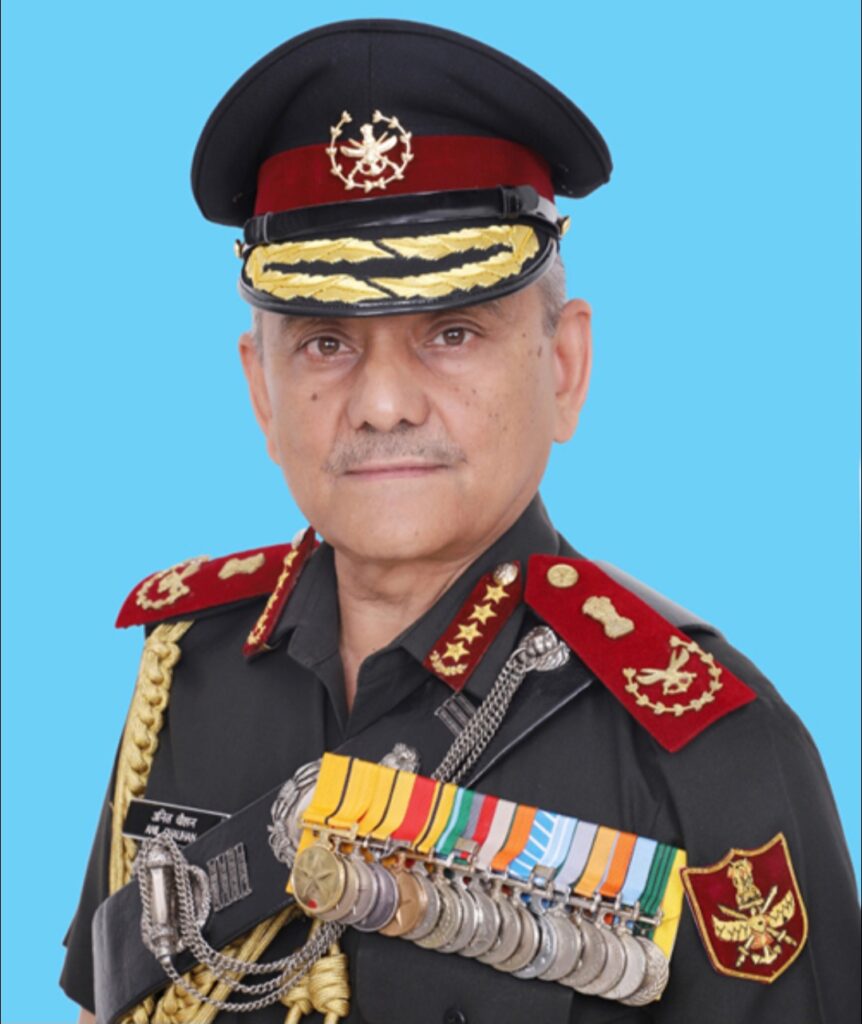
On September 30, 2022, General Anil Chauhan assumed the office of India’s second Chief, of Defence Staff (CDS), stepping into a decisive role in reforms, but more than that, it was a test of leadership. The newly created office of CDS which was lying vacant since last 8 months after the tragic death of Gen Bipin Rawat, India’s first CDS, had a challenging and a layered mandate. Gen Chauhan inherited this legacy wearing multiple hats, not to seek headlines and privileges of his four-star ascendency, but he quietly set his own course to bring jointness in its true sense. During his tenure, Gen Chauhan transformed the position of CDS from a symbol to a working architecture. Reshaping India’s higher defence management and aligning it with a joint framework, Gen Chauhan remained calm in his style but sharp in vision. He emphasized on numerous platforms that the Theatre Commands are not the final goal, for India’s unique threat landscape, it is just a starting point towards more profound military reforms. His vision reiterates the transition of Indian military beyond the jointness and towards the “convergence warfare”. It is founded on the notion of merging kinetic and non-kinetic warfare including those in the cognitive, space, and cyber domains.
This article expresses how Gen Chauhan’s vision and ideas behind them have propelled the jointmanship in Indian armed forces. A holistic analysis of all the initiatives taken by Gen Chauhan within the joint defence architecture have been covered to identify how he has been able to move very close to his mandated task. One thing that gets validated consistently about Gen Chauhan is, during his course, he has remained a steady hand in pushing Indian armed forces towards an integrated, agile, and indigenously grounded future.
The Twin-Track Approach
Gen Chauhan’s philosophical approach entails that jointness should be a precursor to integration. The term jointness/ jointmanship for him is an encapsulation of structural, cultural and doctrinal unity rather than just functional and operational togetherness. To that end, the tenure of Gen Chauhan as the 2nd CDS of India, can be understood as a carefully calibrated “twin‑track” efforts on the culture and structure of jointness.[i] Rather than leaning purely on top‑down or leaving change to the slow, organic drift of service‑centric instincts, he simultaneously pushed jointness from the highest headquarters and cultivated it from the ground up from doctrine tables in Delhi to mess tables and training rooms in joint‑command and tri‑service institutions. The result was a dual‑pronged campaign: a top‑down architecture of policies and institutions, and a bottom‑up reconstruction of attitudes and habits toward jointmanship.
The Top-Down Track: Setting the Legal, Administrative, and Doctrinal Milestones
At the top, Chauhan’s approach was eminently structural: he emphasizes that jointness must be materialized as a sequence of legal, administrative, and doctrinal milestones. Such materialization had to be put in place before any theatre commander could meaningfully function. His “Jointness 2.0” formulation moving beyond bonhomie to an actual joint culture was consciously distanced from the top‑down “command‑and‑order” style of organizational change that often fails in tradition‑bound hierarchies. Instead, he built a layered architecture:
Policy and, Conceptual Frameworks: He oversaw the articulation of joint doctrines, primers, and policies (including military cyber, manned‑unmanned teaming, and joint‑staff procedures) that defined how jointness should be exercised rather than merely asserting that it should exist.
Administrative “Pilot Joints”: Before full theaterization, he pushed for joint administration of selected defence zones, logistics, and training so that tri‑service collaboration became a daily practice, not a one‑off exercise.
Bottom‑up Track: Cultivating Joint Culture among Officers and Institutions
If the top‑down track dealt with structures, the bottom‑up track dealt with minds. Gen Chauhan recognized that the Indian military is a prestige‑conscious, status‑conscious organization in which officers often first see themselves as “Army”, “Navy”, or “Air Force” before they see themselves as “joint” professionals. His bottom‑up strategy therefore focused on three layers:
Changing the Conversation at All Levels: He consciously “painted the bigger picture” through lectures, conferences, and internal forums, repeatedly asking officers to think about how they wanted the armed forces to look in 2047, and what jointness that would demand. By framing reform as a long‑term national project rather than a personal crusade, he reduced the sense of individual loss and amplified the sense of collective gain.
Fostering Interaction Across Services: He encouraged frequent, structured, and even unstructured interactions among officers of all three Services through joint‑commanders’ conferences, tri‑service training‑institution dialogues, and special forums like “Parivartan Chintan‑I” focused explicitly on jointness rather than mere integration. These platforms allowed younger officers and mid‑level commanders to debate joint doctrine, share pain‑points, and incubate ideas that would later feed into official policy.
Adapt or Fall Behind
In the 22nd Maj Gen Samir Sinha Memorial Lecture held at the USI of India, Gen Chauhan mentioned that, to inculcate jointness in our functional and operational approaches, the forces must look at the broader picture of the security situation of our nation. Hinting towards the looming multi-front, multi-domain, multi-dimensional and technology-enabled threats from adversaries, integration of capabilities and intent is no longer optional. He suggested that the lessons learned from the Operation Sindoor, speak clearly of the immediate need for joint commands and strategic planning.
According to him, failure to adapt does not mean staying still; even small steps can cause a big impact in such endeavours. In a region and at a time where adversaries are consistently diversifying and rapidly intelligentizing, failing to integrate means falling into a state of permanent strategic disadvantage. The 3 I’s hailed by the CDS, “Innovative, Imaginative, and Inventive” are now the critical imperatives. Theaterization has been established as a trend of the time for armed forces around the world. In 2025, Japan also unveiled its Joint Operations Command (JOC), as a permanent organization within the Ministry of Defence of the Japanese Self-Defence Forces. This trend is the reflection of the changing nature of warfare amid rapid technological evolution and increasing hybridity among non-conventional malign actors. In such era of uncertainty and grey fog, integration of offensive and defensive capabilities has become a critical necessity.
Cultural Primacy for Jointmanship
The CDS acknowledges that while jointness was a founding principle (seen in the creation of the NDA), a vacuum developed over decades. A key insight in Gen Chauhan’s approach was that Service culture cannot be bulldozed; instead, he spoke of forging a “fourth culture” of jointness that respected the uniqueness of each Service while distilling the “highest common factor” (HCF) of their traditions. This allowed officers to see jointness not as a betrayal of their Service ethos, but as an elevation of it where being “joint” became a professional badge of honour, not a dilution of identity.
Cultural synergy is the essential “software” required to run the “hardware” of India’s military reforms, specifically jointness, integration, and theaterization. While structural changes like the appointment of the Chief of Defence Staff (CDS) and the creation of the Department of Military Affairs (DMA) provide the framework, the success of these initiatives depends on bridging the deep-seated institutional prisms and service-specific cultures that currently define the Indian Armed Forces.
In a candid conversation, Gen Chauhan says that he is on a crusade to convert three institutions that follow different religions to convince them to follow one religion, that is, the religion of jointness. He seeks to enhance the situation through an added mix of symbology and rituals that invoke the spirit of Jointmanship. Initiatives involving creating joint songs, movies and magazines, research initiatives with participation of tri-service personnel etc. are a few such attempts which have gained traction in recent times. Joint training, taken up by the Defence Services Staff College from June 2024, now includes a “Joint Staff” vertical to train officers specifically for tri-service roles. Moreover, a conceptual month-long course on “Future Warfare” is being conducted in collaboration with the Centre for Joint Warfare Studies (CENJOWS), which is in its fourth iteration now. In this coursework, Majors to Two-Star Generals of the Army along with their equivalent from Navy and Airforce are learning together to encourage a cross-pollination of ideas.
The Legacy and the Way Forward
The CDS identified nine verticals for immediate integration, these are Operations, Operational Logistics, Training, Human Resources, Administration, Supply Chain Management, Maintenance, Intelligence Sharing, and Information Flow. These verticals represent a comprehensive outlook of the course and scope of the theaterization process. These interlinked verticals have been designed to foster consensus and a groundwork for the evolution of a joint culture of camaraderie among the tri-service staff. There are three overarching verticals to these 9, which dictate the direction and intensity needed for these nine verticals. They are structural, doctrinal and cultural transformations towards jointmanship. Through this architecture, Gen Chauhan has marked some significant achievements, such as, interlinking of air defence networks (Akashteer-IACCS), Common Standard Operating Procedures (SOPs) for missiles, Joint communication architectures (JCA) at five locations, functional expansion of HQ Integrated Defence Staff (HQ IDS) and creating the groundwork for unified logistic nodes.
Moreover, according to his recent deliberations in an event called “Kalam & Kawach 3.0” organized by CENJOWS and Pentagon Press, his efforts over his tenure have successfully normalized and institutionalized the pathways for jointness, leading to theatre commands. In the event, he mentioned that his efforts along with the Headquarters Integrated Defence Staff (HQ-IDS) have created a consensus-based framework, bringing joint doctrines, technology integration roadmap and a nourishing environment for a joint culture within the integrated architecture. To that end, Gen Chauhan will leave a grand legacy as the founding fathers of this continuous jointmanship drive among the armed forces of this great nation. His successor will be walking on the path laid down by him by stimulating the foundations of India’s military institutions towards the inevitable transformation.



