
By: Sanskriti Singh, Research Analyst, GSDN
On the surface, the recent turmoil in Nepal may seem like another protest against a government action. However, it stems from a mix of frustration, changing demographics, geopolitics, and long-standing domestic problems. For its neighbour India, what occurs in Nepal affects India directly. Trade, security, identity, and diplomacy all connect. Let’s explore the story. We will look at why the unrest happened, who is responsible, how it ties to India, and what it could mean for both countries.
The Immediate Trigger: Social Media Ban & Youth Anger
In September 2025, Nepal was hit by a massive wave of protests; because most of the protesters were fairly young people, they were quickly dubbed the Gen Z protests. The reason for the protest was the decision of the government to completely ban or seriously restrict such popular platforms among the population on social networks as Facebook, Instagram, WhatsApp, X, Reddit, and others. But why was this ban especially explosive? First, for many Nepalese young people, social networks are the way they establish connections, mobilize, express their indignation. Secondly, the ban immediately turned from the suppression of the rights of freedom of speech to a massive protest against corruption, nepotism, high youth unemployment, a feeling that the game is not by the rules. Third, this is a protest about a generation many guys felt that they were deprived of an opportunity as elite children play with some other rules as before.
Beyond the Ban: Years of Frustration Boiling Over
To understand why the unrest spread so rapidly, one must look beyond the immediate cause. The social-media ban was simply the match; the real fire had been smouldering for years beneath the surface.
Economic Discontent and Youth Unemployment
Inflation leaves Nepal’s dignified young people in an economic monastery: Jobs are hard to find or when you do find one, they pay so little money going home is out of the question. And no matter how hard you work for them there isn’t much chance of moving up the ladder because now career prospects are restricted too. Many families rely on the money their relatives send from India or the Gulf., It is an irony that quite in the negative sense: once they leave home, young Nepalis can live on but they cannot enjoy Contents of the Constitution. Standard Square’s will not be commensurate. Local people often say, “Just What Will It Be Like After Modernisation?” Any progress achieved will then ultimately reproduce itself in formlessness. Every roof in the village is fitted with a television aerial. All these “achievements.” But for a generation born after the breakup of a monarchy and educated dreams of democracy, capitalism, all this is nothing more than shattered sights.
Corruption and Political Nepotism
The same leading political figures and parties have dominated Nepal’s power structure for decades. Even despite periodic elections and frequent changes in government, there is a great sense among many Nepalese people that the system remains essentially corrupt. Political elites also have a nasty habit of lining their own pockets at the expense of their fellow countrymen. But the youthful activity of these power-holders in attempting to stifle online criticism was as much a confirmation for those who saw it as a reminder the power of Nepal is not responsible, but by inheritance.
A tenuous democracy ever since the abolition of the monarchy in 2008, Nepal has been a republic. But the process has been messy and inconclusive. Frequent changes of government, struggles between parties for power, and slowness in implementing the constitution have made institutions weak. The mood of fresh beginnings is replaced by the feeling that nothing can change. The new generation, untainted by the past and yet living with its consequences, now wants to see an authentic alternative to hollow talk of reform.
The Streets Speak: How the Unrest Unfolded
What had started as only student protests suddenly became a national movement. Young men and women tens of thousands of them were carrying banners, shouting slogans and breaching curfews en masse. They were not led by a single party but brought together by common anger. The government response police brutality, tear gas, and mass raids merely widened the divide.
By early September, it was reckoned that across the country at least 19 people had died and hundreds injured. The world turned its attention towards Kathmandu. Local pressure forced the government to lift its ban on social media. Yet by then it was already too late. The call for political change had now unfolded into something much more long term–responsibility, employment, justice. The message was clear: this generation will not remain silent.
India and Nepal: A Relationship of Proximity and Paradox
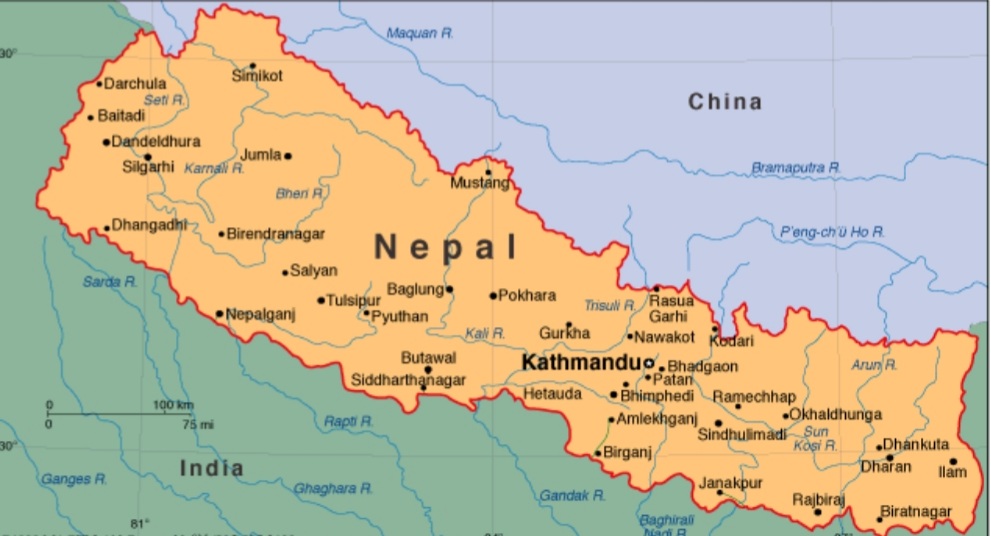
And the roots. For the deeper meaning of Nepal’s troubles, we must also look southward: to India. India’s relationship with Nepal is one of the closest and most complex in the world. Shared between both the countries is a 1,750 mile long open border, joined cultures, generations of migration, trade and kinship combine in this easy-flowing river to form an inseparable whole. Yet their political relationship has been marked by periods of both friendship and argument. India is Nepal’s largest trading partner, as well as being the primary transit route for international commerce. All manner of goods, ranging from everyday consumer items to foodstuffs and medicines arrive in the country through Indian territory. This interdependent relationship means that when Nepal suffers any earthquake tremor it can be felt by the Indians immediately. At the same time, the closeness between them also brings about conflicts. Many Nepalis think that India has too much say over their country’s affairs, both political and economic, while Indian policy-makers often look at Nepal from the perspective of strategic security especially in terms of China.
The Economic Ripples Across the Border
The protests closed out trade links between the two countries when they closed down highways and cross-border trade posts. Indian border towns such as Raxaul, Gorakhpur and Sitamarhi all reported that as truckloads of goods were stranded in their confines, they had daily losses well over ₹10 crore. Small traders, transporters and labourers on both sides of the border had their means of livelihood disrupted by the turn of events. The turmoil also reminded both countries that their economic destinies are tied together. Economically, the unrest presented India–which has invested heavily in power plants, resources and infrastructure throughout Nepal–with both a financial and public relations problem. The question that faced Indian policymakers was just how to support stability in a way that wasn’t overbearing–a subtle balance that Delhi has struggled with for decades.
Security and Strategic Concerns
In the view of India’s security establishment, Nepal is a vital buffer state between itself and China. The open border while echoing the sweetness of friendship also opens vulnerabilities. During chaotic periods illegal trade, trafficking and extreme movements can all flourish. At the height of the protests, Indian agencies were put on alert, fearing that instability might spill over or be exploited by foreign actors.
Moreover, every episode of turmoil in Nepal sets in motion a geopolitical chess game. China, seeking to expand its influence in South Asia through investments and soft power, often presents itself to Kathmandu as an alternative partner. For India, which regards Nepal as part of its own natural sphere of eminence, the result is tension between the two countries. Therefore, the recent unrest was not simply about Nepal´s internal politics-it was purely of regional competition and realignment of alliances
The Emotional and Cultural Dimension
The India-Nepal relationship, however, is not just strategic. Millions of families on both sides of the border share language, religion, and blood. Hinduism and Buddhism flow into and out of the Himalayas from the fertile plains below. Countless Nepalis work and study in India; Indian tourists and pilgrims spend time at Nepal’s temples and go into the mountains. It is a relationship that is profoundly both deeply personal and political.
But friendship can also gradually give rise to discontent. In Nepal there are people who regard India as a big brother to China, compassionate but domineering. The memory of last year’s blockade which left Nepal suffering from severe shortages and saw many blame India is still fresh. This historical wound injects the suspicion that India is temporarily wrapping Nepal. Some of the protesters carried signs rejecting foreign interference at all in 2025. The nature of their appeal was sovereignty. Nepal should be allowed to depict itself through its own eyes, not those of others.
The Way Forward: Lessons for Both Nations
For Nepal, this turmoil is an uncomfortable but necessary experience. It discloses how pressing it is to fight corruption, create jobs and restore confidence in the institutions. Superficial changes will no longer satisfy a populace that is seeking something solid.
India, however, should regard Nepal as a sovereign partner in its own right, not simply as a sustainer of the Mother Tongue of Chinese Leadership. Real friendship lies in enabling others, not bending them to your will. In a manner that is consistent with its own policy stances and respects Nepalese freedom and choices, providing support for Nepal’s economy, education and communication could move a critical juncture into an epoch of mutual benefit.
The people should benefit both from this same mindfulness and this shared relationship. With an open frontier comes co-responsibility from environmental challenges some Italians may face in the Himalayas to fishing and migration. The disobedience obviously is a sign that stability in Nepal is no longer just a problem for Nepalis. It is a regional imperative.
Conclusion: From Unrest to Renewal
Nepal’s unrest in 2025 was not a case of isolated anger. It was the accumulation for many years of frustration from inequality, injustice, and denial of voice. It was a generational awakening in the nation seeking dignity and clear purpose.
The protests had shown that when the system fails to respond to people’s needs, one can even trigger a revolution in cyberspace.
For India, the turmoil next door is both a wake-up call and a reminder that true neighbourhood policy cannot base itself simply on pragmatism. South Asia’s stability depends upon empathy, understanding, and cooperation. As Nepal manoeuvres its uncertain future, India’s role will be examined: can it be a partner in moving forward rather than an emblem of pressure?
Ultimately, the story of Nepal’s unrest is more than politics. It is about a young democratic nation searching for its place in the modern world and a region struggling to forge relationships based not on power rivalry but mutual regard. If both Nepal and India can extract lessons from this crisis, the tragedy of unrest might yet be turned into a seed for regeneration not only for one country, but also the Himalaya, the heart of South Asian Asia.



