
By : Dhritiman Banerjee, Research Analyst, GSDN
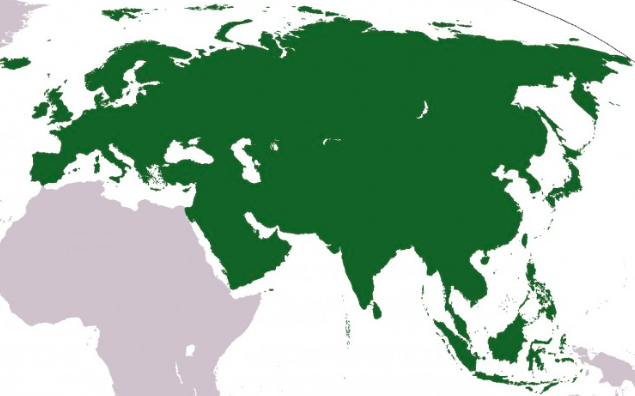
Sir Halford Mackinder famously termed Eurasia as the heartland as the largely landlocked region, immune to maritime power and the storehouse of large reserves of natural resources were key areas of control for dominant powers to achieve hegemony in world politics. The region famously was the sight of the great game in the 19th century between the British and the Russian Empires over control of key regions like Central Asia for different reasons. While, the British aimed to protect their Indian empire, Russia aimed to expand southwards into modern day Iran, Turkmenistan and Afghanistan to expand its sphere of influence.
The region later became a key battleground of the Cold War due to the proxy conflict in Afghanistan. The dissolution of the USSR and the end of the Cold War led to the formation of the Central Asian states as a separate geopolitical zone where the new state of Russia tried to build influence and which in the current state of multipolarity has become a zone of focus for not only Russia but other players such as India, the EU and China. This article posits that this landlocked region is an important zone for great power rivalry in the 21st century, consistent with the ideas of Mackinder.
The players and their game: Eurasia in the 21st century
The landlocked region of Eurasia is disconnected from the high seas and therefore land-based connectivity is the only source of connectivity available to this region. Mackinder observed that this peculiar feature allows great powers of hegemony over the region by monopolizing the land routes and enforcing control over the resources in the region. Indeed, in the current discourse of connectivity in international politics, initiatives by states such as Russia and China to undertake projects connecting the Central Asian states to the rest of the world prominently. Initiatives such as the Belt and Road initiative by China form an important part of the global land connectivity with Central Asia while Russian pipeline projects in the region and its attempt to create a zone of influence in Central Asia show the growing interest of external players in Central Asia.
In fact, it can be said that major Powers such as Russia and China have realized their strategic proximity to Eurasia and the Global heartland and have therefore used their geographical location to create spheres of influence among Central Asian states. Chinese initiatives like the Shanghai Cooperation Organization (SCO) are meant foster economic cooperation with Eurasia and therefore, highlight the emerging quest to control the region. The game between Russia and China aims to engage Central Asia differently. While Russia focuses on being the primary security partner in the region, China promises to be the main economic partner. However, both these powers aim to curb Western influence through color revolutions in the region by providing support to the authoritarian regimes to consolidate their regimes in their respective states.
Therefore, it can be said that the game between Russia and China in Central Asia involves supporting authoritarian regimes both through security and through economic cooperation to expand their influence in the region. The Russian led Collective Security Treaty Organization (CSTO) is meant to provide military security to these regimes and create a Russian sphere of influence while Chinese economic initiatives like the SCO ensure economic cooperation of the major players in the region with Central Asia.
However, it should be noted that Russia and China both actively cooperate as well as compete with each other in securing influence in Eurasia as Russia is a major player in the SCO and cooperates with China in securing an alternative to Western led initiatives like NATO (North Atlantic Treaty Organization) in Central Asia. Thus, Eurasia is seen by the dominant players as a buffer zone free from Western influence in their quest to pose a counterweight to Western ideals of liberal democracies and establish control over the heartland. In fact, as John Mearsheimer points out the primacy of land power in international politics makes control of Eurasia an important aspect for challengers of the Western led liberal international regime. In fact, it should be noted that other players including India and the EU play an important role in the region.
The EU focuses on the region due to its need for energy diversification and reduce its energy dependence on Moscow, its geographical distance from the region and declining US presence in the region (a major EU ally) after the withdrawal from Afghanistan makes its impact limited in Eurasia. India however, due to its strategic proximity to Central Asia and its strategic goal to balance China is a major player in the region as Indian connectivity projects like International North-South Transport Corridor (INSTC) and the Tapi Gas pipeline provide an alternative to Chinese BRI initiatives while India’s participation in the SCO along with Russia and China make it a major player in the region. However, it should be noted that all the major players in Central Asia view the region as key to challenging Western liberal dominance, which is key to their current strategic goals in a multipolar international system.
Eurasia and Multipolarity: The push for regime security
The end of the Cold War was marked by the collapse of the bipolar system which led to the disintegration of the USSR and the formation of Central Asia as a new geographical region as the new Central Asian republics were erstwhile territories of the Soviet Union. This led to new power dynamics and the evolving importance of the heartland. Russia focuses on these new territories as key to creating its own sphere of influence and thus views preservation of authoritarian regimes as an important strategic goal. China views the region in similar terms as both these powers understand democratization of Central Asia as akin to Western penetration in a contested region and thus a major setback to their strategic ambitions in a multipolar world. Therefore, both these states create alliances in the region that seek to preserve the status quo and ensure regime security in Central Asia. One of the major examples of external actors actively ensuring regime security in the region is the CSTO intervention in Kazakhstan in 2022 to preserve the regime status quo. These events signify the Russian commitment to military security for authoritarian regimes in Central Asia while China’s strengthening China+ Central Asia (C+C5) show Chinese commitment to the region. Both states aim to create a separate sphere of influence in the region free from Western interference.
The Chinese goal of achieving great power status is intrinsically tied to its challenge of the liberal institutionalist goal of spreading democratization while Russia’s aim of a separate sphere of influence in the region will fail because of democratization in Central Asia. Thus, both the powers while competing for influence in the region simultaneously cooperate to ensure regime security in Central Asia and preserve the emerging multipolar world order. While the EU has limited goals in the region due to its geographical limitations and thus views Eurasia strictly from the perspective of energy security, India has an expanding role in the region.
But India also does not aim to promote democratization in Central Asia as a key foreign policy goal and instead maintains friendly relations with the authoritarian regimes due to a foreign policy based balancing Chinese expansionism rather than promoting liberal institutionalism. These complex realities highlight the importance of Central Asia as an important geo-political region of contestation where external powers often cooperate as well as compete simultaneously in a strict calculus of national interest.
Such strategies are a result of the newly emerging multipolar international order where each state functions according to the maximization of its own national interest which often leads to formulation of policies that aim to cooperate as well as compete with other states rather than foreign policies focusing on a zero-sum definition of allies and adversaries. Eurasia is a region where such developments are evident in the policies of the major players. Thus, it should be noted that for Russia, China as well as India, Eurasia and Central Asia stand as a region which for different reasons should be a region free from Western penetration and thus, all these players through FDI, security alliances and connectivity projects aim to preserve regime security in the region based on a shared vision of a multipolar world order.
Conclusion
The highly contested region of Eurasia is an important zone of great power engagement in the multipolar era. While all the major players aim to expand their influence in the region, they also project the region as an alternative in the Western liberal institutionalist order. It should be noted that all the three external actors in proximity to the region simultaneously view Eurasia in the lens both cooperation as well as competition with each other to fulfil often diverging strategic objectives but all the three actors aim to protect the region from Western led democratization and efforts and ensure regime security. The influence of the West has dramatically declined in the region after the US withdrawal from Afghanistan and states like Russia and China are keen to fill the power vacuum.
Thus, the complex politics of contestation in Eurasia is marked by the multiplicity of external players and their strategic goals which often diverge and converge at the same time in their quest to gain control of the resource rich region and balance each other’s interest while preventing Western penetration.



