
By : Andey Vivaan, Research Analyst, GSDN
Introduction
The war between Israel and Hamas that began on October 07, 2023, became one of the most destructive and politically significant conflicts in the recent history of the Middle East. The war began after Hamas-led fighters launched a surprise attack on southern Israel, killing around 1,200 people and taking approximately 250 hostages. Israel responded by launching a massive military campaign in the Gaza Strip, with the declared objectives of destroying Hamas’s military and governing capabilities and securing the release of the hostages.
What followed was a prolonged conflict that caused enormous destruction in Gaza, significant military losses for Hamas and a humanitarian crisis that attracted worldwide attention. Israel used its overwhelming conventional military superiority to target Hamas’s leadership, tunnel networks and military infrastructure. Hamas, on the other hand, relied on asymmetric warfare and attempted to survive against a much stronger military force.
But deciding who actually won the war is not as simple as comparing battlefield gains or casualty figures. Israel achieved major military successes and significantly weakened Hamas, but questions remain over whether all its broader strategic objectives were achieved. Hamas suffered enormous losses but survived as an organization and remained relevant to negotiations surrounding Gaza. Meanwhile, Palestinian civilians paid the greatest price through death, displacement and destruction.
To understand who really won, we need to look beyond the battlefield and ask a more important question: did either side actually achieve what it set out to do?
The October 07 Attack and the Beginning of the War
The conflict began with the Hamas-led attack on Israel on October 07, 2023. Hamas fighters crossed the border from Gaza and attacked Israeli communities and military positions. Around 1,200 people were killed and approximately 250 were taken hostage.
The attack represented one of Israel’s most serious security failures. For years, Israel had invested heavily in border surveillance, intelligence systems and military technology designed to prevent attacks from Gaza. The ability of Hamas to cross the border and carry out such a large-scale assault challenged the perception of Israeli military and intelligence superiority.
For Hamas, the attack was intended to change the political situation surrounding the Palestinian issue. Before October 07, regional diplomacy was increasingly focused on possible normalization between Israel and Saudi Arabia. The Palestinian issue appeared to have become less central to regional politics.
The attack dramatically changed this situation. The Israeli-Palestinian conflict once again became a major international issue, although at an enormous human cost.
Israel responded by declaring war and launching an extensive military campaign in Gaza. Prime Minister Benjamin Netanyahu made the destruction of Hamas and the return of Israeli hostages’ central objectives of the campaign. From that point onward, the question of victory became closely connected to whether Israel could achieve these objectives.
Israel’s Military Achievements
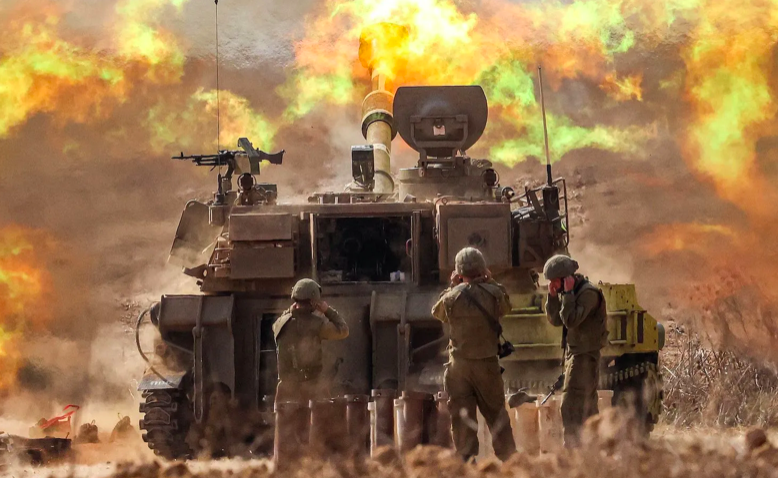
From a purely conventional military perspective, Israel clearly possessed overwhelming superiority. The Israel Defense Forces carried out extensive air strikes and ground operations throughout Gaza, targeting Hamas fighters, commanders, weapons storage facilities and tunnel networks.
Israel succeeded in eliminating several senior Hamas leaders and significantly disrupting the organization’s military structure. Large parts of Hamas’s infrastructure were damaged or destroyed, while its ability to operate openly was severely restricted.
Israel also established military control over significant areas of Gaza during different stages of the conflict. These operations gave Israeli forces greater ability to monitor Hamas activity and prevent another attack like October 07.
The weakening of Hamas’s leadership represented an important achievement for Israel. Hamas had spent years developing a military organization capable of operating through underground tunnels and decentralized command structures. Destroying or weakening these networks requires prolonged military operations.
But battlefield dominance is not the same as a strategic victory. Israel clearly weakened Hamas, but it did not completely remove the organization as a military and political force.
Despite suffering severe losses, Hamas was not destroyed. Its continued survival created a difficult question for Israel: if the objective was to eliminate Hamas, could Israel claim complete victory while the organization continued to exist?
Hamas: Defeated or Still Standing?
Hamas entered the war facing one of the most powerful militaries in the Middle East. It had no conventional air force, navy or advanced armored forces capable of competing directly with Israel. Its strategy therefore depended heavily on asymmetric warfare.
The organization used underground tunnels, small fighting units, improvised explosive devices, and rocket attacks. These tactics were designed not necessarily to defeat Israel’s military conventionally, but to survive and prolong the conflict.
Hamas, however, entered the war with a very different understanding of what victory would look like.
Israel needed to demonstrate that it could dismantle Hamas’s military capabilities and prevent it from governing Gaza. Hamas, by contrast, could present its own survival as a form of victory.
This does not mean that Hamas emerged from the war militarily stronger. The organization suffered major losses to its leadership, fighters, and infrastructure. Gaza itself was devastated, significantly reducing Hamas’s ability to operate as it had before the conflict.
Nevertheless, the fact that Hamas remained relevant to ceasefire and hostage negotiations demonstrated that it had not disappeared completely as a political and military actor.
This created a strange outcome. Israel could point to major battlefield successes, while Hamas could point to the simple fact that it had survived. In other words, both sides could claim success, but for completely different reasons.
The Hostage Question
The hostages taken during the October 07 attack became one of the most important political and emotional issues inside Israel.
The Israeli government faced enormous pressure from the families of hostages and the wider public to secure their return. At the same time, the government maintained that continued military pressure on Hamas was necessary.
However, diplomacy also became essential.
Qatar and Egypt emerged as important mediators between Israel and Hamas. Qatar’s relationship with Hamas’s political leadership gave it influence over negotiations, while Egypt’s geographical position and long-standing involvement in Gaza made Cairo another important diplomatic actor. The United States also played an important role in supporting negotiations.
The temporary ceasefires made one thing clear: military force alone could not bring all the hostage’s home. Negotiations, involving difficult compromises and prisoner exchanges, became equally important.
The hostage crisis further complicated any straightforward claim of victory. Israel’s ability to secure the return of hostages represented an important achievement, but the dependence on negotiations also demonstrated the limitations of military power in achieving every objective of the war.
The Human Cost in Gaza
Any discussion about who won the Israel–Hamas war must recognize that Palestinian civilians in Gaza suffered devastating consequences.
Large areas of Gaza were destroyed during Israeli military operations. Homes, hospitals, schools, and other infrastructure were damaged, while a large proportion of the population was displaced.
The humanitarian crisis became one of the most controversial aspects of the conflict. Israel argued that Hamas operated from densely populated civilian areas and used underground infrastructure, making military operations extremely difficult. Critics of Israel, however, argued that the scale of the military campaign caused unacceptable civilian suffering.
For Hamas, the destruction of Gaza also created difficult questions. Although the organization could claim that it survived militarily, Palestinians themselves paid an enormous price.
This, in my view, is one of the biggest problems with describing Hamas’s survival as a victory.
An organization may survive, but if the territory it claims to defend is devastated and its population suffers enormously, the meaning of victory becomes deeply questionable.
The humanitarian consequences also damaged Israel’s international reputation. As images of destruction and civilian suffering spread around the world, international criticism of Israel increased.
Therefore, even though Israel maintained military superiority, the humanitarian consequences created significant diplomatic and political costs.
Israel’s Diplomatic and Political Costs
Israel entered the war with strong support from the United States and several Western governments, particularly following the October 07 attacks.
As the conflict continued, however, international criticism of Israeli military operations increased. The humanitarian situation in Gaza became a major subject of debate in international organizations, governments, and public demonstrations.
Israel maintained the support of the United States throughout crucial periods of the conflict, which was strategically important. However, disagreements emerged regarding civilian casualties, humanitarian assistance, and the future governance of Gaza.
Relations with Arab countries also became more complicated. Before October 07, the possibility of normalization between Israel and Saudi Arabia was considered one of the most important diplomatic developments in the Middle East. The war disrupted this momentum.
From Hamas’s perspective, this represented political achievement. The Palestinian issue returned to the center of international diplomacy and discussions surrounding Palestinian statehood gained renewed attention.
However, this political outcome should not be confused with a complete Hamas victory. Hamas itself faced widespread criticism for the October 07 attacks, while its future role in governing Gaza remained deeply controversial.
Politically, the outcome was far less clear. Israel succeeded in weakening Hamas militarily but faced growing international criticism, while Hamas brought renewed attention to the Palestinian issue at the cost of devastating organizational and human losses.
The Battle of Narratives
The struggle over how the war was interpreted became almost as politically significant as developments on the battlefield itself.
Israel presented its military campaign as an act of self-defence following the October 07 attacks. Its central argument was that no country could accept the continued presence of an armed organization capable of carrying out another attack on a similar scale.
Hamas presented the conflict through the language of Palestinian resistance and argued that its survival demonstrated Israel’s inability to eliminate the movement.
The problem, then, is that Israel and Hamas were never measuring victory by the same standard.
For Israel, victory meant restoring security, returning hostages and dismantling Hamas’s military and governing capabilities. For Hamas, simply surviving an overwhelming Israeli military campaign allowed it to claim that resistance had continued.
This difference explains why both sides could claim achievements despite suffering serious costs.
However, narratives cannot resolve the underlying political conflict. The war may have changed the military balance in Gaza, but it did not eliminate the broader dispute between Israelis and Palestinians.
The Regional Impact
The Israel–Hamas war also had consequences far beyond Gaza.
The conflict increased tensions across the Middle East and involved regional actors with connections to the broader Israeli-Palestinian struggle. Iran’s regional network, including Hezbollah and the Houthis, became increasingly relevant to the wider security environment.
At the same time, Qatar and Egypt strengthened their positions as important diplomatic mediators. Their involvement in ceasefire and hostage negotiations demonstrated the continuing importance of regional diplomacy.
The United States remained Israel’s most important international ally while simultaneously participating in diplomatic efforts aimed at limiting escalation and addressing the humanitarian crisis.
The war also showed that whatever happens next in Gaza will not be decided by Israel and Hamas alone. Regional and international actors became essential to negotiations surrounding ceasefires, humanitarian assistance, and post-war governance.
Did Hamas Achieve a Strategic Victory?
Hamas’s strongest claim to strategic success rests on two things: it survived, and it pushed the Palestinian question back to the centre of international attention.
Hamas survived a massive Israeli military campaign, remained part of negotiations and succeeded in returning the Palestinian issue to the center of global attention. The war also disrupted the regional diplomatic environment that existed before October 07.
However, describing this as a complete victory would ignore the enormous losses suffered by Hamas and Gaza.
Many senior Hamas leaders were killed, much of its military infrastructure was destroyed or damaged and its ability to govern Gaza was severely weakened. More importantly, Palestinian civilians suffered catastrophic consequences.
Therefore, Hamas may claim symbolic or political achievements, but these came at an extraordinarily high cost.
Did Israel Win?
On military terms, Israel has the stronger claim to victory.
It demonstrated overwhelming military superiority, eliminated senior Hamas leaders, destroyed significant military infrastructure and reduced Hamas’s ability to operate freely.
Israel also secured the return of hostages through a combination of military pressure and diplomacy and strengthened security arrangements designed to reduce the possibility of another October 07-style attack.
Yet Israel’s victory was incomplete if measured against its broadest objectives.
If Hamas remained armed, politically relevant or capable of rebuilding, then the objective of eliminating the organization was not fully achieved. Israel also faced significant international criticism and deterioration in its global image.
Therefore, Israel achieved major military successes without necessarily securing an undisputed strategic victory.
Who Actually Won?
So, who actually won? The answer depends largely on what we mean by victory. Israel was unquestionably the stronger military power and inflicted severe damage on Hamas. But if victory meant eliminating Hamas and permanently resolving the security threat from Gaza, the outcome was less decisive.
Hamas, meanwhile, survived and remained politically relevant, but survival came at an extraordinary cost. Gaza was devastated, Hamas’s own capabilities were severely weakened, and the Palestinian population suffered enormously.
For this reason, neither side can convincingly claim an absolute victory. Israel won important battles, while Hamas survived the war, but the political conflict that existed before October 07 remained unresolved.
Conclusion
The Israel–Hamas war demonstrates how difficult it is to define victory in modern asymmetric conflicts. Israel emerged as the clear military superior and inflicted enormous damage on Hamas’s leadership, infrastructure and fighting capabilities. From a conventional military perspective, Israel achieved substantial successes.
However, military success did not automatically produce complete strategic victories. Hamas survived as an organization and remained relevant to negotiations surrounding Gaza. The Palestinian issue, rather than disappearing from international politics, returned to the center of global diplomatic attention.
At the same time, describing Hamas as the winner would be equally misleading. Its leadership and military capabilities suffered major losses, while the Palestinian population of Gaza endured extraordinary destruction, displacement and suffering.
In my assessment, Israel has the stronger claim to military victory, having severely weakened Hamas’s leadership and military capabilities. Yet this was not an absolute strategic victory. Hamas’s survival meant that Israel fell short of eliminating the organization, while the broader Israeli-Palestinian conflict remained unresolved.
Ultimately, the greatest losers were civilians. Israelis experienced the trauma of the October 07 attacks and the hostage crisis, while Palestinians in Gaza experienced death, displacement and widespread destruction on an enormous scale.
Therefore, the Israel–Hamas war produced no simple or undisputed winner. Israel changed the military balance but did not resolve the underlying conflict. Hamas survived but at an extraordinary cost to itself and to Gaza. Ultimately, neither military dominance nor organizational survival can resolve the deeper Israeli-Palestinian conflict. Without a sustainable political settlement, any claim of victory by either side is likely to prove temporary.



