
By: Sonalika Singh, Consulting Editor, GSDN
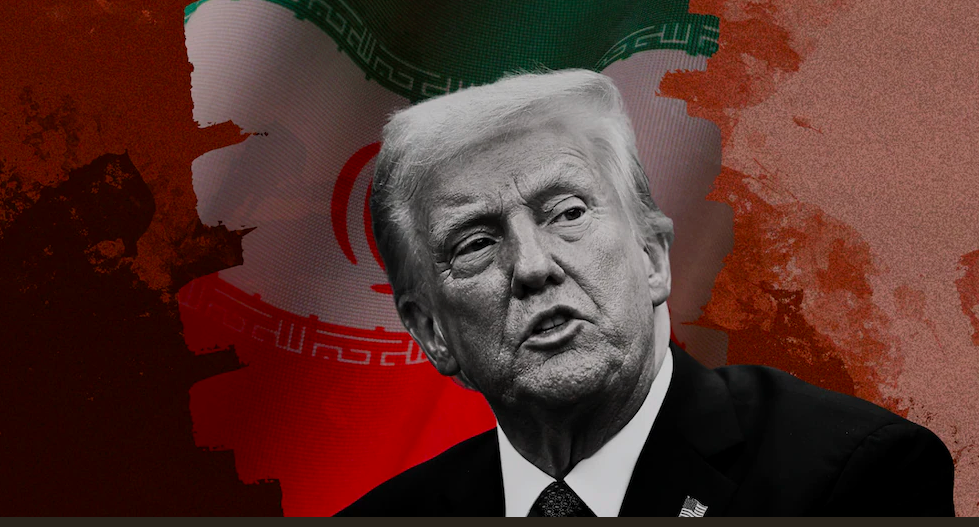
The fragile ceasefire between the United States and Iran in April 2026 sits on a knife’s edge, shaped not by a single decisive factor but by a dense web of political calculations, military realities, economic pressures, and personal leadership styles. At the center of this delicate balance is Donald Trump, whose rhetoric has often leaned toward escalation, yet whose actions at least temporarily have stopped short of resuming full-scale conflict. Understanding what is holding him back requires examining the interplay between strategic constraints and incentives that make breaking the ceasefire both tempting and risky.
One of the most immediate constraints is the sheer unpredictability and cost of renewed military escalation. Although the United States and Israel launched devastating strikes against Iran’s infrastructure earlier in the conflict, the war has demonstrated that Iran retains significant retaliatory capabilities. Tehran’s ability to target U.S. bases, disrupt maritime trade, and strike regional allies has created a deterrent environment that complicates any decision to restart hostilities. Trump’s warnings of “lots of bombs” signal willingness, but they also function as negotiating leverage rather than a definitive commitment to act. Restarting the war would not be a limited or controlled escalation; it would likely trigger a broader regional conflict with unpredictable consequences.
Closely tied to this is the strategic importance of the Strait of Hormuz, a narrow waterway that has become the central bargaining chip in the conflict. Iran’s intermittent closure of the strait has already sent global energy markets into turmoil, with oil prices surging sharply. For the United States, maintaining stability in global energy flows is not just an economic issue but a geopolitical imperative. Any decision by Trump to break the ceasefire risks further disruptions that could damage not only the global economy but also domestic economic stability in the United States. High energy prices, inflationary pressures, and market volatility would carry political costs at home, especially for an administration that has emphasized economic strength.
Another significant factor is the incomplete nature of U.S. strategic objectives. While Trump has claimed that major military goals have been achieved, key issues particularly Iran’s nuclear program remain unresolved. The United States continues to demand zero uranium enrichment; a position Iran has firmly rejected. Figures such as JD Vance have framed the core objective as preventing Iran from acquiring nuclear weapons capability, but this goal has not been secured through military means alone. Breaking the ceasefire without a diplomatic framework in place would risk returning to conflict without a clear path to achieving these objectives, potentially trapping the United States in a prolonged and costly cycle of strikes and counterstrikes.
Diplomatic dynamics also play a crucial role in restraining. The ceasefire itself was broken with significant involvement from Shehbaz Sharif and other international actors. Pakistan’s mediation has created a platform for dialogue that, while fragile, represents one of the few avenues for de-escalation. Walking away from this process would not only undermine Pakistan’s diplomatic efforts but also strain U.S. relations with other partners who have urged continued negotiations. European leaders, China, and regional powers have all emphasized the need for a negotiated settlement, placing additional pressure on Washington to avoid unilateral escalation.
Internal divisions within the U.S. administration further complicate the decision-making process. While Trump’s public statements often project decisiveness, reports suggest ongoing deliberations among key advisors, including figures like Steve Witkoff and Jared Kushner. These internal discussions reflect differing views on the costs and benefits of continuing negotiations versus resuming military action. Such divisions can slow decision-making and create a bias toward maintaining the status quo at least temporarily rather than taking irreversible steps toward renewed conflict.
Military realities on the ground also act as a constraint. The United States has deployed significant forces to the region, but sustaining a large-scale military campaign would require further mobilization and logistical preparation. At the same time, Iran’s asymmetric capabilities including missile strikes, naval harassment, and proxy forces mean that any renewed conflict would not be confined to conventional battlefields. The risk to U.S. personnel and assets across the Middle East is substantial, and the potential for casualties adds another layer of caution to any decision to escalate.
The role of regional actors cannot be overlooked. Israel’s ongoing conflict with Hezbollah in Lebanon, for example, has already complicated the ceasefire framework. Although Trump has characterized this as a separate issue, Iran has repeatedly linked its actions in the Strait of Hormuz to developments in Lebanon. This interconnectedness means that breaking the ceasefire with Iran could trigger a cascade of escalations across multiple fronts. Gulf states, many of which have already been targeted by Iranian strikes, are also wary of further instability and have called for comprehensive negotiations rather than renewed conflict.
Economic considerations extend beyond energy markets to include sanctions and reconstruction. Iran has demanded relief from sanctions and compensation for war damage, while the United States has used economic pressure as a key tool in its strategy. Maintaining the ceasefire allows Washington to continue leveraging sanctions without incurring additional costs of military operations. Breaking the ceasefire, by contrast, would shift the focus back to military engagement and potentially reduce the effectiveness of economic pressure as a negotiating tool.
Another important factor is the question of credibility and negotiations. Trump has positioned himself as a dealmaker, and the ongoing talks however uncertain provide an opportunity to claim a diplomatic victory. Abandoning the ceasefire prematurely would undermine this narrative and could be seen as a failure to achieve a negotiated outcome. At the same time, maintaining the ceasefire keeps pressure on Iran to make concessions, particularly on issues such as nuclear enrichment and maritime access.
Iran’s own position also plays a role in restraining U.S. action. Tehran has signaled both willingness to negotiate and readiness to resume fighting, creating a situation of mutual deterrence. Statements from officials like Esmail Baghaeiemphasize grievances over U.S. actions while leaving the door open for talks. This dual approach complicates the decision for Trump breaking the ceasefire could unify Iranian domestic support for escalation; while maintaining it keeps internal pressures within Iran focused on negotiation outcomes.
International law and legitimacy are additional considerations. Actions such as the U.S. boarding of oil tankers and the blockade of Iranian ports have already drawn criticism from other countries. Escalating further could deepen perceptions of unilateralism and erode international support for U.S. actions. In a conflict where global opinion matters particularly maintaining alliances and economic stability, such considerations cannot be ignored.
Finally, there is an element of timing and uncertainty. The ceasefire was always intended as a temporary pause, a window for negotiations rather than a permanent solution. As the deadline approaches, both sides are engaged in a high-stakes game of brinkmanship, using threats and limited actions to strengthen their bargaining positions. For Trump, breaking the ceasefire too early could forfeit potential gains at the negotiating table, while waiting allows for the possibility however slim of a deal that addresses at least some U.S. objectives.
Hence, what is stopping Donald Trump from breaking the Iran ceasefire is not a single decisive factor but a convergence of strategic, economic, diplomatic, and political constraints. The risks of escalation, the importance of the Strait of Hormuz, unresolved nuclear issues, international pressure, internal deliberations, and the broader regional context all combine to create a powerful incentive for caution. While Trump’s rhetoric suggests a readiness act, the realities of the situation impose limits on that willingness. The result is a tense and uncertain standoff, where the ceasefire endures not because of trust or agreement, but because the costs of breaking it remain, for now, too high for either side to bear.

About the Author
Sonalika Singh began her journey as an UPSC aspirant and has since transitioned into a full-time professional working with various organizations, including NCERT, in the governance and policy sector. She holds a master’s degree in political science and, over the years, has developed a strong interest in international relations, security studies, and geopolitics. Alongside this, she has cultivated a deep passion for research, analysis, and writing. Her work reflects a sustained commitment to rigorous inquiry and making meaningful contributions to the field of public affairs.




This is exactly what I was looking for.