
By: Khushbu Ahlawat, Consulting Editor, GSDN
Introduction
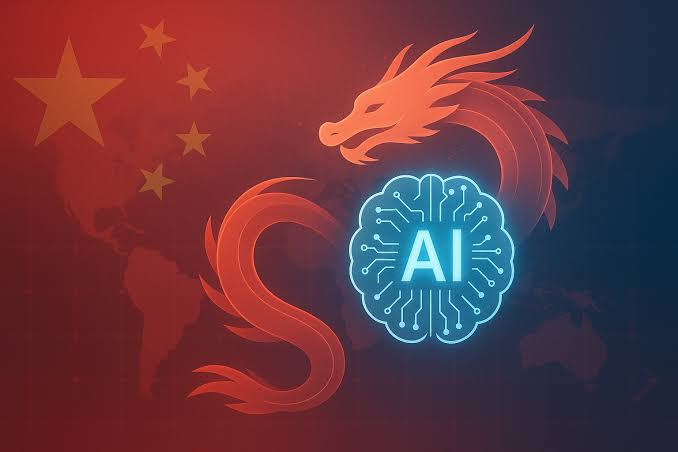
For much of the past three years, China’s approach to global artificial intelligence governance has unfolded through declarations, action plans and capacity-building pledges — a steady accumulation of soft-power gestures rather than hard institutional commitments. That changed in July 2026, when Beijing used the World AI Conference and the accompanying High-Level Meeting on Global AI Governance in Shanghai to unveil something considerably more durable: the World Artificial Intelligence Cooperation Organization (WAICO), a standing intergovernmental body headquartered in Shanghai, backed by a formal Council and Secretariat, and launched alongside a package of action plans, a Chair’s Statement, and a new initiative on AI-agent interoperability. The shift is significant not because any single document reshapes global AI governance overnight, but because it marks China’s transition from AI diplomacy — persuasion, outreach, goodwill — to AI institution-building, with all the durability and agenda-setting power that implies.
This article examines what China unveiled in Shanghai, how it fits into Beijing’s broader strategy of “selective shaping” in global technology governance, how it differs from Washington’s more security-driven approach, and what the resulting contest is likely to mean for the shape of the global AI order over the coming years.
Xi’s Vision and the Logic of Selective Shaping
President Xi Jinping’s opening address at the conference set out four organising priorities for China’s AI diplomacy: openness and cooperation, equitable access to AI technologies, keeping AI systems secure and under human control, and channelling global coordination through United Nations-centred processes rather than parallel, exclusive groupings. Xi paired this framing with pointed criticism of what he characterised as the “overstretching” of national-security justifications in technology policy — an implicit but unmistakable rebuke of Washington’s export-control regime — while also announcing concrete deliverables: 5,000 AI training opportunities for partner countries, a network of international AI application cooperation centres, and the rollout of China’s MAZU meteorological early-warning system across 30 countries.
These commitments build directly on foundations Beijing laid earlier in the decade — its 2023 Global AI Governance Initiative and its 2024 AI Capacity-Building Action Plan — but the Shanghai package goes further by tying that earlier rhetoric to infrastructure, skills training, data resources, security cooperation and practical deployment. The underlying strategy is best described as selective shaping: rather than attempting to rewrite the entirety of global AI governance, China is concentrating its diplomatic and technical resources on the specific domains where fragmented existing rules leave room for a new entrant to set the terms — technical standards, capacity-building programmes, and governance forums where no dominant framework has yet taken hold. Combined with the continued global diffusion of Chinese open-source AI models, this gives Beijing’s strategy a reach that extends well beyond the diplomatic set-pieces of any single summit.
From Rhetoric to Architecture
The documents released alongside Xi’s address — the Chair’s Statement, the Action Plan on AI Cooperation and Development, the Action Plan on International AI Ethics and Governance, and the Global Cooperation Initiative on Agent Mutual Trust, Interconnection and Interoperability — together sketch a policy architecture organised around four linked pillars: access, capacity, safety and interoperability. The underlying logic treats these pillars as mutually reinforcing rather than competing priorities. Wider diffusion of AI technology to developing countries, in this framing, is meant to be accompanied by the training and infrastructure needed to use it responsibly, while a parallel layer of standards, traceability mechanisms and human-oversight requirements is meant to provide the governance guardrails.
It is worth noting, however, that the package remains considerably stronger on stated principles than on operational detail. Funding commitments, implementation timelines, reporting mechanisms and clear lines of institutional responsibility are all largely unspecified. What the Shanghai outcomes provide is not a fully operational governance regime but a map of the terrain China intends to contest — precisely the domains where its existing technical capabilities, its development-partnership relationships, and its institutional design choices can reinforce one another most effectively. This is selective shaping translated into policy architecture: a deliberate concentration of effort in areas where Beijing already holds real advantages, rather than a diffuse attempt to compete across every front of AI governance simultaneously.
WAICO: A Permanent Vehicle for Influence
The most consequential single outcome of the Shanghai summit is WAICO itself. Where previous Chinese AI initiatives functioned largely as summit-cycle declarations, WAICO is structured as a permanent intergovernmental organisation, complete with a governing Council, a standing Secretariat, and a mandate covering capacity-building, the development of governance rules and technical standards, interoperability frameworks, support for open-source ecosystems, and coordination with United Nations processes — though its remit is explicitly confined to civilian applications of AI.
Structurally, WAICO has been designed to project multilateral legitimacy. Membership is formally open to all states, voting rights are equal across members, and decisions are meant to be reached by consensus wherever possible, falling back to a two-thirds majority only where consensus cannot be achieved. Representatives of 29 countries signed the organisation’s founding agreement in Shanghai, giving it an initial membership base broader than many comparable initiatives manage to secure at launch. Whether this formal openness translates into genuine multilateral governance, however, remains an open question. The organisation’s long-term significance will hinge on issues that founding agreements rarely settle in advance: whether member states beyond China are willing to fund substantive programming, whether they gain real influence over the institution’s agenda-setting, and whether the organisation comes to be seen internationally as a genuinely shared platform rather than a Chinese-led body wearing multilateral packaging.
Two Models of AI Diplomacy
China’s institutional turn stands in deliberate contrast to the approach Washington has taken. The United States’ strategy, most clearly articulated through its own AI Action Plan, combines heavy domestic investment in innovation and compute infrastructure with an international diffusion strategy built around exporting the American AI technology stack to trusted partners. That external offer is bundled together with a parallel architecture of restriction: controls on the access of strategic rivals to advanced hardware, tighter investment screening, supply-chain security partnerships, and initiatives such as Pax Silica, the State Department’s flagship programme on AI and supply-chain security. In effect, Washington’s model ties access to trust, security clearance and strategic alignment.
The restrictive dimension of this approach has been expanding steadily. Since 2022, the United States has progressively tightened controls on Chinese access to advanced semiconductors and the equipment used to manufacture them. That logic briefly extended to frontier AI models themselves in June 2026, when the Commerce Department restricted foreign-national access to Anthropic’s Fable 5 and Mythos 5 systems under export-control authority — a measure later lifted once additional safeguards were put in place, but one that illustrated, even in its brief duration, how access to the most capable AI systems may increasingly be gated by nationality, institutional trust, intended end use and formal security review rather than by price or technical readiness alone.
Beijing’s model is organised on different premises. Rather than structuring access through tiers of vetted trust, China presents broad participation, capacity-building support and formally open institutional membership as the foundational pillars of its governance offer. It would be a mistake, though, to read this contrast simply as an open China facing a closed United States — both powers are, at bottom, working to expand the international footprint of their own technology stacks. Washington pursues that goal through selective, trust-gated partnership; Beijing pursues it through wider formal access that is nonetheless designed to draw partner countries toward Chinese models, infrastructure, standards and institutions. China’s own criticism of security “overstretching” abroad, moreover, coexists comfortably with an extensive domestic apparatus of content controls, algorithmic regulation, security reviews and a deliberate national push toward technological self-reliance — meaning Chinese “openness” is best understood as openness to the outward diffusion of Chinese capability, not as unrestricted access to information or markets within China itself.
This distinction comes into sharpest focus when WAICO is set alongside Pax Silica. The two are not functional equivalents competing for the same role, but rather embodiments of two different organising principles for international technology cooperation: WAICO seeks legitimacy through broad formal membership, capacity-building outreach and multilateral process, while Pax Silica prioritises trusted-partner networks, supply-chain resilience and coordinated strategic alignment among a narrower set of allies. As of July 2026, participation in the two frameworks remains almost entirely distinct, with Kazakhstan the sole country to appear on both membership lists — a small but telling sign that the two ecosystems are not designed as mutually exclusive blocs, even as most states so far are gravitating toward one or the other rather than both.
The Narrowing Technology Gap
China’s institutional offer is also being reinforced by genuine technical progress, which lends its diplomatic push a credibility it might otherwise lack. The performance gap between the leading American and Chinese frontier AI models has narrowed considerably: as of March 2026, the top-performing US model held only a 2.7 percent lead over its closest Chinese counterpart on major benchmark measures. Recent releases such as Moonshot AI’s Kimi K3, together with China’s increasingly influential open-weight model ecosystem, give Beijing the ability to pair its diplomatic and institutional outreach with technology that is both capable and comparatively inexpensive to deploy. This does not erase the advantages the United States retains in advanced chip design, large-scale compute infrastructure and certain frontier capabilities — but it does mean China’s governance and capacity-building offer now comes attached to genuinely competitive technology, rather than functioning as a purely diplomatic overture.
Toward Overlapping Ecosystems, Not Rival Blocs
Looking ahead, the credibility of China’s institutional strategy will depend far less on the ambition of what was announced in Shanghai than on whether Beijing can convert its commitments — on capacity-building, standards development, infrastructure support and technology access — into programmes that partner countries find genuinely useful, affordably priced and responsive to their own development priorities, rather than instruments primarily designed to serve Chinese interests. The United States, for its part, faces a distinct challenge: widening the circle of countries with access to its most advanced AI capabilities while preserving partner confidence that such access will remain predictable, rather than subject to shifting export-control decisions and open-ended security screening each time strategic circumstances change.
The deeper contest between these two models, in other words, is not really about openness versus restriction — it is about the terms on which dependence is created. China’s approach may lower the practical barriers to adopting AI technology while gradually deepening reliance on Chinese platforms, technical standards and supply chains. The American approach may offer access to more advanced underlying capability, but on increasingly conditional terms tied to strategic alignment. Most governments are unlikely to resolve this tension by choosing one camp outright. Instead, they will need to weigh AI partnerships not only on cost and immediate technical performance, but on their longer-term consequences for technical standards, infrastructure dependence, data governance and national policy autonomy.
Conclusion
China’s launch of WAICO marks a genuine inflection point in the global contest over AI governance — not because it settles that contest, but because it gives Beijing, for the first time, a standing institutional platform rather than a rotating cycle of summit pledges through which to pursue it. Set against Washington’s trust-gated, security-conscious model of diffusion, the result is unlikely to produce two cleanly separated technological blocs. It is more likely to produce exactly what current participation patterns already suggest: a global AI order defined by overlapping ecosystems, differentiated levels of access, and selective alignment by countries seeking to capture the benefits of both systems while safeguarding their own technological and policy autonomy. How that balancing act plays out — and which institution proves more durable once the initial diplomatic momentum fades — will be one of the defining questions of technology geopolitics over the remainder of this decade.

About the Author
Khushbu Ahlawat is a research analyst with a strong academic background in International Relations and Political Science. She has undertaken research projects at Jawaharlal Nehru University, contributing to analytical work on international and regional security issues. Alongside her research experience, she has professional exposure to Human Resources, with involvement in talent acquisition and organizational operations. She holds a Master’s degree in International Relations from Christ University, Bangalore, and a Bachelor’s degree in Political Science from the University of Delhi.



