
By: Khushbu Ahlawat, Consulting Editor, GSDN
Introduction
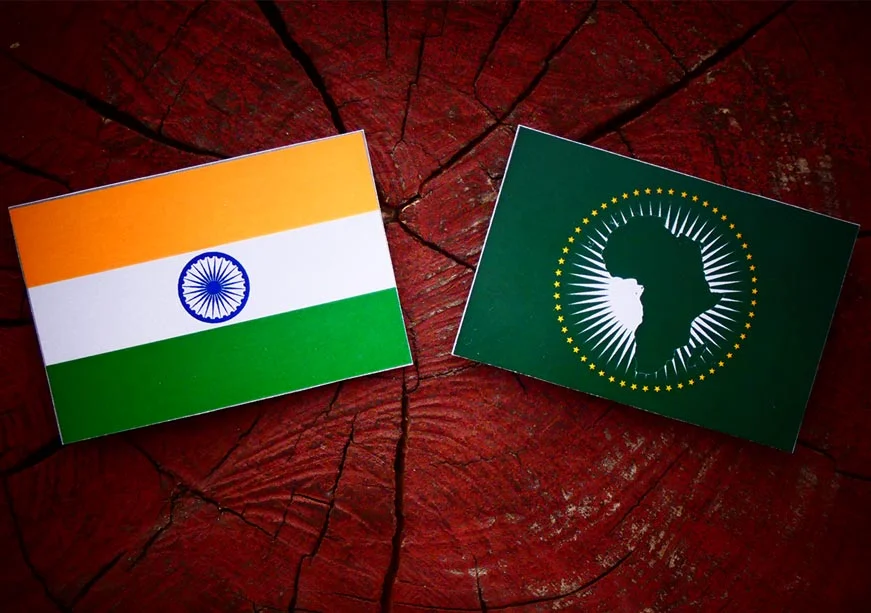
Agriculture sits at the heart of the India-Africa relationship, yet for decades it has been treated as a secondary theme within a broader story about trade, energy and infrastructure. That is beginning to change. As food insecurity, climate volatility and rural unemployment intensify across the Global South, India and Africa are increasingly recognising agriculture not merely as a sector to be developed, but as the connective tissue of a genuinely strategic partnership — one capable of delivering food security, nutrition security and livelihood security simultaneously. The India-Africa relationship, in this sense, has reached an important inflexion point: political commitment to South-South cooperation is well established, but the real test now is whether that commitment can be institutionalised and translated into outcomes that farmers can actually feel.
This article examines the foundations of that emerging partnership — the complementarities that make it logical, the mechanisms through which it currently operates, the institutional momentum created by BRICS expansion, and the structural challenges that must be addressed if the relationship is to move convincingly beyond trade and aid into durable, co-owned agrifood systems.
Why India and Africa Need Each Other
The rationale for deeper cooperation begins with a shared paradox. Agriculture employs a large share of the workforce in both regions yet contributes disproportionately little to national income, leaving millions of farming households trapped in low productivity and precarious livelihoods. In Sub-Saharan Africa, agriculture employs close to two-thirds of the workforce but generates only around 15 percent of GDP — a gap that reflects low mechanisation, weak infrastructure, limited access to credit and insurance, and chronic vulnerability to erratic rainfall. Since 2000, food imports into the region have risen sharply relative to domestic production; the continent’s annual food import bill, once estimated at around US$50 billion, has been projected to climb toward US$90–110 billion amid successive global shocks — from the pandemic-era disruption of supply chains to the Russia-Ukraine war’s impact on global wheat and fertiliser exports, which pushed food prices in Sub-Saharan Africa up by close to a quarter between 2020 and 2022.
India, meanwhile, has spent seven decades building precisely the kind of institutional and technical capacity that addresses these constraints: a Green Revolution that transformed grain self-sufficiency, one of the world’s largest dairy cooperative movements, an expanding digital public infrastructure for agriculture, and hard-won experience managing food security at a scale and level of resource constraint that mirrors African realities far more closely than the experience of wealthier industrial economies. Africa, in turn, offers what India increasingly needs: vast underutilised arable land, a young and growing labour force, and an agribusiness market projected to be worth close to US$1 trillion by 2030 as food demand across the continent is expected to roughly double by mid-century.
This complementarity is not simply resource-based; it is also methodological. Indian agricultural innovation has often prized what might be called the “3A” principle — technologies and institutions that are affordable, appropriate and adaptable to resource-constrained environments — rather than capital-intensive solutions transplanted from industrialised agriculture. That orientation matters enormously for African smallholders, most of whom farm plots too small and too undercapitalised to absorb expensive, import-dependent technology.
How the Partnership Currently Works
India’s agricultural engagement with Africa operates through several parallel channels, each with a distinct rationale and reach.
Government-to-government cooperation remains the backbone of the relationship. India’s Export-Import Bank has extended concessional Lines of Credit for agricultural mechanisation and infrastructure across the continent — Angola, for instance, received a US$23 million credit line to purchase tractors and farm machinery alongside support for a food-processing business incubation centre, while Lesotho secured a smaller credit facility for agricultural equipment and Malawi received support to establish a business incubation centre offering short-term training in crop processing and composting. Zimbabwe has benefited from Indian-supported rural technology parks, food testing laboratories and vocational training centres. These interventions are modest individually but cumulatively significant, reflecting a development-financing model built around capacity-building rather than large, debt-heavy infrastructure projects.
Private-sector investment has grown into an equally important pillar. Indian agribusiness conglomerates such as the Export Trading Group now operate integrated agricultural value chains across Tanzania, Kenya, Malawi, Mozambique, Nigeria and South Africa, while beverage and food-processing firms have committed hundreds of millions of dollars to bottling, edible-oil and processing facilities in markets like Zimbabwe. One joint venture near Harare grew into Southern Africa’s largest cooking-oil manufacturer from an initial investment of under US$2 million — an illustration of how comparatively modest Indian capital, paired with local partnership, can scale quickly in underserved African food-processing markets. Development finance institutions have also begun backing inclusion-focused private initiatives, including grant support for women-led agribusiness ventures across several East and Southern African markets.
Humanitarian and capacity-building assistance forms a third channel, less visible but consequential during periods of acute stress. India has periodically supplied emergency food aid — rice shipments to Zimbabwe during drought years, agricultural equipment and grain to Malawi following crop failures, tractors to the Democratic Republic of Congo — while training programmes under India’s technical cooperation schemes have brought thousands of African agricultural officials, extension workers and scientists through Indian institutions. Grassroots organisations such as India’s Self-Employed Women’s Association have also exported women-centred rural empowerment models directly to African communities, outside formal government channels altogether.
Institutional and cooperative knowledge exchange may ultimately prove the most transformative channel, precisely because it moves beyond aid and investment into genuine two-way learning. The clearest example lies in dairy. When Kenya’s Dairy Farmer Foundation approached India’s National Dairy Development Board roughly a decade ago to explore replicating India’s cooperative “Anand model,” the resulting East African dairy hubs went on to reach more than 200,000 smallholder farmers and generate well over US$100 million in additional farmer revenue. Tellingly, the learning has not flowed in only one direction: milk-quality certification practices developed within Kenya’s informal dairy sector were later adapted for use in Assam, generating millions of dollars in estimated benefits for Indian producers. This reciprocity — rather than a one-way transfer of Indian expertise to African beneficiaries — is precisely the model that a mature partnership should aspire to replicate across other value chains, from digital agriculture platforms to agricultural risk insurance.
The BRICS Opening
If bilateral cooperation has historically defined the India-Africa agrifood relationship, a new institutional layer is now emerging through BRICS, and it arrives at a genuinely useful moment. With Egypt and Ethiopia now full BRICS members, and South Africa a founding member, African voices carry more direct weight within the bloc’s agenda-setting than at any point previously. India’s chairship of BRICS through 2026 has been used to push agriculture higher up the grouping’s priorities, most visibly through the Indore Declaration, which centres farmer welfare, food security, climate resilience and technology cooperation, and through new mechanisms including a BRICS agricultural research network, a digital agriculture initiative, and a proposed centre of excellence on agroecology and regenerative farming. The BRICS Action Plan for Agricultural Cooperation running through 2028 similarly foregrounds family farming, food security and agricultural trade as shared priorities across the expanded bloc.
The significance of this shift lies less in any single new institution and more in what it enables structurally: a platform through which India and multiple African economies can pursue joint research, pooled financing and shared standards, rather than negotiating each relationship bilaterally from scratch. Paired with the African Continental Free Trade Area, which is gradually reducing the tariff and regulatory fragmentation that has long constrained intra-African and India-Africa agricultural trade, BRICS offers a genuine opportunity to convert scattered bilateral goodwill into a more coherent regional architecture.
What Still Needs to Change
For all this momentum, the partnership carries structural weaknesses that cannot be wished away by new declarations or summit communiqués.
The first is a persistent gender gap that undercuts productivity gains on both sides. Women make up a substantial share of the agricultural workforce in India and across Africa alike, yet in India women operate only a small fraction of landholdings despite comprising close to three-quarters of the rural agricultural workforce, while African women farmers own, on average, roughly one-eighth of agricultural land despite comparable workforce participation. Without secure land tenure, women in both regions continue to face restricted access to formal credit, crop insurance and extension services — meaning that cooperation focused narrowly on technology transfer, without addressing land rights and financial inclusion, will continue to bypass the demographic that does much of the actual farming.
The second weakness is a bias toward announcement over implementation. Political summits have produced no shortage of memoranda of understanding and framework agreements over the past two decades, but many initiatives lose momentum once they move from ministerial signing ceremonies to district-level execution. India’s own domestic experience offers a partial template here: its network of Krishi Vigyan Kendras — district-level centres that integrate agricultural research, extension services and farmer outreach — demonstrates how national policy can be translated into local practice. Replicating an equivalent subnational layer through partnerships between Indian districts and comparable African agroecological regions could create exactly the kind of implementation architecture that has so far been missing, enabling farmer exchanges, joint field demonstrations and locally adapted innovation rather than one-off pilot projects that quietly wind down once initial funding lapses.
The third weakness concerns which innovations actually reach smallholders. Cooperation should be judged by relevance to resource-constrained farmers rather than by technological sophistication — affordable irrigation, climate-resilient seed varieties, village-level storage and processing, and accessible micro-insurance are far more likely to move the needle on rural incomes than capital-intensive technologies poorly suited to local conditions or difficult to maintain once donor support ends.
A Path Forward
Bringing these threads together suggests a fairly clear set of priorities for the next phase of India-Africa agrifood cooperation. Value chains need to be strengthened in ways that retain more processing and value-addition within African rural economies, rather than exporting raw commodities for processing elsewhere — an area where India’s own experience in food processing and agro-industry offers directly transferable lessons. Climate resilience needs sustained joint investment given that both regions remain heavily dependent on rain-fed agriculture and face intensifying weather volatility. Cooperation needs to be localised through subnational partnerships that connect institutions rather than only governments. And existing institutional innovations — cooperative dairy models, digital agriculture platforms, crop insurance systems — need to be scaled through joint pilots and co-financing rather than reinvented in each new bilateral relationship.
Conclusion
India and Africa already possess most of the ingredients required for a transformative agrifood partnership: complementary resource endowments, decades of accumulated institutional experience, an expanding private-sector appetite for investment, and now a strengthened multilateral platform through BRICS to coordinate at scale. What has been missing is not political will but sustained follow-through — the unglamorous work of building implementation layers between national commitments and farm-level practice. The measure of success for this partnership will not be the number of agreements signed at summits, but whether smallholder farmers, and particularly the women who form the backbone of both regions’ agricultural workforces, see tangible improvements in productivity, income and resilience. If India and Africa can convert their shared ambition into that kind of localised, institutionally grounded cooperation, the agrifood partnership has the potential to become one of the more consequential — if least discussed — pillars of Global South solidarity in the years ahead.

About the Author
Khushbu Ahlawat is a research analyst with a strong academic background in International Relations and Political Science. She has undertaken research projects at Jawaharlal Nehru University, contributing to analytical work on international and regional security issues. Alongside her research experience, she has professional exposure to Human Resources, with involvement in talent acquisition and organizational operations. She holds a Master’s degree in International Relations from Christ University, Bangalore, and a Bachelor’s degree in Political Science from the University of Delhi.



