
By: Khushbu Ahlawat, Consulting Editor, GSDN
Introduction
In an era defined by shifting power balances and the steady militarisation of maritime spaces, India’s strategic calculus is undergoing a profound transformation. The oceans—once viewed primarily as conduits of trade—have now emerged as decisive theatres of geopolitical competition. For a country like India, with over 7,500 kilometers of coastline and critical sea lanes of communication passing through its maritime periphery, ensuring security beneath the waves has become as vital as defending its borders on land.
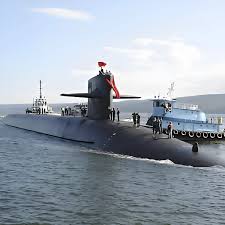
The steady advancement of India’s nuclear submarine programme, particularly the induction of INS Aridhaman, signals a decisive consolidation of its sea-based deterrence posture. As the third nuclear-powered ballistic missile submarine (SSBN) in the Arihant-class, Aridhaman represents not just technological progress but a strategic milestone in India’s quest for a credible and survivable nuclear triad. This development gains even greater significance in the context of an increasingly assertive China in the Indian Ocean Region (IOR), the growing complexities of hybrid warfare, and the persistent volatility in India’s extended neighbourhood.
Submarine-based deterrence offers a unique advantage: invisibility coupled with assured retaliation. It embodies the principle of second-strike capability, which is central to India’s declared “No First Use” nuclear doctrine. As threats evolve and adversaries expand their naval footprints, India’s investment in undersea capabilities is no longer a matter of prestige—it is an imperative for national security, strategic stability, and long-term geopolitical relevance.
Strengthening the Nuclear Triad: The Role of SSBNs
India’s nuclear doctrine rests firmly on the concept of a credible minimum deterrent supported by a robust nuclear triad—delivery systems that operate across land, air, and sea. While land-based missiles and air-delivered nuclear weapons were established relatively early, the sea-based leg has historically been the most complex and technologically demanding to develop. The commissioning of INS Arihant in 2016 marked India’s entry into an exclusive group of nations possessing operational SSBN capabilities, followed by INS Arighat in 2024, and now INS Aridhaman. The significance of SSBNs lies in their survivability. Unlike fixed land installations or airbases that can be targeted in a first strike, nuclear submarines operate in stealth, submerged for extended durations, making detection extremely difficult. This ensures that even in the event of a devastating initial attack, India retains the capacity to retaliate decisively—thereby reinforcing deterrence. INS Aridhaman represents a qualitative leap in this domain. With a displacement exceeding 7,000 tonnes and the capacity to carry advanced submarine-launched ballistic missiles (SLBMs) such as the K-15 and K-4, it significantly enhances India’s strike range and payload flexibility. While earlier submarines were limited in missile capacity, Aridhaman’s improved design allows for a higher number of warheads, strengthening the credibility of India’s deterrence posture.
Globally, only a handful of countries—including the United States, Russia, China, France, and the United Kingdom—possess fully operational nuclear triads. India’s steady progress in this direction underscores its emergence as a responsible nuclear power capable of maintaining strategic stability. Importantly, this capability is not aimed at warfighting but at preventing war itself—a core principle of deterrence theory.
The Indian Ocean Chessboard: Rising Strategic Pressures
The Indian Ocean Region has transformed into a contested strategic space, driven largely by China’s expanding maritime ambitions. Through its Belt and Road Initiative (BRI) and the development of dual-use infrastructure in countries like Sri Lanka, Pakistan, and Djibouti, China has steadily increased its presence in waters traditionally considered within India’s sphere of influence. One of the more subtle yet concerning developments has been the frequent deployment of Chinese research and survey vessels in the IOR. While officially engaged in scientific activities, these vessels possess advanced capabilities for seabed mapping, underwater surveillance, and intelligence gathering—functions that have clear military applications. Their presence raises concerns about the tracking of submarine movements and the potential compromise of India’s underwater deterrent. Additionally, China’s People’s Liberation Army Navy (PLAN) has significantly expanded its submarine fleet, including nuclear-powered attack submarines (SSNs) and SSBNs. This growing undersea capability enhances China’s ability to project power far from its shores, including into the Indian Ocean. Pakistan, too, is enhancing its naval capabilities with Chinese assistance, including the acquisition of advanced submarines. This creates a two-front maritime challenge for India, necessitating a robust and credible deterrence posture.
In this evolving environment, sea-based deterrence becomes indispensable. Submarines provide India with the ability to monitor adversary movements, secure its maritime interests, and maintain strategic balance. They also serve as a powerful signalling tool, demonstrating India’s resolve and capability to defend its interests in the face of growing external pressures. The intensifying strategic competition in the Indian Ocean Region is further underscored by quantitative shifts in naval capabilities and maritime activity. China today commands the world’s largest navy, with over 370 battle force ships, including approximately 60 submarines, of which at least 12 are nuclear-powered. In contrast, India operates a significantly smaller fleet of around 16 conventional submarines and 2 operational SSBNs prior to the induction of INS Aridhaman, highlighting a capability gap that New Delhi is actively seeking to bridge. Furthermore, according to estimates from the Stockholm International Peace Research Institute (SIPRI), China’s defence budget exceeded $290 billion in recent years—nearly four times that of India’s approximately $75 billion allocation—allowing Beijing to sustain rapid naval modernisation and overseas deployments. The frequency of Chinese vessel presence in the Indian Ocean has also increased markedly, with reports indicating that over 8–10 Chinese research and survey ships operate annually in the region, often docking at strategically located ports such as Hambantota in Sri Lanka and Gwadar in Pakistan. These ports, developed under the Belt and Road Initiative, provide logistical depth to Chinese naval operations and raise concerns about potential dual-use military applications. Simultaneously, nearly 80% of global seaborne oil trade passes through the Indian Ocean, including critical chokepoints such as the Strait of Hormuz and the Malacca Strait, making the region indispensable to global economic stability. For India, which imports over 85% of its crude oil requirements, the security of these sea lanes is directly tied to its economic resilience. Additionally, the Indian Navy has projected the need for at least 24 submarines to effectively safeguard its maritime interests, a target that remains unmet. These figures collectively illustrate the scale of the challenge India faces and reinforce the strategic necessity of accelerating submarine induction, enhancing maritime domain awareness, and strengthening undersea deterrence capabilities to maintain a favourable balance of power in the region.
Changing Nature of Warfare: The Maritime Dimension
Modern warfare is increasingly characterised by its multi-domain nature, where conflicts seamlessly transition between land, air, sea, cyber, and space. The traditional boundaries of warfare are blurring, making it essential for nations to develop integrated capabilities that can respond to complex and unpredictable threats. Recent global conflicts illustrate this shift. The tensions in West Asia, particularly around critical chokepoints like the Strait of Hormuz, highlight the strategic importance of maritime routes in global energy security. Similarly, the Russia-Ukraine war has underscored the role of naval power in blockades, supply chain disruptions, and strategic deterrence. For India, the implications are clear. The Indian Ocean is not just a regional concern but a vital artery of global trade, with nearly 80% of India’s energy imports passing through these waters. Any disruption—whether due to conflict, piracy, or geopolitical tensions—can have severe economic consequences.
The concept of deterrence must therefore extend beyond traditional military capabilities to include maritime dominance. Submarines, with their ability to operate undetected and strike with precision, are ideally suited for this role. They provide both defensive and offensive capabilities, enabling India to protect its interests while deterring potential adversaries. Moreover, India’s own military operations have demonstrated the importance of maritime integration. Naval deployments during crises, anti-piracy missions, and coordinated exercises with partner nations all point to the increasing centrality of the maritime domain in India’s strategic thinking.
Self-Reliance and Technological Advancements in Submarine Development
India’s submarine programme is not just a military endeavour but also a driver of technological innovation and industrial growth. The development of nuclear-powered submarines requires expertise in areas such as nuclear engineering, metallurgy, propulsion systems, and stealth technology—fields that have significant civilian applications as well.
The Arihant-class submarines are a testament to India’s growing indigenous capabilities. Developed with significant domestic input, these submarines reflect the success of India’s push towards self-reliance in defence manufacturing. This is particularly important in the context of global supply chain disruptions and the increasing unpredictability of international partnerships.India’s push for self-reliance in submarine development must also be understood through the lens of defence economics, industrial capacity, and long-term strategic sustainability. Over the past decade, India’s defence capital expenditure has steadily increased, with nearly 68–70% of the capital procurement budget earmarked for domestic industry in recent years under the “Atmanirbhar Bharat” initiative. The submarine-building ecosystem, led by Mazagon Dock Shipbuilders Limited (MDL) and supported by the Defence Research and Development Organisation (DRDO) and the Bhabha Atomic Research Centre (BARC), has witnessed significant technological progress, particularly in nuclear propulsion, hull design, and sonar systems. The Arihant-class programme itself is estimated to have cost over ₹90,000 crore cumulatively, reflecting both the complexity and the strategic value of indigenous SSBN development. Furthermore, India’s Project-75 and the upcoming Project-75(I), aimed at constructing advanced conventional submarines with air-independent propulsion (AIP) systems, are expected to inject billions of dollars into the domestic defence manufacturing sector while fostering private sector participation. From a technological standpoint, the development of submarine-launched ballistic missiles such as the K-4 (with a range of approximately 3,500 km) and the under-development K-5 (expected to exceed 5,000 km) significantly enhances India’s second-strike capability by allowing submarines to operate further from adversarial coastlines, thereby improving survivability. Additionally, the integration of indigenous combat management systems and advanced communication networks ensures secure and real-time command and control, which is critical for nuclear deterrence. On a broader scale, India’s ambition to build at least six nuclear-powered attack submarines (SSNs), with an estimated project cost exceeding ₹1.2 lakh crore, reflects a long-term commitment to strengthening undersea warfare capabilities. These investments are not merely military expenditures but strategic enablers of technological innovation, employment generation, and industrial growth. As global defence supply chains become increasingly fragmented due to geopolitical tensions, India’s emphasis on indigenisation positions it to reduce external dependencies while simultaneously emerging as a potential hub for defence manufacturing and technology in the Indo-Pacific region.
The Russia-Ukraine conflict has further highlighted the vulnerabilities associated with dependence on foreign suppliers. Delays in defence deliveries, rising costs, and shifting geopolitical alignments have reinforced the need for indigenous production capabilities.
Looking ahead, India plans to expand its submarine fleet with more advanced platforms, including nuclear-powered attack submarines (SSNs). Unlike SSBNs, which are primarily designed for deterrence, SSNs are equipped for offensive operations, including tracking enemy submarines and protecting carrier battle groups. The planned induction of these platforms by the mid-2030s will significantly enhance India’s maritime capabilities. At the same time, emerging technologies such as artificial intelligence, autonomous underwater vehicles, and advanced sonar systems are set to redefine undersea warfare. Integrating these technologies into India’s submarine programme will be critical to maintaining a competitive edge.
Conclusion
India’s journey towards submarine dominance reflects a broader transformation in its strategic outlook—one that recognises the centrality of maritime power in ensuring national security and global relevance. The induction of INS Aridhaman is not merely an addition to the fleet but a powerful symbol of India’s growing capabilities and strategic intent. As the Indian Ocean becomes an increasingly contested space, the ability to operate effectively beneath its surface will be a defining factor in shaping regional power dynamics. Submarines, by virtue of their stealth, endurance, and destructive potential, offer a unique advantage in this regard. They embody the principle of deterrence—not through aggression, but through the assurance of retaliation. However, the path ahead is not without challenges. Bridging the technological gap with major naval powers, ensuring efficient resource allocation, and integrating emerging technologies will require sustained effort and strategic clarity. At the same time, India must continue to strengthen partnerships with like-minded nations to promote stability and security in the maritime domain.
Ultimately, submarine dominance is not just about military strength—it is about safeguarding sovereignty, securing economic interests, and maintaining peace in an uncertain world. As India’s silent sentinels patrol the depths, they carry with them not just weapons, but the weight of a nation’s aspirations for security, stability, and strategic autonomy in the 21st century.

About the Author
Khushbu Ahlawat is a research analyst with a strong academic background in International Relations and Political Science. She has undertaken research projects at Jawaharlal Nehru University, contributing to analytical work on international and regional security issues. Alongside her research experience, she has professional exposure to Human Resources, with involvement in talent acquisition and organizational operations. She holds a Master’s degree in International Relations from Christ University, Bangalore, and a Bachelor’s degree in Political Science from the University of Delhi.



