
By : Soumya Dutta
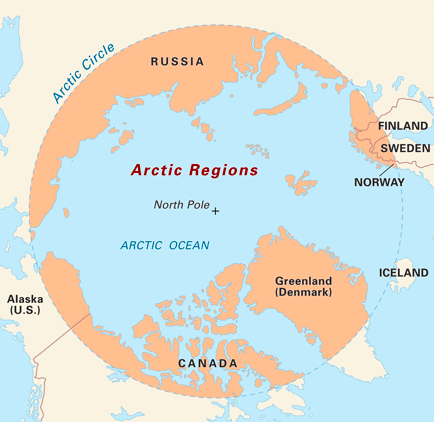
On May 19th 2026, India enhanced its Arctic engagement at the Third India-Nordic Summit at Oslo, with Prime Minister Narendra Modi and his Nordic counterparts reaffirming their commitment to science, sustainabilityand strategic partnerships. With the Arctic ice melting, the previously inaccessible shipping and trade routes are becoming accessible, and the region also holds immense economic value for its oil, gas and other critical minerals, which has further resulted to its growing geopolitical importance. Moreover, climate change in the Arctic can directly influence India through monsoon disruptions affecting food and water security and rising sea-levels threaten over 1300 of its island territories. The summit therefore reinforced India’s Arctic policy, by strengthening cooperation in polar research, climate and environmental issues and further elevating the relationship through the signing of a Green Technology and Innovation Strategic Partnership.
India’s involvement in the Arctic however dates to 1920 when it signed the Svalbard Treaty as a part of the British dominion. In 2007 the first Indian scientific expedition reached the Arctic and in the following year the Himadri Research Station was established at Ny-Ålesund in Svalbard, Norway. This not only served India’s scientific utilities but became a strategic asset allowing a year-round research engagement in the region and has also helped in its transition, from a peripheral scientific presence to becoming a stakeholder in the Arctic governance. Established in 1966, the Arctic Council has emerged as the highest-level platform on discussions of the Arctic region and India was granted an observer status in 2013. Even without voting powers, the status however ensures India’s presence in key decision shaping processes in a globally significant region and collaboration with the Arctic states on issues of climate change, sustainable development and environmental protection.
A signification portion of the Himalayan region also lies within India and because of its ice reserves, it has been referred to as the “Third Pole”. The Himalayas are of immense strategic importance as they influence water security, climate patterns and agricultural productivity by regulating river flows and monsoon rainfall, which sustain millions of people. Despite being geographically distant, the developments in the Arctic such as the melting ice, rising temperatures and shared patterns have highlighted the interconnected nature of the environmental changes in the Himalayas. Consequently, India has increasingly come to view the Arctic, the Antarcticand the Himalayan region as part of its broader polar programme, which reinforces the scientific and the strategic importance of having a sustained presence when it comes to the Arctic.
In 2014, India deployed its first multi-sensor moored observatory, to provide real time subsea monitoring at Kongsfjorden and in 2016, an atmospheric laboratory was set up at Gruvebadet, one kilometer south of Ny-Ålesund. The momentum has been carried on by the release of the “India’s Arctic Policy: Building a Partnership for Sustainable Development” in 2022. Based on the six pillars of scientific research, environmental protection, economic development, connectivity, cooperation and national capacity building, the policy laid down a multi-dimensional approach when it comes to the region and aims to create a more coherent framework that would secure India’s environmental, economic and strategic interests. At one level, the policy can be realized as an extension of India’s broader foreign policy approach rooted in multi-alignment and cooperative engagement through partnership with the Arctic states and adherence to a rules-based governance. However, by simultaneously, linking the policy to energy and resource security, shipping routes and drawing on its advances of space-based technologies such as satellite remote sensing and Earth observation, the policy has advanced a vision that situates the Arctic affairs within India’s broader national priorities, especially at a time when competition in regard to access and governance in the region among major powers continues to grow.
Who Owns the Arctic?
One of the first issues that emerges, when Arctic politics is considered is the concept of ‘global commons. The status of the region has been debated as many insist that it should not be exclusively controlled by a few states but instead must be seen as belonging to the international community, similar to the idea of the high seas, the region of Antarctica and outer space. The proponents of this idea argue that the Arctic must be governed through collective responsibility and managed in a way so that there is open access, as otherwise the focus becomes limited to narrow national interest and an exclusive influence by the Arctic Council countries. Moreover,issues of climate change have global consequences and a shared approach to preserve the region’s sensitive biodiversity also requires inclusive global governance.
Those who argue against this state that the Arctic cannot be treated as a ‘global commons’ as most of the region falls under the sovereign jurisdiction of the eight Arctic states. Instead, it can be more accurately described as a “Quasi-Global Common”, particularly as these Arctic coastal states have clearly defined Exclusive Economic Zone (EEZ) and territorial rights under the United Nations Convention on the Laws of the Sea (UNCLOS). Only the central Arctic Ocean beyond this EEZs form part of the high seas that can be truly considered as ‘global commons. Moreover, the governance in the region is Ied by institutions such as the Arctic Council and the non-Arctic countries are given only observer status and therefore have limited influence when it comes to the region. Also, by extending the ‘global commons’ framework to the entire Arctic region it will end up ignoring the existing state sovereignty of the member countries and external powers may also justify greater involvement in the Arctic, particularly in relation to its resources and as new shipping routes emerge, thereby challenging the jurisdictional arrangements when it comes to the region. Moreover, unlike the Antarctic Treaty, there exists no equivalent comprehensive agreement when it comes to the Arctic.
The Arctic as a Theatre of Great Power Rivalry
The governance architecture of the Arctic region is sustained by the Arctic Council, as established by the Ottawa Declaration in 1996. However, among the Council members, a loose grouping has emerged consisting of five Arctic littoral states, which include the United States, Russia, Canada, Denmark and Norway to signal unity among the Arctic coastal powers and also to engage in issue specific cooperation, which will directly affect the interests of the coastal states. Since 2022, the Russia-Ukraine conflict has significantly disrupted the working of the Council and the remaining seven members also boycotted and refused participation. This continued till Russia’s chairmanship in the Council ended in 2023 and was succeeded by Norway.
The present Danish Chairship is being seen as a possible ‘reset’, but even then, its effectiveness has been diminished as the Council must navigate the complex internal political dynamics and other emerging constraints. It has also undermined the idea of “Arctic Exceptionalism” that science and cooperation will separate it from global political conflicts. The shifting dynamics has also been reinforced by Russia, as it has moved closer to China, which it increasingly views as an Arctic partner. With the longest Arctic coastline and a fleet of 40 ice breaker vessels, Russia continues to consolidate its capabilities and operational presence in the region.
As part of this wider great-power competition, the self-governing Arctic island and part of Denmark, Greenland has also become a region of consternation under the Trump administration, especially with its strategic location. Home to the critical US led Pituffik Space Base used for missile warning and aerospace monitoring purposes, it has become an important element of the North American defence against potential Russianoperations through the GIUK Gap (Greenland-Iceland-UK). Combined with rare earth minerals, the US has considered a range of options including military force to acquire Greenland. This resulted in considerable anxiety in countries such as Canada, as a potential US acquisition of Greenland can alter the balance of control over the contested Northwest Passage resulting in an American claim of jurisdiction through both Alaska and Greenland. France and Canada therefore responded to these developments by opening consulates in Greenland, while Denmark undertook ‘Operation Arctic Endurance’ to strengthen Europe’s strategic determination.
The entry of Sweden and Finland into NATO has further bolstered its defence capabilities in the Arctic, especially as Russia increases its military buildup and China aims to deepen its strategic footprint in the region. An observer in the Arctic Council, China has positioned itself as an important stakeholder by identifying as a “Near-Arctic State’ and extending its Belt and Road Initiative in the region, through the emerging Arctic shipping corridors called the ‘Polar Silk Road’. The Sino-Russian cooperation has also emerged as a defining feature in the Arctic, through cooperation on energy projects such as LNG, shipping routes and military drills such as a joint military operation in the Bering Sea, near the coast of Alaska that featured naval exercise and bomber patrols.
This growing contestation over shipping routes, resources and militarization has come to increasingly shape Arctic geopolitics. Russia continues to expand its strategic capabilities and influence in the region, by militarizing its northern coast, securing its key shipping corridors such as the Northern Sea Route (NSR) and heavily investing in infrastructure development, through which it aims to secure what it views as its sovereign frontier. The US remains security focused and aims to deter the Sino-Russian axis through operational readiness and through coordination with its Arctic allies. On the other hand, China’s strategy to the Arctic has been influenced by its aim to secure resources, to enhance its global status as a leading polar power and to develop alternative trade routes, through strategic partnerships as it lack a territorial presence in the Arctic itself. What therefore emerges in the Arctic is a competitive landscape where states position themselves both strategically and through commercial activities using territorial claims and expanding presence, driven by powers both within and beyond the region.
India’s Expanding Arctic Footprint
India is not merely a passive observer of these polar affairs and has increasingly created its own distinct position in the Arctic landscape.
The Nordic Partnership: India’s engagement with the Nordic countries (Norway, Sweden, Denmark, Iceland and Finland) have been largely based on shared democratic values, research driven partnership and deepening trade ties. Realizing the growing importance of countries like India in Arctic affairs, they had also extended their support for admission as an observer in the Arctic Council. In recent years the India-Nordic Summits in 2018 and 2022, focused on Arctic cooperation through polar research, climate change and environmental protection. This trajectory has been continued through the third Summit in Oslo, where they advanced a forward-looking strategic partnership in green technology, innovation, trade and investment, blue economy, STEM collaboration and defence.
Norway has been the leading partner of India’s Arctic affairs, with its physical and strategic presence maintained through the Himadri research station and collaboration with the Norwegian Polar Institute. Through space collaboration with Sweden’s Esrange Space Centre, India also aims to strengthen its Arctic ground station capabilities and improve monsoon prediction and agriculture management. The inaugural India-Finland Arctic Dialogue at Rovaniemi, Finland in January 2026, has deepened cooperation on Arctic matters and India also aligns closely with polar priorities and environmental diplomacy in the region.
The Russian Dimension: Amid Western sanctions in the aftermath of the Ukraine conflict, Moscow has increasingly turned towards diversifying its partnerships, with its long-standing bilateral ties with India, extending into cooperation in the Arctic as well. Both countries have agreed at the 23rd India-Russia Annual Summit, to develop the Northern Sea Route to reduce the transit passage of energy and goods, while also enhancing connectivity through the Chennai-Vladivostok Eastern Maritime Corridor. Under the Reciprocal Exchange of Logistics (RELOS), there is now an increased opportunity for India to gain strategic maritime presence in the Arctic, through shared military access of ports and bases. Moreover, through projects such as joint polar ship building, Russia has clearly established itself as the “gateway to the Arctic” and today serve as a crucial partner to India’s Arctic ambitions.
The China Factor: A fellow observer of India in the Arctic Council, China’s Arctic strategy has been of commercial expansion, infrastructure development and narrative construction. By normalizing its presence in the Arctic, China wants to integrate itself into the broader economic and security architecture of the region. Moreover, the Northern Sea Route (NSG) offers a more attractive alternative that can overcome the “Malacca Dilemma” that China faces. For New Delhi, in contrast its strategy has been deepening its own scientific capabilities, strengthening its partnerships and positioning itself as a responsible stakeholder in Arctic governance.
What Lies Ahead
Moving forward, the Arctic is likely to be more fragmented, where scientific and environmental cooperation will coexist with strategic rivalry, regarding shipping routes and resource access. At the same time, climate change is remaking the Arctic’s physical geography, and these changes are moving faster than what its political geography can adapt to. The consensus-based governance structure that has been developed anchored in the Arctic Council, is also getting challenged by the escalating East-West geopolitical tensions. This may end up creating gaps for more transactional and interest-driven forms of engagement in the region.
For New Delhi, it has already established a network of partnerships, articulated a comprehensive policy, and maintained a careful balance across competing geopolitics alignments. However, in the coming period its ambitions must be enhanced with investments, establishment of research infrastructure and long-term continuity in the region anchored in sustainability. There is also a need for greater coherence in managing parallel engagements with it Nordic partners and Russia, which may at time end up reflecting divergent strategic expectations. Therefore, these developments reflect that the High North is no longer a distant frontier, but one which increasingly sits at the intersection of India’s core national priorities.



