
By : Simar Kaur, Research Analyst, GSDN
Introduction
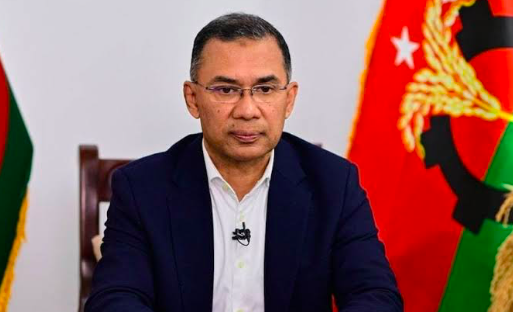
The very first foreign visit of an incoming chief executive has a certain level of political significance, especially within the South Asia region whose politics is governed by its complex history and interdependencies. When Mr Tarique Rahman became the Prime Minister of Bangladesh after winning the parliamentary elections in February 2026, it was widely anticipated that his very first foreign tour would be according to the protocol: he would pay his first state visit to New Delhi in order to reinforce the special relationship that Bangladesh and India share. In contrast, Rahman chose Kuala Lumpur and Beijing as the destination for his very first foreign tour that took place from June 21st to June 26th, 2026. The fact that he decided not to follow the diplomatic tradition raises many questions regarding Bangladesh’s foreign policy strategy and the potential impact on India, which has been Bangladesh’s closest ally of Bangladesh before. This paper will explore the economic and political significance of this trip and try to interpret the message it gives to New Delhi.
The Economic Imperative: Malaysia and China as Strategic Partners
The itinerary of Prime Minister Rahman reflected the government’s pragmatic approach, prioritizing economic accomplishments over diplomacy. The first stop in Kuala Lumpur, from June 21 to June 22, was for discussions on labour migration and economic partnership. There are close to one million Bangladeshi migrants who are working in Malaysia, and they form almost one-third of the total number of foreigners working in the country. It is important to note that remittances received by Bangladesh from its citizens working in Malaysia form an essential part of its foreign currency. The discussions involved the recruitment process, workers’ well-being, a framework for free trade agreements, and cooperation in the new fields such as semiconductors, halal industry, and digital industry. The China leg, from June 22 to June 26, had much more economic cloutthan the other two countries combined. The memorandum of understanding that Bangladesh entered with China was seventeen in number, with an action plan for deepening relations. The most important result of this trip was the official endorsement of the US340 million Chinese Economic and Industrial Zone in Chittagong, supported by US$ 200 million of concessional loans from China, estimated to create about 100,000 jobs and to receive foreign direct investment worth more than US$ 500 million during its first phase. Talks on the Teesta River management, which involved dredging and building embankments, were another topic of discussion. This is because the Teesta is the only one among fifty-four cross-border rivers where Bangladesh and India failed to come to an agreement, and the Chinese move into this strategic vacuum has riled India. The Foreign Minister, while answering questions on money lending, clarified that no leader goes for diplomacy abroad with a “begging bowl.” This visit is meant to define “the direction, content, calibre, extent, and depth of the relationship between the two countries.” On returning from abroad, the Prime Minister himself said that he went there under the policy of “Bangladesh First” and all benefits accrued to the people of Bangladesh who had entrusted him with the job of looking after their interests.
The Diplomatic Signal: Third-Way Diplomacy and Strategic Autonomy
The ordering of the visit to Malaysia first, followed by China, while India is noticeably missing from the schedule, is part of the strategy of “third-way diplomacy” as described by some experts. Traditionally, a newly elected president in Dhaka had to choose between two options: either to appease India or to please China. In choosing the third option of going to Malaysia first, Rahman decided on neutrality. However, the real test of the new approach will be the priority given to travelling to Beijing rather than New Delhi. The itinerary chosen by Rahman has raised eyebrows among Indian commentators and security experts due to the concern that he is visiting China before visiting India. In the highly sensitive environment of South Asian geopolitics, such a scheduling can be interpreted very conveniently as a clear tilt towards Beijing. Adding to these fears are recent problems in the bilateral relations of the two countries. The relationship between Bangladesh and India worsened significantly after the revolt on August 5, 2024, which resulted in the removal from power of the former Prime Minister, Sheikh Hasina, who is now residing in India. The diplomatic protests related to the arrest of a Bangladeshi advisor at the New Delhi airport, accusations against each other concerning border issues and “push-in” of migrants, and the politically charged issue of Sheikh Hasina residing in India have added strains to the relationship. But to think of Rahman’s tour as the final breakaway from India is too simplistic. Geography makes it imperative for India to be an essential partner for Bangladesh in matters of security cooperation, river-water distribution, and regional commerce. According to a Bangladeshi minister who chose to remain anonymous while speaking to The Wire, “India is a vital partner”, and “Malaysia invites first, China second, and India third” was just pragmatic thinking. Humaiun Kobir, Adviser to Foreign Affairs, said that “a trip to India will happen when the temperature cools down, and a conducive atmosphere prevails.” In fact, taking Malaysia into account as a buffer destination was calculated perfectly well to ease India’s fears, as this shows that Dhaka values neutrality in terms of economy prior to dealing with big players in the region. As noted by Asif Shahan, Professor of Development Studies at the University of Dhaka, “The visits are as economically as they are diplomatic. China is important for investment, whereas Malaysia is vital for foreign employment.”
Implications for India: A Strategic Recalibration
The relevance of Rahman’s visit to India for the country goes beyond the immediate two-state relationship. It is a part of the overall regional trend; wherein nearby states have tried to alter their foreign policy orientation away from Indian hegemony. As soon as Nepal became democratic in 2008, its Prime Minister Pushpa Kamal Dahal chose to make his first significant international visit to China. In 2017, the Maldivian President, Abdulla Yameen, visited China before visiting India. The most recent example includes the Maldivian President, Mohammed Muizzu, who initiated the “India Out” movement and focused on developing relations with Turkey and Saudi Arabia. Bangladesh’s new government needs to prove its independence in conducting foreign policy due to the political change. As an analyst notes, Rahman has to consider the possibility of not going to India because of the necessity to prolong his tenure and save himself from political problems, since people of Bangladesh still believe that the presence of Hasina in Delhi is a significant barrier for relations between the countries. Rahman chose to go through Kuala Lumpur and Beijing, trying to show that Bangladesh would not let other countries define its foreign policy by their concerns. It is worth mentioning that the Chinese dimension plays a crucial role. The signing of seventeen instruments and the resuming of discussions about Teesta projects show that Beijing is going to take the positions of strategic vacuums that appear after diplomatic mistakes made by India. Bangladesh is going to join the Global Development Initiative of China, which implies not only project cooperation but also political and economic ones. For India, the concern of China getting access to the regions close to the Siliguri Corridor, the narrow neck connecting India’s northeast part with the country, is crucial.
Conclusion
The foreign journey of Prime Minister Tarique Rahman to Malaysia and China in June 2026 is one of the major deviations from the typical diplomatic conduct of Bangladesh. The visit came about owing to immediate economic concerns: access to the labour market in Malaysia, investments, and cooperation in technology in China. However, the diplomatic significance of the visit cannot be underestimated either. Rahman deliberately avoided making the first visit to India and declared a “Bangladesh First” doctrine with an attempt to shift his country away from the role of a mere playing field of rivalry between regional powers to an independent player in the international political arena able to balance different positions. This shift causes certain worries in India but cannot be seen as a complete break with the neighboring state because of the geographical, security and historical links between the countries. It is rather a more fragmented and multi-aligned policy of Bangladesh in international relations aimed at multiplying its options.



