
By : Andey Vivaan, Research Analyst, GSDN
Introduction
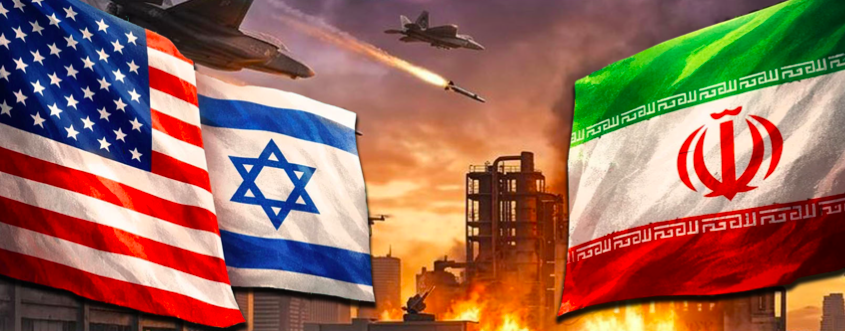
For decades, the Islamic Republic of Iran has viewed the United States and Israel as its principal strategic adversaries. Since the 1979 Iranian Revolution, relations between Tehran and Washington have remained hostile, while tensions between Iran and Israel have steadily increased due to disagreements over Iran’s nuclear programme, regional influence and support for armed groups across the Middle East. Although the possibility of a direct war between Iran, the United States, and Israel appeared remote for many years, Iranian leaders consistently prepared for such a scenario. Rather than attempting to match the military capabilities of its adversaries, Iran developed a strategy focused on deterrence, asymmetric warfare, missile technology, regional partnerships, and economic leverage.
The conflict that intensified during 2025 and expanded further in 2026 demonstrated that Iran had spent decades preparing for a confrontation with militarily superior opponents. Despite facing two technologically advanced powers equipped with modern air forces, intelligence networks, precision-guided weapons, and substantial military resources, Iran managed to sustain its resistance and continue military operations. In my opinion, this was not simply the result of chance. It reflected years of planning that focused on strengthening Iran’s military capabilities, regional influence and ability to withstand prolonged conflict.
Iran’s preparations were shaped by several historical experiences. The Iran-Iraq War of 1980–1988 convinced Iranian leaders that the country needed self-reliant defence capabilities. Later, economic sanctions, regional conflicts, the killing of General Qasem Soleimani on January 03, 2020, and increasing Israeli concerns regarding Iran’s nuclear activities reinforced Tehran’s belief that future military confrontation was possible. Consequently, Iran invested heavily in missile forces, drone technology, underground military infrastructure, and relationships with regional partners that collectively became known as the “Axis of Resistance.”
This article examines how Iran prepared for its war with the United States and Israel. It explores the historical foundations of Iranian strategy, the development of missile and drone capabilities, the strengthening of internal security institutions, the role of regional proxy networks, and the importance of economic pressure points such as the Strait of Hormuz.
Historical Background and Strategic Thinking
Iran’s approach to national security has been heavily influenced by its modern history. The eight-year Iran-Iraq War left a profound impact on Iranian military thinking. During the conflict, Iran faced extensive missile attacks, chemical weapons, and international isolation. The experience convinced Iranian leaders that dependence on foreign suppliers was dangerous and that the country needed indigenous military capabilities.
Following the war, Iran began investing heavily in missile development and defence industries. Over time, sanctions and diplomatic isolation further encouraged self-sufficiency. Tehran concluded that it could not compete directly with the conventional military power of the United States. Instead, it adopted an asymmetric warfare strategy designed to exploit the vulnerabilities of stronger opponents.
Iranian leaders often argue that major wars are forced upon Iran rather than started by it. This belief has influenced the country’s defence planning for decades. This concept became central to Iranian strategic doctrine. According to this thinking, Iran must prepare not only to defend its territory but also to ensure that any adversary pays a heavy price for military action.
The United States’ withdrawal from the Joint Comprehensive Plan of Action (JCPOA) on May 08, 2018 further reinforced these perceptions. The return of economic sanctions, combined with increasing tensions in the Gulf region, convinced many Iranian officials that military confrontation could eventually occur. The assassination of Qasem Soleimani in January 2020 deepened these concerns and accelerated efforts to improve deterrence capabilities.
By the mid-2020s, Iranian strategic planning increasingly focused on surviving a potential war, preserving state institutions, maintaining retaliatory capabilities, and ensuring that adversaries could not achieve rapid victory.
Building the Largest Missile Arsenal in the Middle East
One of the most important parts of Iran’s military strategy was the expansion of its missile programme. According to the Center for Strategic and International Studies (CSIS), Iran possesses the largest and most diverse missile arsenal in the Middle East. Over the years, Tehran invested heavily in ballistic and cruise missiles to strengthen its deterrence capabilities.
Missiles such as the Shahab-3, Emad, Ghadr-1, Sejjil, and Khorramshahr provide Iran with the ability to strike targets across the Middle East, including Israel and United States military bases. Iran also improved the accuracy and survivability of these weapons by constructing underground missile bases and mobile launch systems.
In addition, Iran gained valuable combat experience through missile operations in Syria, Iraq, Saudi Arabia, and against United States forces in Iraq between 2017 and 2020. These operations gave Iranian forces practical experience and helped improve how missiles would be used during a larger conflict.
The Rise of Drone Warfare
Alongside missiles, unmanned aerial systems became a crucial component of Iran’s military strategy. Recognizing its limitations in modern combat aircraft, Iran invested heavily in drone technology as a cost-effective alternative.
Systems such as the Shahed-131 and Shahed-136 became internationally known due to their operational use in several conflicts. These drones provided Iran with the ability to conduct long-range strikes while imposing significant costs on adversaries.
Iran’s investment in drones provided several military advantages. Drones were cheaper to produce than advanced fighter aircraft, could be manufactured in large numbers, and could overwhelm air-defence systems through saturation attacks. They also provided valuable intelligence, surveillance, and reconnaissance capabilities.
The effectiveness of Iranian drone technology became particularly evident during the September 14, 2019 attack on Saudi Arabia’s Abqaiq and Khurais oil facilities. The operation temporarily disrupted a significant portion of global oil production and demonstrated the strategic impact that relatively inexpensive weapons could achieve.
By the mid-2020s, drones had become one of the main tools in Iran’s overall military strategy
Strengthening Internal Security and Political Stability
Iran’s preparations extended beyond military capabilities. Iranian leaders believed that any future war would likely involve attempts to destabilize the regime from within. As a result, significant attention was devoted to internal security and political resilience.
Following periods of domestic unrest and external pressure, Iranian authorities strengthened security institutions and increased coordination among intelligence agencies. Border regions received additional attention, while measures were introduced to counter foreign influence and potential sabotage operations.
The government also enhanced wartime decision-making structures. Reports indicated that the Supreme National Security Council received expanded responsibilities, while new defence coordination mechanisms were introduced to improve crisis management.
Iranian leaders believed that future wars would involve not only military attacks but also political pressure, cyber operations and economic sanctions.
The Axis of Resistance and Regional Influence
Another important part of Iran’s preparation was the development of the Axis of Resistance, a network of state and non-state groups that oppose American and Israeli influence in the Middle East. Over the years, Iran strengthened its ties with Hezbollah in Lebanon, the Houthis in Yemen, Iraqi Shiite militias, and Palestinian armed groups.
These partnerships gave Iran strategic depth by creating multiple fronts that could deter or complicate military action against it. Following the October 07, 2023 Hamas attack and the subsequent regional escalation, the importance of these alliances became even more evident. Iran continued to strengthen coordination among its regional partners, viewing them as an essential part of its overall deterrence strategy and regional influence.
Protecting the Nuclear Programme and Strategic Infrastructure
Iran’s nuclear programme has remained a major source of tension with the United States and Israel. Anticipating that nuclear sites would be among the first targets in any conflict, Tehran invested heavily in protecting strategic infrastructure. Facilities such as Natanz, Fordow, and Isfahan were reinforced with underground tunnels, hardened structures, and additional fortifications to improve their survivability against air and missile strikes.
Iran also strengthened the protection of missile bases, command centres, and drone production facilities by dispersing and hardening them across different locations. These measures were intended to preserve critical military capabilities and ensure continuity of operations during a prolonged conflict.
Preparing for Economic Warfare
Iranian leaders understood that any major conflict would involve significant economic consequences. Therefore, economic warfare became an important component of Iranian strategic planning.
One of Iran’s most powerful tools in this regard is the Strait of Hormuz. Located between Iran and the Arabian Peninsula, the strait serves as one of the world’s most important maritime chokepoints. A substantial portion of global oil and liquefied natural gas exports passes through these waters each day.
For decades, Iranian officials have periodically warned that the Strait of Hormuz could be disrupted if Iran faced existential threats. While such actions would also impose costs on Iran itself, Tehran viewed the ability to threaten global energy flows as an important deterrent.
Military exercises conducted in the Persian Gulf often demonstrated Iran’s capability to operate in and around the strait. Naval units practiced asymmetric tactics involving fast attack craft, anti-ship missiles, naval mines, and drone systems.
The idea behind these preparations was relatively simple. If Iran could not match American military power directly, it could still impose substantial economic costs on its adversaries and the wider international community.
Many analysts argued that any prolonged disruption of the Strait of Hormuz would affect global energy markets, increase oil prices, and create economic uncertainty far beyond the Middle East. By maintaining this capability, Iran sought to ensure that military action against it would carry consequences extending well beyond the battlefield.
Military Exercises and Readiness
Military exercises played an important role in Iran’s preparations. Throughout the years leading up to the conflict, Iranian armed forces regularly conducted large-scale drills designed to test operational readiness and demonstrate capabilities.
These exercises involved the Islamic Revolutionary Guard Corps (IRGC), the regular armed forces, naval units, missile forces, and air defence systems. Scenarios often simulated attacks on foreign military bases, protection of strategic infrastructure, defence of coastal regions, and disruption of maritime traffic.
These exercises had several purposes.They allowed military commanders to identify weaknesses, improve coordination, and test new technologies under realistic conditions. They also sent political signals to foreign governments regarding Iran’s willingness and ability to defend its interests.
Joint exercises with partners such as Russia further demonstrated Iran’s efforts to strengthen international military relationships. Although these exercises did not create formal military alliances comparable to the North Atlantic Treaty Organization (NATO), they provided opportunities for cooperation and knowledge-sharing.
Iran’s preparations were not limited to conventional military exercises. Iran also invested heavily in cyber capabilities, intelligence collection, electronic warfare, and information operations. These tools provided additionalmeans of influencing events without relying solely on traditional military force.
By the time conflict intensified, Iran had spent years developing a multidimensional approach to warfare that integrated conventional, unconventional, economic, and informational instruments of power.
Wartime Performance and Strategic Resilience
When conflict eventually erupted, Iran faced immense challenges. The United States and Israel possessed overwhelming advantages in air power, intelligence capabilities, and technological sophistication. Iranian military infrastructure suffered significant damage, while several senior commanders and officials were killed.
Despite these setbacks, Iran demonstrated a degree of resilience that surprised many observers. Although significant damage was inflicted on military infrastructure, the state continued to function and retained the capacity to respond militarily, which was one of Tehran’s primary objectives from the outset.
Iran also retained the ability to threaten regional infrastructure, military bases, and maritime routes. These capabilities prevented its adversaries from achieving a quick and decisive victory.
One of the main reasons Iran managed to continue fighting was the preparation it had carried out over several decades. Underground facilities, dispersed military assets, established command structures, and extensive missile inventories allowed Iran to continue operating under difficult conditions.
Equally important was Iran’s ability to frame the conflict as a struggle for national survival. Government narratives emphasized sovereignty, resistance, and defence against foreign aggression. This messaging helped strengthen domestic cohesion during a period of extraordinary pressure.
Although Iran suffered substantial military and economic losses, its preparations enabled it to avoid complete strategic defeat. In this sense, Tehran achieved one of its primary wartime objectives: survival.
Implications for Regional Security
Iran’s preparations and performance during the conflict carry important implications for regional and international security.
The conflict also highlighted several broader lessons for regional security. One lesson was the growing importance of missiles and drones in modern warfare. Another was the strategic importance of the Strait of Hormuz, where any disruption could affect global energy markets. The war also demonstrated how regional allies and non-state actors can shape conflicts beyond national borders. Finally, it showed that resilience and long-term preparation are now as important as conventional military strength.
Conclusion
Iran’s preparation for a possible war with the United States and Israel developed gradually over several decades rather than through one single policy. Instead, it reflected decades of strategic planning shaped by historical experiences, regional competition, economic pressures, and security concerns.
Iran invested heavily in missile technology, drone warfare, underground infrastructure, and regional partnerships. It strengthened internal security institutions, developed economic pressure tools centered on the Strait of Hormuz, and expanded its ability to conduct asymmetric warfare. These measures were designed not to match the military power of the United States and Israel directly, but to ensure that any conflict would be costly, prolonged, and uncertain.
The conflict demonstrated both the strengths and limitations of Iran’s approach. While Tehran remained at a conventional military disadvantage, its preparations enabled it to preserve key capabilities, maintain resistance, and avoid political collapse. The ability to survive sustained military pressure and continue retaliatory operations reflected years of deliberate preparation.
In my opinion, the biggest lesson from this conflict is that military strength alone does not determine the outcome of modern wars. Resilience, adaptability, economic leverage, regional partnerships, and technological innovation have become equally important. Iran understood this reality and structured its preparations accordingly.
As tensions continue to shape the geopolitical landscape of the Middle East, Iran’s experience will likely influence military planning across the region. Regardless of whether Iran’s strategy is viewed as defensive or expansionist, its long-term military preparations clearly influenced the course of the conflict. The war demonstrated that even when facing stronger adversaries, a state that has prepared patiently and strategically can remain a significant actor in regional and international affairs.



