
By : by Ankit Raj, Research Analyst, GSDN
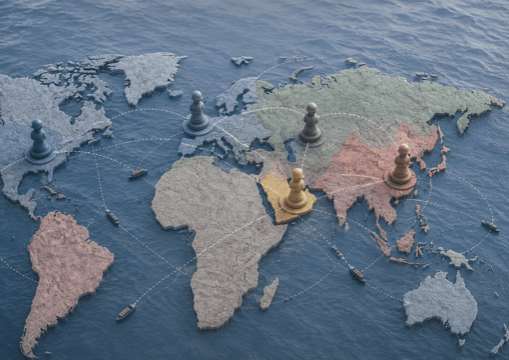
The geopolitical landscape of the Middle East and the broader international system has undergone profound transformations following decades of tension, proxy conflicts, and intermittent military confrontations involving Iran. While discussing the concept of a “new world order” in the context of Iran requires careful analysis of ongoing developments, the regional and global implications of Iran’s conflicts with various actors have already begun reshaping alliances, economic relationships, security architectures, and power balances that define international relations in the twenty-first century.
Historical Background of Iranian Conflicts
Iran’s confrontational relationship with the United States and its regional adversaries traces back to the Islamic Revolution of 1979, which overthrew Shah Mohammad Reza Pahlavi and established an Islamic Republic under Ayatollah Ruhollah Khomeini. The seizure of the American Embassy in Tehran on November 4, 1979, and the subsequent 444-day hostage crisis fundamentally ruptured U.S.-Iran relations, creating animosity that has persisted for more than four decades.
Throughout the 1980s, Iran fought a devastating war with Iraq that lasted from September 22, 1980 to August 20, 1988, resulting in hundreds of thousands of casualties and massive economic destruction. This conflict established patterns of regional rivalry and demonstrated Iran’s willingness to endure enormous costs in pursuit of its strategic objectives.
The United States designated Iran as a state sponsor of terrorism on January 19, 1984, citing Iranian support for groups including Hezbollah in Lebanon, Hamas and Palestinian Islamic Jihad in the Palestinian territories, and various militias throughout the Middle East. This designation has remained in place, shaping American policy toward Iran across multiple presidential administrations.
Iran’s nuclear program has been a source of international concern since revelations in August 2002 about undeclared nuclear facilities at Natanz and Arak. The International Atomic Energy Agency (IAEA) has conducted extensive inspections and monitoring, while debates have raged about whether Iran seeks to develop nuclear weapons capabilities or maintain exclusively peaceful nuclear energy programs.
The Joint Comprehensive Plan of Action (JCPOA), signed on July 14, 2015, in Vienna, Austria, represented a major diplomatic achievement involving Iran, the United States, the United Kingdom, France, Germany, Russia, China, and the European Union (EU). This agreement placed strict limits on Iran’s nuclear activities in exchange for relief from economic sanctions. However, President Donald Trump announced American withdrawal from the JCPOA on May 8, 2018, reimposing sanctions and initiating a “maximum pressure” campaign against Iran.
Tensions escalated dramatically following the U.S. drone strike that killed Major General Qasem Soleimani, commander of the Islamic Revolutionary Guard Corps (IRGC) Quds Force, near Baghdad International Airport on January 3, 2020. Iran retaliated with ballistic missile strikes against American forces at Al Asad Airbase in Iraq on January 8, 2020, marking one of the most dangerous moments in U.S.-Iran confrontation.
Regional Power Dynamics and Proxy Conflicts
Understanding the potential new world order following intensified Iran conflicts requires examining the complex web of regional rivalries and proxy wars that have characterized Middle Eastern politics. Iran has developed an “axis of resistance” comprising allied governments and non-state actors across multiple countries, creating what some analysts describe as a “Shia Crescent” extending from Tehran through Iraq and Syria to Lebanon.
In Iraq, Iran has cultivated close relationships with Shia militias collectively known as the Popular Mobilization Forces (PMF), or Hashd al-Shaabi in Arabic, which formed to fight the Islamic State of Iraq and Syria (ISIS) but have become powerful political and military actors. These groups maintain complex relationships with the Iraqi government while receiving support from Tehran.
Hezbollah in Lebanon represents Iran’s most sophisticated and capable non-state partner. Established in the 1980s with Iranian assistance, Hezbollah has evolved into a powerful political party and military force with an estimated arsenal of more than 100,000 rockets and missiles capable of striking anywhere in Israel.
In Yemen, Iran has provided varying levels of support to the Houthi movement, which seized control of the capital Sanaa on September 21, 2014, and has fought against a Saudi-led coalition since March 26, 2015. The Houthis have launched numerous drone and missile attacks against Saudi Arabia and have targeted international shipping in the Red Sea, demonstrating Iran’s ability to project influence across the Arabian Peninsula.
Saudi Arabia views Iran as its primary regional rival, competing for influence across the Middle East along sectarian, ideological, and geopolitical lines. This rivalry has fueled conflicts in Yemen, Syria, Lebanon, Iraq, and Bahrain, creating a regional cold war that periodically threatens to escalate into direct confrontation.
Israel considers Iran’s nuclear program, ballistic missile development, and support for groups hostile to Israel as existential threats. Israeli military operations have targeted Iranian positions in Syria, assassinated Iranian nuclear scientists, and reportedly conducted sabotage operations against Iranian nuclear facilities. The assassination of Mohsen Fakhrizadeh, Iran’s top nuclear scientist, on November 27, 2020, near Tehran, attributed to Israel, demonstrated the covert dimension of this conflict.
Nuclear Proliferation and Arms Control
A major military conflict involving Iran would have profound implications for nuclear non-proliferation efforts and arms control frameworks globally. Iran’s nuclear program has been the subject of intense international scrutiny, negotiations, and confrontation for more than two decades.
The collapse of the JCPOA following American withdrawal in May 2018 eliminated constraints on Iran’s nuclear activities. Iran subsequently began exceeding limits on uranium enrichment levels and stockpiles specified in the agreement. By 2023, Iran had enriched uranium to 60 percent purity, significantly closer to the 90 percent threshold typically required for weapons-grade material.
If Iran were to develop nuclear weapons capabilities, either before or after a major conflict, the regional and global implications would be enormous. Saudi Arabia has indicated it would pursue its own nuclear weapons program if Iran acquired such capabilities. Turkish officials have made similar statements about Turkey’s right to nuclear weapons if regional neighbors possess them.
A Middle East with multiple nuclear-armed states would fundamentally alter deterrence calculations, crisis stability, and the risk of catastrophic conflict. The Nuclear Non-Proliferation Treaty (NPT), which entered into force on March 5, 1970, and has been the cornerstone of global non-proliferation efforts, would face its most serious challenge. Widespread proliferation in the Middle East could trigger similar dynamics in other regions, including Northeast Asia and South Asia.
Economic Consequences and Energy Markets
Iran’s role in global energy markets means that major conflict involving the country would have immediate and far-reaching economic consequences. Iran possesses the world’s second-largest natural gas reserves and fourth-largest proven crude oil reserves, with approximately 157 billion barrels of oil.
The Strait of Hormuz, through which approximately 21 million barrels of oil per day pass, representing about 21 percent of global petroleum liquids consumption, is partially controlled by Iran. Iranian threats to close the strait during periods of high tension have caused oil price spikes and demonstrated Tehran’s potential leverage over global energy supplies.
Economic sanctions imposed on Iran since the 1990s and intensified after 2018 have severely damaged the Iranian economy, causing currency devaluation, inflation exceeding 40 percent annually during peak periods, and reduced oil exports from more than 2.5 million barrels per day before sanctions to fewer than 500,000 barrels per day during maximum pressure periods.
A post-conflict scenario could see either the intensification of Iran’s economic isolation if Tehran is decisively defeated, or potentially the lifting of sanctions and reintegration into global markets if diplomatic resolution accompanies military de-escalation. The economic reconstruction of Iran, should such a scenario emerge, would require hundreds of billions of dollars and create opportunities for countries and companies willing to invest.
China has emerged as Iran’s largest trading partner, importing Iranian oil despite American sanctions and signing a comprehensive strategic partnership agreement on March 27, 2021, covering economic cooperation, political coordination, and potentially military collaboration over a 25-year period. This relationship positions China to play a major role in any post-conflict reconstruction or normalization process.
Realignment of Global Alliances
The question of a new world order following the major Iran conflict necessarily involves examining how international alliances and partnerships might be reconfigured. The existing alliance structures, formed largely during the Cold War and its immediate aftermath, have already shown signs of strain and transformation.
The United States has maintained security partnerships with Gulf Cooperation Council (GCC) countries, including Saudi Arabia, the United Arab Emirates (UAE), Kuwait, Bahrain, Qatar, and Oman, since the council’s establishment on May 25, 1981. These relationships have been anchored in American security guarantees, arms sales, and military presence in exchange for energy supplies and regional stability.
However, confidence in American commitment to Gulf security has periodically wavered. The Obama administration’s pursuit of the JCPOA, perceived by Gulf states as insufficiently addressing Iranian regional activities, created tensions. The Trump administration’s limited response to Iranian attacks on Saudi oil facilities at Abqaiq and Khurais on September 14, 2019, which temporarily removed approximately half of Saudi oil production, raised questions about American reliability.
The Abraham Accords, announced on August 13, 2020, normalized relations between Israel and the UAE, followed by normalization between Israel and Bahrain on September 15, 2020, Morocco on December 10, 2020, and Sudan on October 23, 2020. These agreements represent a significant realignment in Middle Eastern politics, with Arab states prioritizing shared concerns about Iran over the Palestinian issue.
Restructuring of International Institutions
A new world order emerging from major conflict involving Iran would likely involve either the reform or marginalization of existing international institutions. The United Nations, particularly the Security Council, has been paralyzed on numerous Middle Eastern issues by divisions among permanent members holding veto power.
Russia and China have repeatedly used their Security Council vetoes to block resolutions targeting Iran, Syria, or other allied states, while the United States, United Kingdom, and France have blocked resolutions critical of Israel or calling for actions against Saudi Arabia. This gridlock has undermined the UN’s credibility and effectiveness.
The IAEA, established on July 29, 1957, has played a central role in monitoring Iran’s nuclear program and verifying compliance with agreements. The agency’s credibility and authority have been tested by disputes over access to Iranian facilities, interpretation of evidence, and politicization of its work by various parties.
Technological and Cyber Dimensions
A new world order following major conflict involving Iran would increasingly feature cyber warfare, drone technology, and artificial intelligence as central elements of military and strategic competition. Iran has developed significant cyber warfare capabilities, conducting attacks against Saudi Arabia, the United States, and other adversaries.
Iranian-supplied drones used by Houthi forces in Yemen and by Shia militias in Iraq have attacked Saudi oil facilities, American bases, and other targets throughout the region. The relatively low cost and increasing sophistication of drone technology democratizes military capabilities, allowing non-state actors and smaller countries to threaten larger adversaries.
The proliferation of these technologies and tactics to non-state actors and other countries would be accelerated by major conflict, creating new security challenges globally. Cyber weapons, unlike nuclear weapons, cannot be easily contained through non-proliferation regimes, and drones are increasingly available through commercial markets.
Conclusion
The concept of a new world order emerging from major conflict involving Iran encompasses multiple dimensions including regional power balances, alliance structures, nuclear proliferation dynamics, economic relationships, humanitarian consequences, and the effectiveness of international institutions. While the specific contours of such an order would depend on the nature, duration, and outcome of any conflict, several trends seem likely.
The Middle East would likely see accelerated realignment of relationships, with traditional divisions between Arab and Israeli states giving way to coalitions based on shared threat perceptions regarding Iran. The role of external powers, particularly the United States, China, and Russia, would be reconfigured based on their actions during and after conflict.
Nuclear proliferation risks would intensify, potentially triggering a cascade of additional countries seeking weapons capabilities. The credibility of non-proliferation frameworks would be severely tested, with uncertain prospects for restoration.
Humanitarian costs would be enormous, creating refugee flows, displacement, casualties, and long-term trauma affecting millions of people across multiple countries. The international community’s capacity to respond would be severely challenged.
Ultimately, the question of whether a genuine “new world order” emerges or simply a reshuffling of existing power dynamics depends on whether key actors learn from historical mistakes, prioritize diplomacy over military force, and construct inclusive frameworks addressing legitimate security concerns of all parties. The stakes are high enough that failure to achieve such outcomes could reshape the international system in dangerous and destabilizing ways for decades to come.



