
By : Jaiwant Singh Jhala, Research Analyst, GSDN
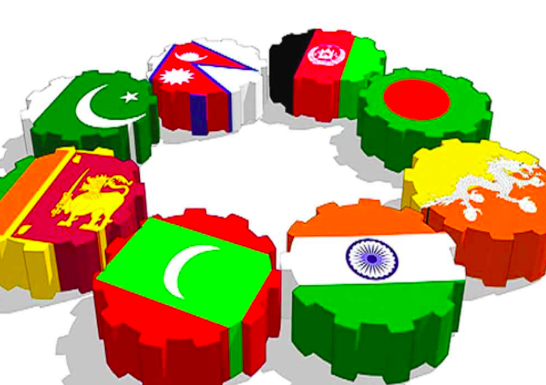
South Asia occupies a position of immense strategic importance in global geopolitics. Home to nearly one-fourth of the world’s population, the region serves as a bridge between the Middle East, Central Asia, Southeast Asia, and the Indian Ocean. At the heart of this region stands India, the largest country in South Asia in terms of geography, population, economic size, military capability, historical legacy and diplomatic influence. All these factors shape India’s geopolitical standing in South Asia. After becoming independent in 1947, India has sought to establish itself as a regional leader while balancing complex relationships with neighboring countries such as Pakistan, Bangladesh, Nepal, Bhutan, Sri Lanka, Maldives, and Afghanistan. In recent decades, India’s rise as a major global power has further enhanced its influence in South Asia. However, challenges such as regional rivalries, border disputes, terrorism, political instability in neighbouring states, and increasing Chinese involvement have complicated India’s efforts to maintain regional primacy.
Geographical Significance
India’s geographical position is one of its most important strategic assets. Located at the center of South Asia, India shares land borders with Pakistan, China, Nepal, Bhutan, Bangladesh, and Myanmar, while maintainingmaritime proximity to Sri Lanka and Maldives. India’s location allows it to influence major trade routes across the Indian Ocean. The Indian Ocean is one of the world’s busiest maritime regions, carrying a substantial portion of global energy supplies and commercial shipping. India’s long coastline of over 7,500 kilometers and its island territories, including the Andaman and Nicobar Islands, provide strategic advantages in monitoring maritime activities. The country’s central position enables it to act as a gateway between East and West Asia. This strategic location enhances India’s role in regional connectivity, trade corridors and maritime security. It also provides India with significant influence over the security of South Asia.
Impact of Population
India’s population plays a crucial role in shaping its geopolitical standing in South Asia. As the world’s most populous country, India possesses significant demographic advantages that enhance its economic strength, military capabilities, diplomatic influence, and regional leadership. At the same time, managing such a vast population presents challenges that affect its regional and global ambitions. A large population provides India with a vast labor force and consumer market. This advantage has contributed to India’s emergence as one of the world’s fastest-growing major economies. Population size provides a large pool for military recruitment. India maintains one of the world’s largest armed forces, enabling it to project power and maintain security across South Asia and the Indian Ocean region. India’s large population contributes to its cultural and diplomatic influence. The country’s diverse cultural traditions, educational institutions, entertainment industry, and technological expertise enhance its soft power across the region. India’s demographic weight also gives it greater representation and influence in international forums such as the United Nations, G20, and BRICS. This international influence reinforces its leadership position in South Asia. India’s huge domestic market attracts foreign investment and promotes regional economic integration. Neighboring countries often seek access to Indian markets for exports, trade, and employment opportunities. A young and growing population provides India with significant human capital. Advances in education, technology, innovation, and entrepreneurship have helped India become a major player in information technology, digital services, pharmaceuticals, and space research. At the same time, a large population places significant pressure on food supplies, water resources, energy demand, healthcare systems, and housing and infrastructure.
Role of Rising Economy
Economic strength forms the foundation of India’s geopolitical standing. India is among the world’s largest economies and has become a major destination for foreign investment, technology development and manufacturing. India’s economic growth has enabled it to extend development assistance and investment to neighboring countries. Through grants, loans, infrastructure projects, and technical cooperation, India has strengthened ties with countries across South Asia. It has engaged in initiatives such as the Hydropower cooperation with Bhutan, Infrastructure and connectivity projects in Nepal, Development assistance to Afghanistan, Railway and energy cooperation with Bangladesh, Port and housing projects in Sri Lanka and infrastructure and capacity-building support for Maldives. Trade relationships also reinforce India’s regional influence. Bangladesh has emerged as one of India’s largest trading partners in South Asia, while Nepal and Bhutan remain highly dependent on economic exchanges with India. India’s growing digital economy, technological capabilities, and pharmaceutical industry further enhance its soft power and economic attractiveness. During the COVID-19 pandemic, India’s vaccine diplomacy demonstrated its ability to provide public goods to neighbouring countries and strengthen regional goodwill.
Military Dominance
India possesses one of the most powerful militaries in South Asia. Its armed forces rank among the largest in the world, supported by advanced conventional capabilities and a growing defense-industrial base. India’s military strength serves several geopolitical purposes such as protection of territorial integrity, deterrence against external threats, maritime security in the Indian Ocean, humanitarian assistance and disaster relief and peacekeeping and regional stabilization. India is also a nuclear-armed state, which significantly enhances its strategic standing. The development of a credible nuclear deterrent has strengthened India’s position in comparison to Pakistan and contributed to regional strategic stability. The Indian Navy has become increasingly important in safeguarding sea lanes and countering maritime threats. Through naval exercises, coastal surveillance networks, and defense partnerships with other states, India has reinforced its role as a net security provider in the Indian Ocean region. India’s military interventions and assistance in Sri Lanka, Maldives, and humanitarian missions across the region demonstrate its capacity to dominate the regional security system. India is also involved in multiple military exercises taking place across the world by participating and competing in almost all the continents. This helps the armed forces to learn about their position in the world and exchange knowledge, technical and technological expertise while maintaining friendly relations with other participating states.
Historical Legacy
India’s geopolitical importance in South Asia is rooted in history. For centuries, the Indian subcontinent was connected through shared cultural, religious, and economic networks. Ancient kingdoms, trade routes, and religious traditions such as Hinduism, Buddhism, Jainism, and Sikhism spread across the region from the Indian heartland. During the Cold War, India played a leading role in the Non-Aligned Movement. By advocating strategic autonomy and avoiding alignment with either superpower bloc, India gained respect among newly independent states. Following independence, India’s leaders envisioned the country as a stabilizing force in South Asia. Prime Minister Jawaharlal Nehru emphasized regional cooperation and peaceful coexistence. India’s support for the liberation of Bangladesh in 1971 demonstrated its willingness to shape regional developments when its strategic interests were involved. Over time, India emerged as the dominant regional actor due to its overwhelming demographic, economic, and military advantages. India’s historical prominence sometimes creates concerns among neighbouring countries about Indian dominance. Due to its size, economic power, and historical influence, some states fear excessive dependence on India. These concerns occasionally encourage smaller South Asian countries to seek alternative partnerships with external powers, particularly China. Consequently, India’s historical centrality can be both a source of influence and a diplomatic challenge.
Diplomatic Influence
India’s diplomatic influence is one of the most important factors shaping its geopolitical standing in South Asia. India uses diplomacy to maintain regional stability, promote economic integration, counter external influences and strengthen its leadership role. Through diplomatic engagement with neighboring countries, India seeks to foster political stability and maintain friendly governments. Its ‘Neighborhood First’ policy emphasizes close cooperation and mutual development, enhancing India’s leadership. India’s economic diplomacy strengthens its geopolitical position by creating interdependence with neighboring states. Through trade agreements, development assistance, infrastructure projects, and investment initiatives, India promotes regional connectivity. India’s diplomatic standing is strengthened by its soft power resources such as cultural ties, Bollywood and media influence, educational opportunities, religious and historical connections and humanitarian assistance and disaster relief. India uses regional organizations such as South Asian Association for Regional Cooperation (SAARC) and Bay of Bengal Initiative for Multi-Sectoral Technical and Economic Cooperation (BIMSTEC) to advance cooperation on trade, security, and development. While SAARC has faced challenges due to India-Pakistan tensions, BIMSTEC has emerged as an important platform linking South and Southeast Asia and enhancing India’s regional influence.



