
By : Upasna Mishra
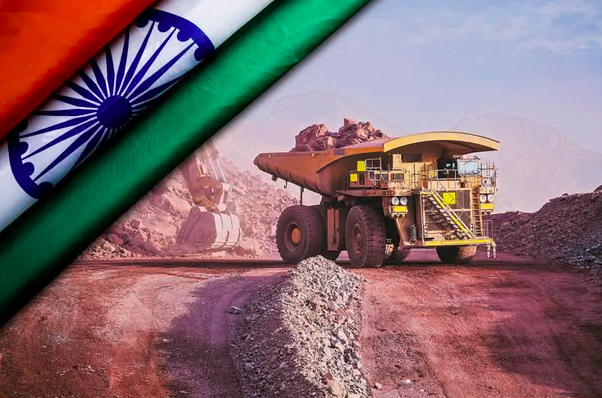
The 21st century geopolitics is no longer defined solely by the movement of armies or the doctrine of nuclear deterrence. It is increasingly written in the language of the lithosphere about the composition of rocks, the distribution of rare earth elements, and the location of cobalt-bearing laterites. For India, a nation aspiring to transform its demographic dividend into technological sovereignty, the intersection of geology and international relations presents both an existential challenge and an unprecedented opportunity. The hard truth is this: if global suppliers of critical minerals are exhausted or simply decide to withhold supplies, no strategic partnership or diplomatic overture will rescue us.
India’s geological endowment is considerably more substantial than public discourse acknowledges. According to government data, the nation possesses approximately 8.52 million tonnes of Rare Earth Elements Oxide (REO) in situ. This wealth is distributed across two distinct geological formations: 7.23 million tonnes contained in monazite-bearing beach sands stretching along the coastlines of Kerala, Odisha, Andhra Pradesh, and Tamil Nadu, and an additional 1.29 million tonnes embedded in hard rock deposits across Gujarat and Rajasthan. These are not abstract figures; they represent one of the world’s significant concentrations of heavy rare earths, elements vital for permanent magnets in wind turbines, precision-guided munitions, and electric vehicle drivetrains.
Yet geology alone does not confer strategic power. The gap between India’s resource endowment and its global standing is stark. Despite holding nearly 7 million tonnes of rare earth reserves, India contributes less than one percent to global rare earth production, while China lacking comparable domestic reserves controls nearly 60 percent of global output and an estimated 70 percent of processing capacity. This paradox reveals a fundamental truth of resource geopolitics: in the critical minerals age, the refinery matters more than the mine.
The explanation lies in the geological complexity of Indian deposits. Our rare earths are primarily monazite-hosted, containing significant concentrations of thorium as a radioactive element that necessitates sophisticated handling protocols and investment in radiation safeguards. This is not a geological curse but a technological challenge. Nations that invested decades ago in hydrometallurgical research and separation technologies now reap strategic dividends. China’s dominance rests not on its own geological fortune but on its acquisition of rare earth processing intellectual property from Western firms in the 1980s and sustained investment in midstream capabilities.
India’s vulnerabilities extend beyond rare earths. The Mangampet baryte deposit in Andhra Pradesh accounting for 95 percent of India’s baryte reserves has witnessed nearly 50 percent depletion since 2015, driven primarily by export-oriented extraction. Baryte may escape public attention, but it is indispensable for India’s energy security as a weighting agent in drilling fluids for oil and gas exploration. The irony is profound: India may find its own exploration in the Krishna-Godavari basin constrained not by geological failure but by the exhaustion of a mineral exported to meet short-term revenue targets. This represents what international relations scholars’ term “intergenerational resource injustice” the present generation consuming assets that rightfully belong to India’s future strategic requirements.
The international response to these vulnerabilities has accelerated. Recent discussions between India, the United States, and France signal recognition that critical minerals supply chains cannot remain concentrated in any single nation. Union Mines Minister G Kishan Reddy’s participation in dialogues with Washington and Paris reflects a maturing diplomatic approach one that acknowledges India cannot achieve self-reliance through domestic measures alone. External Affairs Minister S Jaishankar’s attendance at the inaugural Critical Minerals Ministerial in Washington, where he conveyed India’s support for the US-led FORGED initiative, demonstrates how mineral security has ascended to the highest levels of India’s diplomatic engagement.
However, international partnerships must be grounded in geological realism. India’s engagement with resource-rich nations in Africa and Latin America requires sophisticated understanding of their mineral endowments, legal frameworks, and infrastructure deficits. The Khanij Bidesh India Limited (KABIL) agreement with Argentina’s CAMYEN for lithium exploration represents a template worth replicating government-to-government arrangements that combine India’s capital with host nations’ geological assets. Yet these efforts remain nascent. As the Centre for Social and Economic Progress notes, most of India’s international partnerships are still at the memorandum of understanding stage, with few translating into operational value chains.
The National Critical Minerals Mission, backed by sovereign funding of approximately Rs 34,000 crore, represents India’s most ambitious policy response to date. Its success hinges on three geological imperatives. First, India must transition from exploration to proven reserves. The Geological Survey of India has initiated over 4,000 critical mineral exploration activities, but converting these into bankable reserve estimates requires adoption of global best practices in 4D geological modelling and mineral systems mapping. Second, India must develop processing capabilities commensurate with its geological endowment. The identification of Andhra Pradesh, Odisha, Gujarat, and Maharashtra as future processing hubs is welcome, but execution remains the critical variable. Third, India must embrace urban mining as geological strategy. With an estimated 3.8 million tonnes of annual electronic waste, India holds significant secondary reservoirs of neodymium, dysprosium, lithium, and cobalt materials that can be recovered with lower environmental impact than primary extraction.
For the Indian citizen and policymaker alike, the message must be unambiguous. Geological wealth is not strategic power; it is potential waiting to be activated through policy clarity, technological investment, and diplomatic sophistication. The nations that dominate the 21st century will be those that master the entire value chain from ore to advanced manufactured products. India’s beach sands contain the elements of its technological future. The question is whether we possess the strategic patience to extract, process, and deploy them before the global doors close. When it comes to critical minerals, geology offers opportunity, but only statecraft delivers security.



