
By : Prachi Kushwah, Research Analyst, GSDN
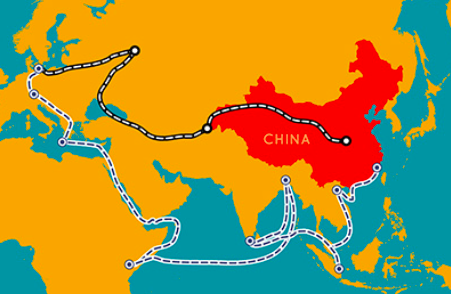
China’s Belt and Road Initiative (BRI) is one of the most ambitious global development and connectivity projects of the twenty-first century. Officially launched by China’s President Xi Jinping in September 2013, the initiative aims to improve infrastructure, trade, investment, and economic cooperation between China and countries across Asia, Africa, Europe, and Latin America. Through the construction of roads, railways, ports, power plants, industrial zones, and digital infrastructure, the BRI seeks to create stronger economic integration and increase China’s global influence.
The success of the Belt and Road Initiative remains a subject of intense debate among governments, economists, and political analysts. Supporters argue that the initiative has transformed infrastructure development in many developing countries and created new opportunities for trade and economic growth. Critics, however, argue that the project has created debt burdens, increased political dependency on China, and raised environmental and strategic concerns. Therefore, the success of the BRI can only be understood by examining its economic, political, strategic, and social impacts.
Origins and Objectives of the BRI
The Belt and Road Initiative consist mainly of two components: the Silk Road Economic Belt and the Twenty-First Century Maritime Silk Road. Together, they aim to revive the ancient trade routes that historically connected China with Asia, the Middle East, Africa, and Europe. The initiative focuses on infrastructure connectivity, trade facilitation, financial cooperation, policy coordination, and people-to-people exchanges.
China introduced the initiative at a time when its domestic economy was slowing down and industrial overcapacity had become a serious concern. By investing in overseas infrastructure projects, Chinese companies could find new markets and maintain industrial production. The BRI also allowed China to strengthen its energy security, diversify trade routes, and increase its geopolitical influence.
By 2025, more than 150 countries had signed cooperation agreements related to the Belt and Road Initiative. China had invested hundreds of billions of US dollars in infrastructure projects worldwide. Major projects include ports in Pakistan and Sri Lanka, railways in East Africa, highways in Central Asia, and energy projects in Southeast Asia.
Economic Achievements of the BRI
One of the most important achievements of the Belt and Road Initiative has been infrastructure development in countries that lack sufficient financial resources. Many developing nations had long struggled with poor transportation networks, inadequate electricity supply, and weak connectivity. Chinese investments helped fill these gaps.
The China-Pakistan Economic Corridor is often presented as one of the flagship projects of the BRI. It includes highways, energy projects, and the development of the Gwadar Port. The project improved electricity generation and transportation infrastructure in Pakistan while strengthening trade connections between China and the Arabian Sea.
Similarly, the Addis Ababa–Djibouti Railway in Africa significantly reduced travel and transportation time between Ethiopia and Djibouti. This railway improved regional trade and provided Ethiopia with better access to international markets through Djibouti’s ports.
The BRI has also increased trade between China and participating countries. Improved transportation and logistics networks reduced transaction costs and encouraged regional economic integration. Chinese companies benefited from overseas contracts, while local economies gained access to new infrastructure and employment opportunities.
In addition, the initiative promoted financial cooperation through institutions such as the Asian Infrastructure Investment Bank and the Silk Road Fund. These institutions provided loans and investment for large-scale development projects that traditional financial institutions were sometimes unwilling to support.
Political and Strategic Successes
Beyond economics, the Belt and Road Initiative has strengthened China’s political and strategic influence. Countries participating in the initiative often develop closer diplomatic and economic ties with Beijing. China has used the BRI to project itself as a leader of globalization and development cooperation, especially in the Global South.
The initiative has expanded China’s soft power by presenting the country as a provider of infrastructure and development assistance. In regions where Western investment was limited, China emerged as an important economic partner.
Strategically, the BRI has helped China secure access to critical trade routes and natural resources. Investments in ports and transportation corridors reduce China’s dependence on traditional maritime routes dominated by Western naval powers. Projects such as Gwadar Port in Pakistan and the Port of Piraeus in Greece have strengthened China’s strategic presence in key regions.
Challenges and Criticisms of the BRI
Despite these achievements, the Belt and Road Initiative has faced serious criticism and challenges. One of the most common criticisms concerns debt sustainability. Several countries participating in the initiative accumulated large debts due to expensive infrastructure loans.
Sri Lanka’s Hambantota Port became a major example in debates about debt-trap diplomacy. Unable to repay its loans, Sri Lanka leased the port to a Chinese company for ninety-nine years in December 2017. Critics argued that this increased China’s strategic influence over the country.
Environmental and social concerns have also affected the reputation of the BRI. Large infrastructure projects sometimes cause deforestation, environmental degradation, and displacement of local communities. Critics claim that environmental standards and labor protections were often weaker than those required by Western development institutions.
Is the BRI Truly Successful?
The success of the Belt and Road Initiative depends largely on the criteria used to evaluate it. From an infrastructure and connectivity perspective, the initiative has achieved considerable success. Roads, ports, railways, and energy projects transformed transportation and trade networks in many developing regions.
From China’s perspective, the initiative has strengthened diplomatic relationships, expanded economic influence, and increased global visibility. Chinese companies gained international contracts and access to foreign markets, while Beijing enhanced its position as a major global power.
Conclusion
China’s Belt and Road Initiative has undoubtedly become one of the most influential international development projects of the modern era. It has improved infrastructure, increased trade connectivity, and strengthened China’s global economic and political influence. Many developing countries benefited from roads, railways, ports, and energy investments that might otherwise not have been possible.
At the same time, the initiative faces major criticisms regarding debt sustainability, transparency, environmental impact, and geopolitical intentions. While the BRI achieved important short-term successes, its long-term effectiveness will depend on whether projects remain economically sustainable, socially responsible, and politically acceptable to participating countries.
Therefore, the Belt and Road Initiative can be considered partially successful. It succeeded in expanding China’s influence and improving global connectivity, but it also created new economic and political challenges that continue to shape international debates about development, globalization, and power in the twenty-first century.
Author



