
By: Khushbu Ahlawat, Consulting Editor, GSDN
Introduction
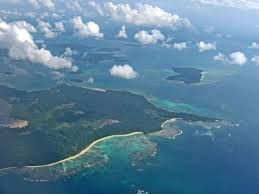
The Great Nicobar Island (GNI) Project, a ₹92,000 crore mega-development initiative, represents one of India’s most ambitious yet controversial infrastructure undertakings. Situated at the southern tip of the Andaman and Nicobar archipelago, the project aims to transform this remote outpost into a global hub for trade and tourism. However, the scale of the “holistic development” has sparked a fierce national debate, pitting the government’s strategic and economic vision against the survival of ancient indigenous tribes and one of the world’s most pristine tropical ecosystems.
In addition, the project reflects a broader shift in India’s developmental paradigm, where remote geographies are increasingly being integrated into national and global economic networks. The Great Nicobar Island is no longer viewed as a peripheral territory but as a strategic frontier with immense untapped potential. This transformation is closely tied to India’s aspirations of becoming a major maritime power and a key player in global supply chains. However, such large-scale interventions in ecologically and culturally sensitive regions raise critical questions about sustainability, governance, and ethical responsibility. The tension between rapid infrastructure expansion and environmental stewardship is particularly pronounced in island ecosystems, where even minor disruptions can have disproportionate consequences. As debates intensify, the GNI project stands as a defining test case for India’s ability to balance economic ambition with ecological prudence and social justice in the 21st century.
The Vision: A Port-Led Economic Revolution
The cornerstone of the GNI project is the transition from a subsistence and administrative economy to a port-led and tourism-driven model. The Union government views the island not just as a territory, but as a “stationary aircraft carrier” and a potential commercial goldmine.
Key Infrastructure Components
The draft master plan identifies four primary pillars of development:
- International Container Transshipment Port (ICTP): Located at Galathea Bay, this port is the project’s heartbeat. Its proximity to the Malacca Strait—a narrow waterway through which nearly 25% of global sea trade passes—positions India to capture a massive share of international maritime traffic currently dominated by Singapore and Colombo.
- Greenfield International Airport: Designed to support both large-scale tourism and military logistics.
- Gas and Solar Power Plants: To provide the energy self-sufficiency required for a burgeoning urban population.
- Pristine Tourism Infrastructure: Envisioning GNI as a world-class destination for business, adventure, and biodiversity tourism.
The Demographic Shift
Perhaps the most staggering aspect of the plan is the population target. Currently inhabited by roughly 10,000 people, the government projects a population of 3.36 lakh by 2055. This 30-fold increase assumes a massive influx of settlers, workers, and service providers, aiming to create over 70% of new jobs in the tourism and allied sectors.
The Strategic Imperative: The Malacca Dilemma
From a geopolitical lens, the GNI project is less about “tourism” and more about national security. The Great Nicobar Island is the closest Indian territory to the Malacca Strait, often referred to as a “choke point” for global trade and energy supplies, particularly for China.
By developing a dual-use (civilian and military) infrastructure, India strengthens its “Act East” policy. A robust presence in GNI allows the Indian Navy to monitor maritime traffic more effectively and provides a strategic base to counter increasing foreign naval footprints in the Indian Ocean Region (IOR). The National Green Tribunal (NGT), while acknowledging environmental concerns, has notably cited this “strategic importance” as a primary reason for allowing the project to proceed.
Beyond immediate military calculus, the Great Nicobar Island project must also be situated within the broader evolution of Indo-Pacific geopolitics. The increasing centrality of the Indian Ocean Region in global supply chains, energy flows, and naval competition has made maritime infrastructure a decisive factor in shaping power hierarchies. India’s investment in Great Nicobar complements initiatives such as the Quad’s maritime cooperation framework and aligns with its ambition to emerge as a “net security provider” in the region. Furthermore, with China expanding its footprint through port developments under the Belt and Road Initiative—particularly in Gwadar, Hambantota, and Kyaukpyu—India’s presence near the Malacca Strait gains heightened urgency. Control over maritime chokepoints is no longer merely about defense; it is about economic leverage, supply chain resilience, and diplomatic influence. Thus, the GNI project can be seen as a long-term geopolitical hedge, enabling India to project both hard and soft power across Southeast Asia while safeguarding its maritime interests against emerging strategic uncertainties.
The Ecological Cost: A Biodiversity Hotspot at Risk
Great Nicobar is not a vacant plot of land; it is a UNESCO Biosphere Reserve. It hosts unique species found nowhere else on Earth, including the Nicobar Megapode and the Giant Leatherback Turtle, which uses Galathea Bay as its primary nesting ground.
Environmental Flashpoints
- Deforestation: The project involves the diversion of approximately 130 sq. km of primary forest. While the government promises “compensatory afforestation” in other parts of India (like Haryana), ecologists argue that a tropical rainforest in the Andaman Sea cannot be replaced by a plantation in the northern plains.
- Coral Reefs: The construction of the ICTP involves dredging and land reclamation, which could lead to the irreversible destruction of coral reefs that provide essential coastal protection and sustain marine life.
- Seismic Vulnerability: The islands are located in a high-seismic zone (Zone V). Critics point to the 2004 Indian Ocean Tsunami, which saw parts of the island sink by several meters, questioning the long-term viability of massive concrete infrastructure in such a volatile geography.
- The ecological concerns surrounding Great Nicobar extend beyond immediate biodiversity loss and must be understood within the context of global climate change and ecological interdependence. Tropical rainforests such as those found on the island function as critical carbon sinks, regulating atmospheric carbon dioxide levels and contributing to climate stability. Their destruction not only releases stored carbon but also diminishes future carbon sequestration capacity, exacerbating global warming. Additionally, the island’s mangroves and coral reef systems serve as natural buffers against extreme weather events, including cyclones and storm surges, whose frequency and intensity are increasing due to climate change. The loss of these ecosystems could render both existing and proposed infrastructure highly vulnerable. Scholars within Environmental Studies emphasize that island ecosystems are particularly fragile due to their isolation and limited regenerative capacity. Unlike mainland ecosystems, disturbances here often lead to irreversible changes. Therefore, the GNI project is not merely a local environmental issue but part of a larger planetary crisis, where decisions taken in one region can have cascading effects on global ecological equilibrium and climate resilience.
The Human Element: Tribal Rights and Displacement
The most sensitive dimension of the GNI project is its impact on the Shompen and Nicobarese tribes.
- The Shompen: A Particularly Vulnerable Tribal Group (PVTG), the Shompen are hunter-gatherers who have lived in isolation for thousands of years. The massive influx of 3.3 lakh outsiders poses an existential threat to their health (due to lack of immunity to common diseases) and their traditional way of life.
- Legal and Forest Rights: Reports suggest that tribal forest rights, which should have been settled under the Forest Rights Act (FRA), have remained unsettled since 2022. There is significant confusion regarding “contradictory relocation plans” found in various drafts of the master plan, leading to a lack of trust between the indigenous communities and the administration.
- From an anthropological perspective, the situation of the Shompen and Nicobarese communities raises profound ethical questions about development, modernity, and cultural survival. Indigenous groups like the Shompen represent living repositories of traditional ecological knowledge, possessing intricate understandings of forest ecosystems, medicinal plants, and sustainable resource use. Their displacement or forced integration into mainstream society risks not only cultural erosion but also the loss of invaluable knowledge systems that have evolved over millennia. Within the framework of Anthropology, such interventions are often critiqued as forms of cultural homogenization, where dominant models of development override localized ways of life. International norms, including those advocated by the United Nations Declaration on the Rights of Indigenous Peoples, stress the importance of free, prior, and informed consent. The ambiguity surrounding relocation plans and forest rights settlements in GNI suggests a gap between policy commitments and ground realities. Ultimately, the challenge lies in reconciling national development goals with the moral imperative to preserve human diversity, ensuring that progress does not come at the cost of erasing entire ways of life.
Legal Battles and Transparency Concerns
The project is currently navigating a complex legal landscape. Challenges are ongoing in the Calcutta High Court, with petitioners arguing that the environmental clearances were granted with undue haste and without adequate public consultation.
Experts have raised concerns regarding:
- Commercial Viability: Can GNI truly compete with established ports like Singapore?
- Transparency: The timeline for public consultation has been criticized for being opaque, leaving stakeholders with little opportunity to voice grievances before the master plan was notified.
The governance architecture underpinning the GNI project reveals significant institutional complexities and gaps that merit closer scrutiny. Large-scale infrastructure initiatives in ecologically sensitive zones require robust regulatory frameworks, inter-agency coordination, and transparent decision-making processes. However, critics argue that the rapid pace of environmental clearances and the limited scope of public consultation indicate procedural deficiencies. Institutions such as the Ministry of Environment, Forest and Climate Change are tasked with balancing developmental imperatives against environmental safeguards, yet their effectiveness often depends on political will and administrative capacity. Moreover, the absence of comprehensive cumulative impact assessments raises concerns about the long-term sustainability of the project. Policy analysts highlight that fragmented governance—where multiple agencies operate with overlapping mandates—can lead to regulatory blind spots. Strengthening institutional accountability, enhancing stakeholder participation, and integrating scientific expertise into policymaking are essential steps toward addressing these challenges. Without such reforms, the risk is not only environmental degradation but also the erosion of public trust in governance processes, which is critical for the legitimacy of any large-scale national project.
A critical yet underexplored dimension of the GNI project is its long-term economic viability in a highly competitive global maritime landscape. International container transshipment hubs such as Singapore and Dubai have achieved dominance through decades of investment, strategic location advantages, and efficient logistics ecosystems. For Great Nicobar to emerge as a viable competitor, it must overcome significant challenges, including high initial capital costs, limited hinterland connectivity, and the need to attract sustained shipping traffic. Economic models suggest that transshipment hubs rely heavily on network effects, where established routes and partnerships reinforce existing centers of trade. Additionally, the success of tourism infrastructure depends on accessibility, branding, and environmental sustainability—factors that require careful planning and execution. Lessons from global examples indicate that premature scaling without adequate demand can lead to underutilized assets and financial strain. Therefore, a phased and adaptive approach to development, supported by rigorous cost-benefit analysis and market assessment, is essential. Aligning economic ambitions with ecological and social realities will ultimately determine whether the GNI project becomes a transformative success or an overextended aspiration.
Conclusion: The Path Forward
The Great Nicobar Island project is a microcosm of the global struggle between development and conservation. While the strategic and economic arguments—boosting global maritime trade share and securing the IOR—are compelling, they cannot be pursued in a vacuum.
For the project to be truly “holistic,” it must move beyond top-down mandates. A balanced approach is essential, requiring:
- Inclusive Consultation: Meaningful engagement with the Shompen and Nicobarese people, ensuring their rights are not just “considered” but legally protected.
- Rigorous Safeguards: Moving beyond “compensatory afforestation” toward genuine on-site mitigation strategies for the island’s unique flora and fauna.
- Long-term Viability Assessment: A transparent review of whether the island’s fragile ecology and seismic reality can actually sustain a population of three lakh people.
Development does not have to come at the cost of irreversible social and ecological damage. If India is to lead the “Global South,” it must demonstrate that it can build the infrastructure of the future without erasing the heritage and biology.
In addition, global best practices from island development models such as Singapore and Mauritius suggest that ecological sensitivity, phased urbanisation, and strict regulatory oversight are essential for sustainability. Applying such lessons to GNI could help India strike a balance between ambition and responsibility, ensuring that economic transformation does not permanently undermine ecological resilience or indigenous dignity.

About the Author
Khushbu Ahlawat is a research analyst with a strong academic background in International Relations and Political Science. She has undertaken research projects at Jawaharlal Nehru University, contributing to analytical work on international and regional security issues. Alongside her research experience, she has professional exposure to Human Resources, with involvement in talent acquisition and organizational operations. She holds a Master’s degree in International Relations from Christ University, Bangalore, and a Bachelor’s degree in Political Science from the University of Delhi.



