
By: Khushbu Ahlawat, Consulting Editor, GSDN
Introduction: A World in Strategic Transition
The contemporary international system is witnessing a profound churn, marked by intensifying great power competition, geopolitical flashpoints, and the erosion of long-standing global norms. At the heart of this transformation lies a central question that has gripped policymakers and strategic thinkers alike: Is the United States in decline, or is it entering a new phase of assertive resurgence?
This question has become particularly salient in China, where recent global developments—from military interventions in the Middle East to economic coercion and technological decoupling—have triggered an intense internal debate. The discourse is no longer confined to academic circles; it reflects broader anxieties and ambitions within Beijing regarding its position in the evolving global order.
The debate is not merely analytical—it is strategic. How China interprets American power will shape its foreign policy choices, military posture, and long-term vision of global leadership. This article examines the competing narratives within China’s strategic community, evaluates recent global developments, and assesses the implications for the future of great power competition.
Narratives of American Decline: The Rise of Strategic Confidence in Beijing
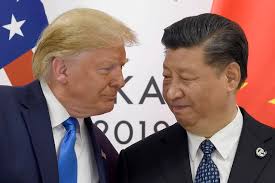
For much of the past decade, a dominant narrative within Chinese strategic circles has been the gradual decline of the United States and the simultaneous rise of China. This perspective gained traction following prolonged trade tensions and geopolitical confrontations, particularly during the presidency of Donald Trump. The October 2025 Busan summit between Trump and Xi Jinping marked a symbolic moment in this discourse. Many Chinese analysts interpreted the outcomes as evidence that Washington had failed to coerce Beijing into structural concessions. Instead, they argued that the United States had incurred significant economic costs—ranging from inflationary pressures to supply chain disruptions—without achieving its strategic objectives. This interpretation fed into a broader ideological narrative: the “rise of the East and decline of the West.” Chinese media and academic discourse increasingly portrayed the Chinese governance model as more efficient, resilient, and adaptable compared to what they described as the fragmented and polarized political system of the United States. The viral spread of the “Kill Line” discourse on Chinese digital platforms further amplified this sentiment. It depicted the United States as a nation grappling with deindustrialization, monopolistic financial capital, and deep social inequalities. According to this view, America’s ability to sustain global leadership—militarily, economically, and institutionally—was steadily eroding.
This confidence was also underpinned by tangible indicators. China’s advancements in infrastructure, technology, and manufacturing capacity appeared to contrast sharply with perceived stagnation in the United States. Initiatives like the Belt and Road Initiative (BRI) were seen as instruments of global influence, reinforcing China’s image as an emerging superpower shaping the contours of a post-Western world.
Strategic Reality Check: The Persistence of American Power
Despite the prevalence of decline narratives, recent developments have prompted a reassessment within China’s strategic community. A series of geopolitical and economic events have challenged the assumption that the United States is retreating from global leadership. One of the most significant turning points was the US-Israel strikes on Iran. The ability of the United States to conduct high-intensity military operations with minimal immediate consequences reinforced perceptions of its enduring military superiority. For some Chinese analysts, this demonstrated that American power—particularly in terms of force projection and alliance coordination—remains formidable. Similarly, Washington’s actions in regions such as Venezuela and Panama have been interpreted as evidence of strategic assertiveness. Rather than retrenching, the United States appears to be recalibrating its approach—leveraging economic tools, military presence, and diplomatic pressure to maintain its global influence. Economic indicators further complicate the narrative of decline. Despite trade tensions and domestic challenges, the United States continues to attract substantial foreign investment. Reports of trillions of dollars in investment commitments from Middle Eastern states highlight the enduring attractiveness of the American economy.
Moreover, the aggressive use of tariffs and sanctions under Trump 2.0 has demonstrated Washington’s capacity to shape global economic dynamics. While these measures have faced criticism, they have also yielded strategic advantages, forcing countries and corporations to adapt to American policy priorities. For China, these developments have exposed vulnerabilities in its own global strategy. Setbacks in overseas investments—such as disruptions in port acquisitions and regulatory challenges faced by Chinese companies in Europe and Australia—have raised concerns about the security of its economic interests abroad.
The Tech-Economic Battlefield: Decoupling, Dependence, and Strategic Leverage
An equally critical dimension shaping Chinese perceptions of American power is the intensifying contest in technology and geoeconomics. While traditional metrics of power—military capability and GDP—remain important, the emerging battleground lies in control over advanced technologies, supply chains, and financial systems. In this domain, the United States continues to wield disproportionate influence, complicating narratives of its decline.
Washington’s restrictions on semiconductor exports, particularly targeting advanced chip manufacturing and AI-related technologies, have exposed structural dependencies within China’s technological ecosystem. Despite significant progress in indigenous innovation, China still relies on foreign inputs in high-end semiconductor fabrication, design software, and precision manufacturing equipment. The US-led coalition—including partners like Japan and the Netherlands—has reinforced these restrictions, effectively slowing China’s access to cutting-edge capabilities. This has led to a growing realization within Beijing that technological self-reliance is not merely an economic objective, but a strategic necessity.
At the same time, China has responded with a dual strategy of resilience and retaliation. On one hand, it has accelerated investments in domestic semiconductor industries, quantum computing, and artificial intelligence. On the other, it has leveraged its dominance in critical minerals—such as rare earth elements—as a counterweight in the strategic competition. Recent export controls on gallium and germanium, essential for semiconductor production, signal Beijing’s willingness to weaponize its own economic strengths.
However, the interdependence between the two economies complicates the picture. Despite efforts toward “decoupling,” trade between China and the United States remains substantial, and global supply chains continue to intertwine their economic fortunes. Multinational corporations, while diversifying production bases, have not fully disengaged from China, given its unparalleled manufacturing ecosystem and market size.
Financial power also remains a key pillar of American influence. The dominance of the US dollar in global trade and finance provides Washington with significant leverage, enabling it to impose sanctions and shape international economic behavior. For China, efforts to internationalize the renminbi and develop alternative financial architectures—such as digital currency initiatives—are part of a broader strategy to mitigate this vulnerability.
This evolving tech-economic contest underscores a central paradox in the China-US rivalry: while both sides seek strategic autonomy, they remain deeply interconnected. For Chinese strategists, this duality reinforces the perception that the United States is not simply declining, but adapting—leveraging its structural advantages in new domains of competition.
From Confidence to Anxiety: Recalibrating China’s Strategic Outlook
The emerging consensus within sections of China’s strategic community is that the narrative of American decline may have been overstated. Instead, the United States is perceived as entering a phase of adaptive resurgence—one characterized by strategic flexibility, economic leverage, and military assertiveness. This shift in perception has generated a degree of strategic anxiety in Beijing. Analysts have begun to question whether China has adequately prepared for the evolving nature of competition with the United States. The assumption of an inevitable power transition is increasingly being scrutinized. Prominent scholars such as Chen Wenling and Yan Xuetong have argued that while China has achieved significant progress, a substantial gap in comprehensive national power still exists. They contend that the United States retains advantages in key domains, including advanced technology, global alliances, and military capabilities.
At the same time, these scholars emphasize that the long-term trajectory remains favorable to China. The narrowing of the power gap is seen as an irreversible trend, provided that China continues to focus on domestic development and strategic modernization. This duality—confidence in long-term rise coupled with short-term caution—defines the current phase of China’s strategic thinking. It reflects a more nuanced understanding of power dynamics, moving beyond simplistic narratives of decline and resurgence.
Rethinking “Peaceful Rise”: Toward a More Assertive Posture
The reassessment of American power has significant implications for China’s foreign policy doctrine, particularly the concept of “peaceful rise.” For decades, this framework guided China’s approach to international relations, emphasizing economic integration and non-confrontational engagement. However, recent developments have sparked debates about the viability of this approach in an increasingly competitive and volatile global environment. The perceived aggressiveness of US policies—ranging from military interventions to technological restrictions—has led some Chinese strategists to advocate for a more assertive stance. The publication of the article “Five Lessons from the US-Israel Attack on Iran” by a Chinese military news agency underscores this shift. Its emphasis on self-reliance, the dangers of complacency, and the importance of military strength reflects a growing recognition of the need for robust deterrence capabilities.
This evolving discourse suggests that China may seek to balance its traditional emphasis on economic development with greater investment in military modernization and strategic resilience. The goal is not necessarily confrontation, but the ability to deter and respond effectively to perceived threats.
The Global Context: Erosion of the Liberal Order
The debate on American power is inseparable from broader changes in the international system. The post-World War II liberal order, long dominated by the United States, is under increasing strain. Multilateral institutions are facing challenges, global trade norms are being contested, and geopolitical rivalries are intensifying. In this context, the United States’ actions can be interpreted in multiple ways. For some, they represent a resurgence of hegemonic ambition—a determination to preserve global dominance through assertive policies. For others, they reflect a defensive response to shifting power dynamics and the rise of competitors like China. China, meanwhile, is navigating this uncertain landscape by seeking to expand its influence while avoiding direct confrontation. Its approach combines economic engagement, diplomatic outreach, and strategic caution.
However, the interplay between these strategies is complex. As both powers seek to assert their interests, the risk of miscalculation and escalation increases. The challenge lies in managing competition without crossing the threshold into conflict.
Implications for India and the Global South
The evolving US-China dynamic has significant implications for other countries, particularly India and the broader Global South. As the two major powers compete for influence, smaller and middle powers are navigating a delicate balance.For India, this presents both opportunities and challenges. On the one hand, the rivalry creates space for strategic autonomy and economic partnerships. On the other, it requires careful calibration to avoid entanglement in great power conflicts. The Global South, more broadly, is increasingly asserting its agency in shaping global governance. Countries are seeking to diversify partnerships, leverage economic opportunities, and advocate for a more inclusive international order.
Conclusion
The debate within China on the future of American power reflects a deeper transformation in global politics. It is not simply a question of whether the United States is declining or resurging, but how power is being reconfigured in a complex and interconnected world. The evidence suggests that American power, while challenged, remains significant. At the same time, China’s rise continues to reshape the global balance. The interaction between these two forces will define the trajectory of the international system in the coming decades.
For policymakers and analysts, the key lies in moving beyond binary narratives. Understanding the nuances of power—its strengths, limitations, and adaptability—is essential for navigating an increasingly uncertain world. Ultimately, the future of global order will not be determined solely by the competition between the United States and China, but by the ability of all nations to manage this competition responsibly. In this sense, the debate unfolding in Beijing is not just about America—it is about the future of the world itself.

About the Author
Khushbu Ahlawat is a research analyst with a strong academic background in International Relations and Political Science. She has undertaken research projects at Jawaharlal Nehru University, contributing to analytical work on international and regional security issues. Alongside her research experience, she has professional exposure to Human Resources, with involvement in talent acquisition and organizational operations. She holds a Master’s degree in International Relations from Christ University, Bangalore, and a Bachelor’s degree in Political Science from the University of Delhi.



