
By:Sonalika Singh, Consulting Editor,GSDN
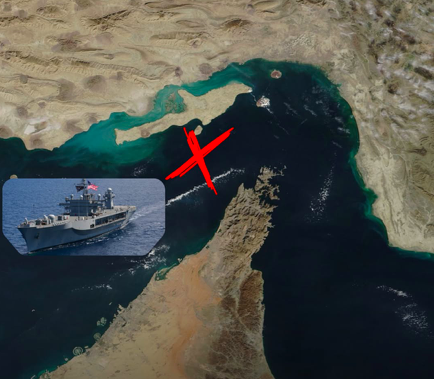
The prospect of a United States-led naval blockade targeting Iranian ports and restricting maritime access around the Strait of Hormuz marks a significant escalation in an already volatile geopolitical environment. As one of the most strategically critical chokepoints in the world, the Strait of Hormuz carries nearly one-fifth of global oil and gas supplies in normal times. Any attempt to control or restrict movement through this narrow waterway has far-reaching implications not only for regional security but also for the global economy. The question of whether such a blockade can succeed is complex, involving military capability, legal legitimacy, economic consequences, and the likelihood of escalation.
At a strategic level, the United States possesses unmatched naval capabilities. Its fleet includes advanced destroyers, aircraft carriers, surveillance systems, and maritime patrol aircraft capable of monitoring and interdicting shipping activity across vast areas. In theory, these capabilities enable the U.S. Navy to impose significant restrictions on maritime traffic. However, the operational environment in and around the Strait of Hormuz presents unique challenges. The strait is only about 21 miles wide at its narrowest point, with shipping lanes even more constrained. This creates a dense and highly congested maritime corridor where hundreds of vessels may pass within short timeframes. Monitoring, identifying, and intercepting such a volume of traffic would require sustained deployment of naval assets, coordination with allies, and continuous intelligence support.
One of the central operational challenges lies in the distinction between a “close blockade” and a “distant blockade.” A close blockade involves direct physical presence near ports or within the strait, where naval vessels actively intercept ships attempting to pass. While this allows for tighter control, it exposes naval forces greater risks, including missile strikes, drone attacks, and swarm tactics from small fast-attack boats. A distant blockade, on the other hand, seeks to interdict vessels farther from the chokepoint, potentially in international waters. This reduces immediate tactical risk but also dilutes enforcement effectiveness, as it relies heavily on intelligence, tracking systems, and cooperation from other states to detain or deny access to targeted vessels.
Enforcement of feasibility is further complicated by the sheer scale of global maritime trade. Even with a robust naval presence, it is practically impossible to intercept every vessel attempting to transit the region. Analysts suggest that only a fraction of ships could realistically be stopped, inspected, or redirected. This creates opportunities for evasion through methods such as flag switching, transshipment, or operating under “dark fleet” conditions where tracking systems are turned off. Without broad international cooperation, particularly major trading nations and maritime hubs, enforcement gaps are likely to persist.
The legal dimension adds another layer of complexity. Under international law, particularly the rules governing international straits, freedom of navigation is a fundamental principle. A blockade is traditionally considered an act of war and must meet strict legal criteria to be deemed lawful. These include formal declaration, impartial enforcement, and provisions for humanitarian access. Any perception that the blockade disproportionately affects civilian populations or restricts essential supplies such as food and medicine could undermine its legitimacy. Moreover, since the Strait of Hormuz is bordered by multiple sovereign states, unilateral attempts to restrict transit may face legal and diplomatic challenges from the international community.
Beyond legal considerations, the economic implications of a blockade are profound. The Strait of Hormuz is not merely a regional transit route; it is a global energy artery. Disruptions to oil and gas flows can lead to immediate price spikes, increased inflation, and widespread economic instability. Higher energy costs affect transportation, manufacturing, agriculture, and consumer goods, creating ripple effects across global supply chains. Fertilizer exports, for instance, are heavily dependent on transit through the region, and disruptions could impact agricultural productivity and food security worldwide. As a result, even a partially effective blockade could have disproportionate economic consequences far beyond its intended strategic objectives.
Another critical factor is the response from Iran. While the United States may hold conventional naval superiority, Iran has developed asymmetric capabilities specifically designed to counter larger naval forces. These include fast-attack boats, naval mines, anti-ship missiles, and drone systems. The deployment of sea mines, in particular, poses a significant threat, as mine-clearing operations are complex, time-consuming, and resource-intensive. Even a limited mining effort could deter commercial shipping, effectively achieving a similar outcome to a blockade without direct confrontation.
Iran could also adopt indirect strategies to counter the blockade. These might include targeting commercial vessels, disrupting regional infrastructure, or leveraging allied non-state actors to expand the conflict beyond the immediate maritime domain. Such actions would increase the risk of escalation and potentially draw additional regional and global actors into the conflict. The presence of major energy importers, particularly in Asia, further complicates the situation. Countries heavily reliant on Gulf energy supplies may seek alternative arrangements, diplomatic interventions, or even challenge the blockade through economic or political means.
The role of international partners is therefore crucial. A unilateral blockade is far less effective than a coordinated multinational effort. Successful enforcement would require cooperation in areas such as intelligence sharing, maritime domain awareness, port inspections, and legal enforcement. However, securing such cooperation is not guaranteed. Different countries have varying strategic interests, economic dependencies, and political alignments. Some may view the blockade as a necessary measure to maintain regional stability, while others may see it as an escalation that threatens global economic security.
Historically, naval blockades have rarely achieved decisive outcomes on their own. While they can exert economic pressure and limit access to resources, targeted states often adapt through alternative supply routes, domestic production adjustments, or support from allies. In the case of Iran, its established trade relationships and geographic connectivity to regions outside the immediate maritime domain reduce the likelihood of complete economic isolation. This suggests that while a blockade could increase economic strain, it may not be sufficient to achieve broader political or strategic objectives without complementary measures.
Another dimension to consider is the sustainability of the operation. Maintaining a long-term naval blockade requires significant financial, logistical, and human resources. Continuous deployment of ships, aircraft, and personnel places strain on military readiness and operational capacity. Over time, this could limit the ability to respond to other global contingencies. Additionally, prolonged economic disruptions may generate domestic and international pressure to de-escalate, particularly if energy prices continue to rise and impact everyday consumers.
The blockade also carries inherent risks of miscalculation. In a congested and militarized environment, the potential for accidental encounters or unintended escalation is high. A single incident involving the interception of a vessel, the use of force, or a misinterpreted maneuver could trigger a broader conflict. This risk is amplified by the presence of multiple actors with varying rules of engagement and communication protocols.
From a strategic perspective, the blockade may function more as a tool of coercive diplomacy than a definitive military solution. By increasing economic pressure and demonstrating military capability, it seeks to influence negotiations and compel concessions. However, its success depends on the relative resilience and response of the targeted state. If the pressure leads to negotiations and compromise, the blockade may be deemed effective. If it provokes retaliation or entrenches resistance, it could exacerbate the conflict without achieving its intended goals.
In evaluating the likelihood of success, it is essential to define what “success” entails. If the objective is to disrupt specific economic activities, such as oil exports, the blockade may achieve partial success. If the goal is to enforce complete control over maritime transit or compel immediate political concessions, the challenges become significantly greater. The interplay between military capability, economic resilience, legal constraints, and geopolitical dynamics ultimately determines the outcome.
From a strategic standpoint, while the United States has the military capacity to impose a naval blockade in and around the Strait of Hormuz, the success of such an operation is far from assured. Operational challenges, legal complexities, economic consequences, and the risk of escalation all limit its effectiveness. Rather than a decisive solution, the blockade is likely to serve as one component of a broader strategy involving diplomatic, economic, and military measures. Its ultimate impact will depend not only on its execution but also on the responses it provokes and the evolving dynamics of the conflict.

About the Author
Sonalika Singh began her journey as an UPSC aspirant and has since transitioned into a full-time professional working with various organizations, including NCERT, in the governance and policy sector. She holds a master’s degree in political science and, over the years, has developed a strong interest in international relations, security studies, and geopolitics. Alongside this, she has cultivated a deep passion for research, analysis, and writing. Her work reflects a sustained commitment to rigorous inquiry and making meaningful contributions to the field of public affairs.



