
By: Khushbu Ahlawat, Consulting Editor, GSDN
Introduction
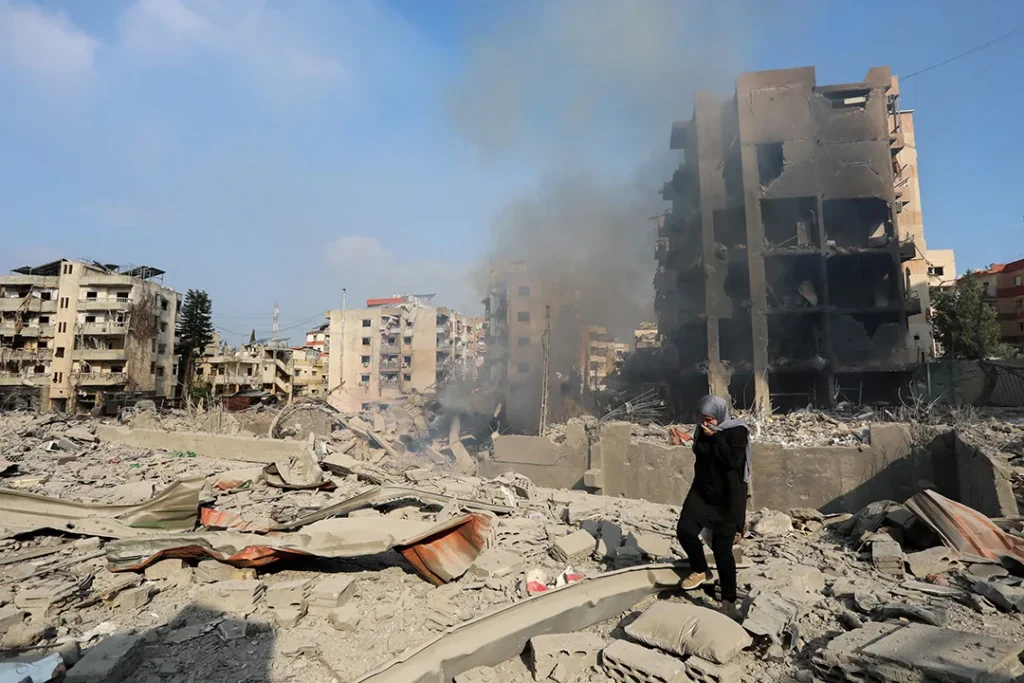
The evolving conflict dynamics in Lebanon have once again drawn global attention to the enduring influence of Hezbollah, the Iran-backed militant and political organization that has long been a central actor in the region’s geopolitical landscape. Despite sustained military pressure and targeted operations by Israel, Hezbollah has demonstrated a remarkable capacity to regroup, retaliate, and retain strategic relevance. Recent escalations—marked by cross-border rocket fire, drone attacks, and intensified rhetoric—highlight that the group remains far from neutralized. Instead, the conflict underscores a deeper reality: Hezbollah is not merely a militant force but a deeply embedded socio-political entity with regional backing, making its decline far more complex than conventional military assessments suggest.
From Militia to Hybrid Power: Hezbollah’s Institutional Evolution
Hezbollah’s transformation from a guerrilla militia in the 1980s to a hybrid political-military organization is central to understanding its resilience. Established during the Lebanese Civil War with ideological and logistical support from Iran, Hezbollah initially positioned itself as a resistance force against Israeli occupation in southern Lebanon.
Over the decades, it has expanded its role beyond militancy. Today, Hezbollah operates as a significant political party within Lebanon’s parliamentary system, holding seats in the National Assembly and exerting influence over key state institutions. It also runs an extensive network of social services, including schools, hospitals, and welfare programs, particularly in Shiite-majority areas. This dual identity—armed group and political actor—has allowed Hezbollah to maintain legitimacy among its support base while simultaneously engaging in asymmetric warfare.
For instance, even during periods of intense conflict, Hezbollah has continued to provide financial aid and reconstruction assistance to affected communities, reinforcing its grassroots support. This integration into Lebanon’s socio-political fabric makes it difficult to isolate or dismantle the organization through military means alone. Another crucial factor underpinning Hezbollah’s durability is its deep entrenchment within Lebanon’s socio-economic fabric, particularly in marginalized Shiite-dominated regions such as southern Lebanon and the Bekaa Valley. In the absence of a strong and functional state, Hezbollah has effectively filled governance gaps by providing essential services, thereby cultivating long-term legitimacy. Its vast welfare apparatus includes dozens of schools, hospitals, reconstruction units, and financial aid programs, which have proven especially critical amid Lebanon’s ongoing economic collapse. Since the 2020 Beirut port explosion and the subsequent financial crisis, where the Lebanese pound lost over 90% of its value, Hezbollah has expanded its relief efforts, including food distribution networks and subsidized goods through affiliated institutions. Reports suggest that tens of thousands of families continue to rely on these parallel systems for basic survival. Additionally, Hezbollah has established cooperative systems and informal markets that partially shield its support base from inflationary pressures. This form of “shadow governance” not only strengthens its grassroots appeal but also complicates efforts by the Lebanese state or external actors to curtail its influence. Importantly, such embeddedness creates a loyalty structure that goes beyond ideology—it is sustained through daily dependence and service delivery. Even critics within Lebanon often acknowledge that in regions where state institutions are absent or ineffective, Hezbollah remains one of the few actors capable of ensuring stability and continuity. This socio-economic integration ensures that Hezbollah is not merely an armed group operating within Lebanon, but an organisation deeply woven into the country’s societal structure, making its dislodgment not only politically sensitive but also socially disruptive.
Military Strategy and Asymmetric Warfare
Hezbollah’s military strategy is rooted in asymmetric warfare, enabling it to counter a technologically superior adversary like Israel. Rather than engaging in conventional battles, the group relies on guerrilla tactics, decentralized command structures, and a vast arsenal of rockets and drones.
Recent confrontations have illustrated this approach. Hezbollah has launched sustained rocket barrages and drone incursions across the Israel-Lebanon border, targeting military installations and strategic locations. While these attacks may not cause large-scale destruction comparable to state-level warfare, they serve a critical purpose: maintaining pressure, signaling capability, and deterring deeper incursions.
Estimates suggest that Hezbollah possesses over 100,000 rockets and missiles, including precision-guided munitions capable of reaching major Israeli cities. This arsenal, combined with its тәжіce in the Syrian civil war, has significantly enhanced its combat capabilities. The group’s ability to sustain prolonged low-intensity conflict complicates Israel’s strategic calculations, as a full-scale war would carry high costs for both sides.A critical yet often underexplored dimension of Hezbollah’s strength lies in its information warfare and psychological operations, which have become increasingly sophisticated in recent years. Since 2024, Hezbollah has amplified its digital presence through coordinated media messaging, real-time battlefield updates, and the strategic dissemination of drone footage targeting Israeli positions. This media strategy is designed not only to project strength but also to shape public perception across the Arab world. Reports indicate that Hezbollah-linked media channels have significantly increased engagement, particularly during periods of escalation, reinforcing its image as a capable and resilient force. Simultaneously, the group has leveraged encrypted communication networks and decentralized command systems to reduce vulnerability to Israeli intelligence penetration, a lesson drawn from earlier conflicts. On the Israeli side, while advanced surveillance systems such as Iron Dome and David’s Sling have intercepted a substantial percentage of incoming threats, the sheer volume and frequency of Hezbollah’s launches—estimated at hundreds of rockets during peak escalation days in 2025—have tested the limits of these defense systems. This dynamic creates a strategic imbalance where even limited successes by Hezbollah can generate disproportionate psychological impact. Furthermore, Hezbollah’s ability to integrate media, military action, and political messaging reflects a broader shift toward hybrid warfare, where the battlefield extends beyond physical territory into the cognitive domain. The result is a persistent state of tension in which narratives, perceptions, and signaling play as significant a role as kinetic operations. This evolution underscores that Hezbollah’s resilience is not solely dependent on weapons or manpower, but also on its capacity to control the narrative, sustain morale, and influence regional discourse—factors that are increasingly decisive in modern conflict environments.
Regional Backing and the Iran Axis
A key factor behind Hezbollah’s endurance is its strong backing from Iran, which provides financial support, advanced weaponry, and strategic guidance. Hezbollah is widely regarded as a crucial component of Iran’s “Axis of Resistance,” which includes allied groups in Syria, Iraq, and Yemen.
This regional network amplifies Hezbollah’s strategic depth. For example, supply routes through Syria have enabled the continuous transfer of weapons and resources, even amid regional instability. Iran’s support also ensures that Hezbollah can replenish its capabilities despite economic constraints within Lebanon.
Moreover, Hezbollah’s role extends beyond Lebanon’s borders. Its involvement in the Syrian conflict in support of the Assad regime demonstrated its capacity to operate as a regional force. This external engagement has further strengthened its military expertise while aligning it more closely with Iran’s broader geopolitical objectives. Beyond military capability, Hezbollah’s financial and organisational resilience has become a critical pillar sustaining its long-term relevance. Despite Lebanon’s severe economic collapse, the group continues to access diversified funding streams, including direct Iranian support—estimated by U.S. and regional intelligence sources to range between $700 million to $1 billion annually—alongside revenues from transnational networks, diaspora contributions, and informal economic channels. This financial stability enables Hezbollah to maintain salaries for fighters, reportedly ranging between $500–$1,500 per month, significantly higher than average Lebanese incomes amid hyperinflation, thereby ensuring loyalty and recruitment continuity. Moreover, Hezbollah has invested heavily in technological adaptation, including the use of precision-guided munitions (PGMs), anti-tank missiles, and surveillance drones, narrowing the technological gap with conventional forces. Recent battlefield patterns indicate increased reliance on low-cost drone warfare, mirroring tactics seen in Ukraine and other modern conflicts, allowing Hezbollah to impose costs without escalating into full-scale war. On the diplomatic front, international efforts led by actors such as France and the United States have attempted to de-escalate tensions along the Israel-Lebanon border, yet with limited success, largely due to Hezbollah’s strategic calculus being tied to broader regional dynamics involving Iran and Israel. Notably, Hezbollah’s messaging has shifted toward calibrated deterrence—avoiding actions that could trigger total war while sustaining enough pressure to assert relevance in the regional conflict matrix. This balancing act reflects a sophisticated understanding of escalation thresholds. As a result, Hezbollah today operates not just as a militant organisation, but as a quasi-state actor with financial autonomy, technological adaptation, and geopolitical alignment, making it one of the most enduring and complex non-state actors in contemporary international security.
Lebanon’s Internal Crisis and Political Constraints
While Hezbollah remains militarily robust, it operates within a Lebanon that is facing severe economic and political crises. The country’s financial collapse, currency devaluation, and governance paralysis have created widespread public discontent. In this context, Hezbollah’s actions are increasingly scrutinized, particularly when they risk dragging Lebanon into broader regional conflicts.
However, the group’s political influence allows it to navigate these challenges. Hezbollah continues to shape government decisions and maintain alliances with other political factions, ensuring that its strategic priorities are not easily undermined. At the same time, it must balance its militant agenda with domestic considerations, as prolonged conflict could exacerbate Lebanon’s already fragile situation.
For instance, recent tensions have sparked debates within Lebanon about sovereignty and the risks of unilateral military actions. Yet, Hezbollah’s entrenched position makes it a decisive actor whose decisions carry national implications. Recent developments since late 2024 and into 2025–26 further reinforce Hezbollah’s continued strategic relevance despite sustained pressure. Following the escalation triggered after the Gaza conflict spillover, cross-border hostilities between Israel and Hezbollah intensified, with reports indicating thousands of projectiles, including rockets and drones, exchanged across the Blue Line. According to regional security estimates, Hezbollah has maintained a stockpile exceeding 130,000 rockets and missiles, including precision-guided systems capable of striking deep into Israeli territory. Simultaneously, Israel has conducted hundreds of targeted airstrikes in southern Lebanon, focusing on command infrastructure and launch sites, yet without decisively degrading Hezbollah’s operational capabilities. The conflict has also led to mass displacement, with over 90,000 people in southern Lebanon and a comparable number in northern Israel forced to evacuate border areas, highlighting the humanitarian and economic costs of prolonged instability. Economically, Lebanon’s GDP has contracted by over 35% since 2019, and the ongoing tensions risk further deterioration, yet Hezbollah continues to sustain its parallel welfare networks, distributing aid and maintaining influence among its core constituencies. Additionally, Hezbollah’s coordination within Iran’s broader regional axis has become more visible, particularly through synchronized messaging and calibrated escalation patterns seen across multiple fronts, including Iraq and the Red Sea theatre. These developments suggest that Hezbollah is not merely surviving but adapting—leveraging controlled escalation to maintain deterrence while avoiding full-scale war. The current trajectory indicates a prolonged phase of managed conflict, where neither side seeks total war, yet both remain locked in a cycle of strategic signaling and limited confrontation.
Another emerging dimension is the increasing internationalisation of the Hezbollah-Israel confrontation, which is gradually drawing in global diplomatic and security stakeholders. Since 2025, the United States has reinforced its military presence in the Eastern Mediterranean, deploying naval assets as a deterrent against wider escalation. Simultaneously, European actors—particularly France—have intensified backchannel diplomacy to prevent a full-scale conflict that could destabilize the region and trigger a new refugee crisis. According to international estimates, a large-scale war could displace over 1 million people in Lebanon, given the dense population in conflict-prone areas. Additionally, global energy markets remain sensitive to escalation risks, as instability in the Levant could disrupt key maritime routes and increase oil price volatility. The United Nations has repeatedly warned that the current trajectory risks undermining UN Security Council Resolution 1701, which has served as the foundation for relative stability since 2006. However, enforcement mechanisms remain weak, and violations have become increasingly frequent. This growing external involvement underscores that the conflict is no longer a localized confrontation but part of a broader geopolitical contest, where regional alignments, great power interests, and economic considerations intersect.
Conclusion
Hezbollah’s continued relevance in Lebanon’s conflict landscape reflects more than just military capability—it is a product of institutional integration, strategic adaptability, and regional support. Efforts to weaken the group through force alone have repeatedly fallen short, as its hybrid nature allows it to absorb shocks and reassert itself. As tensions with Israel persist, the risk of escalation remains high, with potential consequences not only for Lebanon but for the broader Middle East. Any sustainable resolution will require addressing the underlying political and regional dynamics that sustain Hezbollah’s power, rather than viewing it solely through the lens of security.

About the Author
Khushbu Ahlawat is a research analyst with a strong academic background in International Relations and Political Science. She has undertaken research projects at Jawaharlal Nehru University, contributing to analytical work on international and regional security issues. Alongside her research experience, she has professional exposure to Human Resources, with involvement in talent acquisition and organizational operations. She holds a Master’s degree in International Relations from Christ University, Bangalore, and a Bachelor’s degree in Political Science from the University of Delhi.



