
By : Sonalika Singh, Consulting Editor , GSDN
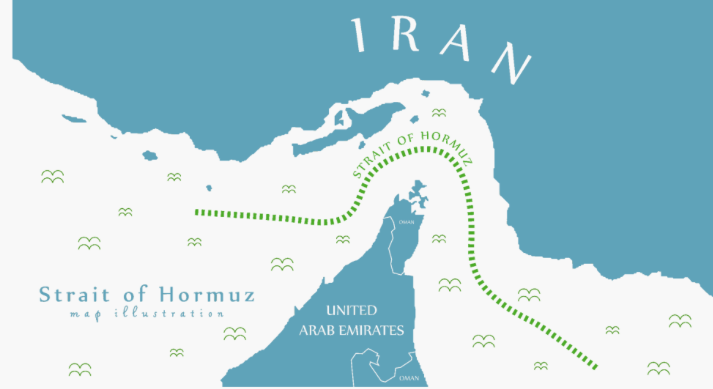
The Strait of Hormuz, a narrow maritime corridor connecting the Persian Gulf with the Arabian Sea, occupies a central position in the global energy system. For India, however, its importance extends far beyond global statistics or abstract geopolitical narratives. It is a lifeline that underpins the country’s energy security, economic stability, and strategic autonomy. As tensions in the Middle East intensify and the risk of disruption in this critical chokepoint grows, the Strait of Hormuz has emerged not merely as a distant geopolitical concern but as a direct determinant of India’s economic resilience and policy choices.
India’s dependence on imported energy forms the foundation of its vulnerability. The country imports approximately 85–90 percent of its crude oil requirements, with a significant share originating from Gulf countries such as Iraq, Saudi Arabia, the United Arab Emirates, and Kuwait. A substantial portion of these imports estimated at nearly half of India’s total crude intake passes through the Strait of Hormuz. This geographic concentration of supply routes creates a structural dependency that leaves India highly exposed to any disruption in the region. Unlike countries with diversified energy sources or domestic reserves, India’s growth trajectory is intricately linked to the uninterrupted flow of hydrocarbons through this narrow passage.
The economic implications of this dependency are profound. Oil is not merely a commodity for India; it is a critical input that influences transportation, manufacturing, agriculture, and electricity generation. Any disruption in supply or spike in prices triggered by instability in the Strait of Hormuz quickly transmits across the economy. Higher crude prices increase fuel costs, which in turn elevate transportation expenses and contribute to inflationary pressures. This cascading effect impacts everything from food prices to industrial output, ultimately affecting household consumption and economic growth. In a country where price stability is closely tied to political and social stability, such shocks can have far-reaching consequences.
One of the most immediate channels through which disruptions in the Strait affect India is inflation. A sustained increase in crude oil prices can significantly raise the consumer price index, eroding purchasing power and complicating monetary policy. For instance, a sharp rise in oil prices can push up the cost of essential goods and services, forcing policymakers to balance growth objectives with inflation control. This creates a challenging macroeconomic environment, particularly when combined with external uncertainties such as global financial volatility or supply chain disruptions.
In addition to inflation, the Strait of Hormuz plays a critical role in shaping India’s external balances. The country’s current account deficit is highly sensitive to fluctuations in oil prices. When crude prices rise, the import bill increases, widening the deficit and exerting pressure on the national currency. A weaker currency, in turn, makes imports more expensive, creating a feedback loop that exacerbates economic stress. This dynamic underscore the extent to which India’s macroeconomic stability is intertwined with developments in the Strait of Hormuz.
Beyond macroeconomic indicators, the Strait’s importance is also evident in its role in supporting India’s industrial and technological sectors. The country’s $250 billion in information technology and services industry, while not directly dependent on oil, relies on stable energy supplies to maintain operations and infrastructure. Energy disruptions can indirectly affect these sectors by increasing operational costs, disrupting supply chains, and creating uncertainties in global markets. Furthermore, industries such as petrochemicals, aviation, and logistics are directly impacted by fuel availability and pricing, making them particularly vulnerable to disruptions in the Strait.
The strategic dimension of the Strait of Hormuz is equally significant. Control over or disruption of this chokepoint has historically been a tool of geopolitical leverage. For India, which maintains strong economic and diplomatic ties with multiple countries in the Gulf region, this creates a complex balancing act. The country must navigate relationships with energy suppliers, regional powers, and global actors while safeguarding its own interests. Any escalation in tensions involving major powers in the region has the potential to disrupt not only energy flows but also broader trade and diplomatic engagements.
India’s exposure is further compounded by the limited availability of immediate alternatives. While the country has diversified its energy imports to include suppliers such as Russia, the United States, and countries in West Africa, these alternatives come with logistical, economic, and geopolitical constraints. Shipping routes from these regions are longer and more expensive, and in some cases, the quality of crude differs from what Indian refineries are optimized to process. This limits the speed and scale at which India can substitute Gulf supplies in the event of a disruption.
To mitigate these risks, India has invested in strategic petroleum reserves, which serve as a buffer during supply disruptions. These reserves, along with commercial inventories, provide a limited window of protection, allowing the country to manage short-term shocks. However, they are not a long-term solution. In the event of a prolonged disruption in the Strait of Hormuz, these reserves would need to be supplemented by alternative supply arrangements, which may not be readily available at scale.
The Strait’s importance is not confined to oil alone. It is also a critical route for liquefied natural gas (LNG), which plays an increasingly important role in India’s energy mix. As the country transitions toward cleaner energy sources, natural gas is expected to serve as a bridge of fuel, supporting industrial growth while reducing carbon emissions. A disruption in LNG shipments through the Strait would therefore have implications not only for energy security but also for India’s environmental and sustainability goals.
In recent years, the Strait of Hormuz has also emerged as a focal point for discussions on maritime security. The presence of naval forces from various countries reflects the recognition of its strategic importance. For India, enhancing maritime domain awareness and expanding naval capabilities in the region are critical components of its energy security strategy. The Indian Navy’s increased presence in the Western Indian Ocean, along with its participation in anti-piracy operations and international collaborations, underscores the country’s commitment to safeguarding its maritime interests.
Another dimension that has gained prominence is the intersection of energy security with digital infrastructure. The seabed around the Strait of Hormuz hosts several submarine communication cables that carry a significant portion of global internet traffic. For India, which is deeply integrated into the global digital economy, disruptions to these cables could have implications for connectivity, financial transactions, and technological operations. This dual role of the Strait as both an energy and digital chokepoint adds a new layer of complexity to its strategic significance.
The geopolitical history of the region further highlights the persistent risks associated with the Strait. Tensions between Iran and Western countries, periodic threats to block the passage, and incidents involving attacks on shipping vessels have repeatedly underscored its vulnerability. These developments serve as reminders that the stability of this corridor cannot be taken for granted. For India, which depends heavily on predictable and uninterrupted energy flows, such uncertainties necessitate proactive planning and strategic foresight.
Looking ahead, India’s approach to managing its dependence on the Strait of Hormuz is likely to involve a combination of diversification, diplomacy, and domestic capacity building. Diversifying energy sources remains a key priority, with efforts to increase imports from non-Gulf regions and expand renewable energy capacity. At the same time, strengthening diplomatic engagement with Gulf countries and participating in multilateral initiatives can help ensure the security of maritime routes.
Investments in infrastructure, such as pipelines and port facilities, also play a role in reducing reliance on a single chokepoint. Projects like the development of the Chabahar Port in Iran offer potential alternative routes for trade and connectivity, although their impact on energy flows remains limited. Similarly, enhancing domestic refining capabilities and adopting flexible procurement strategies can improve resilience in the face of disruptions.
The transition to renewable energy represents a long-term solution to reducing dependence on imported hydrocarbons. India’s ambitious targets for solar, wind, and other renewable sources reflect a recognition of the need to diversify its energy mix. However, this transition will take time, and in the interim, the Strait of Hormuz will continue to play a central role in meeting the country’s energy needs.
Therefore, the Strait of Hormuz is far more than a geographic feature on the global map. For India, it is a critical artery that sustains economic growth, supports industrial development, and influences strategic decision-making. Its significance is rooted in the country’s dependence on imported energy, the structure of global supply chains, and the complexities of regional geopolitics. As the world navigates an era of heightened uncertainty, the importance of this narrow passage is likely to grow rather than diminish.
Ensuring energy security in this context requires a comprehensive and forward-looking approach. It demands not only the ability to respond to immediate challenges but also the capacity to anticipate and mitigate future risks. For India, this means balancing short-term resilience with long-term transformation, leveraging both domestic capabilities and international partnerships. The Strait of Hormuz, with all its vulnerabilities and strategic implications, will remain at the center of this endeavor, shaping the contours of India’s energy landscape for years to come.

About the Author
Sonalika Singh began her journey as an UPSC aspirant and has since transitioned into a full-time professional working with various organizations, including NCERT, in the governance and policy sector. She holds a master’s degree in political science and, over the years, has developed a strong interest in international relations, security studies, and geopolitics. Alongside this, she has cultivated a deep passion for research, analysis, and writing. Her work reflects a sustained commitment to rigorous inquiry and making meaningful contributions to the field of public affairs.



