
By: Khushbu Ahlawat, Consulting Editor, GSDN
Introduction: Redefining Conflict in the Indo-Pacific
The nature of warfare is undergoing a profound transformation. In an era marked by nuclear deterrence, economic interdependence, and technological disruption, outright war between major powers has become both costlier and riskier than ever before. Against this backdrop, the evolving strategic alignment between Russia and China offers a compelling case of how great powers are adapting to achieve their objectives without necessarily engaging in full-scale conflict.
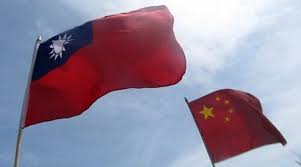
Nowhere is this more evident than in the question of Taiwan. For Beijing, the unification of Taiwan with the People’s Republic of China remains a core national objective—non-negotiable and deeply embedded in its strategic calculus. However, the pathway to achieving this goal is no longer limited to conventional invasion scenarios. Instead, China appears to be developing a more sophisticated approach—one that blends coercion, deterrence, capability-building, and psychological dominance.
The growing partnership with Russia plays a critical role in shaping this evolving playbook. Through military cooperation, technology transfers, and lessons drawn from real-world conflicts, Moscow is contributing to Beijing’s ability to potentially “win without fighting.”
Strategic Convergence: Foundations of the Russia–China Partnership
The Russia–China relationship is not a traditional alliance but a strategic alignment driven by shared interests and converging geopolitical objectives. Both countries seek to counterbalance the global influence of the United States and reshape the international order in ways that reflect their priorities.
Unlike asymmetrical partnerships—such as China’s relationship with Pakistan—the Russia–China alignment is characterized by relative parity. Both nations possess significant military capabilities, advanced technological infrastructures, and global strategic ambitions. This parity allows for a more balanced exchange of resources, expertise, and strategic support.
A tacit understanding underpins this partnership. China has maintained a cautious stance on Russia’s actions in Ukraine and Crimea, avoiding outright condemnation while emphasizing neutrality. In return, Russia has consistently supported China’s positions on sensitive issues, including Taiwan, Hong Kong, and Xinjiang. This mutual backing creates a foundation for deeper cooperation, particularly in the military domain.
Capability Transfers: Filling Operational Gaps
One of the most tangible aspects of Russia’s contribution to China’s Taiwan strategy lies in military-technical cooperation. Over the past decade, Russia has supplied China with advanced military hardware, including Su-35 fighter jets, S-400 air defence systems, and critical engine technologies. These transfers are not merely transactional; they are strategic. They help China address specific operational gaps, particularly in areas such as air superiority, missile defence, and long-range strike capabilities. For instance, advanced air defence systems enhance China’s ability to deter or counter potential intervention by external powers in a Taiwan contingency. Moreover, Russia’s expertise in expeditionary warfare and large-scale military operations provides invaluable insights for the People’s Liberation Army (PLA). Unlike China, which has limited recent combat experience, Russia has been actively involved in conflicts ranging from Syria to Ukraine. These experiences offer practical lessons in logistics, coordination, and battlefield adaptability. The reported transfer of amphibious assault vehicles, airborne systems, and specialized training further underscores the depth of this cooperation. Such capabilities are particularly relevant for Taiwan scenarios, where rapid deployment and multi-domain coordination are critical.
Military Exercises: Laboratories of Modern Warfare
Joint military exercises between Russia and China serve as critical platforms for testing and refining operational strategies. These exercises go beyond symbolic displays of cooperation; they function as laboratories for modern warfare. Over the years, the frequency and complexity of these exercises have increased significantly. They now involve multi-domain operations, integrating air, land, sea, and cyber capabilities. Exercises such as missile defence drills and joint naval patrols demonstrate a high level of interoperability between the two forces. These exercises also have a signalling function. By showcasing their combined capabilities, Russia and China send a clear message to potential adversaries—particularly the United States and its allies—about their readiness to respond to strategic challenges.
Importantly, these drills often simulate scenarios relevant to Taiwan. Operations in the East China Sea, South China Sea, and surrounding regions allow the PLA to rehearse potential contingencies, including blockade strategies, amphibious assaults, and air superiority campaigns.
Quantifying the Shift: Data, Defence Spending, and Operational Metrics
A closer examination of defence spending patterns, force modernisation data, and operational metrics further illustrates the depth of the evolving Russia–China military alignment and its implications for a Taiwan contingency. According to recent global defence estimates, China’s official military budget has crossed $225 billion, making it the second-largest defence spender globally, while Russia, despite economic constraints imposed by sanctions, continues to allocate over $100 billion annually when adjusted for wartime expenditures and purchasing power parity. More significantly, China’s naval expansion has been unprecedented in scale. The People’s Liberation Army Navy (PLAN) now operates over 370 vessels, surpassing the United States Navy in numerical strength, with projections indicating a fleet size of 425 ships by 2030. This expansion is particularly relevant in a Taiwan scenario, where maritime dominance and blockade capabilities are critical.
Airpower metrics also reveal a shifting balance. China’s air force and naval aviation together field over 2,800 aircraft, including advanced platforms such as the J-20 stealth fighter, while continued upgrades to H-6K bombers enhance long-range strike capabilities. Russian contributions—particularly in engine technology and air defence systems—have played a pivotal role in sustaining and upgrading these capabilities. In missile systems, China’s inventory of short- and medium-range ballistic missiles positioned along its eastern seaboard provides a dense strike network capable of targeting Taiwan’s key military installations within minutes.
Joint military exercises have also increased both in frequency and complexity. Data from strategic databases indicate that Russia–China exercises have more than doubled since 2015, with a marked shift toward multi-domain operations involving integrated air defence, electronic warfare, and amphibious assault simulations. Notably, exercises conducted in the East China Sea and Sea of Japan have involved tens of thousands of troops, signaling preparedness for large-scale coordinated campaigns.
In parallel, logistics and mobilisation indicators suggest growing readiness. China’s expansion of dual-use infrastructure—ports, एयरfields, and रेल connectivity—along its southeastern coast enhances rapid troop deployment capabilities. Meanwhile, Russia’s experience in sustaining prolonged military operations under contested conditions provides valuable lessons in supply chain resilience and battlefield endurance.
Taken together, these data points underscore a critical reality: the Russia–China alignment is not merely rhetorical but is grounded in measurable enhancements in capability, coordination, and operational readiness. This empirical foundation strengthens China’s ability to shift from symbolic deterrence toward credible compellence in a Taiwan scenario.
The Ukraine Factor
Perhaps the most significant contribution of Russia to China’s Taiwan playbook lies in the lessons derived from the ongoing conflict in Ukraine. Modern warfare in Ukraine has highlighted the importance of several factors:
- Integrated multi-domain operations
- Real-time intelligence and surveillance
- Logistical resilience
- Psychological and information warfare
For China, these lessons are invaluable. They provide a real-world testing ground for strategies that could be adapted to a Taiwan scenario. For instance, the use of drones, precision strikes, and electronic warfare in Ukraine offers insights into how to achieve tactical advantages while minimizing costs.
At the same time, the challenges faced by Russia—such as supply chain disruptions and resistance from local populations—serve as cautionary lessons. They underscore the complexity of modern warfare and the need for comprehensive planning.
Toward “Winning Without Fighting”: The Logic of Compellence
The concept of “winning without fighting” is deeply rooted in Chinese strategic thought, drawing from classical texts such as Sun Tzu’s The Art of War. In the context of Taiwan, this approach translates into achieving political objectives through coercion and deterrence rather than outright conflict.
Russia’s support enhances China’s ability to pursue this strategy. By strengthening its military capabilities and operational readiness, China can increase the perceived costs of resistance for Taiwan and its potential allies. This, in turn, could lead to a situation where Taiwan is compelled to negotiate on Beijing’s terms without the need for large-scale military action.
Key elements of this strategy include:
- Economic pressure and blockade scenarios
- Cyber and information warfare
- Demonstrations of military superiority
- Diplomatic isolation of Taiwan
The goal is to create an environment where the balance of power is so overwhelmingly in China’s favor that resistance becomes untenable.
Grey-Zone Warfare and Cognitive Dominance: The Invisible Battlefield
Beyond conventional military preparations, a critical dimension of China’s evolving Taiwan strategy—shaped in part by its alignment with Russia—lies in the domain of grey-zone warfare and cognitive operations. This approach seeks to operate below the threshold of open conflict while steadily eroding the adversary’s will to resist. Drawing lessons from Russian operations in Crimea and Eastern Ukraine, China has increasingly emphasized information warfare, cyber capabilities, and psychological operations as force multipliers. These tools aim to influence public opinion within Taiwan, create divisions in its political system, and undermine trust in democratic institutions.
Cyber intrusions targeting critical infrastructure, disinformation campaigns across social media platforms, and economic coercion—such as selective trade restrictions—form part of this broader strategy. The objective is not immediate capitulation, but gradual strategic fatigue. By shaping perceptions and narratives, Beijing can attempt to create a sense of inevitability around unification, thereby reducing the likelihood of armed resistance.
Additionally, legal warfare—or “lawfare”—has emerged as another instrument in this toolkit. By framing its actions within a legal narrative that emphasizes sovereignty and territorial integrity, China seeks to delegitimize external intervention, particularly by the United States and its allies. This layered strategy reflects a shift from purely kinetic conflict to a more comprehensive form of competition, where victory is achieved not only on the battlefield but also in the minds of populations and the norms of the international system. This evolving approach is also supported by advances in artificial intelligence and big data analytics, enabling more precise targeting of information campaigns and behavioral manipulation. As a result, future conflicts over Taiwan may be decided less by battlefield victories and more by success in shaping perceptions, narratives, and decision-making environments.
Implications for the United States and Allies
The evolving Russia–China alignment presents significant challenges for the United States and its allies. A coordinated strategy by these two powers could strain Washington’s ability to respond effectively, particularly in a scenario involving simultaneous crises in different regions. The prospect of a “two-front challenge”—with tensions in Europe and the Indo-Pacific—complicates strategic planning for the United States. It raises questions about resource allocation, alliance coordination, and escalation management. For allies such as Japan and South Korea, the stakes are equally high. A shift in the balance of power in the Taiwan Strait could have far-reaching implications for regional security and economic stability.
India’s Strategic Calculus: Navigating a Complex Landscape
For India, the Russia–China alignment introduces a new layer of complexity. India shares a strategic partnership with Russia while simultaneously facing a long-standing rivalry with China. A potential Taiwan contingency could have indirect implications for India’s security environment, particularly in the Indian Ocean Region. Increased Chinese assertiveness could extend beyond Taiwan, affecting broader regional dynamics. India’s response will require a careful balancing act—maintaining its relationship with Russia while strengthening partnerships with like-minded countries in the Indo-Pacific. Initiatives such as the Quad and enhanced maritime cooperation will play a crucial role in this strategy.
Conclusion: The Future of Conflict and Cooperation
The Russia–China partnership is reshaping the strategic landscape of the Indo-Pacific. By combining capabilities, sharing lessons, and aligning their objectives, the two powers are redefining the rules of engagement. In the case of Taiwan, this alignment enhances China’s ability to pursue its goals through a combination of coercion and deterrence. The prospect of “winning without fighting” reflects a broader shift in the nature of conflict—one where psychological, economic, and technological tools are as important as military . For the international community, these developments underscore the need for adaptive strategies and robust cooperation. As great power competition intensifies, the challenge will be to manage tensions without escalating into conflict. Ultimately, the question is not just whether the China can achieve its objectives in Taiwan, but how the evolving dynamics of power will shape the future of global order.

About the Author
Khushbu Ahlawat is a research analyst with a strong academic background in International Relations and Political Science. She has undertaken research projects at Jawaharlal Nehru University, contributing to analytical work on international and regional security issues. Alongside her research experience, she has professional exposure to Human Resources, with involvement in talent acquisition and organizational operations. She holds a Master’s degree in International Relations from Christ University, Bangalore, and a Bachelor’s degree in Political Science from the University of Delhi.



