
By: Simran Sodhi, Guest Author, GSDN
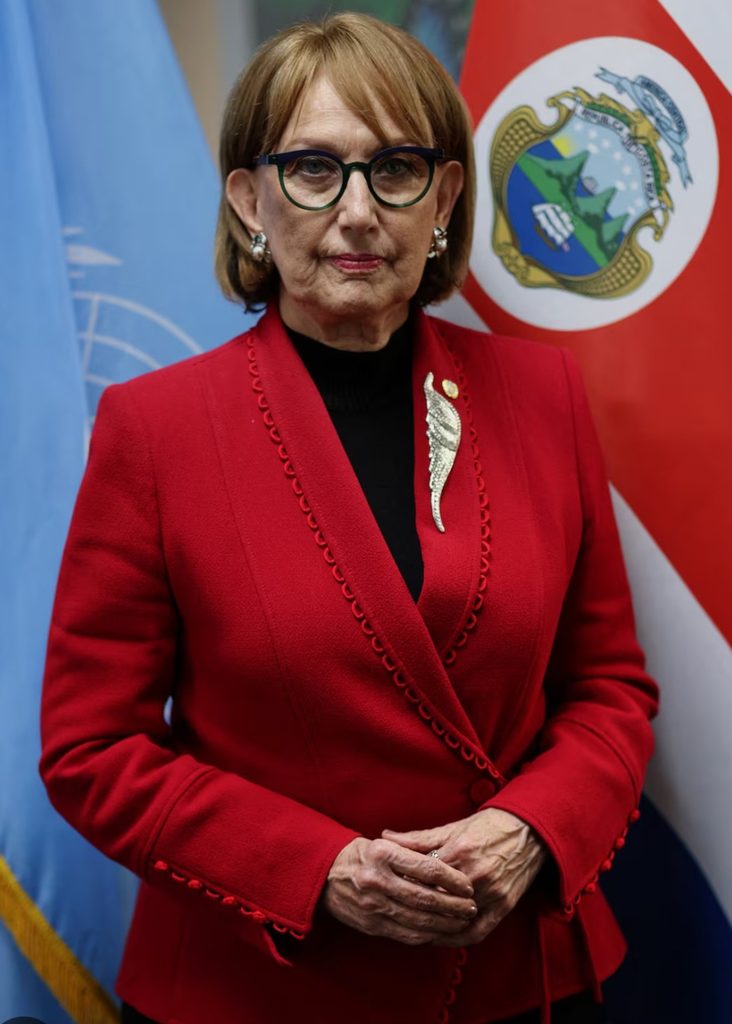
In its 80-year-old history, the United Nations has never had a woman serve as Secretary-General. The calls for a woman to now helm the UN is increasing as António Guterres prepares to step down at the end of December 2026.
The tenth Secretary-General is set to take office on January 1, 2027. Several female diplomats and leaders are being looked at as potential candidates to become the UN’s first woman chief. The calls for a woman to lead the UN is also being made since the exclusion of women in top positions of diplomacy also point to a glaring example of gender inequality. That too, at the helm of an international institution, that is designed to work on issues such as gender equality.
The process to elect the next Secretary-General is rather simple. The 15-member Security Council, including permanent veto powers Britain, China, France, Russia and the United States considers an undisclosed list behind closed doors and then recommends a candidate to be elected by the General Assembly (GA). For the sake of greater transparency, the General Assembly in 2015 asked its president and that of the Security Council to invite U.N. members to nominate candidates. It also called for regular circulation of candidates’ names and CVs to member states.
This time around, seven serious contenders have emerged so far out of which four are women. Based on the UN’s informal regional rotation, the likelihood of a candidate from the Latin American and Caribbean region being selected is high.
The four women contenders are:
Rebeca Grynspan (Costa Rica): The current Secretary-General of UN Trade and Development (UNCTAD) and former Vice President of Costa Rica has emerged as a leading contender, backed by strong showings in UN Security Council straw polls.
Carolyn Rodrigues Birkett (Guyana): Guyana’s permanent representative to the UN and former foreign minister has regional backing from Caricom as an indigenous woman candidate from a developing nation.
Michelle Bachelet (Chile): The former President of Chile and former head of UN Women entered the race but officially withdrew on September 19, 2026. Though she was a strong contender for the job.
María Fernanda Espinosa (Ecuador): Former President of the UN General Assembly and former foreign minister of Ecuador has also been positioned as a prominent Latin American candidate.
The world today has changed a lot and one sees women in leadership positions across the spectrum. But it is also glaringly obvious that some top posts like the President of the United States have remained an all-male bastion. While former Vice President Kamala Harris and former First Lady Hillary Clinton tried to break this glass ceiling, it still seems a distant dream. Europe has seen more women leaders emerge, for instance, the Italian Prime Minister Giorgia Meloni. South Asia has given the world its fair share of women leaders like Indian PM Indira Gandhi and Pakistan PM Benazir Bhutto. Even in corporates, women leaders are increasingly finding their positions at the top whether one looks at Chanel which is today headed by a woman CEO Leena Nair, or PepsiCo which again was led by a woman Indra Nooyi.
Women hold roughly 30% of global managerial positions and 27% of board seats, according to the International Labour Organization (ILO). Studies have shown that higher rates of women representation in leadership are associated with a variety of benefits for organizations. Greater gender equity also contributes to wider economic benefits, increased productivity, and improved development results. This translates into the simple point that gender representation is beneficial for everyone, not just women.
Rebeca Grynspan, who has emerged as the frontrunner for the post of the next UN Chief, said that the United Nations has become too risk-averse and its next leader must be prepared to bear the cost of diplomatic failure and try again. She made these comments to a media outlet ahead of another Security Council poll on Oct 16 to gauge support for a new secretary-general to succeed Antonio Guterres.
Grynspan will become the first female secretary-general in the UN’s history if she wins. She has already come out ahead in four out of five informal straw polls, obtaining nine votes in favour last week, according to diplomats close to the process. Securing the recommendation requires at least nine positive votes out of the 15 countries, and no “discourage” votes from the five permanent members: the US, China, Russia, France, and Britain.
But the game is hardly over. It is possible that even now, Grynspan might get a discourage vote from one of the P5 which would essentially end her race. But it is time the UN realised that the world looks upto it and a woman UN Chief would be a positive message that international bodies recognize the contribution of women to societies and to the work place. In a world reeling from wars and uncertainties, this would be welcome news.



