Hamesha A-One Engineer Regiment in counter-IED Operation in Manipur
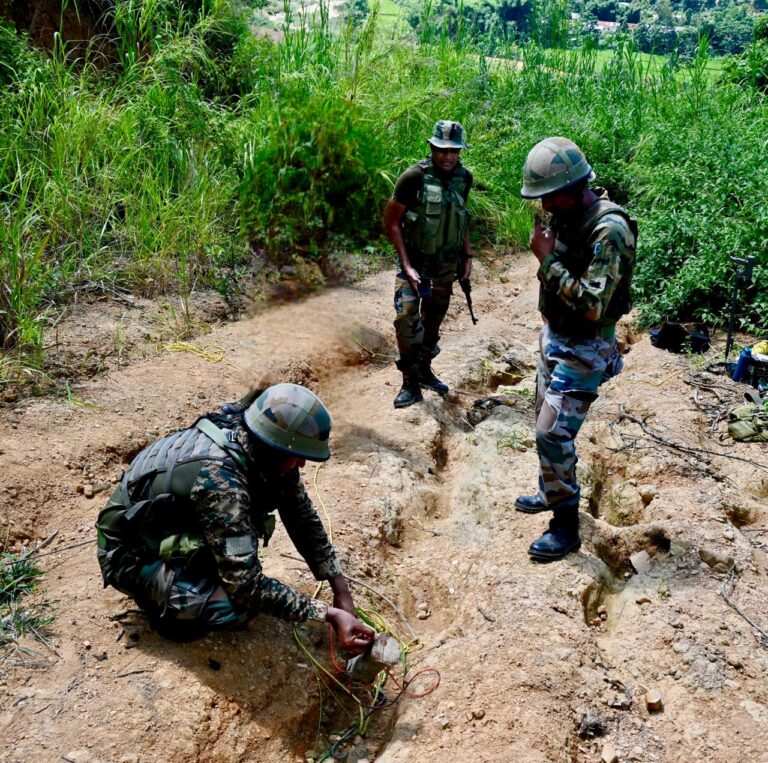
In a swift and major operation launched by the Indian Army with Manipur Police, a significant threat to life and property was averted when a large quantity of Improsived Explosive Devices (IEDs) was recovered in the hilly areas near Bongjang and Itham villages in Imphal East district.
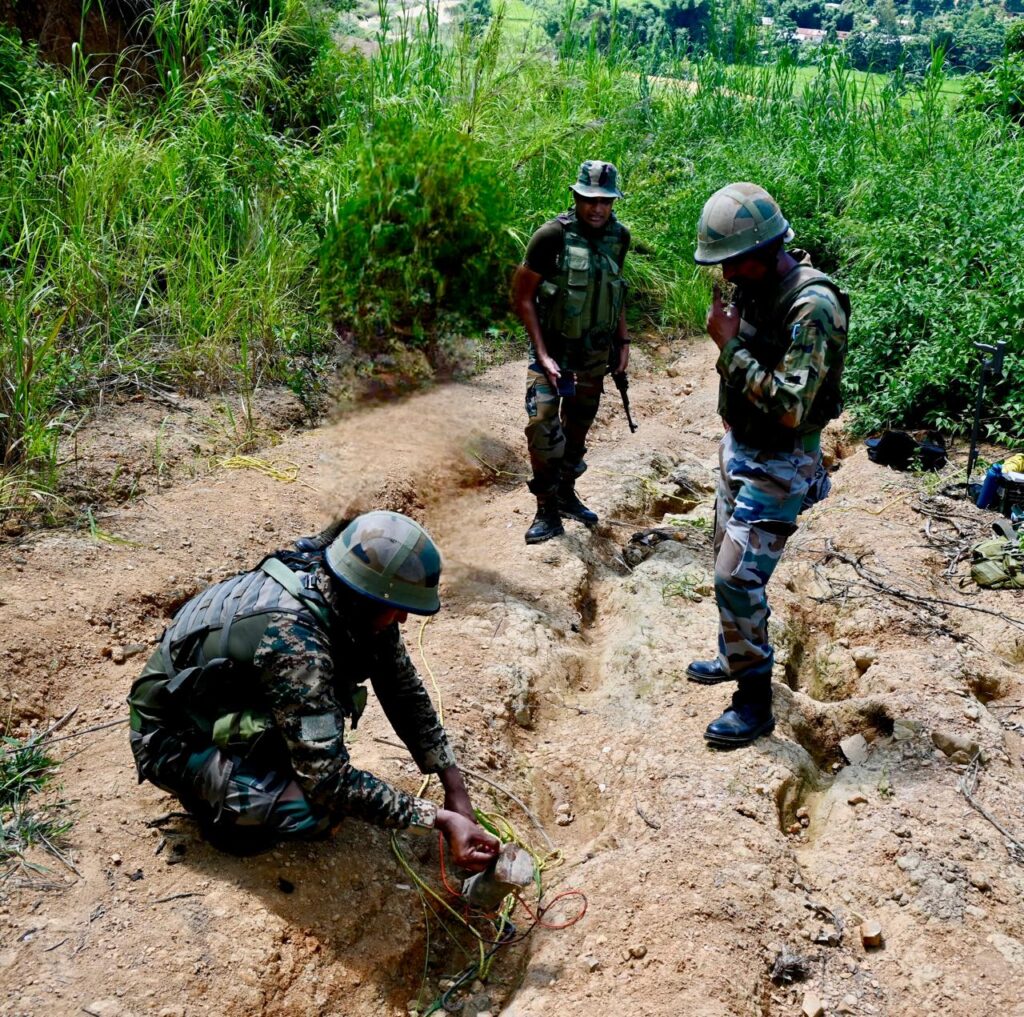
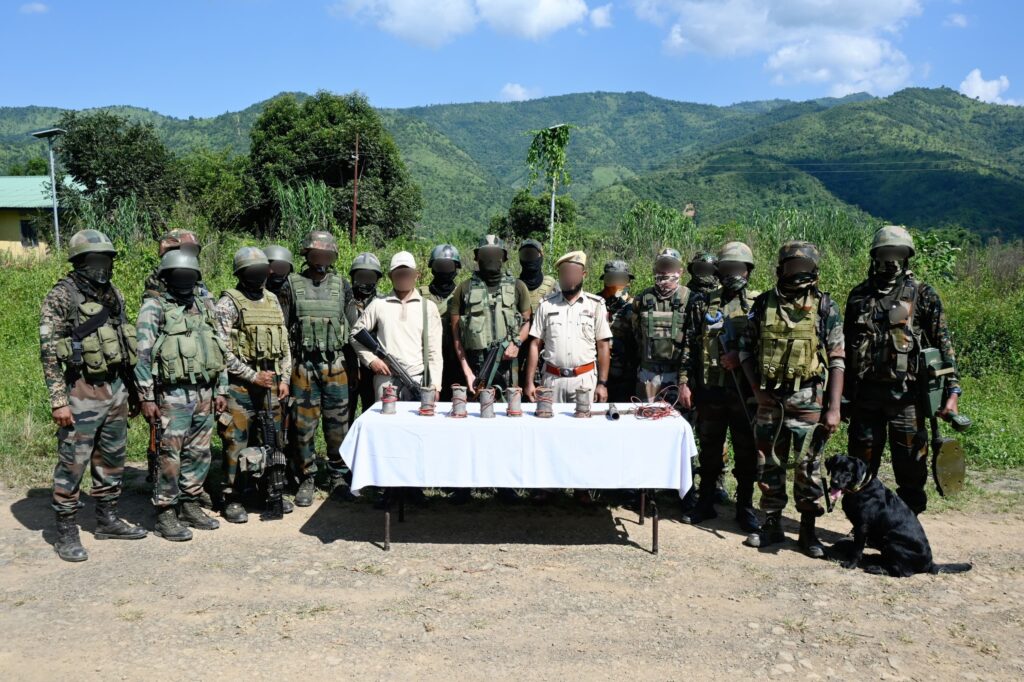
Acting on specific intelligence, columns of the Engineer Regiment of the Red Shield Division of the Indian Army and Manipur Police acted speedily and launched a search operation with Army Explosives Detection Dogs and recovered seven IEDs weighing approximately 28.5 kgs. The recovered IEDs were diffused by experts from the Red Shield Engineers. Thus, preventing a major disaster and ensuring saving of precious lives of innocent civilians.
Hamesha A-One and Manipur Police after successfully neutralizing the seven IEDs
With utter disregard to personal safety and security the adept and skilled professionals of the elite Red Shield Engineers took control of the situation and in a race against time diffused all the seven IEDs thus averting a major disaster.
This recovery of IEDs is the second major haul for the security forces in the past three months, wherein on July 20, 2024 eight IEDs weighing 33 Kgs were successfully recovered in the hilly areas of Saichang Itham, Imphal East and neutralized earlier too by the expert Engineers of the Red Shield Division of the Indian Army
The expeditious response of the Indian Army in sync with the Manipur Police has once again exhibited seamless coordination amongst the security forces and also ensured the safety and security of the region, sending a strong message to anti-national elements.
Lieutenant General Dhiraj Seth, AVSM, GOC-in-C, Southern Command addressing the Seminar
The Regiment of Artillery in conjunction with the Centre for Land Warfare Studies (CLAWS), hosted the 2nd Edition of ‘Gen SF Rodrigues Memorial Seminar’ at General Bipin Rawat Auditorium, Pune on September 19, 2024. The prestigious event paid tribute to the late Chief of Army Staff and deliberated on the critical theme of National Security @2047.
The seminar commenced with a keynote address by Lieutenant General Dhiraj Seth, Ati Vishisht Seva Medal, General Officer Commanding-in-Chief, Southern Command, which set the tone for the event. Comprehensive Fireside Chat Sessions were held on “Audit of India’s Defence Posture” and “Amrit Kaal-The Road Ahead (Blueprint on Capacity Building)”. Additionally, Air Marshal (Dr) Diptendu Choudhury (Retd) Param Vishisht Seva Medal, Ati Vishisht Seva Medal, VM (Devotion of duty), Vayu Sena Medal delivered a special address on Atmanirbharta (self-reliance) emphasizing the importance of self-reliance in achieving national security objectives.
Distinguished guests in the Seminar
The seminar witnessed enriching deliberations on national security issues from military, economic and diplomatic perspectives. Esteemed veterans, with their diverse experience, contributed meaningfully to the discussions, generating implementable options for the future. The event had a large attendance of distinguished participants, including serving and retired officers, scholars and experts.
In his concluding remarks, Lieutenant General Adosh Kumar, Ati Vishisht Seva Medal, Sena Medal, Director General Artillery and Senior Colonel Commandant, Regiment of Artillery, delivered a vote of thanks to the esteemed speakers, participants and organizers for their valuable contributions to the seminar. The seminar concluded on a high note, with a renewed sense of purpose and commitment to addressing the complex challenges of national security.
For years, the Pakistan Army has ventured far beyond its primary role of national defence, entrenching itself in sectors that have little to do with its core responsibilities. One glaring example is its involvement in the Special Investment Facilitation Council (SIFC), where the military secured nearly five million acres of land across provinces for corporate farming under the Green Pakistan initiative. These army-owned companies now control massive swaths of fertile land, leaving little room for civilian entrepreneurs and small farmers. The military’s penchant for expanding its influence, especially when it comes to financial gains, knows no bounds.
Time and again, the establishment seizes any opportunity to secure more funds under the banner of national security. One such instance is the recent PKR 60 billion ‘Special Allotment’ for the floundering counterterrorism operation ‘Azm-e-Istehkam’, aimed at combating groups like the Tehreek-e-Taliban Pakistan (TTP), Balochistan Liberation Army (BLA) and Balochistan Liberation Front (BLF). Far from achieving its objectives, the operation has been a spectacular failure, with the recent Balochistan attack laying bare its ineffectiveness and tarnishing the government’s reputation.
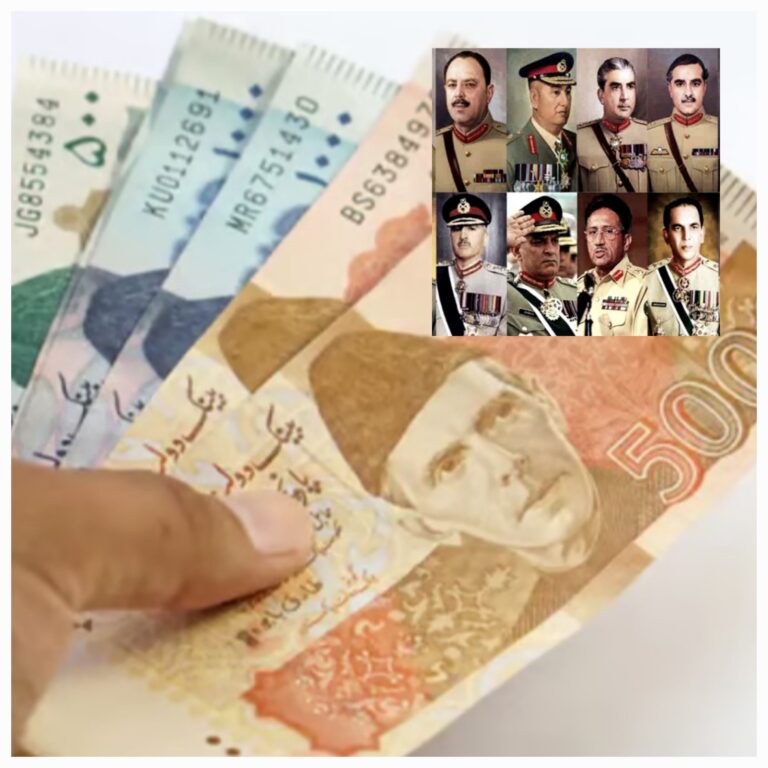
In the fiscal year 2022-23, Pakistan’s defence services were allocated a staggering PKR 1,563 billion, later revised to PKR 1,592 billion. Despite this colossal sum, the military boasted of saving PKR 379.848 million, as proudly announced by Lt Gen Ahmed Sharif during a recent DG ISPR press conference. What truly stood out in this conference was the army’s suggestion that other institutions should follow its lead in “serving the nation.” But one must ask: Is this really the path to follow? A path marred by the misuse of defence funds, secret land grabs and a disturbing history of corruption?
A recent audit of the Pakistan Army’s finances for 2023-24 has exposed yet another instance of public funds being misused under the guise of national security. The report reveals a troubling pattern of financial irregularities, including unauthorized transactions, extravagant spending and manipulation of documents to siphon off taxpayer money. Procurement irregularities alone amounted to a staggering PKR 2,845.310 million with PKR 2,429.073 million spent beyond authorized limits. High-priced contractors were hired over lower bidders without justification, causing substantial losses to the state.
Additionally, PKR 1,506 million from the Al-Mizan fund, intended for operational areas, was diverted to non-operational regions a clear violation of financial regulations. Military land meant for defence purposes was used for unauthorized commercial projects, with profits pocketed while rent remained unpaid to the government.
The audit also uncovered luxurious perks enjoyed by the military elite, including officers living in high-end apartments while still receiving house rent allowances, costing PKR 41.813 million in unauthorized payments. Meanwhile, contracts for items like “Bhoosa” (fodder) were awarded repeatedly to the same contractor, further fuelling personal extravagances.
Despite detailed evidence of these fraudulent activities, accountability remains elusive. While the military thrives in luxury funded by public money, Pakistan’s economy continues to suffer, weighed down by debt and a struggling population.
Who will dare to forget the Dubai based military mighty properties revealed by ‘Dubai Leaks’. This revealed that several high-ranking military officers had acquired properties abroad, including luxury real estate in Dubai. These revelations have further fuelled suspicions that military officials are enriching themselves at the expense of the state. This exposed the financial impropriety of military officials who had amassed vast wealth far beyond their official earnings. These revelations not only raised questions about the source of these funds but also about the military’s role in facilitating corruption. For a military that presents itself as the custodian of national security, the sight of its officers accumulating foreign assets raises serious concerns about priorities.
The military’s involvement in large-scale corruption is not confined to a few individuals. Over the years, numerous reports have surfaced about military officials engaged in illicit activities, from embezzling public funds to manipulating contracts for personal gains like former Pakistan Army chief General Qamar Javed Bajwa. These “military millionaires” have built fortunes through corrupt practices, often exploiting their positions of power and influence. The lack of transparency in military affairs has only compounded the problem, with whistleblowers silenced and investigations into corruption either stifled or derailed.
Recent press conference once again echoed one of the most high-profile cases i.e. the court martial of General Faiz Hameed, former head of Pakistan’s intelligence agency, the Inter-Services Intelligence. Hameed, once a rising star in the military establishment, was charged with pursuing political agendas during his tenure as ISI chief. His downfall underscores the dangerous intersection of military power and political influence in Pakistan. He was accused of manipulating political outcomes, aligning himself with certain political factions, and using his position to shape the political landscape in Pakistan. His actions reflected the broader problem of military interference in civilian governance, a trend that has plagued the country for decades. Hameed’s court martial, while a step toward accountability, is only a small piece of a much larger puzzle.
The allegations against Hameed also highlight the military’s role in undermining democratic institutions in Pakistan. His involvement in political manoeuvring, particularly in the context of the Faizabad sit-in done by TLP party and other significant political events, demonstrates the extent to which the military seeks to control the political narrative in the country. While Hameed may have been singled out, his actions are emblematic of a military establishment that routinely interferes in civilian matters to maintain its grip on power.
In light of these issues, the suggestion that other sectors follow the military’s example appears misguided at best. Instead of copying an institution riddled with financial scandals and political meddling, Pakistan’s other institutions should prioritize transparency, accountability, and the public good—values that seem glaringly absent from the military’s current approach.
The recent expansion of China’s nuclear arsenal has put China’s Nuclear Program into limelight. Other Nuclear and Non-Nuclear states have always been a little sceptical about the China’s progress toward great-power status. Even during the most intense periods of Cold War rivalry, China managed to maintained remarkably vulnerable number of nuclear power that was assumed to be probably around 200 warheads. Chinese nuclear modernization continued after the Cold War ended, it has truly accelerated only over the last decade by more than doubling the number of warheads deployed since 2020. It makes clear that China’s historical reliance on a “minimum deterrent” has markedly shifted. Although, China is one of the P5 countries which has signed the Non-Proliferation Treaty, the credibility of China for never using the Weapon of Mass Destruction seems to be questionable.
China’s Nuclear Program
Since its first nuclear test in 1964, China has maintained a consistent narrative about the purpose of its nuclear weapons. China has the largest number of nuclear warheads in South-Asia including India, China, and Pakistan, although only China has signed the ‘Non-Proliferation Treaty’, ‘Credible Minimum Deterrence’ and ‘No First Use Policy’. This narrative was recently restated in China’s updated 2023 national defense policy: “China is always committed to a nuclear policy of no first use of nuclear weapons at any time and under any circumstances”. Chinese production of weapon-grade plutonium reportedly ceased in 1980s. However, Beijing is combining its civilian technology and industrial sector with its defense industrial base to leverage dual-use infrastructure.
To extract plutonium from its spent nuclear fuel, China has nearly completed its first civilian “demonstration” reprocessing plant at the China National Nuclear Corporation (CNNC) Gansu Nuclear Technology Industrial Park in Jinta, Gansu province, which is expected to be operational in 2025. China has started the construction of a second plant at the same location, which should be up and running before the end of the decade. The 200 tonne-per-year fuel reprocessing capacity at Jinta and the 50 tonne-per-year capacity at Jiuquan (Plant 404) could support the plutonium needs of the two CFR-600 reactors, especially since the first of these reactors will begin operation with highly enriched uranium (HEU) rather than mixed oxide (MOX) fuel through a supply agreement with Russia.
The ambiguity of Chinese nuclear warhead types and uncertainty on the exact amount of fissile material required for each warhead design makes it difficult to estimate how many weapons China could produce from its existing HEU and weapons-grade plutonium stockpiles. Once both fast-breeder reactors come online, they could potentially produce large amounts of plutonium and, by some estimates, could enable China to acquire over 330 kilograms of weapon-grade plutonium annually for new warhead production.
China’s Nuclear Stockpile and Capabilities
How much and how fast China’s stockpile can grow will depend upon its inventories of plutonium, highly enriched uranium (HEU), and tritium. The International Panel on Fissile Materials assessed that at the end of 2022, China had a stockpile of approximately 14 metric tons of HEU and approximately 2.9 tonnes of separated plutonium available for nuclear weapons. The Pentagon assesses that China is expanding and diversifying its capability to produce tritium. In 2023, China also reportedly began operating two large new centrifuge enrichment plants, and also took a significant step forward with its domestic plutonium production capabilities.
The Pentagon’s 2023 report to Congress assessed that China’s nuclear stockpile now includes over 500 warheads. This is a significant growth since it used to be around 200 till 2019. According to Pentagon estimates, Beijing is on track to producing 1,000 nuclear warheads by 2030. If expansion continues at the current rate, the Pentagon’s previous projections say that China might field a stockpile of about 1,500 nuclear warheads by 2035. The existing inventories were sufficient to double the stockpile over the past five years. However, as estimated by the Pentagon, additional production would require additional fissile material production.
It is estimated that China has produced a stockpile of approximately 440 nuclear warheads for delivery by land-based ballistic missiles, sea-based ballistic missiles, and bombers. Roughly 60 more warheads have thought to have been produced, with more in production, to eventually arm additional road-mobile and silo-based missiles and bombers. Many of these will probably be “deployed at higher readiness levels” and most “fielded on systems capable of ranging the continental United States”.
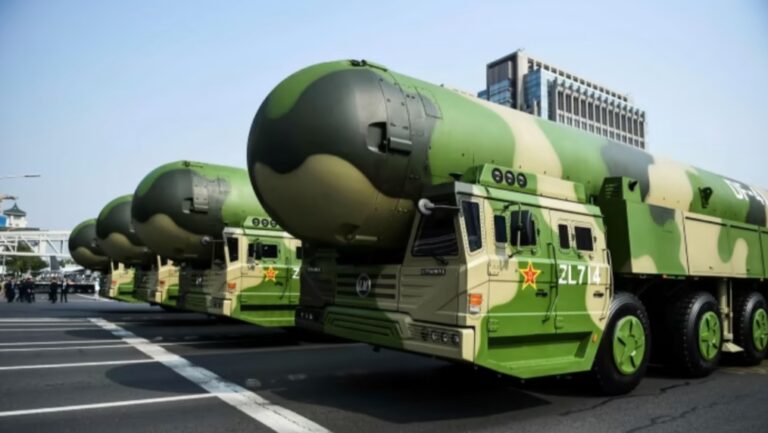
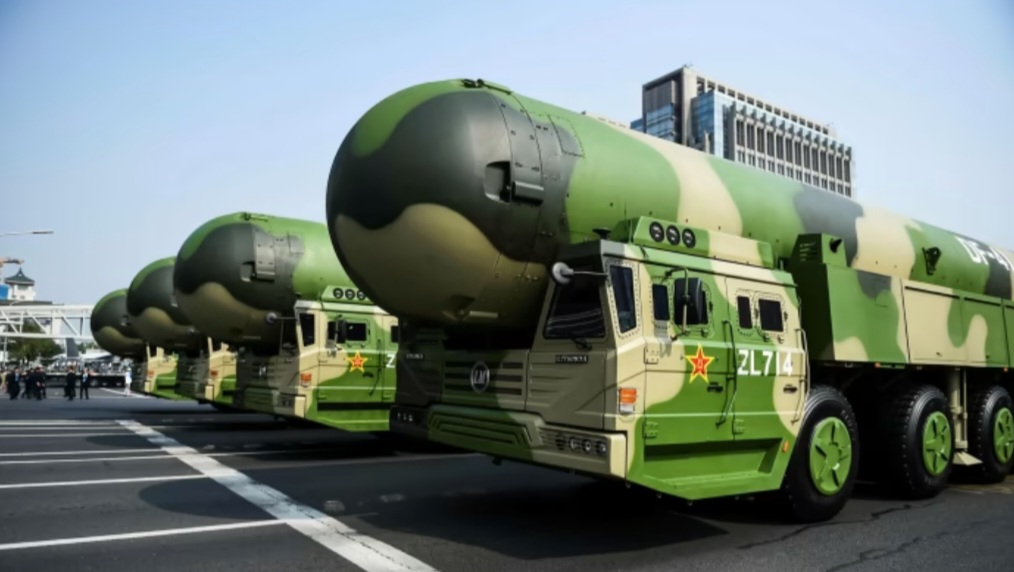
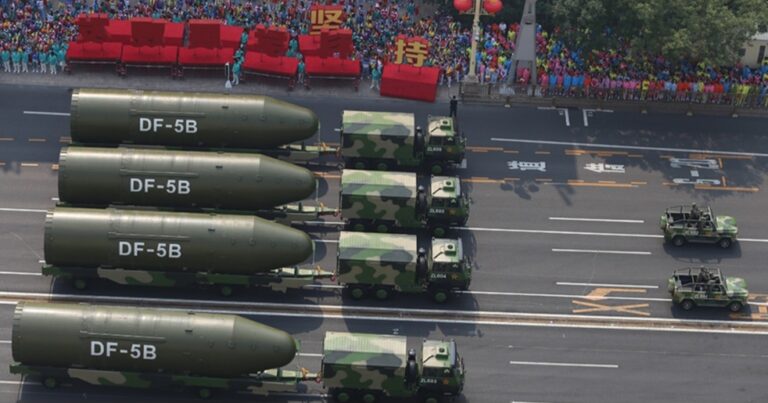
China has significantly increased the speed of the long-term modernization of its land-based, nuclear-capable missile force, with the construction underway of approximately 350 new missile silos that can deliver nuclear warheads and several new bases for road-mobile missile launchers. Most of China’s ballistic missile launchers are for short-range, medium-range, and intermediate-range missiles intended for regional missions, and most of those do not have nuclear strike missions. SIPRI estimates that the number of Chinese Intercontinental Ballistic Missile (ICBM) launchers exceeded 450, of which 142 are believed to be operational. From those missiles, about 135 can reach the continental United States, according to the Pentagon assumption.
Recently, the People’s Liberation Army Navy reportedly conducted its first test of the JL-3 in November 2018 and appears to have conducted at least two to three additional tests since. China currently fields a submarine force of 6 Jin-class (Type 094), second-generation nuclear-powered ballistic missile submarines (SSBNs), which are based at the ‘Yalong’ naval base near Longposan on Hainan Island. These SSBNs include a more prominent hump, which initially triggered some speculation as to whether they could carry up to 16 submarine-launched ballistic missiles (SLBMs), instead of the usual 12 (SLBMs).
The People’s Liberation Army Air Force (PLAAF) nuclear mission became dormant as the rocket force improved and older intermediate-range bombers were unlikely to be useful or effective in the event of a nuclear conflict. China used aircraft to deliver at least seven of nuclear weapons while developed several kinds of WMD by nuclear testing program between 1965 and 1979. According to US Department of Defense reported in 2018, currently China is focused on H-6 “Badger” bomber, which may have two distinct nuclear-capable variants. The first is H-6K version has “dual nuclear-conventional bomber” with extended-range than H-6. The H-6N is another variant accommodate a nuclear-capable air-launched ballistic missile (ALBM) that can be refuel in the air. To eventually replace the H-6, China is developing a stealth bomber with longer range and improved capabilities. The Pentagon asserts that the new bomber, known as H-20, will have both a nuclear and conventional capability with a range exceeding 10,000 kilometres, and may be revealed sometime during the next decade.
Impact on Global Security
Under Chinese President Xi Jinping, the increase in nuclear stockpile, combined with China’s defence investments in modernizing its armed forces, has caused deep concern in the world. In 2023, the Congressional Commission on the Strategic Posture of the United States insisted that China’s nuclear expansion should prompt U.S. policymakers to “re-evaluate the size and composition of the U.S. nuclear force.” However, the Biden administration has made clear that the United States has enough stockpile and does not currently need to increase its nuclear arsenal.
The Pentagon believes that China probably seeks a “lower-yield” nuclear warhead. Recently, the United States has publicly shared its concerns about activity at China’s Lop Nur nuclear test site. Open-source satellite imagery analysis indicates that China appears to be expanding the Lop Nur test site with the construction of what appears to be new drainage areas, drill rigs, roads, spoil piles, and covered entrances to potential underground facilities, as well as new construction at the main administration, support, and storage areas. If China did conduct low-yield nuclear tests at Lop Nur, it would violate its responsibility under the Comprehensive Test Ban Treaty it has signed but not ratified.
China’s nuclear capabilities also affect the military strategy in East Asia. China helps North Korea’s nuclear program in order to have more powerful allies on their side. North Korea’s value as leverage or a bargaining chip for China in Beijing’s relations with South Korea and the United States has been well recognized. In 2024, however, China may consider adding another layer to this leverage by supporting North Korea’s nuclear program. In response to that United States has significantly ramped up its military presence on and around the Korean Peninsula, in consultation with its ally, South Korea.
South Asia is considered one of the nuclear flashpoint due to the three nuclear armed bordering countries. India worries about the continuing deep links between China and Pakistan. The links between Pakistan and China for the developments if the nuclear weapon has been found multiple times. For instance, in February 2020, India caught items being shipped by China to Pakistan. According to the DRDO, this item can be used for the manufacturing of rocket motors for ballistic missiles. This has further deteriorated the bilateral relationship between India with China and Pakistan.
Conclusion
Historically, China has consistently rejected efforts at bilateral or trilateral engagement on its nuclear arsenal. However, recently China might be softening on its position toward talks related to nuclear and arms control. In November 2023, the counterparts of Bureau of Arms Control, Deterrence and Stability met with their Chinese counterparts for “candid and in-depth discussion on issues related to arms control and non-proliferation”. In January 2024, China participated in military-to-military dialogues for the first time in years. While these dialogues did not yield any concrete arms control agreements, they have the potential to be a meaningful foundation for future progress.
All these nuclear countries are developing their nuclear program and try to increase the nuclear arsenal in order to deter from the potential nuclear threat. For instance, Pakistan have nuclear weapon to deter from India, India have it to deter from China, China have it to deter United States, and United States have it deter from Russia. Therefore, the best way to reduce nuclear risks and prevent a nuclear arms race is for the United States and China to keep engaging in serious dialogue to explore possible transparency, crisis management, and confidence-building measures.
By: Shivangee Bhattacharya, Research Analyst, GSDN
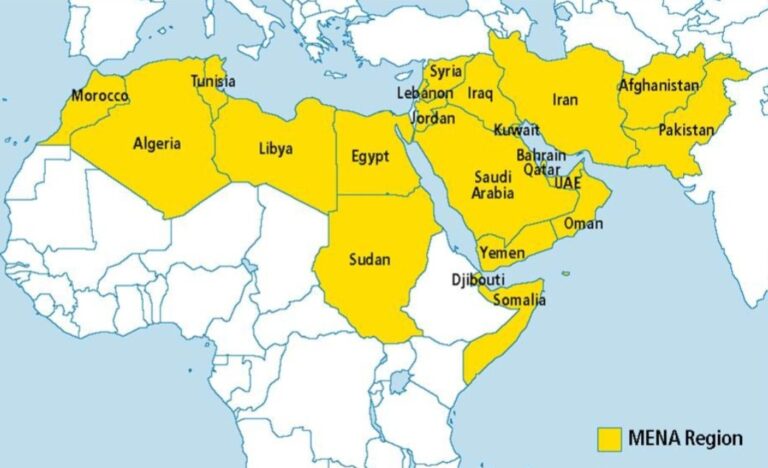
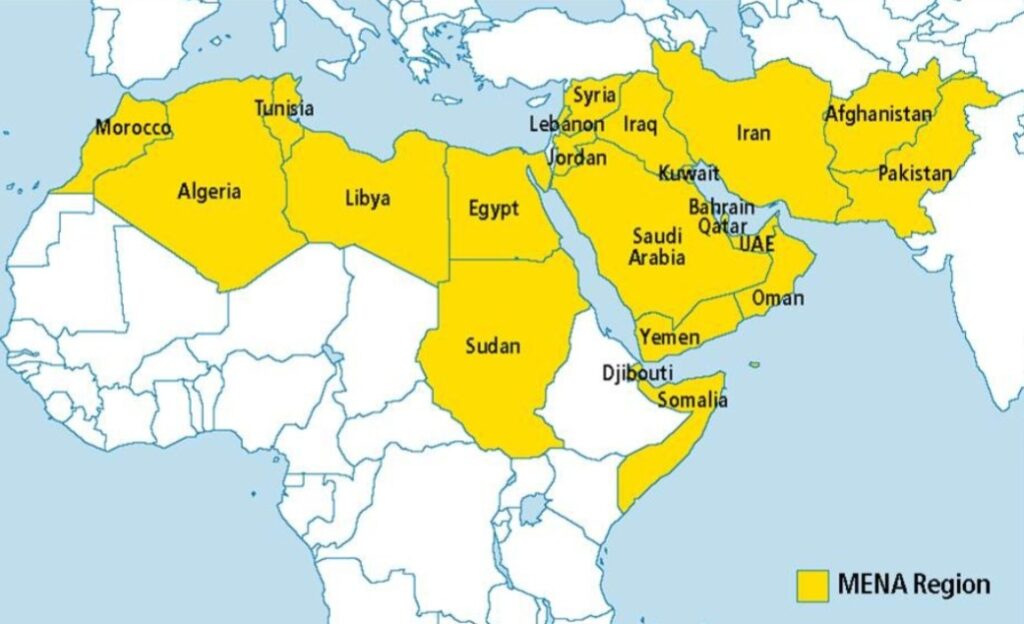
MENA countries: source Internet
For the major part of the modern history, the Middle East & North African (MENA) region has always been in some conflict or the other. The region’s diverse and vital resources have always made it crucial for the rest of the world. The conflicts that have been present for the last few decades have also made it a point of discussion as trade and commerce gets affected easily. In the period of the 19th century, the European colonizers have always invaded the Middle East for the procurement of natural resources and for its geostrategic location. In this article, we will be focusing on the importance of the Middle East and also try to highlight the mineral resources, wealth, demography, and most importantly, geopolitical location. The exploitation of the resources majorly led to the rise of conflicts in the area; the article tries to highlight it as well.
Starting with the basic concept of resource exploitation, it is evident that the Middle East is flourishing with resources. Mostly, when the discussion takes place, it focuses on the material power of a state, the spending on military and economic output. The scholars suggest that the state’s power is measured through its capabilities to spend, and it’s the work force it holds within a large population. The Middle East region holds more than the fossil and oil power—its demographic and geostrategic power of the regional parties. The regional parties exploit the existing resources, such as gas and oil, in accordance with their convenience, which often results in the strategic image of the state worldwide. The Middle East has also had “Youth Bulge,” referring to the large population of youth working for the economy; the factor of a well-educated population plays an important role in the upliftment of institutions. Finally, when a state has a large population with a well-educated working force and economic power, it creates a strong image in front of the neighbour. The factors change the political dynamics of the state. Examples like Turkey and Iran have created their influence and also successfully used their resources for the benefit of economies.
The major part on which to focus is the economic power of the region; the region holds great importance because of its natural resources. According to reports released in 2015, the Arab countries, which constitute only the 5.2% population of the world, enjoyed 55.2% of the world’s oil reserves and 27.5% of the world’s natural gas (Joint Arab Economic Report 2015). Despite having flourished resources, the region suffers from internal economic ups and downs. Still, the states are products of instability and insecurity. The region is often affected by the destabilization of the political system. This factor of instability and insecurity has created risks of challenges that have altered the international relations dynamics at the global arena.
The regional reconstruction of the political system in the region has created major issues for the Middle East to shine on the global level. The regional dynamics get influenced by the international events. The instability also keeps the Middle East in the news, which makes the world leaders re-evaluate their policies. The instability and conflicts create the geopolitical importance for the Middle East as its functioning creates major decision-making processes. Also, the region faced civil unrest, wars, and revolutions, which unfortunately led to an increase in humanitarian crises. The humanitarian crisis majorly welcomed the increase in terrorism.
The conflicts directly affect commerce and trade as the region falls in the middle, making the crossroads for Europe, Asia, and Africa. It does it as a strategically important in the geopolitics. It does have a history of commerce getting affected due to turmoil in the region. The assurance for peace and harmony in the Middle East is harder to maintain as political and religious still continue to prevail.
The point of religious turmoil also makes the region both conflict-prone and culturally diverse in the world. The Middle East and areas of Africa consist of different religions, like majorly Islam, which is in practice, but with that Christianity, Judaism, and a practicing population. The religion has a global implication in the world as well; religious conflicts often lead to political turmoil and have the tendency to create political instability, which is directly proportional to effects in international relations. Religion also plays a crucial role in the establishment of relations between the states. The world leaders prefer the state that follows a similar type of religion and ideology related to it.
The region has also come out to be a competition for the other global powers like the US, European Union, Russia and China. The global power comes with their insecurity related to power maximization. The power maximization is related to military strength, natural resource flourishment and having global power. Commerce and trade have a significant part to play in it as well. As the Middle East has natural resources and also has a great economy, the global powers try to influence the region according to their interests by exerting diplomatic relations with leaders. Developing relations with the middle eastern leaders helps them to exert power in the region in order to advance their interests.
With diplomatic relations, the economy and globalization have a major part in creating the Middle East important for global geopolitics. Middle Eastern countries have resources from which other countries get benefits. MENA has significance in the increase in trade and economics; it gives a boost to global trade, and there are numbers suggesting an increase in global ties. Economic development is crucial for the overall prosperity of the world’s development. There is a negative impact of it as well; due to overexploitation of resources, it can lead to unemployment and degradation of the environment, which has an adverse impact on the health of the global environment.
In conclusion, the importance of MENA is multifaceted, which comprises energy, strategic location, religion, culture, a series of dynamic conflicts, and economic development. These factors make MENA a strategic partner for world leaders; creating diplomatic relations and engaging in dialogues helps in strengthening relations between them. In return, the world powers have a component to ask for in return of that, majorly natural resources, and MENA being the crossroad for Europe, Asia, and Africa. MENA’s location has had geopolitical importance for the past few decades. It is also a politically and conflict-oriented area that causes destabilization in the region and it has also importance in the drafting of foreign policies of other countries according to their self-interest. In recent organizations like the G21, Middle Eastern and African nations got recognition and gave the significance through policies and offering membership by India. India also, through the IMEC (India-Middle East Europe Economic Corridor), showed the strategic and geopolitical importance of the region by inculcating the Middle East into its grand economic project.
The North Atlantic Treaty Organization (NATO) is a military alliance created in 1949 to balance the Soviet military presence in central and eastern Europe after World War II. Following the Cold War, NATO redefined itself as a cooperative security organization and now includes 32 member countries.
The core of NATO’s mission is outlined in Article 5 of the North Atlantic Treaty, also known as the Washington Treaty, which established the alliance on April 4, 1949. Over the years, many countries have joined NATO, including Greece and Turkey in 1952, West Germany in 1955 (later unified as Germany in 1990), Spain in 1982 and many others up to the most recent additions of Finland in 2023 and Sweden in 2024.
France did stay in NATO but not for a long time draw out from its unified military command in 1966. It rejoined the military command structure in 2009.
Historical Background
After World War II ended in 1945, Western Europe was left economically devastated and militarily weak Meanwhile, communist parties grew stronger in France and Italy. On the other hand, the Soviet Union emerged with a powerful military, controlling central and eastern Europe. By 1948, Moscow-backed communists had taken over the governments in these areas and eliminated all non-communist political activities, leading to what became known as the Iron Curtain—a term made famous by Winston Churchill—that divided communist East from democratic West. Cooperation between the Western Allies and the Soviet Union broke down completely, and each side controlled its part of occupied Germany, leading to the formation of two German states: West Germany and East Germany.
In 1948, the US launched the Marshall Plan, providing substantial economic aid to Western and Southern European countries if they worked together on their recovery. Militarily, the Brussels Treaty of 1948 established the Western European Union, a defence pact among the UK, France, Belgium, the Netherlands, and Luxembourg. However, it soon became clear that a stronger alliance was needed to counter the Soviet threat.
At the same time, Britain, Canada, and the US began secret discussions about a new security arrangement, as the United Nations was becoming ineffective due to Cold War tensions. Following a communist takeover in Czechoslovakia in February 1948, these countries, along with France, the Low Countries and Norway, began working on a collective defence agreement to strengthen Western security and promote democratic values. These discussions led to the creation of NATO in April 1949 with the signing of the North Atlantic Treaty.
Current Challenges to NATO Unity
NATO is facing major challenges in political, financial and security areas. Politically, the upcoming US presidential elections bring uncertainty. Donald Trump’s comments about potentially ending the Russia-Ukraine War quickly and his threats to encourage Russia to act aggressively if European NATO members don’t increase their contributions are casting doubt on the unity between the US and Europe.
This situation not only undermines the progress made by the Biden administration in supporting Ukraine but also risks straining trans-Atlantic unity.
Despite NATO’s proven resilience and growth from its original 12 members to 32, including recent additions like Finland and Sweden, its effectiveness goes beyond just expanding its membership. The alliance must manage diverse political interests and maintain unity and collective action, especially during crises.
NATO also faces the challenge of adapting to new threats from emerging technologies and innovations. As it looks toward the Indo-Pacific region, it must address threats like cyber warfare, terrorism and hybrid tactics to stay competitive against China and other adversaries.
Finally, Ukraine’s possible membership, as recently suggested by the US Secretary of State Antony Blinken, could be a game-changer for NATO. It could either bring Russia to the negotiating table or push Europe closer to nuclear conflict. How NATO handles these issues will shape its role and influence in global security in the years to come
The role of the US and European allies
Relations between NATO and the EU were formalized in the early 2000s, following steps taken in the 1990s to increase European responsibility in defence. NATO and the EU have complementary and reinforcing roles in maintaining international peace and security. Building strong European defence capabilities is crucial for enhancing security in the Euro-Atlantic area and for sharing the defence burden across the Atlantic. As these capabilities are developed, NATO allies need to ensure that efforts are coordinated, complementary and free of unnecessary overlap.
Close NATO-EU cooperation is essential for a comprehensive international approach to managing crises and operations, combining military and civilian resources. Both NATO and the EU strongly condemn Russia’s aggression against Ukraine and support Ukraine’s sovereignty, territorial integrity and right to self-defence. NATO’s 2022 Strategic Concept, which outlines the Alliance’s strategic goals, recognizes the European Union as a vital partner and calls for a stronger strategic partnership.
In January 2023, NATO Secretary General Jens Stoltenberg, European Council President Charles Michel, and European Commission President Ursula von der Leyen signed the third Joint Declaration on EU-NATO Cooperation to strengthen their relationship by building on the accomplishments established since the 2016 and 2018 declarations. Currently, NATO and EU share 23 member nations. For the partnership to thrive, it’s crucial that non-EU NATO Allies are fully involved in EU defence efforts.
US-NATO relations
NATO was the first military alliance the United States joined outside of its own territory. After World War II, European countries were focused on rebuilding their economies and ensuring their security. Economic recovery required significant aid to rebuild industries and produce food, while security concerns were centred on the threat of a resurgent Germany or Soviet aggression.
The US believed that a strong and unified Europe was essential to prevent the spread of communism. To support this, Secretary of State George Marshall proposed a significant economic aid program, known as the Marshall Plan, which not only helped rebuild Europe’s economy but also encouraged cooperation between Europe and the US The Soviet Union’s refusal to participate in the Marshall Plan or allow its Eastern European allies to do so, deepened the divide between Eastern and Western Europe.
In the late 1940s, several events heightened concerns about security in Western Europe and increased US involvement in European affairs. The civil war in Greece and tensions in Turkey led President Truman to promise economic and military aid to these countries and others resisting oppression. A Soviet-backed coup in Czechoslovakia brought a communist government to power on Germany’s border, and there were fears of communist influence in Italy’s elections.
In Germany, the Soviets’ blockade of West Berlin in 1948, which was under Allied control but surrounded by Soviet territory, nearly led to a direct conflict between the US and the Soviet Union. The Berlin Airlift, however, managed to supply the city and prevent war. These events raised US fears that Western European countries might seek security deals with the Soviets. To prevent this, the Truman Administration considered forming an alliance between Europe and America to ensure the security of Western Europe.
The future of NATO and the alliance’s Unity
NATO’s 75th anniversary meeting in the Quincy Institute, Washington, D.C. saw top US and European analysts sharing their views on the alliance’s future. While their opinions on NATO’s past role and future direction varied widely, they all agreed that NATO is currently facing a particularly challenging and dangerous time in its history.
NATO often calls itself “the most successful alliance in history,” not because it won a war, but because it managed to deter a Soviet attack on Western Europe during the Cold War, thus preventing a new world war. However, it’s often overlooked that this success was due not just to NATO’s unity but also to its cautious approach. Successive US administrations, with full support from their European allies, resisted calls for aggressive strategies aimed at reducing Soviet influence in Eastern Europe.
After the Cold War ended, however, NATO shifted to actively reducing Russian influence, even in former Soviet states on Russia’s borders. This shift has led to a proxy conflict between NATO and Moscow on European soil. If this conflict escalates into a direct war, there’s a significant risk of nuclear confrontation, which would render questions about NATO’s future irrelevant because no one would be left to ask them.
If direct war is avoided, most analysts believe that hostility between Russia and the West will persist for the foreseeable future, with ongoing risks of conflicts near Russia’s borders, such as over Belarus’s future or Russia’s access to its Kaliningrad exclave through NATO territory in Lithuania. The severity of these threats depends largely on how the war in Ukraine concludes, whether through a negotiated peace or a prolonged, unresolved conflict.
Analysts also believe that NATO’s members will likely try to bolster their defences. especially if Donald Trump is re-elected and US support for Europe becomes uncertain. However, these rearmament efforts may be limited by economic challenges, competing budget priorities like healthcare and social welfare, and reluctance among European countries to combine their military resources. To keep the US engaged in Europe, NATO might also make efforts to expand its focus globally, including addressing China’s rise.
If the U.S. significantly reduces its presence in Europe, NATO may abandon its recent expansionist efforts and concentrate on defending its existing members, though this could lead to internal disagreements on how to handle Russia. In the coming decades, however, these growing threats could make many of NATO’s current priorities seem less significant.
Conclusion
Beyond its original purpose as a military alliance, NATO now emphasizes cooperation among multiple nations and takes a broad approach to address today’s complex challenges. However, the rapidly changing geopolitical environment requires NATO to revamp its tools and capabilities to create a comprehensive and forward-looking security strategy.
NATO faces a dynamic and complicated security challenges that requires more than just adaptability and resilience. It must deal with a mix of external challenges that don’t follow the pattern of traditional threats and internal issues, such as strained relations across the Atlantic, perceived differences in values, and rising tensions among members. These factors threaten the Alliance’s unity. Additionally, varying perceptions of threats among its members cause NATO to serve different roles depending on the country. While disagreements have historically been part of NATO’s experience, they often led to productive diplomacy. However, the current geopolitical situation demands greater unity and collective action.
This analysis examines NATO’s evolving role in an ever-changing global context, highlighting the need for the organization to rethink its strategy, boost innovation, enhance agility, and develop capabilities across multiple domains. By doing so, NATO aims to remain a key player in international security for the decades ahead.
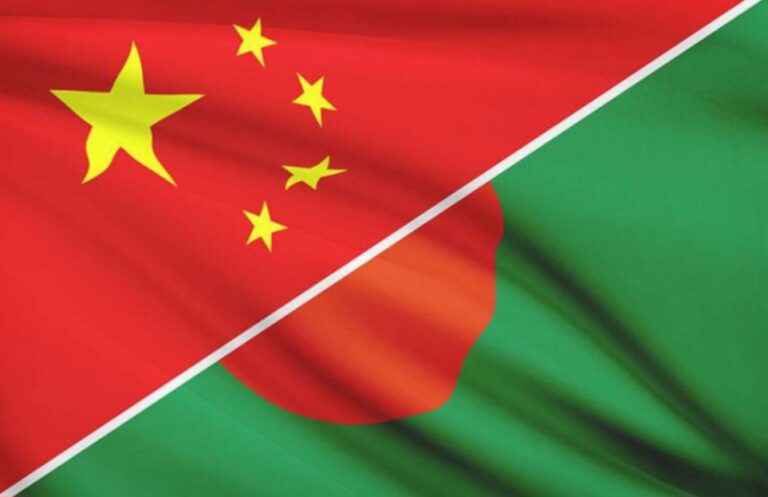
In 21st Century, it has become increasingly evident that global stage is shifting its power towards the East. The way China is trying to expand its influence across Asia has drawn significant attention, particularly in the region of South Asia, where region’s complex geopolitical landscape is undergoing through a vast transformation. Bangladesh is one of major key player of this region being the second largest economy of South Asia.
The relationship of Bangladesh–China can be traced back from the liberation of Bangladesh when China has recognized the state of Bangladesh and both the nations started to maintain the diplomatic relations in 1975. This relation reaches its zenith in 2006 when China left India behind and became the largest trading partner of Bangladesh despite the fact that both the nations do not share the territorial borders.
The historical ties between the two nations go beyond official diplomatic relations. Cultural and commercial connections have existed since antiquity, when trade between China and South Asia was enabled by the Silk Road. This long history fosters cultural affinities that improve contemporary diplomatic relations particularly in the wake of Chinese President Xi Jinping’s October 2016 visit to Bangladesh.
Economic Entanglement
Economic cooperation has been the main driver of relations between Bangladesh and China. For 13 years running, China has been Bangladesh’s biggest trading partner. Bangladesh has increased its level of interaction with China since 2017. China is now Bangladesh’s biggest trading partner, with over US$ 40 billion in Chinese investments. Over US$ 9.75 billion have been invested by China in transit projects in Bangladesh, including current projects like the Dasher Kandi Sewerage Treatment Plant, Bangabandhu Tunnel, and Padma Bridge Rail Link. The growth of infrastructure, economic collaboration, and general bilateral ties between China and Bangladesh have all benefited greatly from these events. Beijing’s presence in the Indo-Pacific region has grown as a result of its collaboration with Bangladesh.
With a total flow of US$ 940 million in the fiscal year 2021–2022, China has also emerged as Bangladesh’s top source of foreign direct investment (FDI). With 104 investors working in eight export-processing zones, it has also been recognised as the leading foreign investor in Bangladesh in 2022. The COVID-19 epidemic presented significant obstacles, yet bilateral trade between the two nations increased by an astounding 58% in the preceding year, demonstrating the robustness of their trading relationship.
Enhanced Defence Collaboration
Over the past five years, Bangladesh and China have increased their military cooperation and increased transparency. After Pakistan, Bangladesh has emerged as China’s second-biggest buyer of weaponry, receiving almost 17% of China’s military exports between 2016 and 2020. The two nations’ defence cooperation has grown to include joint defence production as well as military personnel training in China.
In order to improve its naval capabilities, Bangladesh purchased submarines from China in 2016 despite prior problems with defence hardware supplied by China. Bangladesh’s first submarine base, BNS Sheikh Hasina, was officially opened in Cox’s Bazar by Prime Minister Sheikh Hasina in March 2023. Built for USD $1.2 billion, the facility can house multiple warships and six submarines. It was built by China. As of right now, two Chinese-built submarines are docked in this naval base.
According to defence strategists, Bangladesh will benefit from its growing military alliance with China, which will also put pressure on India. According to these observers, China’s military actions in Bangladesh, including the possible missile station, constitute psychological warfare against India and could cause political changes at home and the emergence of pro-China organisations there. Although the defence cooperation is within their sovereign rights, some analysts worry that China’s efforts could go too far and affect the dynamics of the area. To further strengthen bilateral military cooperation, China has signed a contract to supply the Bangladesh Air Force with 23 Hongdu K-8W intermediate training planes.
Strategic Balancing Act
The portrayal of China as a “friend for attaining development” and India as a “political friend” captures the nuanced stance that Bangladesh has tried to uphold. As international tensions increase and commercial interests entwine with internal politics, Bangladesh may find it more challenging to maintain this separation and make difficult strategic decisions. The Indo-Pacific region has also seen a rise in geopolitical tensions during and after the COVID-19 pandemic. Bangladesh is now directly involved in the US and Chinese foreign policy objectives. Bangladesh has received an invitation from the United States to become a partner in the Indo-Pacific Strategy. China has responded by threatening to sour relations with Bangladesh if it joins the Quad and by requesting that Bangladesh take part in its
“The Global Security Initiative and the Global Development Initiative”.
China encouraged non-interference in Bangladesh’s internal issues before to the country’s most recent elections, sending a subliminal message to the US and its allies to stay out of Bangladesh’s internal political matters. Similarly, during the high-level “2+2” foreign and defence ministry dialogue with the US last September, India expressed a nuanced view on Bangladesh’s democratic process. At a press conference following the dialogue, Indian Foreign Secretary Vinay Mohan Kwatra declared, “The election in Bangladesh is their internal matter, and it is for the people of Bangladesh to decide their future.”
Bangladesh’s delicate balance between India and China is coming up against more unanticipated obstacles. Although there have been benefits to growth of the state from economic collaboration with China, worries about debt dependency and strategic vulnerability have also been raised concerns. It is becoming more and more difficult for Bangladesh to retain its neutral position given the changing geopolitical conditions in South Asia and the Indo-Pacific area. The nation is juggling intricate matters such as water rights, economic integration, and regional security, which could strain ties with the two titans.
Bangladesh’s Minister of Information and Broadcasting, Muhammad A. Arafat, stated that the country owed over US$ 149.5 billion in external debt. These loans include hazards if they are not handled properly, even though they have funded important infrastructure projects. Bangladesh can learn from other nations’ experiences, such Sri Lanka, which had financial difficulties as a result of an over-reliance on Chinese loans.
The total value of bilateral commerce between China and Bangladesh is US$ 23 billion annually. Less than US$ 1 billion of the total trade comes from exports from Bangladesh to China; the great bulk comes from imports into Bangladesh. Bangladesh’s foreign currency reserves, which are already fighting to survive the inflation brought on by the Russia-Ukraine war, are under pressure from the trade deficit with China. The government was compelled to reduce monthly imports from an average of over US$ 8 billion to less than US$ 5 billion in order to manage the strain on the foreign exchange reserve.
Bangladesh may need to review its foreign policy approach as it develops since finding the ideal balance between China and India may become more difficult to achieve. It might be more successful to take a more nuanced strategy that puts Bangladesh’s long-term interests first while keeping flexible, issue-based alignments. Bangladesh’s predicament and experience highlight the difficulties smaller countries face in areas controlled by rival powers. To successfully negotiate the treacherous seas of regional and global geopolitics in the twenty-first century, among other things, will need deft diplomacy, economic diversification, and a clear understanding of national interests.
Sheikh Hasina, the former prime minister of Bangladesh, wrapped off her formal visit to China in July 2024, a few weeks after spending June 21–22 in India, her nearest neighbour. For more last fifteen years, New Delhi has provided total political support to Hasina and her ruling Awami League, and diplomats in both China and India have been closely monitoring her travels.
With a massive group of 196 people, Hasina visited China accompanied by members of her cabinet, high ranking government officials, and influential businessmen. The primary goal of Bangladesh’s visit was to obtain US$ 5 billion loan for budget support, primarily to restock the nation’s depleting foreign exchange reserves.
Prior to Hasina’s trip to China, government representatives from both countries bargained for several weeks over Bangladesh’s request for budget support in the amount of US$ 5 billion in Chinese yuan to relieve pressure on Dhaka’s foreign exchange reserves. Things did not, however, progress as anticipated. Bangladesh was looking for low-cost budget support, but China was interested in offering the money as a high-interest trade facility.
During Hasina’s visit to Beijing on July 8–10, nothing changed. Many government officials were expecting China to make a big statement on budget support. That being said, the PM of Bangladesh came back from China virtually broke. A financial support of one billion yuan, or around US$ 137 million, was announced by China.
Many analysts interpreted Hasina’s early return from the vacation home as an indication that she was unhappy with the results. It was previously believed that Bangladesh had been able to keep its relations with China and India somewhat balanced. However, a lot of observers believe that the nation is no longer in that situation because Bangladesh is becoming much more interested in satisfying Indian demands. It’s possible that China reached the same conclusion. From a geopolitical perspective, we are now more vulnerable to India. Because we have made a lot of decisions lately even though we are aware that China will not be thrilled,” Hossain stated. She further said, “We are not getting any scope to keep China under consideration [while] meeting India’s expectations.”
Conclusion
The Bangladesh-China relationship has come to represent larger regional dynamics as Bangladesh navigates the increasingly complicated geopolitical landscape of South Asia. Notably, with increasing economic cooperation between these two nations on trade and infrastructure, the Chinese are now being viewed as major players in the growth of Bangladesh. But such a solidifying relationship has also raised questions regarding future strategic dependencies and degradation of Bangladesh’s sovereignty.
Bangladesh’s defence cooperation with China also underlines a careful balancing act that Dhaka must pursue between hostile powers. While military links between Bangladesh and China strengthen its defence, these also risk causing unrest in India, a neighbour, thereby further adding to regional security dynamics. Domestic efforts continue to keep up the balance between China and India in Bangladesh’s pragmatic foreign policy.
Looking at geopolitics, increasing interdependence, and economic interests, it is going to be hard to keep this balance intact. The present tussle over the financial packages announced during Sheikh Hasina’s trip to China has shown just how tenuous this relationship stands today. Going ahead, Bangladesh will need to think through its strategic priorities with extra care. It will have to make the required foreign policy fairly flexible and sophisticated in nature so that all these varied influences and interests are kept in due balance with a view to avoiding dependence on any particular power. As Bangladesh joins a more multipolar world community, the nation’s capability to preserve its strategic independence will be the factor determining its future place within it.
Pakistan’s intelligence agency Inter-Services Intelligence (ISI) probably the only intelligence organization in the world that enjoys limitless power or degree in every branch of state machinery in Pakistan. Pakistan is currently on the verge of crisis with civil war threats looming all around. In such a scenario where Pakistan’s civilian leadership has failed, the military is now coming in the prime focus to rescuing Pakistan and Amid all these, Pakistan’s Army and ISI have played their cards by arresting ISI’s former Chief Faiz Hameed in old property case.
The Arrest and Political Gambling of ISI
Downfall episode of ISI’s one-time powerful boss Lieutenant General Faiz Hameed (Retd) is testament to the fact that ISI and Pakistan Army are setting an example, or to be more appropriate consequences of short-circuiting Pakistan’s deep state plans especially in country’s political and economic domains. Like General Zia-ul-Haq is credited for rise of Nawaz Sharif, Faiz was credited for Imran Khan’s rise. Setting political rise of Pakistan politician is straight experiment from Pakistan’s ISI playbook to keep the market democracy in practice and controlling the government from behind the doors. However, when these political puppets go in defiance, they suffer either assassination or political coup.
The similar story happened with Nawaz Sharif when Parvez Musharaf took over and Imran Khan paid the price for steering the foreign policy wheels against the wishes of Pakistan Army and ISI especially those clandestine networks with the West. ISI’s gamble with Pakistan politics paints unfortunate picture as the Army not only puts state in an instable position but it too faces the dangers of strong divide within the forces.
The assassination of Zia-ul-Haq in a mysterious plane crash, which still is a disputed issue, shows that the Army’s strongholds can be weakened from the inside when the Army gets divided into two groups, according to one of the conspiracy theories. Similarly, the present Pakistan Army Chief faces the threat of being targeted from within. The arrest of the former ISI chief also demonstrates General Asim Munir’s advanced deterrence within the ranks. But by this time, Pakistan Army’s gambling habit had made a long-lasting impact within the ranks in fueling their power ambitions and fragile egos, which sets them in a position to sometimes question the omnipresent powers of the Chief of Army Staff and the ISI Chief. The cracks within the Pakistan deep state show the fears of them creating a more complicated struggle that will severely impact civil-military relations in Pakistan, stoking another wave of fears of political instabilities.
The Omnipresence of ISI
When we closely pay attention to the working of ISI, we will see that there is no other prime intelligence agency other than ISI in Pakistan. ISI is responsible for both external and internal security and hence getting a wide range of area to exercise its power both inside and outside the state which essentially gives rise to a sense of centralization of power to one authority and once a state’s authority or agency start enjoying wide powers without any limiting hand over it then the chances of that agency or authority being omnipresent in the state affairs will increase and might try to override political leadership decisions and exercise considerable amount of influence for their benefits.
The same notion of omnipresence applies in Pakistan. ISI as an omnipresent agency in Pakistan is a classic one as since decades. ISI had a major role to play in Pakistan politics, a major chunk of politics in Pakistan was governed by military rulers and one such ruler Zia-Ul Haq had extensively contributed to strengthening the ISI’s grip on Pakistan’s politics by suppressing the Pakistan’s Peoples Party and Benazir Bhutto (former PM of Pakistan). Zia-ul-Haq made ISI his yardstick to fulfil his political interest to remain in power and neutralize those who sought power in Pakistan politics.
Political Color and Internal and External Posture of ISI
Gradually as politics in Pakistan progresses and being the yardstick of many leaders ISI transformed itself from an intelligence agency to a political machine gun which can be used by various leaderships to capture the power and defeat any uprisings or possibility of counter capturing of power in Pakistan politics. All this has politically coloured the agency and created an unwritten charter for ISI to interfere or operate in politics and state affairs in the name of internal security and install friendly regimes in Pakistan. On the other hand, ISI’s external posture is mostly India centric. To establish ISI’s role in Pakistan politics more concretely we need to look upon one prominent incident in Pakistan in the 1990s.
Mehran Bank Scandal
The Mehran Bank Scandal exposed the abuse of public funds by the military and intelligence agencies to manipulate political change in the country. The bank proved to be a hub for ISI and foreign intelligence agencies and politicians collaborated illegally with each other against other elected leaders. The prime objective of ISI through the Mehran Bank was to destabilise the government that was hostile to them (ISI) and establish a friendly government to ISI or leaders who favoured ISI’s interests.
Why ISI became overpowerful or jurisdiction less?
State’s Perspective
When we talk about intelligence agencies becoming supreme or limitless or discuss the cause behind the transformation of the intelligence agency to a supreme state authority then somewhere in the loop the state itself is responsible for making it or its failure to cap the intelligence agency powers and absenting the “Power from above” concept or any governing authority/ Demarcations of duties which limits their power or limits them from going beyond their jurisdiction. Why other intelligence agencies especially those of West enjoys limited authority in their respective states? The answer is straight: there is a limit to their power, and their duties are well defined. These intelligence agencies also enjoy creamy powers when it comes to tackling the threat and exercising their powers in the national security domain, but they always cautiously exercise power.
Intelligence Agency’s Perspective
The rationale behind an intelligence agency become overpowerful or limitless from an agency’s perspective is to seek power/hunger of power or wherever the intelligence agency feels that civilian government are incompetent to hold power. This kind of feeling generates when the democratic structure of a country starts to fall. Even the intelligence hardliners in ISI do not support the concept of democracy much or the bureaucracy and security of a country loses its faith in their political leaders.
This is exactly the case with ISI as it feels that it is the competent power to rule the country or exercise its influence over political decisions because civilian leaders are incompetent to hold power and further ISI also believes in marginalizing other civilian authorities or intelligence agencies which could become powerful with patronage from an elected government. One more reason why ISI is sticking like glue with the internal politics of Pakistan is the absence of a genuine external threat to Pakistan. Pakistan’s false propaganda and its India centric threat perception make the general population of Pakistan believe that there is an actual existence of a threat from India but in reality, India has never exercised force unnecessary until unless provoked. But this real notion is always in denial from Pakistan’s side to nurture a false notion that shows genuine external threat to Pakistan.
The last year or so has witnessed very rapid growth in Chinese nuclear capabilities that have increased over time to a very threatening level, not only to international security but also to regional stability. Throughout its history, China has followed a very successful policy of minimal deterrence and has actually maintained a relatively small arsenal of nuclear weapons, mainly intended to deter potential aggressors. Lately, China’s development of nuclear strategy has been increasingly indicative of a divergence from its earlier posture of prudence. The present phase of growth in the nuclear program is both quantitatively and qualitatively by far the largest. This has raised great concern from the global community on top of consternation about the potential to cause a mass-scale arms race, in turn sounding a clarion call for wider consequences on the global security architecture.
Dynamic development of China’s nuclear policy has raised concerns not only in Washington and Moscow but also among other regional states, who are increasingly apprehensive regarding the strategic implications of cohabiting with a rapidly rising nuclear power. Of course, the acceptability of this newly assertive strategy regarding nuclear armament directly challenges the prevailing world order, which throughout time has constantly secured the absence of nuclear hostilities through a frail balance of power. Of course, it is apt to ramify, through the strategic logics of many nations, onto deep and wide implications that it may set forth, complicating even further the effort for the sustenance of international peace and security.
Within this context, one requires an understanding of the whole picture of China’s nuclear expansion and the much wider geopolitics in which it fits. This paper studies the implications of growing Chinese nuclear capabilities systemically in relation to their impacts on global security and the stability of neighboring countries. This paper is meant to thoroughly understand how the significant rise in threats related to China’s nuclear ambitions is being looked into from the standpoint of real cases, valid reasons, and evidence acquired through quantification.
China’s Nuclear Expansion: A Departure from Minimal Deterrence
While maintaining a “no first use” policy and a relatively small nuclear arsenal designed for minimum deterrence, China has made its strategic doctrine revolve around the judgment that a few nuclear weapons will be sufficient to discourage potential adversaries from attacking China. However, the latest developments suggest drastic changes in China’s thinking. Now, for instance, the Stockholm International Peace Research Institute estimates that China’s nuclear warheads likely increased from around 320 in 2020 to its current count of 410 in 2023. There are other estimates that put the number above 1,000 by 2030. This build-up is, for the most part, driven by the construction of new missile silos, development of new advanced delivery systems such as hypersonic glide vehicles, and deployment of multiple independently targetable re-entry vehicles on its intercontinental ballistic missiles, to name a few measures. It indicates that China is no longer pursuing the concept of minimum deterrence with this massive, modernized nuclear arsenal build-up. This can be attributed to a variety of elements: parity with the United States and Russia, trying to deter regional adversaries, and the intention to put up their global superpowers.
Global Security Implications: The Risk of Nuclear Escalation
It represents an enormous, complex threat to international security, and this is a global stability issue with wide-reaching concerns. The increase in nuclear escalation that is relative to a country such as China, as it improves its capabilities with nuclear weapons and risk from the onset of some conflicts on several dimensions, will just expand on the numbers in nuclear weapons overall but also nuance their governance and regulation.
It is in reality a most disturbing development because it multiplies the perils of miscalculation. Under these tense and instable circumstances, an expanded and improved nuclear stockpile might easily lead to errors of perception or misjudgment of the purposes involved. It will be all too easy for an adversary to misconstrue routine military moves as presaging a surprise pre-emptive nuclear attack, to make appropriate pre-emptive or countermoves, and much too quickly all-out nuclear war will be in town. That means, in itself, potential conflict that is quite blunt with the considerations of hotspots: take China, the South China Sea, and the Taiwan Strait, where even the smallest incident assumes explosive proportions.
It is under this scenario of conflict that a widespread use of nuclear weapons, an event of little probability under the prevailing doctrine of mutual assured destruction, suddenly becomes quite a realistic threat as Chinese nuclear capabilities continue to grow. That enlarged arsenal could make China much more aggressive, convinced that it could dominate—or win—a nuclear exchange. This could create a threshold of use of nuclear weapons, such as when China views limited nuclear use as a usable means to achieve its strategic objectives, especially where the performance of its conventional military forces is up to the mark or where it seeks a third-party intervention in regional conflicts.
The Impact on the Global Strategic Balance
Such growth of the Chinese nuclear arsenal entails important consequences for global strategic stability. Historically, the United States and Russia dominated the international nuclear architecture, their share amounting to over 90 percent of worldwide nuclear warheads. However, China’s rapid furtherance of its nuclear capabilities is hardening this duopoly; at worst, it brings in a new era of dynamic nuclear competition.
This course of events is likely to undermine efforts in arms control on a global level with the New START treaty, which limits the number of deployed strategic nuclear warheads and their delivery systems by both the United States and Russia. The controversy, of course, is whether to include China in further arms control negotiations, and the increasingly mobilizing Chinese nuclear arsenal is against going forward on any new agreements on nuclear dangers in a multilateral framework.
However, continued enhancement of China’s nuclear capability may inspire another arms race in the region. Regional nuclear powers, together with other developing countries, will find a need to increase their arsenals in response to enhanced Chinese power. This, in turn, will spark off another further destabilizing arms race in the region and will increase the risk of nuclear war. The implementation of the arrival of the hypersonic missile force, it specifically speaks to the concept of arms race instability. They are faster than Mach 5 and have very unpredictable trajectories that deny current missile defense systems. If hypersonic missile forces proliferate, two rival nuclear powers are going to feel that they must do first strikes against each other on the outbreak of war, thus threatening to intensify the incidence of nuclear escalation.
Regional Impacts: Security Dilemmas for Neighboring Countries
The implications of such a dramatic rise in China’s nuclear warheads number in the Asia-Pacific nations. China’s growing military prowess, coupled with increasingly belligerent behavior in the South China Sea, the Taiwan Strait, and at borders with India, escalates concerns over security for states in this region.
(i) Japan: Reassessing Security Posture
A major ally of the United States in Asia-Pacific, Japan, too, has raised serious concerns about the growth of China’s nuclear arsenal. The protective measure for the former was also the U.S. nuclear umbrella, but with growing Chinese assertiveness, a significant emphasis was put on relooking at Japan’s security posture. A growing discourse within Japan also discusses not only hardening Japanese missile defenses but also moving toward a firmer deterrence policy that poses consideration, among others, for the development of particularly pre-emptive strike capabilities.
Even more significant is the intermediate-range ballistic missile, the DF-26, already fielded and which targets sites within Asia-Pacific-region, or more specifically, United States military installations in Japan. Further, the Chinese nuclear-armed submarine that will be based in the Pacific could equally pose a threat to Japanese security.
(ii) India: Heightened Security Dilemmas
India shares an unenviable strategic frontier with a nuclear-armed state: China. Its growing stockpile puts an increasing premium on the Indian security apparatus. China has been historically at loggerheads with India over border demarcation, as can be seen in its confrontations in Doklam and in the Galwan Valley. China’s enhanced nuclear powers, in spite of commitment to credible minimum deterrence, might make India adopt a different nuclear posture.
India has already replied to Chinese nuclear build-up by augmenting its own strategic capability, including the long-range Agni-V ICBM, with an intended reach across the whole of China’s expanse. Besides, India is investing in nuclear submarines, for example, INS Arihant, and building up a second-strike capability. But the asymmetry in the nuclear capabilities between the emerging giant China and powerful India may always pose a problem, pushing India into continually enlarging its arsenal, which could finally result in an arms race in the region.
(iii) South Korea and Taiwan: Growing Vulnerabilities
Growing nuclear capability on behalf of China increases vulnerability either for the United States, as in the case of South Korea, or other states within striking distance, such as Japan, to China. However, the presence of Chinese missile capability, nuclear-armed, and within striking distance of South Korea, is significant because such a step averted the extended deterrence of the U.S.
Taiwan is the most vulnerable, with wide-ranging existential threats from China. An increasing disparity in both conventional and nuclear military power with respect to China could induce Beijing to take stronger actions, even through force, to achieve its aim of reunification. Added to this further complication of strategic calculations for Taipei is the ambiguity surrounding the commitment of the United States, particularly in defending Taiwan in the event of an attack by China.
The West’s Reaction: Containment and Diplomacy
(i) US Strategic Rebalancing and Modern
In this light, it has modernized its nuclear forces as a result of the expansion by the People’s Republic to support allies in the Asia-Pacific region. Development investments which the United States had done in credible, flexible, and advanced nuclear deliverance systems to sustain its strategic posture. This includes the development of the Ground-Based Strategic Deterrent and Long-Range Stand-Off missile.
Accompanying this drive for modernization in both military terms and theoretical policy understanding has been a drive for enhancing alliances with Japan, South Korea, and Australia, as well as bolstering security partnerships with India and other regional entities. This manifests itself mostly in the Quadrilateral Security Dialogue (or “Quad”) putatively composed of the United States, Japan, India, and Australia, designed in part as a hedge against China’s growing regional dominance.
(ii) Diplomacy in Weapons Control and Confidence Building
The West has sought to grapple with the rise of China’s nuclear power through arms control and confidence-building, not very successfully. China has been loath to enter any such negotiations—being a minor power in terms of numbers in its nuclear arsenal when compared with the U.S. and Russia. This has, in recent years, been associated with demands for Chinese participation in future arms control agreements, including a follow-on to New START. To achieve this, the confidence-building measures include transparency measures and crisis communication mechanisms that could also help reduce risks of miscalculation and unintended escalation.
Surfing the New Perilous Age
The evolution of such nuclear potentials has altered the strategic balance, intensified the possibility of nuclear escalation, and fueled the security dilemma across the neighboring countries. It being the case, as China proceeds progressively in its modernization drive and expands the domains in the military services that use nuclear potentials, the international society has to rationally adapt to this perilous new phase. The ways may embrace direct and indirect containment, diplomatic efforts, and arm-control attempts. The potential consequences are vast, and the dangers of misperception or unintended escalation are real. The new challenges that have emerged because of China’s nuclear status will need a concerted global effort not to repeat the same arms race and ensure that the deadliest weapons on Earth will never be used in any war. Minds will be further strengthened since there is no backwards way for dealing with the issue of international security and stability.
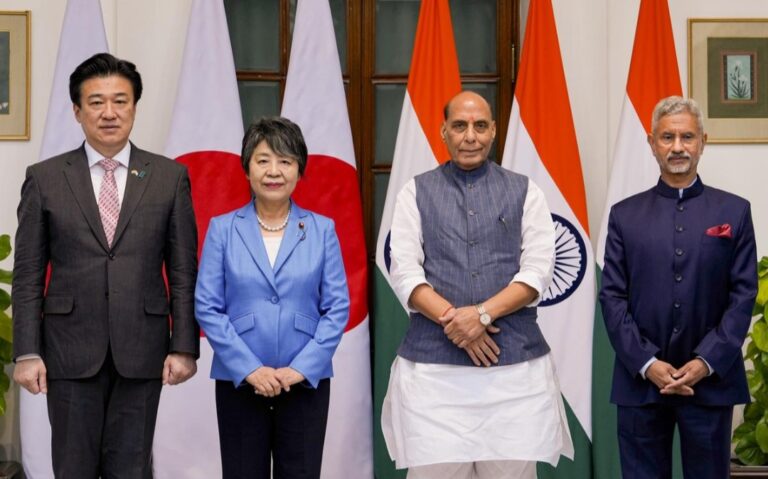
New Delhi on August 20, 2024 hosted the third 2+2 ministerial dialogue with Japan where Defence Minister Rajnath Singh and Foreign minister Dr S Jaishankar hosted their Japanese counterparts, Minister for Foreign Affairs of Japan, Ms. Kamikawa Yoko and Minister of Defence of Japan, Mr. Kihara Minoru. This is an important year as India and Japan celebrates 10th anniversary of the establishment of special strategic global relationship. This relationship has gradually matured from what it was in the start of the century. This dialogue came at a time when PM Modi was set to visit Ukraine and India’s engagement with the West has increased multi-fold. However, Chinese assertiveness is considered as the driver of this relationship. The narrative of the relationship has now been the cooperation between countries with shared vision of Free and Open Indo-Pacific. The 2+2 ministerial dialogue offers unique opportunity for the cooperation between the security and long-term foreign policy objectives.
Evolution
In 2000, Mori Yoshiro became the first Japanese PM in a decade to visit India and that was the point when Indo-Japan relations took off from the shadows of Indian testing nuclear weapons in 1998. The subsequent visit of PM Atal Bihari Vajpayee to Japan in 2001 started the traditions of frequent high-level engagements between these two countries and as a result India inched closer to Japan. All the Japanese and Indian Prime ministers have given priority to this relationship, even Shinzo Abe went a step ahead to say that it would not be surprising if Indo-Japan relations surpass that of US-Japan relations. The security cooperation agreement of 2008 was largely seen as a move against China which Chinese media reported it in that way. In 2024, there is institutional consultation between these two governments are taking place at highest level.
Cultural connect has been something that binds India and Japan. Former Japanese PM Shinzo Abe remains one of the most respected and celebrated foreign leader in India. He was conferred with second highest civilian award, Padma Vibhusana to respect his legacy and contribution in Indo-Japan ties
Shared Objectives
Now, there is a clear convergence of the interests to protect the Sea Lines of Communications (SLOC). Since India’s geographic location is such that it is present at the two most important choke points, Strait of Malacca in the east and the Strait of Hormuz in the west. Chinese presence in the waters of the region is increasing and most of the transportation of oil, gas and energy from the gulf to the pacific passes through these two straits and since Japan’s constitutions inhibits deployment of Maritime self defence forces (MSDF) into the international waters, it is essential to cooperate with Indian Navy in the region. India at the same time is also facing severe challenges from the Chinese navy whose submarines, research vessels and ports like Hambantota and Gwadar that are very close to India are under Chinese control possess a direct security challenge. It is in the Indian interest to cooperate with the likeminded countries.
Third 2+2 Ministerial Dialogue
Major highlight of this meeting is the willingness of the two countries to cooperate in the domains of cyber and space where both of these countries would work together to protect critical information infrastructure. Talks regarding semiconductors also took place. While taking the stock of the previous developments, military exercises were noted and the ministers expressed their satisfaction with the progress made in this domain. The Ministers expressed their commitment to continuing bilateral and multilateral exercises including “Dharma Guardian”, JIMEX and “Malabar”. Defence policy dialogues and joint staff level talks are to be accelerated to enhance the cooperation between these two countries. India is expecting assistance from the Japanese side to enhance its domestic defence capabilities where there will be cooperation and coproduction. They reaffirmed the importance of multilateral defence cooperation and exchanges in the Indo-Pacific region.
Both India and Japan seek to revise and update the 2008 Joint Declaration on Security Cooperation to meet contemporary challenges and to be able to respond to security challenges emerging in the recent times.
Both the countries shared their objection to any kind of unilateral attempt to change the status quo in the Indo-Pacific region. This was hinted to the Chinese belligerence in the South China sea where Chinese coast guards often go beyond their zone and enter into disputed waters. India and Japan will also strengthen the cooperation with the ASEAN.
Economic landscape of the relationship has also been discussed. Since 2000, Japan had been one of the biggest contributors of FDI into India and since then it has invested around US$ 39.94 billion ranking fifth in the world. India plans to engage Japan in the development of its north-eastern states. Technological research and Industrial cooperation is also one of the facets that is being discussed.
Talks also took place regarding the issue of countering terrorism. Both the countries have expressed strong opinions on the cross-border terrorism. It was hinted at the continuous incursion of terrorists from Pakistan administered areas into Indian territories.
Both India and Japan being the member of G 4 grouping reiterated their demands of the reforms at the multilateral institutions and especially United Nations. It has been long-standing demand from India and Japan to reform institutions that were built in 1940s, India and Japan often claim that UN does not reflect the realities of 2024 and deeply embedded in the past.
Japan remains an important partner in India’s growth story. It has valuable contribution in the Indian economy, critical infrastructural projects like Delhi metro and the ongoing Bullet train project and the projects in the north-eastern Indian states. Now it is the time to upgrade the relationship and to involve in the joint ventures and cooperation in the defence production. As Japan is developing its domestic industrial defence capabilities, it becomes important for India to codevelop Indian domestic defence complex with Japanese support. Despite being very robust relations at political level, economic relations largely remain under-utilised where bilateral trade between these two countries remains US$ 21.96 billion and it needs to be improved if India seeks to diversify and decouple its economic dependence from China.