
By : Prachi Kushwah, Research Analyst, GSDN
Introduction
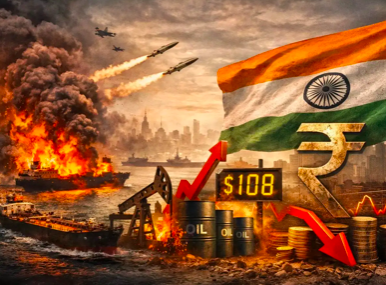
West Asia is one of the most important regions for India because of its significance in energy security, trade, investment, maritime connectivity, and the welfare of the Indian diaspora. The ongoing conflict in West Asia has emerged as a major geopolitical crisis with consequences extending far beyond the region. As a country that maintains strong relations with Israel, Iran, Saudi Arabia, the United Arab Emirates, Qatar, Oman, and several other regional actors, India is directly affected by developments in the region. The conflict has generated uncertainty in energy markets, disrupted shipping routes, increased security concerns, and created challenges for global economic growth. For India, the impact is multidimensional and influences foreign policy, economic stability, strategic planning, and national security. The crisis also highlights the importance of balanced diplomacy and preparedness in an increasingly interconnected world.
India’s Strategic Interests in West Asia
India’s engagement with West Asia is based on long-standing historical, economic, and cultural ties. The region supplies a large share of India’s crude oil and liquefied natural gas requirements. It is also a major destination for Indian exports and a significant source of investment. Millions of Indians work in Gulf countries and contribute to India’s economy through remittances. In addition, India cooperates with regional countries on security, counterterrorism, maritime safety, and infrastructure development. These extensive interests make peace and stability in West Asia extremely important for India’s long-term development and strategic objectives.
Impact on Energy Security
Energy security is the area most immediately affected by conflict in West Asia. India imports a substantial portion of its energy requirements, and disruptions in the region often result in fluctuations in global oil and gas prices. Rising energy prices increase India’s import bill and place pressure on public finances. Higher fuel costs also contribute to inflation by raising transportation and production expenses across sectors. The Strait of Hormuz remains a critical maritime chokepoint through which a significant share of global oil trade passes. Any disruption in this route can create uncertainty in international markets. To reduce risks, India has sought to diversify energy suppliers, expand strategic petroleum reserves, and accelerate the transition toward renewable energy sources. However, continued instability in West Asia remains a significant concern for India’s energy security framework.
Trade and Economic Consequences
West Asia is an important trading partner for India. The conflict has affected trade by increasing transportation costs and creating uncertainty in shipping networks. Security concerns in the Red Sea and surrounding waters have forced some vessels to take longer routes, increasing transit times and freight charges. Such developments affect exporters and importers alike. Indian businesses may face higher costs for imported raw materials, while exporters may experience reduced competitiveness in international markets. Financial markets also react to geopolitical uncertainty, resulting in fluctuations in investor confidence and market performance. Although India’s economy has shown resilience, prolonged conflict could create additional economic pressures and affect global growth prospects.
Impact on the Indian Diaspora
One of India’s primary concerns during any crisis in West Asia is the safety and welfare of Indian citizens residing in the region. Millions of Indians work across Gulf countries in sectors such as healthcare, construction, information technology, education, hospitality, and retail. Escalating tensions can create concerns regarding employment, transportation, and personal security. Families in India often depend on remittances sent by relatives working abroad, making the economic well-being of expatriate communities particularly important. The Government of India has consistently prioritized the protection of overseas citizens through diplomatic engagement, emergency assistance mechanisms, and contingency planning. The conflict has reinforced the need for robust evacuation and support systems to address potential emergencies.
Maritime Security Challenges
Maritime security has become increasingly important because of the conflict’s impact on major shipping lanes. India’s trade depends heavily on sea routes connecting the Indian Ocean with Europe, Africa, and West Asia. Threats to commercial shipping, including attacks on vessels and disruptions to maritime traffic, increase transportation costs, and create logistical challenges. The Indian Navy has enhanced surveillance and operational readiness to safeguard sea lines of communication and ensure the security of commercial shipping. Strong maritime capabilities are essential for protecting India’s trade interests and maintaining uninterrupted access to global markets.
Foreign Policy and Diplomatic Implications
India has adopted a balanced diplomatic approach toward the conflict. It maintains strong bilateral relationships with multiple countries in the region and seeks to preserve these partnerships while promoting peace and stability. India’s foreign policy is guided by the principle of strategic autonomy, enabling it to engage constructively with all stakeholders. The conflict has tested India’s diplomatic skills, as it must carefully navigate competing interests while safeguarding national priorities. India has consistently emphasized dialogue, de-escalation, and peaceful resolution of disputes. This balanced approach has strengthened India’s credibility as a responsible and pragmatic international actor.
Defence and Security Implications
The conflict carries broader implications for India’s security environment. Regional instability can influence global strategic dynamics and create opportunities for extremist organizations to exploit uncertainty. India closely monitors developments in West Asia because security challenges often have transnational consequences. Lessons from contemporary conflicts also contribute to military planning and modernization efforts. The use of advanced technologies, drones, cyber capabilities, and precision weapons in modern warfare provides valuable insights for defence preparedness. The crisis further highlights the importance of strengthening domestic defence production and enhancing strategic self-reliance.
Investment and Connectivity Projects
West Asian countries have become important economic partners and investors in India. Sovereign wealth funds and private investors from the region have invested in infrastructure, renewable energy, logistics, technology, and real estate. Political instability may influence investment decisions by increasing uncertainty, but long-term economic cooperation remains strong because of mutual interests. The conflict may also affect connectivity initiatives linking India with West Asia and Europe. Successful implementation of such projects requires a stable and predictable regional environment. Consequently, regional peace is essential for realizing the full potential of future economic corridors and infrastructure networks.
Humanitarian Dimensions
The humanitarian consequences of war extend beyond geopolitical considerations. Armed conflict results in civilian casualties, displacement, destruction of infrastructure, and disruption of essential services. India has consistently supported humanitarian assistance efforts and emphasized the importance of protecting civilians. Humanitarian concerns influence international diplomacy and shape global responses to crises. India’s support for relief efforts reflects its broader commitment to human welfare and international cooperation.
India’s Policy Response
India’s response to the West Asia conflict has focused on protecting national interests while supporting diplomatic solutions. The government has monitored developments closely, engaged with regional partners, and taken steps to ensure the safety of Indian citizens. Efforts to strengthen energy security, diversify supply sources, enhance maritime surveillance, and maintain stable diplomatic relations form key components of India’s strategy. By pursuing a balanced and pragmatic approach, India seeks to minimize risks and maintain stability despite an uncertain regional environment.
Conclusion
The West Asia war has significant implications for India because of the country’s extensive economic, strategic, and people-to-people connections with the region. Energy security, trade, investment, maritime transportation, diaspora welfare, and foreign policy are all influenced by developments in West Asia. Rising oil prices, disruptions in shipping routes, and geopolitical uncertainty present substantial challenges. At the same time, the crisis underscores the importance of diversification, strategic autonomy, and diplomatic engagement. India’s balanced approach has enabled it to protect its interests while supporting peace and stability. As the situation evolves, India will continue to adapt its policies to address emerging challenges and safeguard its long-term national interests.



