
By : Bhavika Bhartiya, Research Analyst, GSDN
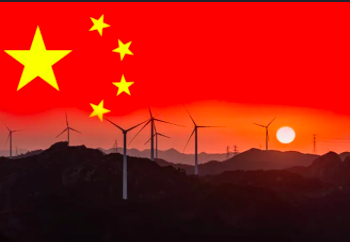
China is the foremost global manufacturer with factories producing everything from phones to steel, cities with thousands of occupants, and an economy that has expanded rapidly at an unprecedented rate in the modern age. To operate all of this, China needs a colossal amount of energy. In 2024, China used 163.8 exajoules of energy, more than all North America (including Canada, Mexico, the USA), the European Union and Japan together. This immense figure has important and inappropriate implications that China cannot provide itself with sufficient energy to meet its needs. While China considers national security as its priority above everything else, dependence on outside sources for energy, rather than being an economic concern, is also a strategic weakness that influences foreign policy, military strategy and its relationships with other countries.
The Scale of the Problem
In addition to being the biggest importer of crude oil, China is also the biggest importer of natural gas. In 2024, imports were about 74% of China’s total crude oil supply, while 42% came from domestic sources. In 2024, the cost of importing crude oil to China was worth $325 billion which is worth more than the Gross Domestic Product [GDP] of many individual countries. The average amount of crude oil imported to China was 11.65 million barrels daily in 2025, which is up by 5.7% from the previous year. To comprehend China’s energy dependency, one needs to first understand its scale.
Coal paints a very different picture. China is effectively self-sufficient in coal (the largest coal producer in the world), however, coal imports into China have also increased dramatically in recent years. In 2023, China imported 474 million tons of coal, the largest coal importer and the largest coal producer in the world. The reasoning behind this is simple China’s industrial hunger is far greater than what could be met by the massive resources of coal located within its borders. Coal is responsible for more than half of the electricity produced in China and in 2024, the number of new coal-fired power plants built reached a high point for the last ten years, with 94.5 GW of new coal capacity being added. This situation, however, conflicts with China’s ambitions for complete green energy development worldwide.
The Malacca Dilemma: A Chokepoint that Haunts Beijing
The Malacca Dilemma is one of China’s major energy-related challenges described by Chinese military officials under the former President Hu Jintao in 2003. This concept was derived from a geographic feature known as the Strait of Malacca located between Malaysia and Indonesia. This waterway is the shortest maritime link connecting the Indian Ocean to the South China Sea. Furthermore, over 80 percent of China’s oil imports travel through this bottleneck, meaning that, in times of war the strait could be blocked, thereby cutting off all of China’s oil supplies within a matter of hours.
This concern is not theoretical. The U.S. Navy is well positioned to enforce a blockade and has done so to various countries before. Thus, China has taken considerable measures over time to develop secondary routes for energy transport through the Strait of Malacca (which is considered to be on the verge of being closed) by pursuing a number of different actions related to its larger Belt and Road Initiative model. One such plan is the construction of a pipeline and road network along the China-Pakistan Economic Corridor (CPEC) which will transport energy from Gwadar Port in Pakistan directly to China’s western region of Xinjiang. Two other major overland options are the Myanmar-China oil pipelines that were finished in 2013 and 2015 respectively. They are not just economic infrastructure projects they are strategic insurance policies against the day when the sea lanes might be closed.
Russia, Saudi Arabia and the Politics of Oil
China’s Foreign Policy is heavily influenced by its dependence on energy supplies that are generally hard to separate from overarching aspirations. China’s primary source of crude oil imports were Russia, Saudi Arabia, and Iraq. Between these three countries, China imported over two million barrels of oil per day (about 20% of all imports) in 2024. After Western nations had imposed economic sanctions against Russia following the February 2022 invasion of Ukraine, China became Russia’s most important customer for energy and purchased large quantities of discounted Russian oil. Both countries thus benefit through China’s acquisition of a stable, low-cost energy source from Russia while Russia has a way to avoid being harmed by Western sanctions. This energy relationship essentially renders China incapable of joining Western led sanctions against Russia regardless of its official position regarding the military conflict.
Overall energy dependence constrains China’s economic and diplomatic options in the international arena in addition to being an economic issue. The same principle applies to China’s diplomatic engagement with Gulf States. Through a concerted effort, China has endeavoured to develop and maintain solid and ongoing relations with Saudi Arabia and other Gulf monarchs while simultaneously solidifying relations with their main rival, Iran (the Gulf States). The ability to continue balancing these competing diplomatic relations depends on maintaining a stable flow of energy between China and both groups.
The Renewable Revolution: Promise and Reality
Despite that, China’s problems with dependency on oil will still not be solved by the renewable revolution. In fact, 86 percent of China’s total primary energy supply was derived from fossil fuels in 2024. This is principally a result of China’s large and extensive industrial base (i.e., steel mills, cement plants, chemical manufacturing, and heavy manufacturing). Industrial processes require both chemical feedstocks and heat (as well as electricity), both of which today are much more difficult to produce using solar panels and wind turbines than they are from fossil fuels. As a consequence, China will remain dependent upon fossil fuels until industrial processes can be largely or fully electrified or be powered by hydrogen feedstocks.
Stockpiling as Strategy
One indication of how seriously China considers its energy vulnerability is the rapid buildup of its oil reserve capacity. By late 2024, China had expanded its total oil storage capacity to more than 2 billion barrels and its total strategic and commercial reserves were estimated to be between 1.2 billion barrels and 1.3 billion barrels. In fact, Chinese state-owned oil companies Sinopec and CNOOC are working on building 11 new storage facilities in 2025 and 2026. Experts say that in 2025 China is stockpiling approximately 1 to 1.2 million barrels of oil each day far more than is necessary to meet current needs providing both a buffer to cover supply interruptions and leverage in global energy markets. However, this also reflects Beijing’s concerns over its supply chain’s reliability amid an increasingly uncertain world.
Conclusion
China has an exceedingly high level of energy dependence, making energy dominance an incredible challenge for itself and other countries. With more total energy being produced than all three of the US, EU, and Japan combined, it should come as no surprise that China’s energy production is not sufficient to meet its needs and that it must constantly manage risk associated with its energy sources and global economies. China must ensure that it maintains stable supplier relationships and multiple alternative pipeline/port options in the Middle East, Central Asia, Russia, and Africa simultaneously to minimize the risk of geopolitical instability or supply disruption, while also maintaining existing coal power facilities in use today and diversifying its energy supply by developing renewables at an unprecedented rate. It has taken on significant amounts of reserve energy to protect against catastrophic events that may or may not occur in the future, but that cannot be ruled out. The way in which China handles the challenges related to energy dependence over the next few decades will impactthe development of global energy markets, international trade and geopolitical stability for the entire world.



